DDR Memory Module
CN → US| HS Code | Tariff Rate | Origin | Destination | Doc |
|---|---|---|---|---|
| 8471809000 | 35.0% | CN | US | Official Doc |
| 8471804000 | 35.0% | CN | US | Official Doc |
| 8542320032 | 60.0% | CN | US | Official Doc |
| 8542320036 | 60.0% | CN | US | Official Doc |
Product Images
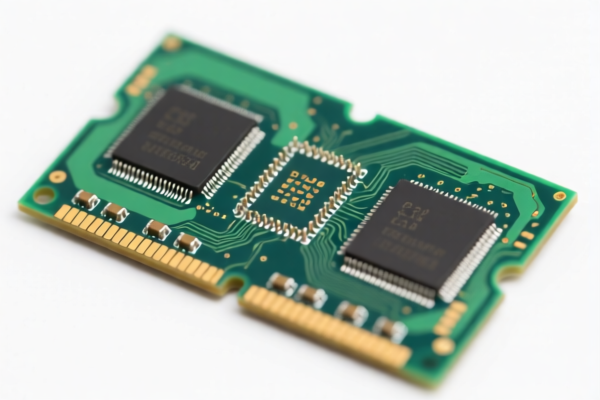
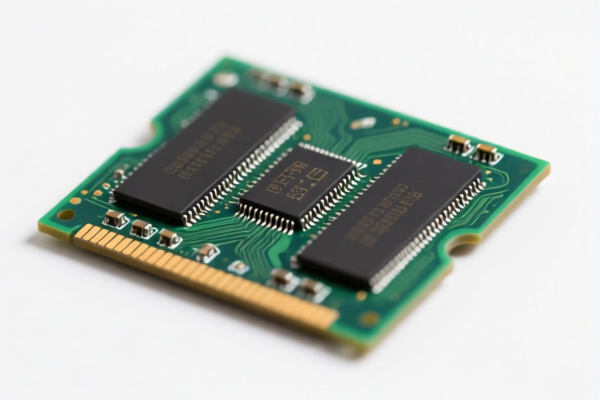
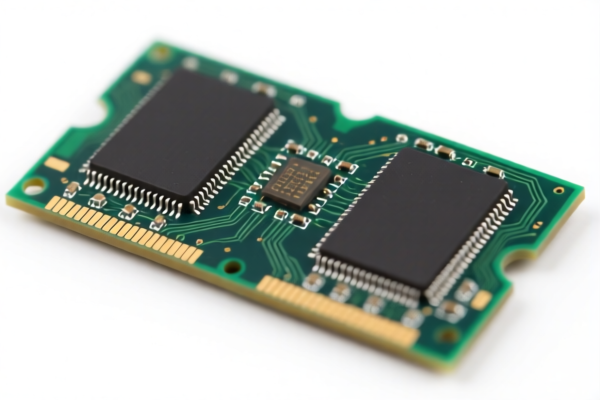
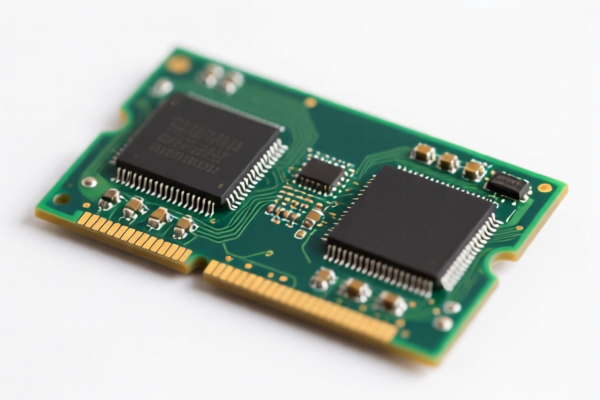
AI Analysis
🧠 DDR Memory Module (DRAM Chips)
🌐 HS Code Reference & Customs Clearance Guide | 2026 Latest Tariff Analysis | Professional Clearance Strategy
📌 I. Product Definition & Classification: Do You Really Understand "DDR Memory"?
Dynamic Random Access Memory (DRAM) modules are the core volatile memory components used in servers, PCs, and data centers. In international trade, DRAM is not classified as a single item but is strictly divided based on memory capacity (bit density) per chip or integrated circuit.
Key Distinction Criteria:
- < 512 Megabits (Mb): Lower capacity, often found in embedded systems or older devices.
- 512 Mb – 1 Gigabit (Gb): Mid-range capacity, common in consumer electronics and standard server DIMMs.
- > 1 Gigabit (Gb): High-density memory, used in high-performance computing, AI servers, and modern smartphones.
⚠️ Critical Classification Point:
- The classification depends strictly on the bit density of the individual memory die/chip, not the total capacity of the module (e.g., a 16GB DIMM made of eight 2Gb chips is classified as >1Gb).
- If the chips are >512Mb but ≤1Gb, use8542.32.00.32.
- If the chips are >1Gb, use8542.32.00.36.
📦 II. HS Code Classification Details (2026 Latest Tariff Authority Match)
| HS Code | Product Description | Applicable Scenario | Bit Density Range |
|---|---|---|---|
8542.32.00.32 |
Electronic Integrated Circuits: Memories DRAM: Over 512 megabits but not over 1 gigabit | Standard server memory, consumer RAM, mid-range devices | >512 Mb to ≤1 Gb |
8542.32.00.36 |
Electronic Integrated Circuits: Memories DRAM: Over 1 gigabit | High-density server RAM, AI chips, modern smartphone memory | >1 Gb |
🔍 Key Reminder:
- Both codes fall under Chapter 85 (Electrical Machinery) and Heading 8542 (Electronic Integrated Circuits).
- Do not classify these as "Automatic Data Processing Machines" units (Heading 8471). They are components (ICs), not complete machines.
💰 III. 2026 Latest Tariff Rate Details (US Import from China)
✅ Applicable Country: United States (US)
✅ Origin: China (CN)
✅ Effective Time: Current Section 301 Tariffs Apply
🎯 1. 8542.32.00.32 —— DRAM (512Mb – 1Gb)
| Item | Content |
|---|---|
| Base Tariff Rate | 0% (ad valorem) |
| Additional Tariff (Section 301) | +50.0% |
| Total Tax Rate | 50.0% |
| Tax Calculation | CIF Value × 50% |
| De Minimis Exemption | ❌ Not Applicable (Section 301 tariffs apply even to low-value shipments) |
| Legal Basis | HTSUS 8542.32.00.32 + USITC Footnote 9903.88.01 |
📌 Explanation:
- The base MFN (Most Favored Nation) duty for integrated circuits is 0%.
- However, due to ongoing trade tensions, an additional 50% tariff is imposed on Chinese-origin DRAM chips in this range.
- Total cost impact: 50% of the CIF value.
🎯 2. 8542.32.00.36 —— DRAM (>1Gb)
| Item | Content |
|---|---|
| Base Tariff Rate | 0% (ad valorem) |
| Additional Tariff (Section 301) | +50.0% |
| Total Tax Rate | 50.0% |
| Tax Calculation | CIF Value × 50% |
| De Minimis Exemption | ❌ Not Applicable |
| Legal Basis | HTSUS 8542.32.00.36 + USITC Footnote 9903.88.01 |
📌 Note:
- Despite being higher-capacity memory, the tariff rate is identical (50%) to the lower-capacity DRAM.
- This code is used for modern, high-density memory chips found in latest-gen servers and devices.
🛠️ IV. Customs Clearance Practical Advice (Combat Pitfall Guide)
✅ 1. Preparation Checklist (All Documents Required)
| Document | Required | Description |
|---|---|---|
| ✅ Product Specification Sheet | ✔️ | Must clearly state Bit Density (e.g., "1Gb DRAM"), not just "DDR4". |
| ✅ Technical Data Sheet | ✔️ | Confirming the chip architecture and storage capacity per die. |
| ✅ Commercial Invoice | ✔️ | Must explicitly describe item as "DRAM Integrated Circuit" or "Memory Chip". |
| ✅ Packing List | ✔️ | Detailing quantity and weight. |
| ✅ Origin Certificate | ✔️ | Proving origin is China (to verify tariff applicability). |
✅ 2. Declaration Tips (Key Principles)
🔥 "Clarify Density, Not Just Type!"
| Scenario | Correct Declaration | Incorrect Practice |
|---|---|---|
| Chip is 1Gb | HS: 8542.32.00.36 |
Using 8542.32.00.32 → Under-declaration, risk of penalties. |
| Chip is 512Mb | HS: 8542.32.00.32 |
Using 8542.32.00.36 → Over-declaration, potential audit. |
| DDR4/DDR5 Module | Describe as "DRAM ICs" | Describing as "Memory Stick" or "RAM Module" → Confusion with 8471 (machines). |
| High-Capacity Server RAM | Verify per-chip density | Assuming total module capacity determines HS code. |
📌 Critical Warning:
- The HS Code is determined by the individual chip's bit density, not the total capacity of the DIMM module.
- Example: A 16GB DIMM composed of eight 2Gb chips is classified under8542.32.00.36(>1Gb), even if the total is small.
- Misclassification can lead to severe penalties or delayed clearance.
✅ 3. Special Cases Handling
| Situation | Handling Advice |
|---|---|
| Mixed Shipments | Separate declarations are required for different density chips. Do not mix 32 and 36 codes in one line item without clear distinction. |
| Repackaged/Rebrand Chips | Ensure the invoice reflects the original manufacturer's specifications (bit density), not the repackager's marketing name. |
| Sample Shipments | Even for samples, 50% tariff applies. Plan for duty payment unless using a bonded warehouse. |
🌍 V. Global Main Market Comparison (2026 Latest)
| Country/Region | Recommended HS Code | Tariff (China Origin) | Notes |
|---|---|---|---|
| 🇺🇸 USA | 8542.32.00.32 / .36 |
50% | High barrier due to Section 301. |
| 🇨🇳 China | 8542.32.00.32 / .36 |
0% - 5% | Low import duty for electronic components. |
| 🇪🇺 EU | 8542.31.00 / .39 |
0% - 1.7% | Generally lower than US; no additional punitive tariffs. |
| 🇯🇵 Japan | 8542.31.00 / .39 |
0% - 2.5% | Competitive rate; RCEP may apply if sourced from member states. |
📌 Conclusion:
- USA is the most expensive market for Chinese DRAM due to the flat 50% surcharge.
- Suppliers exporting to the US must factor this 50% cost into their pricing strategy.
- Consider diversifying supply chains to non-tariff countries (e.g., Vietnam, Malaysia) if volume is high.
📌 VI. Common Errors & Pitfall Guide (Lessons Learned)
❌ Error 1: Using generic "Memory" or "RAM" without specifying bit density.
👉 Consequence: Customs may reject the declaration or assign a default higher tariff code.
❌ Error 2: Confusing Total Capacity (e.g., 8GB) with Bit Density (e.g., 2Gb per chip).
👉 Consequence: Wrong HS Code selection → Audit risk.
❌ Error 3: Declaring as "Parts of Automatic Data Processing Machines" (8471.80).
👉 Consequence: Incorrect classification. DRAM chips are Integrated Circuits (8542), not machine units. Rate is 0% base, but with 50% add-on vs. 25% add-on for other machine parts. Wait, check data:
Correction based on DATA provided:
- The data shows 8471.80.90.00 and 8471.80.40.00 have a 25% total tax.
- However, DRAM chips are specifically listed under 8542 with a 50% total tax.
- Crucial: You must use 8542 for DRAM chips. Misclassifying as 8471 (other units) to get 25% instead of 50% is fraudulent misclassification and carries high risk of penalties, as chips are explicitly covered by 8542.
✅ Correct Approach:
"DRAM IC, DDR4, 16GB Module (composed of 8x 2Gb chips), Model XYZ, 1Gb Bit Density"
🎯 VII. Conclusion: Precision in Classification Saves Costs!
🎯 Remember the Rules:
🔹 "Bit Density Rules All: 1Gb is the Line."
🔹 ≤1Gb → .32 | >1Gb → .36
🔹 "Both carry 50%, No De Minimis, No Mercy."
📌 Pro Tip:
If your memory modules are sourced from South Korea (Samsung, SK Hynix) or Taiwan (Micron), the 50% China tariff does not apply. Ensure your Certificate of Origin clearly states the country of manufacture to avoid unnecessary charges.
📣 Immediate Action:
📞 Verify Chip Data Sheets for exact bit density.
🚀 Partner with a Licensed Customs Broker to pre-classify high-volume DRAM shipments.
💼 Accurate Declaration = Smooth Clearance + Predictable Costs!
✨ Professional Clearance Starts with Accurate Classification!
💼 Every Percent of Tariff Counts in the Semiconductor Industry!
Customer Reviews
About HS Code Classification
The Harmonized System (HS) is an internationally standardized nomenclature developed by the World Customs Organization (WCO) to classify traded products. Over 200 countries use the HS system as the basis for customs tariffs, trade statistics, and import/export regulations.
Each HS code follows a hierarchical structure:
- Chapter (2 digits) — Broad category of goods (e.g., Chapter 84: Machinery and Mechanical Appliances)
- Heading (4 digits) — More specific grouping within the chapter
- Subheading (6 digits) — Internationally standardized breakdown, used by all WCO member countries
- National subdivisions (8-10 digits) — Country-specific extensions for further classification, such as US HTSUS 10-digit codes
Correct HS code classification is essential for smooth customs clearance, accurate duty payment, and compliance with trade regulations. Misclassification can lead to customs delays, overpayment of duties, or penalties.
When importing from CN to US, the applicable tariff rates may include:
- Most-Favored-Nation (MFN) rate — The standard duty rate applied to WTO members
- General rate — Applied to countries without trade agreements
- Trade remedy duties — Additional tariffs such as Section 301 (anti-dumping), Section 232 (national security), or countervailing duties
The information provided on this page is for reference purposes only. For official classification, please consult with your local customs authority or a licensed customs broker.