DEF Fire Extinguishing Powder
CN → US| HS Code | Tariff Rate | Origin | Destination | Doc |
|---|---|---|---|---|
| 3808999501 | 40.0% | CN | US | Official Doc |
| 3813001000 | 35.0% | CN | US | Official Doc |
| 3808997000 | 40.0% | CN | US | Official Doc |
| 3824993990 | 35.0% | CN | US | Official Doc |
| 3813005000 | 38.7% | CN | US | Official Doc |
Product Images
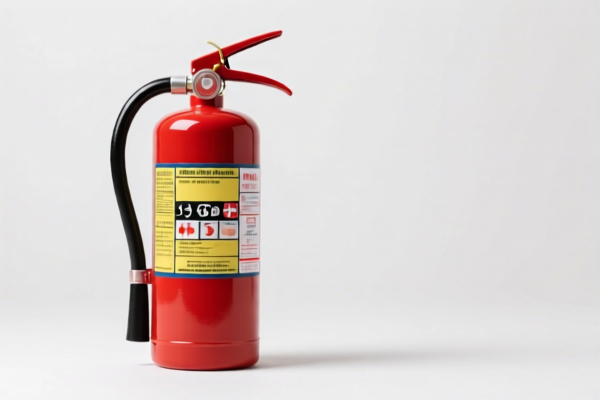
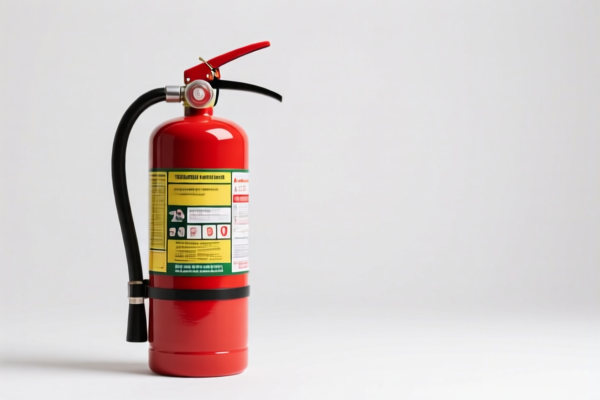
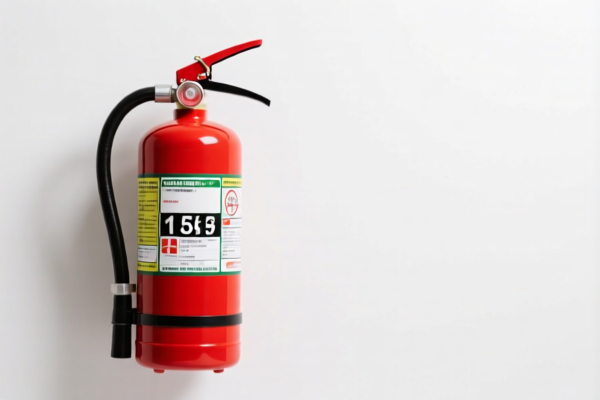

AI Analysis
🔥 DEF Fire Extinguishing Powder (Chemical Suppression Agents)
🌐 HS Code Reference & Customs Clearance Guide | 2026 Latest Tariff Analysis | Professional Entry Strategy
📌 I. Product Definition & Classification: What is "Fire Extinguishing Powder"?
DEF Fire Extinguishing Powder is a chemical agent designed for fire suppression. In international trade, its classification hinges on its chemical composition and primary function. It generally falls under Chapter 38 ("Miscellaneous Chemical Products"), specifically targeting chemical preparations for fire protection or disinfection.
⚠️ Key Distinction Point:
- If the product is primarily a chemical disinfectant/sterilizing agent that also has fire-suppressing properties, it may fall under 3808.
- If the product is explicitly a fire extinguishing agent (chemical preparation for fire protection), it falls under 3813.
- If the product is a specialized chemical mixture not elsewhere specified, it may fall under 3824.
📦 II. HS Code Classification Details (2026 Latest Tariff Authority Comparison)
Based on the provided data, here are the valid HS Code classifications for "DEF Fire Extinguishing Powder":
| HS Code | Summary/Reasoning | Tax Rate |
|---|---|---|
3808.99.95.01 |
Chemical Preparations: The powder is classified as a chemical preparation within the scope of "insecticides/fungicides/disinfectants." Form: Powder. | 40.0% |
3813.00.10.00 |
Fire Extinguishers: "Powder" matches the form; "Fire Suppression" matches the purpose "Fire Extinguishing Agents." | 35.0% |
3808.99.70.00 |
Chemical Disinfectants: "Powder" fits the chemical preparation form; "Fire Suppression" is treated as a广义 (broad) chemical disinfection/treatment agent. | 40.0% |
3824.99.39.90 |
Specialty Chemicals: "Powder" fits the form; "Fire Suppression" is considered a chemical industrial application. | 35.0% |
3813.00.50.00 |
Fire Extinguishing Agents: "Powder" matches the form; "Fire Suppression" perfectly aligns with the purpose "Fire Extinguishing Agents." | 38.7% |
🔍 Key Insight:
- 3813 Codes (3813.00.10.00,3813.00.50.00) are the most direct fit for "Fire Extinguishing" purposes.
- 3808 Codes (3808.99.95.01,3808.99.70.00) apply if the product is marketed or chemically defined more as a disinfectant/sterilizing agent with fire-suppressing capabilities.
- 3824 Code (3824.99.39.90) is a fallback for specialized chemical mixtures.
💰 III. 2026 Latest Tariff Rate Breakdown (Including Additional Duties)
✅ Applicable Country: United States (US)
✅ Origin: China (CN)
✅ Effective Date: Current tariffs apply (including Section 301 and IEEPA duties)
🎯 1. 3808.99.95.01 & 3808.99.70.00 – Chemical Disinfectants/Preparations
| Item | Details |
|---|---|
| Base Tariff | 5.0% (ad valorem) |
| Additional Tariff (Section 301) | +25.0% |
| 122 Clause Tariff (IEEPA) | +10.0% |
| Total Tariff Rate | 40.0% |
| Tax Calculation | CIF Value × 40% |
| De Minimis Exemption | ❌ Not Eligible (High tariff items usually excluded) |
| Legal Basis | USITC Footnotes for Chapter 38 + IEEPA Orders |
📌 Explanation:
- These codes are treated as chemical preparations with a higher base rate (5%).
- The total rate of 40% is driven by the 5% base + 25% Section 301 + 10% IEEPA.
- Risk: Higher base tax means higher absolute duty cost compared to 0% base codes.
🎯 2. 3813.00.10.00 & 3824.99.39.90 – Fire Extinguishers / Specialty Chemicals
| Item | Details |
|---|---|
| Base Tariff | 0.0% (ad valorem) |
| Additional Tariff (Section 301) | +25.0% |
| 122 Clause Tariff (IEEPA) | +10.0% |
| Total Tariff Rate | 35.0% |
| Tax Calculation | CIF Value × 35% |
| De Minimis Exemption | ❌ Not Eligible |
| Legal Basis | USITC Footnotes for Chapter 38 + IEEPA Orders |
📌 Explanation:
- These codes have a 0% base tariff, making them more cost-effective than 3808 codes.
- Total rate of 35% is due to 0% base + 25% Section 301 + 10% IEEPA.
- Recommendation: If the product can be classified under 3813.00.10.00, this is a strong candidate for lower duty costs.
🎯 3. 3813.00.50.00 – Fire Extinguishing Agents (Specific)
| Item | Details |
|---|---|
| Base Tariff | 3.7% (ad valorem) |
| Additional Tariff (Section 301) | +25.0% |
| 122 Clause Tariff (IEEPA) | +10.0% |
| Total Tariff Rate | 38.7% |
| Tax Calculation | CIF Value × 38.7% |
| De Minimis Exemption | ❌ Not Eligible |
| Legal Basis | USITC Footnotes for Chapter 38 + IEEPA Orders |
📌 Explanation:
- This is a middle-ground option.
- Total rate of 38.7% is higher than the 35% codes but lower than the 40% codes.
- Use this if the specific subheading for "Fire Extinguishing Agents" requires a 3.7% base.
🛠️ IV. Customs Clearance Practical Advice (Real-World Pitfall Avoidance)
✅ 1. Documentation Checklist (Essential)
| Document | Required? | Notes |
|---|---|---|
| ✅ Product Specification Sheet | ✔️ | Must detail chemical composition (e.g., monoammonium phosphate, sodium bicarbonate). |
| ✅ Safety Data Sheet (SDS) | ✔️ | Critical for hazardous chemical classification. |
| ✅ Product Photos (Label & Bulk) | ✔️ | Show "Fire Extinguishing Powder" and any hazard symbols. |
| ✅ Commercial Invoice | ✔️ | Clearly state "Fire Extinguishing Powder" and HS Code. |
| ✅ Origin Certificate | ✔️ | To confirm China origin for tariff calculations. |
| ✅ Packing List | ✔️ | Weight and volume details. |
✅ 2. Declaration Tips (Key Phrases)
🔥 "Chemical Nature + Fire Suppression Purpose"
| Scenario | Correct Declaration | Risk of Incorrect |
|---|---|---|
| General Fire Powder | "Fire Extinguishing Powder, Chemical Preparation" → 3813.00.10.00 |
Misclassification as 3808 → +5% Base Tax |
| Disinfectant with Fire Properties | "Chemical Disinfectant, Powder Form" → 3808.99.95.01 |
N/A if purpose is disinfection |
| Specialty Chemical Mix | "Specialty Chemical Mixture for Fire Suppression" → 3824.99.39.90 |
If not truly specialty, risk of audit |
📌 Note:
- Ensure the primary purpose is clearly stated as fire suppression to justify 3813 codes.
- If the product is also sold as a disinfectant, 3808 codes may apply, but with higher base taxes.
✅ 3. Special Cases
| Scenario | Handling Advice |
|---|---|
| OEM Custom Powder | Provide customer specs + chemical analysis to justify HS Code. |
| Bulky Powder vs. Canister | Declare as powder, not as a "fire extinguisher device" (which might be 8306 or 9032). |
| Hazardous Material | Ensure proper UN packaging and IMDG/ DOT labeling if shipping by sea/air. |
🌍 V. Global Market Comparison (2026 Latest)
| Country/Region | Recommended HS Code | Tariff (China Origin) | Certification | Notes |
|---|---|---|---|---|
| 🇺🇸 USA | 3813.00.10.00 |
35% (0% Base + 25% + 10%) | No specific | High Section 301 impact |
| 🇨🇳 China | 3813.00.10.00 |
~1% - 5% | No special | Low import duty |
| 🇪🇺 EU | 3813.00.00 |
0% - 2% | CLP/GHS Labeling | No Section 301 |
| 🇬🇧 UK | 3813.00.00 |
0% - 2% | UKCA Labeling | Post-Brexit rules |
| 🇦🇺 Australia | 3813.00.00 |
5% | ADR Labeling | No high additional taxes |
📌 Conclusion:
- USA imposes significant additional tariffs (35% total) on Chinese-origin fire extinguishing powders.
- EU/UK/Australia have much lower or zero tariffs, but strict chemical labeling (CLP/GHS) requirements.
📌 VI. Common Errors & Pitfalls (Lessons Learned)
❌ Error 1: Declaring as "Fire Extinguisher" (the device) instead of "Powder" (the chemical)
👉 Result: Wrong HS Code (e.g., 8306 or 9032), leading to incorrect duties and delays.
❌ Error 2: Ignoring the Base Tariff Difference
👉 Result: Using 3808 (5% base) when 3813 (0% base) is applicable → 5% unnecessary tax.
❌ Error 3: Failing to provide SDS
👉 Result: Customs holds shipment for chemical safety review → Storage fees and delays.
❌ Error 4: Misdeclaring "Fire Suppression" as "General Chemical"
👉 Result: Potential audit for misclassification → Penalties and back taxes.
✅ Correct Approach:
"Fire Extinguishing Powder, Monoammonium Phosphate, for Industrial Use, HS Code 3813.00.10.00, Origin China."
🎯 VII. Conclusion: Professional Declaration for Cost Efficiency
🎯 Key Takeaway:
🔹 Choose 3813 Codes if the primary function is fire suppression (0% base tax).
🔹 Choose 3808 Codes only if the product is primarily a disinfectant/sterilizing agent.
🔹 Total US Tariff: 35% (for 3813) vs. 40% (for 3808) vs. 38.7% (for 3813.50).📌 Pro Tip:
- Apply for Pre-Ruling from CBP if unsure about the primary purpose.
- Ensure SDS and Specs clearly highlight "Fire Extinguishing" to support 3813 classification.
📣 Immediate Action:
📞 Contact a licensed customs broker.
📄 Provide Product Specs + SDS.
🚀 Optimize for 3813.00.10.00 to minimize duty costs (35% vs. 40%).
✨ Accurate Classification Saves Money!
💼 Your Supply Chain Efficiency Starts with the Right HS Code!
Customer Reviews
About HS Code Classification
The Harmonized System (HS) is an internationally standardized nomenclature developed by the World Customs Organization (WCO) to classify traded products. Over 200 countries use the HS system as the basis for customs tariffs, trade statistics, and import/export regulations.
Each HS code follows a hierarchical structure:
- Chapter (2 digits) — Broad category of goods (e.g., Chapter 84: Machinery and Mechanical Appliances)
- Heading (4 digits) — More specific grouping within the chapter
- Subheading (6 digits) — Internationally standardized breakdown, used by all WCO member countries
- National subdivisions (8-10 digits) — Country-specific extensions for further classification, such as US HTSUS 10-digit codes
Correct HS code classification is essential for smooth customs clearance, accurate duty payment, and compliance with trade regulations. Misclassification can lead to customs delays, overpayment of duties, or penalties.
When importing from CN to US, the applicable tariff rates may include:
- Most-Favored-Nation (MFN) rate — The standard duty rate applied to WTO members
- General rate — Applied to countries without trade agreements
- Trade remedy duties — Additional tariffs such as Section 301 (anti-dumping), Section 232 (national security), or countervailing duties
The information provided on this page is for reference purposes only. For official classification, please consult with your local customs authority or a licensed customs broker.