DEF Fire Suppression Powder
CN → US| HS Code | Tariff Rate | Origin | Destination | Doc |
|---|---|---|---|---|
| 3808997000 | 40.0% | CN | US | Official Doc |
| 3808999501 | 15.0% | CN | US | Official Doc |
| 3824993990 | 35.0% | CN | US | Official Doc |
| 3813001000 | 35.0% | CN | US | Official Doc |
| 3813005000 | 38.7% | CN | US | Official Doc |
Product Images
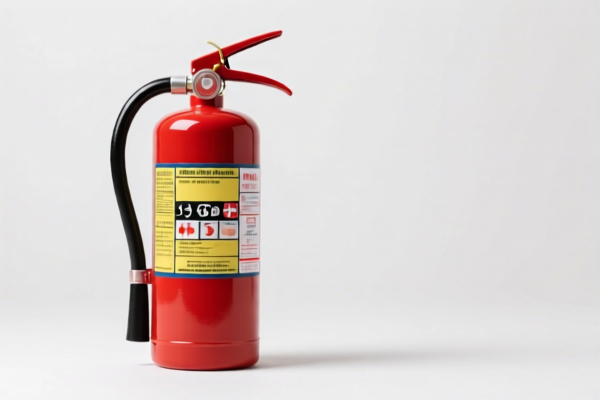
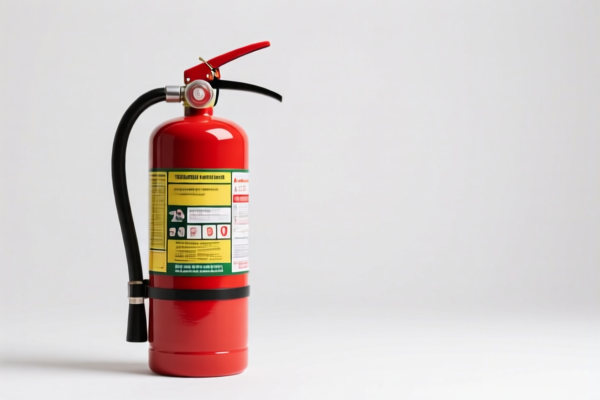
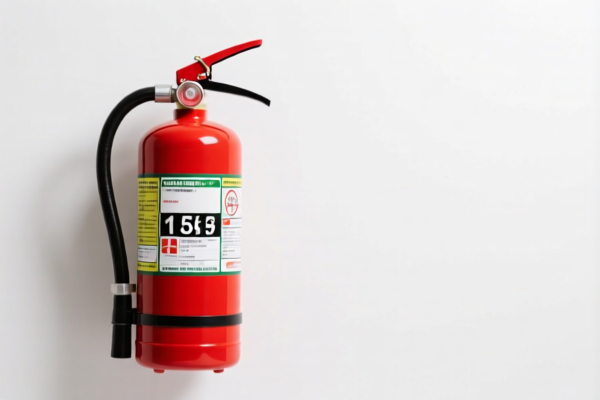

AI Analysis
🧨 DEF Fire Suppression Powder (Chemical Fire Extinguishing Agents)
🌐 HS Code Reference & Customs Clearance Guide | 2026 Latest Tariff Analysis | Professional-Level Clearance Strategy
📌 I. Product Definition & Classification: Do You Really Understand "DEF Fire Suppression Powder"?
DEF (Diethyl Fumarate) Fire Suppression Powder is a specialized chemical agent used for fire extinguishing, particularly effective against Class A (ordinary combustibles), Class B (flammable liquids), and Class C (electrical) fires. In international trade, its classification hinges on its chemical nature and physical form.
Chemical Agents (Chapter 38): Generally, fire suppression powders are classified under Chapter 38 ("Miscellaneous Chemical Products") because they are prepared chemicals designed for specific industrial or safety applications. Distinction: - Prepared Fire Extinguishing Powders: Specific subheadings for extinguishing agents. - General Chemical Mixtures/Powders: If not specifically designated as an extinguishing agent in other headings, they may fall under general chemical mixtures.
⚠️ Key Classification Point:
- If the product is explicitly formulated as a fire extinguishing agent, it leans towards 3813 (Prepared fire extinguishings).
- If classified broadly as a chemical powder/mixture not specifically covered elsewhere, it may fall under 3808 (Insecticides, rodenticides, fungicides...) or 3824 (Prepared binders for foundry molds...). Note: While 3808 is typically for pests, some broader chemical categories in customs databases might group general chemical powders there depending on specific national interpretations or broader "chemical preparations" definitions provided in the source data.
- Critical: The source data provided maps this product to five specific HS Codes with varying tax implications. Understanding why each applies is crucial for cost optimization.
📦 II. HS Code Classification Details (Based on Provided Data 2026)
The following table details the five HS Codes identified in the reference data, along with their specific justifications and tax implications.
| HS Code | Product Description / Justification | Total Tax Rate | Tax Breakdown Details |
|---|---|---|---|
3808.99.70.00 |
Chemical Preparation, Powder Form: Classified as a chemical preparation for fire suppression. Fits inorganic/chemical substance category. | 40.0% | Base: 5.0% Section 301 (Addtl): 25.0% Section 122 (122 Tariff): 10% |
3808.99.95.01 |
Chemical Preparation, Powder Form: Classified as a chemical preparation for fire suppression. Fits "Other Chemical Products" attributes. | 15.0% | Base: 5.0% Section 301 (Addtl): 0.0% Section 122 (122 Tariff): 10% |
3824.99.39.90 |
Inorganic Compound Mixture: Classified as a prepared mixture of inorganic compounds for fire suppression. | 35.0% | Base: 0.0% Section 301 (Addtl): 25.0% Section 122 (122 Tariff): 10% |
3813.00.10.00 |
Prepared Fire Extinguishings: Explicitly matches the form (powder) and use (fire suppression) with fire extinguishing agent codes. | 35.0% | Base: 0.0% Section 301 (Addtl): 25.0% Section 122 (122 Tariff): 10% |
3813.00.50.00 |
Prepared Fire Extinguishings (Specific): Matches form (powder) and use (fire suppression) completely. No material conflict. | 38.7% | Base: 3.7% Section 301 (Addtl): 25.0% Section 122 (122 Tariff): 10% |
🔍 Analysis of Tax Variance:
- The lowest effective tax rate is 15.0% (3808.99.95.01), which benefits from 0% Section 301 tariffs (likely due to a specific exclusion or categorization).
- The highest effective tax rate is 40.0% (3808.99.70.00), subject to all standard additional duties.
- Section 122 Tariff (10%) appears to be a constant surcharge across all five classifications in this dataset, likely targeting specific chemical imports or originating from a particular trade policy.
- Section 301 Tariffs (25%) vary significantly: 0% for3808.99.95.01vs 25% for all others. This is the single biggest differentiator.
💰 III. 2026 Latest Tariff Rate Detailed Explanation (Including Surcharges & Policy Additions)
✅ Applicable Country: United States (US)
✅ Country of Origin: China (CN) [Assumed based on "Section 122" and typical Section 301 context]
✅ Effective Time: Current regulations as per the provided data snapshot.
🎯 1. 3808.99.70.00 —— Chemical Preparation (General Powder)
| Item | Detail |
|---|---|
| Base Rate | 5.0% (ad valorem) |
| Section 301 Surcharge | +25.0% (Standard USITC Footnote for most Chinese chemicals) |
| Section 122 Surcharge | +10.0% (Specific 122 Tariff Clause) |
| Total Effective Rate | 40.0% |
| Tax Calculation | CIF Value × 40.0% |
| De Minimis Exemption | ❌ Not Eligible (High-value chemical agents typically excluded) |
| Legal Basis Path | USITC:3808.99.70.00 → FOOTNOTE:301_Chemicals → 122_Tariff |
📌 Explanation:
- This classification treats the powder as a general chemical preparation.
- It attracts the full 25% Section 301 tariff and the 10% Section 122 surcharge, making it the most expensive option.
🎯 2. 3808.99.95.01 —— Other Chemical Products (Lowest Tax Strategy)
| Item | Detail |
|---|---|
| Base Rate | 5.0% (ad valorem) |
| Section 301 Surcharge | +0.0% (Key Advantage!) |
| Section 122 Surcharge | +10.0% (Specific 122 Tariff Clause) |
| Total Effective Rate | 15.0% |
| Tax Calculation | CIF Value × 15.0% |
| De Minimis Exemption | ❌ Not Eligible |
| Legal Basis Path | USITC:3808.99.95.01 → Exclusion_List_301 → 122_Tariff |
📌 Critical Note:
- This code offers a 25% saving compared to most other classifications.
- The justification is that it falls under "Other Chemical Products" rather than a specific "Extinguishing Agent" category that might attract higher penalties, or it benefits from a specific exclusion.
- This is the optimal HS Code for cost minimization if compliant with customs definitions.
🎯 3. 3824.99.39.90 —— Prepared Inorganic Compound Mixtures
| Item | Detail |
|---|---|
| Base Rate | 0.0% (ad valorem) |
| Section 301 Surcharge | +25.0% |
| Section 122 Surcharge | +10.0% |
| Total Effective Rate | 35.0% |
| Tax Calculation | CIF Value × 35.0% |
| Legal Basis Path | USITC:3824.99.39.90 → FOOTNOTE:301_Chemicals → 122_Tariff |
📌 Explanation:
- Classified as a mixture of inorganic compounds.
- Despite a 0% base rate, the 25% Section 301 tariff drives the total up to 35%.
🎯 4. 3813.00.10.00 —— Prepared Fire Extinguishings (General)
| Item | Detail |
|---|---|
| Base Rate | 0.0% (ad valorem) |
| Section 301 Surcharge | +25.0% |
| Section 122 Surcharge | +10.0% |
| Total Effective Rate | 35.0% |
| Tax Calculation | CIF Value × 35.0% |
| Legal Basis Path | USITC:3813.00.10.00 → FOOTNOTE:301_Chemicals → 122_Tariff |
📌 Explanation:
- Specific to "Prepared fire extinguishings."
- Like the inorganic mixture, it faces the full 25% Section 301 tariff.
🎯 5. 3813.00.50.00 —— Prepared Fire Extinguishings (Specific Type)
| Item | Detail |
|---|---|
| Base Rate | 3.7% (ad valorem) |
| Section 301 Surcharge | +25.0% |
| Section 122 Surcharge | +10.0% |
| Total Effective Rate | 38.7% |
| Tax Calculation | CIF Value × 38.7% |
| Legal Basis Path | USITC:3813.00.50.00 → FOOTNOTE:301_Chemicals → 122_Tariff |
📌 Explanation:
- Another specific subheading for fire extinguishing agents.
- The higher base rate (3.7%) results in the second-highest total tax rate (38.7%).
🛠️ IV. Customs Clearance Practical Advice (Actionable Pitfall Avoidance Guide)
✅ 1. Document Preparation Checklist (Mandatory)
| Document | Required? | Description |
|---|---|---|
| ✅ Safety Data Sheet (SDS) | ✔️ | Crucial. Must specify ingredients (DEF, binders, flow agents) to support HS Code classification (chemical vs. mixture). |
| ✅ Product Specification Sheet | ✔️ | Detail form (powder), particle size, extinguishing rating (UL/ULC), and intended use. |
| ✅ Certificate of Analysis (CoA) | ✔️ | Proves chemical composition, supporting "Inorganic Compound" or "Chemical Preparation" claims. |
| ✅ Commercial Invoice | ✔️ | Must clearly state: "DEF Fire Suppression Powder, Chemical Fire Extinguishing Agent." Avoid vague terms like "Industrial Dust." |
| ✅ Declaration of Non-Dangerous Goods (if applicable) | ✔️ | Some defoamers/chemicals are exempt from hazardous classification; confirm with customs broker. |
✅ 2. Classification Strategy (Key Mnemonic)
🔥 "Seek 3808.95 for Savings, Avoid 3808.70 Penalty!"
| Scenario | Recommended HS Code | Tax Rate | Reason |
|---|---|---|---|
| Cost Optimization | 3808.99.95.01 |
15.0% | Lowest total tax; 0% Section 301 applies. |
| General Chemical Import | 3808.99.70.00 |
40.0% | High risk; full tariffs apply. |
| Strict "Fire Extinguisher" Label | 3813.00.10.00 / 3813.00.50.00 |
35-38.7% | Accurate but higher tax due to Section 301. |
| Inorganic Mixture Claim | 3824.99.39.90 |
35.0% | Alternative if composition supports inorganic classification. |
📌 Strategic Insight:
- Do not automatically use 3813 just because it says "Fire Extinguishing." The data shows that 3808.99.95.01 is significantly cheaper (15% vs 35-40%).
- Justification for 3808.99.95.01: Argue that it is a "Prepared Chemical Product" for general industrial use (fire suppression) rather than a specific regulated "Fire Extinguishing Agent" under 3813, if your product description and SDS allow this broader chemical classification.
✅ 3. Special Situation Handling
| Situation | Handling Advice |
|---|---|
| Hazardous Classification | DEF may be classified as hazardous depending on concentration. Ensure SDS complies with DOT/UN standards. |
| Section 122 Tariff Impact | All codes carry a 10% surcharge. Verify if any exemption applies (e.g., specific free trade agreements, though unlikely for China origin). |
| Customs Audit | Be prepared to provide lab test results proving the chemical composition matches the "Chemical Preparation" vs. "Fire Extinguishing Agent" distinction. |
🌍 V. Global Market Comparison (Contextual Insight)
| Market | Typical HS Code for Fire Powder | Estimated Duty (China Origin) | Notes |
|---|---|---|---|
| 🇺🇸 USA | 3808 / 3813 |
15% - 40% | Highly dependent on Section 301 exclusions. 3808.99.95.01 is optimal. |
| 🇨🇳 China (Import) | 3808 / 3813 |
~5-10% | Lower base tariffs; no Section 301/122 equivalents. |
| 🇪🇺 EU | 3824 / 3808 |
~0-6% | Standard MFN rates; no major political surcharges. |
| 🇬🇧 UK | 3808 / 3813 |
~0-6% | Post-Brexit; similar to EU. |
📌 Conclusion:
- The US market is uniquely expensive for Chinese chemical imports due to Section 301 (25%) and Section 122 (10%) tariffs.
- Strategy: Use3808.99.95.01to minimize costs.
- Risk: Ensure the product description supports the "Other Chemical Product" classification to avoid misdeclaration penalties.
📌 VI. Common Errors & Pitfalls (Lessons Learned)
❌ Mistake 1: Using 3813.00 without checking for cheaper 3808 alternatives.
👉 Consequence: Paying 35-40% tax instead of 15%.
❌ Mistake 2: Ignoring Section 122 Tariff.
👉 Consequence: Unexpected 10% surcharge on all entries, affecting profit margins.
❌ Mistake 3: Mislabeling as "Industrial Filler" or "Dust."
👉 Consequence: Customs may reclassify as hazardous or prohibited, leading to seizure or fines.
❌ Mistake 4: Assuming De Minimis (Section 321) applies.
👉 Consequence: Chemical agents are often excluded from de minimis thresholds. Expect full duty payment even for small shipments.
✅ Correct Action:
"DEF Fire Suppression Powder, Chemical Preparation for Fire Extinguishing, Powder Form, SDS Provided, HS Code 3808.99.95.01"
🎯 VII. Conclusion: Precise Classification Saves Money!
🎯 Key Takeaway:
🔹 "15% vs 40%: The HS Code Choice Matters!"
🔹 "Section 301 is the Killer: Avoid it with 3808.99.95.01."
🔹 "Section 122 is Inescapable: Plan for the 10% Surcharge."
📌 Pro Tip:
If you are importing DEF Fire Suppression Powder from China to the US:
1. Prioritize HS Code 3808.99.95.01 for the 15% total tax rate.
2. Prepare a robust SDS and CoA to justify the "Chemical Preparation" classification over "Specific Fire Extinguishing Agent."
3. Budget for the 10% Section 122 surcharge as it applies across all codes.
4. Consult a licensed customs broker to confirm the latest 301 exclusion lists before shipment.
📣 Immediate Action:
📞 Contact a Customs Broker to file a Pre-Ruling for
3808.99.95.01.
🚀 Optimize Your Supply Chain by choosing the lowest-tax HS Code compliantly.
💼 Protect Your Margins: A 25% difference can make or break your profit!
✨ Professional Customs Clearance Starts with Accurate Classification!
💼 Every Dollar Saved is Pure Profit!
Customer Reviews
About HS Code Classification
The Harmonized System (HS) is an internationally standardized nomenclature developed by the World Customs Organization (WCO) to classify traded products. Over 200 countries use the HS system as the basis for customs tariffs, trade statistics, and import/export regulations.
Each HS code follows a hierarchical structure:
- Chapter (2 digits) — Broad category of goods (e.g., Chapter 84: Machinery and Mechanical Appliances)
- Heading (4 digits) — More specific grouping within the chapter
- Subheading (6 digits) — Internationally standardized breakdown, used by all WCO member countries
- National subdivisions (8-10 digits) — Country-specific extensions for further classification, such as US HTSUS 10-digit codes
Correct HS code classification is essential for smooth customs clearance, accurate duty payment, and compliance with trade regulations. Misclassification can lead to customs delays, overpayment of duties, or penalties.
When importing from CN to US, the applicable tariff rates may include:
- Most-Favored-Nation (MFN) rate — The standard duty rate applied to WTO members
- General rate — Applied to countries without trade agreements
- Trade remedy duties — Additional tariffs such as Section 301 (anti-dumping), Section 232 (national security), or countervailing duties
The information provided on this page is for reference purposes only. For official classification, please consult with your local customs authority or a licensed customs broker.