DIY Photo Album
CN → US| HS Code | Tariff Rate | Origin | Destination | Doc |
|---|---|---|---|---|
| 4911998000 | 17.5% | CN | US | Official Doc |
| 4911914040 | 17.5% | CN | US | Official Doc |
| 4820500000 | 35.0% | CN | US | Official Doc |
| 4820900000 | 35.0% | CN | US | Official Doc |
Product Images

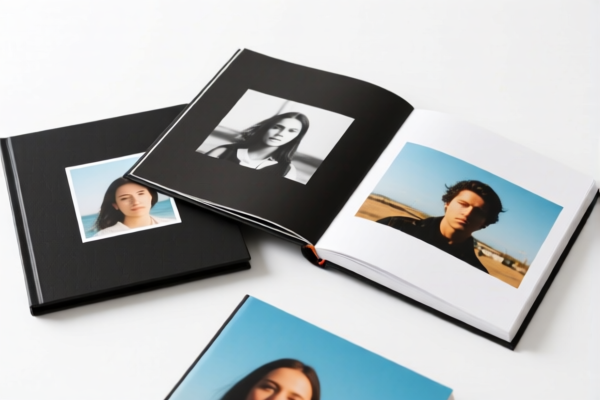
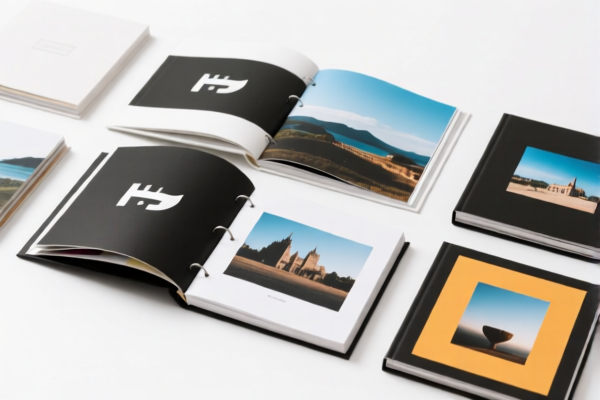

AI Analysis
📸 DIY Photo Album (Blank/Customizable Photo Books)
🌐 HS Code Reference & Clearance Guide | 2026 Tax Analysis | Expert Customs Strategy
📌 I. Product Definition & Classification: Do You Know "DIY Photo Album"?
A DIY Photo Album is a versatile, open-ended product used for personalizing memories. In international trade, it is classified based on its physical form and intended use:
-
General Print Products (Blank Paper): If the product is strictly blank pages with binding, often used as a scrapbook base or a simple notebook.
- Classification Logic: Treated as a standard printed or paper-based item.
- HS Codes: 4911.99.80.00 / 4911.91.40.40
-
Specialized Album/Collection Book: If the product is explicitly shaped, bound, and designed as an album or collection book (e.g., with slots for photos, decorative covers, or rigid structure).
- Classification Logic: Treated as a specific "Album" category, distinct from general paper products.
- HS Codes: 4820.50.00.00 / 4820.90.00.00
⚠️ Key Distinction Point:
- If the product is marketed as a "Blank Notebook" or "Scrapbook Base" (general use) → Likely 4911.x.
- If the product is marketed explicitly as an "Album", "Photo Album", or "Collector's Book" (dedicated use) → Likely 4820.x.
- Critical Note: The "4820" codes carry a significantly higher tax burden (35%) compared to "4911" codes (17.5%), making accurate description vital.
📦 II. HS Code Classification Details (2026 Tax Book Authority)
| HS Code | Product Description | Category Summary | Material/Form |
|---|---|---|---|
| 4911.99.80.00 | Other printed products, not elsewhere specified (General Paper) | "Other Printed Products" | Paper/Cardboard, General Print |
| 4911.91.40.40 | Printed pictures, designs, or photos (Image-focused) | "Printed Pictures/Designs" | Paper/Cardboard, Image/Photo Print |
| 4820.50.00.00 | Blank or printed albums (Photo/Collection Albums) | "Alboms/Collection Albums" | Paper/Cardboard, Album Form |
| 4820.90.00.00 | Other albums (Sample or Collection Albums) | "Sample/Collection Albums" | Paper/Cardboard, Album Form |
🔍 Critical Warning:
- 4820 Series: If your product is sold specifically as a "Photo Album" with a binding designed to hold photos (even if empty), customs often prefer 4820. This triggers a 35% total tax rate. - 4911 Series: If the product is a generic "notebook" or "sketchbook" that can be used for photos but isn't structurally an "album," it may fall under 4911. This triggers a 17.5% total tax rate. - Do Not Split: Do not declare "Album" items as "Paper" to evade higher taxes; this leads to audits and penalties.
💰 III. 2026 Tax Rate Breakdown (Detailed Tariff Analysis)
✅ Applicable Market: USA (US)
✅ Origin: China (CN)
✅ Effective Date: Current Policy (Includes 25% & 10% surcharges)
🎯 1. 4911.99.80.00 & 4911.91.40.40 — General Printed Products / Images
| Item | Detail |
|---|---|
| Base Tariff | 0.0% |
| Section 301 Surcharge | +7.5% (Additional US Tariff) |
| Section 122 (IEEPA) Surcharge | +10.0% (China-specific emergency tariff) |
| Total Tax Rate | 17.5% |
| Tax Calculation | CIF Value × 17.5% |
| De Minimis Exemption | ❌ NO (Not exempt) |
| Legal Basis | USITC:4911 → Section 301:7.5% → Section 122:10% |
📌 Explanation:
- 0% Base: The standard Most Favored Nation (MFN) rate is zero for printed goods. - 7.5% Addition: This is the "Section 301" additional tariff applied to specific Chinese goods. - 10% Addition: This is the "Section 122" tariff (often linked to Executive Order 13936 or related trade measures) targeting Chinese imports. - Total: 17.5% is the effective duty rate.
🎯 2. 4820.50.00.00 & 4820.90.00.00 — Albums & Collection Books
| Item | Detail |
|---|---|
| Base Tariff | 0.0% |
| Section 301 Surcharge | +25.0% (Significant Additional Tariff) |
| Section 122 (IEEPA) Surcharge | +10.0% (China-specific emergency tariff) |
| Total Tax Rate | 35.0% |
| Tax Calculation | CIF Value × 35.0% |
| De Minimis Exemption | ❌ NO (Not exempt) |
| Legal Basis | USITC:4820 → Section 301:25% → Section 122:10% |
📌 Explanation:
- 0% Base: Standard MFN rate is zero. - 25% Addition: "Albums" (4820) face a much higher Section 301 surcharge (25%) compared to general prints (7.5%). This is the critical difference! - 10% Addition: Same Section 122 China tariff applies. - Total: 35.0%. This is nearly DOUBLE the cost of the 4911 classification.
🛠️ IV. Customs Clearance Practical Advice (Pitfall Avoidance)
✅ 1. Preparation Checklist (Must-Haves)
| Document | Required? | Details |
|---|---|---|
| Product Specification | ✅ | Must clearly state "Blank Pages," "No Pre-printed Photos," "Binding Type." |
| Photographs | ✅ | Show the cover, spine, and internal structure (slots vs. plain paper). |
| Material Composition | ✅ | Confirm: 100% Paper/Cardboard? Or mixed with plastic/leather (which changes HS)? |
| Commercial Invoice | ✅ | Description must match HS Code (e.g., "DIY Photo Album" vs. "Paper Notebook"). |
| Origin Certificate | ✅ | Essential for proving China origin to apply the correct surcharges. |
| Customs Declaration | ✅ | Ensure the description matches the HS Code logic exactly. |
✅ 2. Declaration Strategy (The Golden Rules)
🔥 Rule: "Form Dictates Duty"
- If the item is a DIY Book (just blank paper bound): Declare as 4911.99.80.00 (17.5% Tax).
- If the item is a Photo Album (has pockets, sleeves, or specific album branding): Declare as 4820.50.00.00 (35% Tax).
- DO NOT try to misclassify an "Album" as a "Notebook" to save money. Customs officers are trained to spot "Album" structures. Misclassification leads to seizure, fines, and back-taxes.
| Scenario | Correct Classification | Tax Rate | Risk of Error |
|---|---|---|---|
| Blank Notebook (No photo slots) | 4911.99.80.00 |
17.5% | Low (if truly blank) |
| Photo Album (With sleeves/pockets) | 4820.50.00.00 |
35.0% | High (if misdeclared) |
| Printed Design Album (Pre-printed pics) | 4911.91.40.40 |
17.5% | Medium (if structure is "Album") |
| Generic Sketchbook | 4911.99.80.00 |
17.5% | Low |
✅ 3. Special Situations
| Situation | Advice |
|---|---|
| Mixed Orders | If selling both "Notebooks" and "Albums," declare them separately. Do not lump them under one code. |
| Custom Printed | If the "DIY" album comes with some pre-printed decorative pages, it might still fall under 4820 if the primary function is an album. |
| Material Change | If the album cover is Leather or Plastic (not just paper/cardboard), the HS Code changes entirely (e.g., to 4820 or 4202). Check material composition! |
🌍 V. Market Comparison (2026 Context)
| Region | Recommended HS Code | Total Tax (China Origin) | Notes |
|---|---|---|---|
| 🇺🇸 USA | 4911.99.80.00 |
17.5% | Best for blank notebooks. |
| 🇺🇸 USA | 4820.50.00.00 |
35.0% | Mandatory for true Albums. |
| 🇪🇺 EU | 4820.10.00 |
~2.5% | Lower base rates, no Section 122/301. |
| 🇨🇦 Canada | 4820.10.00 |
~0% | CETA/CUSMA benefits may apply. |
📌 Conclusion:
USA Market is the Hardest: The 35% tax on albums (4820) is a massive barrier.
Strategy: If possible, market the product as a "Blank Sketchbook" (4911) to utilize the 17.5% rate, provided the structure is not explicitly an "Album" with photo slots.
📌 VI. Common Errors & Avoidance Guide (Lessons Learned)
❌ Mistake 1: Calling a "Photo Album" with photo pockets a "Paper Book."
👉 Consequence: Customs audits, back-payment of 17.5% difference, plus fines.
❌ Mistake 2: Using "Printed Pictures" code (4911.91.40.40) for a blank album with a cover design.
👉 Consequence: If the album structure dominates, it should be 4820.
❌ Mistake 3: Ignoring the "Section 122" + "Section 301" combination.
👉 Consequence: Underestimating the total duty by ~25%.
✅ Correct Action:
"DIY Photo Album (Blank Pages, 3-Ring Binder, Paper/Cardboard Cover)" → Check if it has photo slots.
- No slots →4911.99.80.00(17.5%).
- Has slots →4820.50.00.00(35.0%).
🎯 VII. Conclusion: Precision Pays Off!
🎯 Remember the Mantra:
🔹 "Blank = 17.5% (4911)"
🔹 "Album (Slots/Pockets) = 35% (4820)"
🔹 "Structure Matters More Than Name!"
📌 Pro Tip:
If your product is a "Scrapbook" (blank pages, no photo pockets), declare it as 4911.99.80.00 to save 17.5% in taxes.
If you must sell an "Album", prepare for the 35% duty and price accordingly.
📣 Immediate Action:
📞 Contact Customs Broker with clear photos of the interior pages (to prove "no slots").
🚀 Verify HS Code before shipping to avoid 35% surprise!
✨ Professional Clearance Starts with the Right Classification!
💼 Every dollar saved on duty is pure profit!
Customer Reviews
About HS Code Classification
The Harmonized System (HS) is an internationally standardized nomenclature developed by the World Customs Organization (WCO) to classify traded products. Over 200 countries use the HS system as the basis for customs tariffs, trade statistics, and import/export regulations.
Each HS code follows a hierarchical structure:
- Chapter (2 digits) — Broad category of goods (e.g., Chapter 84: Machinery and Mechanical Appliances)
- Heading (4 digits) — More specific grouping within the chapter
- Subheading (6 digits) — Internationally standardized breakdown, used by all WCO member countries
- National subdivisions (8-10 digits) — Country-specific extensions for further classification, such as US HTSUS 10-digit codes
Correct HS code classification is essential for smooth customs clearance, accurate duty payment, and compliance with trade regulations. Misclassification can lead to customs delays, overpayment of duties, or penalties.
When importing from CN to US, the applicable tariff rates may include:
- Most-Favored-Nation (MFN) rate — The standard duty rate applied to WTO members
- General rate — Applied to countries without trade agreements
- Trade remedy duties — Additional tariffs such as Section 301 (anti-dumping), Section 232 (national security), or countervailing duties
The information provided on this page is for reference purposes only. For official classification, please consult with your local customs authority or a licensed customs broker.