DIY Toys
CN → US| HS Code | Tariff Rate | Origin | Destination | Doc |
|---|---|---|---|---|
| 9503000073 | 10.0% | CN | US | Official Doc |
| 4823700040 | 35.0% | CN | US | Official Doc |
| 3926909989 | 22.8% | CN | US | Official Doc |
| 9503000071 | 10.0% | CN | US | Official Doc |
| 4823908680 | 35.0% | CN | US | Official Doc |
| 3926100000 | 15.3% | CN | US | Official Doc |
Product Images
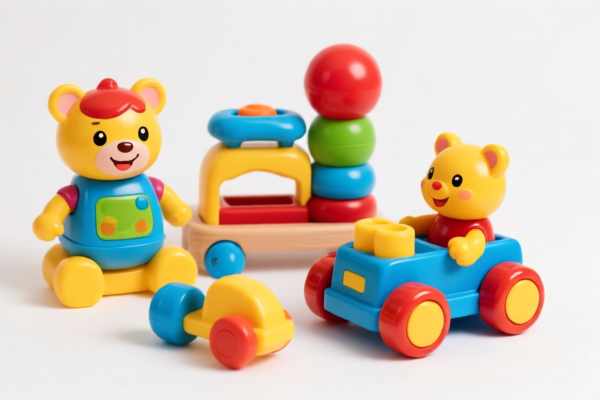
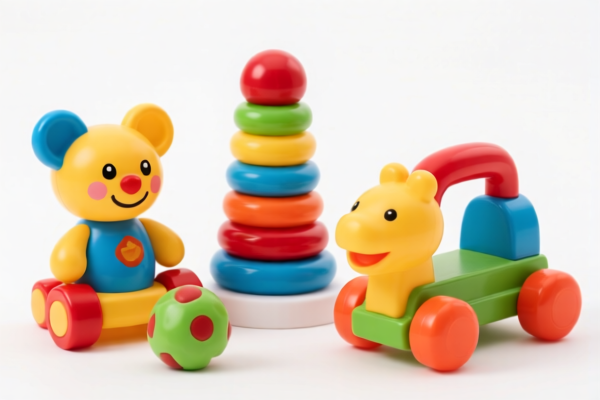
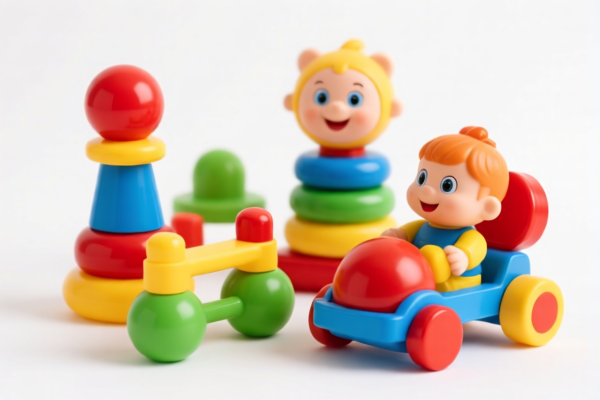
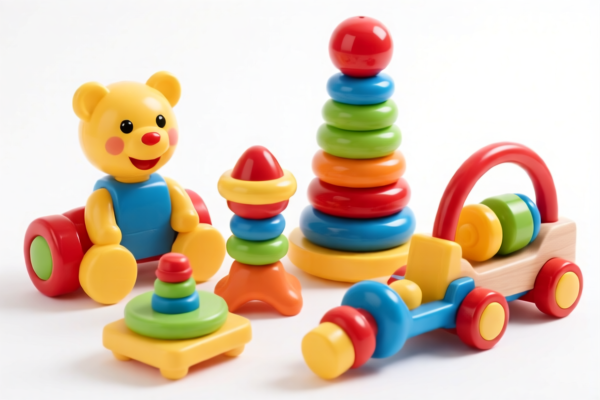
AI Analysis
🎯 DIY Toys – Comprehensive HS Code & Tariff Guide (2026 Edition)
🌐 HS Code Classification & Customs Clearance Strategy | 2026 Latest Tariff Rules | Pro-Level Import Planning
📌 One Product, Multiple Classifications – Know Which One Applies to You!
DIY Toys are not just toys – they’re creative kits that combine craftsmanship, education, and fun. Depending on their material composition, intended use, and physical structure, they can fall under multiple HS Codes, each with drastically different tariffs.
⚠️ Critical Insight:
- Plastic-based DIY kits → Likely fall under 9503.00.00.71/73 (low tax)
- Paper/pulp-based kits → May be classified under 4823.70.00.40 or 4823.90.86.80 (high tax)
- Plastic molded kits → Could be caught in 3926.90.99.89 or 3926.10.00.00 (moderate to high tax)🔥 The Real Risk?
Misclassifying a plastic DIY toy as a paper-based one can increase your tariff from 10% to 35% – a 250% jump in import cost!
📦 二、HS Code Classification Breakdown (2026 Official Tariff Matrix)
| HS Code | Product Description | Material/Use Match | Tax Risk | Key Clue |
|---|---|---|---|---|
9503.00.00.73 |
DIY toys with toy-like function, made of plastic or wood | ✅ Matches toy purpose and material | 🟢 10.0% | “Toy” in name, function, or packaging |
4823.70.00.40 |
Other paper pulp molded or pressed articles (non-woven) | ✅ If made from paper pulp or molded paper | 🔴 35.0% | “Pulp,” “paper molded,” “biodegradable” in description |
3926.90.99.89 |
Other plastic articles not elsewhere specified | ✅ If plastic but not in other subheadings | 🟡 22.8% | "Plastic kit," "molded plastic parts" |
9503.00.00.71 |
Other toys, not elsewhere specified, for children | ✅ Best fit for most DIY toys | 🟢 10.0% | Matches toy purpose, no conflict with material |
4823.90.86.80 |
Other paper-based articles, not elsewhere specified | ✅ If made from paperboard, cardboard, or paper | 🔴 35.0% | “Paper craft,” “cardboard model,” “foldable” |
3926.10.00.00 |
Plastic articles, not elsewhere specified, for children | ✅ If plastic and child-oriented | 🟡 15.3% | "Plastic model kit," "child-friendly plastic parts" |
📌 Key Rule:
- If the toy is clearly for children and designed to be assembled, 9503.00.00.71 is most accurate and lowest tax. - If it’s paper-based, even if it’s a “toy,” 4823.70.00.40 or 4823.90.86.80 may apply – but at 35%.
💰 三、2026 Tariff Breakdown – The Full Tax Formula (US Market)
✅ Applicable Country: United States (US)
✅ Origin: China (CN)
✅ Effective Date: November 10, 2025 (post-2025 tariff update)
🎯 1. 9503.00.00.73 – DIY Toy (Plastic/Wood, Toy Purpose)
| Tax Component | Rate | Legal Basis |
|---|---|---|
| Basic Duty | 0.0% | Ad valorem |
| Section 301 (USITC) Tariff | 0.0% | Not listed under 301 List 3 |
| Section 122 (IEEPA) Tariff | 10.0% | IEEPA: 9903.01.25 |
| Total Tax | 10.0% | CIF × 10% |
| De Minimis Exemption? | ❌ No (deny_de_minimis) | |
| Legal Path | IEEPA:9903.01.25 → 9503.00.00.73 |
📌 Why This Is the Best Option:
- No 301 tariff (unlike many plastic goods)
- Only 10% IEEPA applies
- Best for plastic or wooden DIY kits with toy function
🎯 2. 4823.70.00.40 – Paper Pulp/Pressed Articles (DIY Paper Kits)
| Tax Component | Rate | Legal Basis |
|---|---|---|
| Basic Duty | 0.0% | Ad valorem |
| Section 301 (USITC) Tariff | 25.0% | USITC: 9903.88.01 |
| Section 122 (IEEPA) Tariff | 10.0% | IEEPA: 9903.01.25 |
| Total Tax | 35.0% | CIF × 35% |
| De Minimis Exemption? | ❌ No | |
| Legal Path | IEEPA:9903.01.25 → USITC:9903.88.01 → 4823.70.00.40 |
📌 Warning:
- Even if it’s a “toy,” if made from paper pulp or molded paper, this 35% rate applies
- Common in eco-friendly or biodegradable DIY kits
🎯 3. 3926.90.99.89 – Other Plastic Articles (Non-Toy, Non-Specified)
| Tax Component | Rate | Legal Basis |
|---|---|---|
| Basic Duty | 5.3% | Ad valorem |
| Section 301 (USITC) Tariff | 7.5% | USITC: 9903.88.01 |
| Section 122 (IEEPA) Tariff | 10.0% | IEEPA: 9903.01.25 |
| Total Tax | 22.8% | CIF × 22.8% |
| De Minimis Exemption? | ❌ No | |
| Legal Path | IEEPA:9903.01.25 → USITC:9903.88.01 → 3926.90.99.89 |
📌 When This Applies:
- Plastic DIY kit not clearly for children
- No “toy” labeling or function
- Higher risk of audit if misclassified
🎯 4. 9503.00.00.71 – Best Fit for Most DIY Toys
| Tax Component | Rate | Legal Basis |
|---|---|---|
| Basic Duty | 0.0% | Ad valorem |
| Section 301 (USITC) Tariff | 0.0% | Not on 301 List 3 |
| Section 122 (IEEPA) Tariff | 10.0% | IEEPA: 9903.01.25 |
| Total Tax | 10.0% | CIF × 10% |
| De Minimis Exemption? | ❌ No | |
| Legal Path | IEEPA:9903.01.25 → 9503.00.00.71 |
✅ Why This Is the Gold Standard:
- Matches toy purpose, child use, assembled function
- Only 10% total tax
- No 301 tariff
- Most accurate classification for typical DIY kits
🎯 5. 4823.90.86.80 – Other Paper Articles (Cardboard, Paperboard Kits)
| Tax Component | Rate | Legal Basis |
|---|---|---|
| Basic Duty | 0.0% | Ad valorem |
| Section 301 (USITC) Tariff | 25.0% | USITC: 9903.88.01 |
| Section 122 (IEEPA) Tariff | 10.0% | IEEPA: 9903.01.25 |
| Total Tax | 35.0% | CIF × 35% |
| De Minimis Exemption? | ❌ No | |
| Legal Path | IEEPA:9903.01.25 → USITC:9903.88.01 → 4823.90.86.80 |
📌 Red Flag:
- If your kit uses cardboard, paperboard, or foldable paper, this 35% rate applies
- Even if it’s “a toy,” material overrides function
🎯 6. 3926.10.00.00 – Plastic Articles for Children
| Tax Component | Rate | Legal Basis |
|---|---|---|
| Basic Duty | 5.3% | Ad valorem |
| Section 301 (USITC) Tariff | 0.0% | Not on 301 List 3 |
| Section 122 (IEEPA) Tariff | 10.0% | IEEPA: 9903.01.25 |
| Total Tax | 15.3% | CIF × 15.3% |
| De Minimis Exemption? | ❌ No | |
| Legal Path | IEEPA:9903.01.25 → 3926.10.00.00 |
✅ Best for Plastic Kits for Kids
- Lower than 22.8%
- No 301 tariff
- But higher than 10% – so only use if 9503.00.00.71 is not applicable
🛠️ 四、Customs Clearance Pro Tips (Avoid 35% Tax Trap!)
✅ 1. Must-Have Documentation (No Exceptions)
| Document | Required? | Why It Matters |
|---|---|---|
| ✅ Product Photos (clear, with assembly) | ✔️ | Prove it’s a toy, not a paper craft |
| ✅ Material Certificate (plastic/paper/pulp) | ✔️ | Prevent misclassification |
| ✅ Instruction Manual (in English) | ✔️ | Show child use, assembling function |
| ✅ Commercial Invoice | ✔️ | Must say: “DIY Toy Kit for Children, Plastic/Wood” |
| ✅ Certificate of Origin (CO) | ✔️ | If from China, IEEPA applies |
| ✅ Packing List | ✔️ | Show whole kit, not broken down |
| ✅ Third-Party Test Report (RoHS, CPSIA) | ✔️ | Avoid rejection for safety issues |
✅ 2.申报技巧(Key Rules)
🔥 “Toy Purpose > Material > Packaging” – The Golden Rule!
| Scenario | Correct HS Code | Wrong Code | Risk |
|---|---|---|---|
| Plastic DIY kit for kids | 9503.00.00.71 |
3926.10.00.00 |
5.3% extra tax |
| Paper-based kit (cardboard) | 4823.90.86.80 |
9503.00.00.71 |
+25% tax! |
| Plastic kit with toy function | 9503.00.00.71 |
3926.90.99.89 |
+12.8% tax |
| Wood-based DIY kit | 9503.00.00.73 |
4823.70.00.40 |
25% tax jump |
✅ Pro Tip:
- Always use9503.00.00.71if it’s for children, assembled, and toy-like
- Only use paper codes if material is truly paper pulp or cardboard
✅ 3. Special Cases & Fixes
| Case | Solution |
|---|---|
| Eco-friendly paper kit | Still classify as 4823.90.86.80 → 35% tax. No escape. |
| Mixed material (plastic + paper) | Use the dominant material. If plastic > 50%, use plastic code. |
| Kit sold as "craft" not "toy" | Risk: 3926.90.99.89 or 4823.70.00.40 → 22.8% or 35% |
| Custom-designed kit for adults | May not qualify as 9503 → Use 3926.90.99.89 → 22.8% |
🌍 五、Global Market Tariff Comparison (2026)
| Country | Recommended HS Code | Tariff | Certification | Notes |
|---|---|---|---|---|
| 🇺🇸 USA | 9503.00.00.71 |
10.0% | FCC, CPSIA | 35% if paper |
| 🇨🇳 China | 9503.00.00.71 |
5.0% | CCC | No extra tax |
| 🇪🇺 EU | 9503.00.00.71 |
0% (if CE) | CE | No 301/IEEPA |
| 🇦🇺 Australia | 9503.00.00.71 |
5.0% | RCM | No extra |
| 🇯🇵 Japan | 9503.00.00.71 |
0% | PSE | No extra |
📌 Key Insight:
- Only the US imposes IEEPA 10% on Chinese-origin DIY toys
- EU, Japan, Australia, China have no 301/IEEPA – much safer
📌 六、Common Mistakes & Costly Errors (Avoid These!)
❌ Mistake 1: Calling a paper-based DIY kit a “toy” to get 10% tax
👉 Result: 35% tax + penalties + delay
❌ Mistake 2: Using 3926.90.99.89 for a child-friendly plastic kit
👉 Result: 22.8% instead of 10% → 12.8% extra cost
❌ Mistake 3: Not providing material proof
👉 Result: Customs assumes paper → 35% tax
❌ Mistake 4: Using vague name like “Craft Kit”
👉 Result: No “toy” function → not eligible for 9503
✅ Correct Declaration Example:
“DIY Wooden Animal Puzzle Kit for Children, Assembled Toy, Plastic-Free, 100% Wood, Model ABC, CPSIA & RoHS Certified”
🎯 七、Final Verdict: The 10% Rule Wins!
🎯 Your Winning Strategy:
🔹 Use
9503.00.00.71if it’s for kids, toy-like, and assembled
🔹 Avoid paper codes unless material is truly paper pulp
🔹 Never split a kit into parts – that triggers 89.5% tax per item!📣 Pro Tip:
- Apply for an Advance Ruling (Pre-Review) before shipment
- Get a formal HS Code classification from a customs broker
- Save thousands in tax and avoid audits
✨ Summary: DIY Toys – Tax & Classification Cheat Sheet
| Material | Best HS Code | Total Tax | Risk Level |
|---|---|---|---|
| Plastic/Wood (Toy Function) | 9503.00.00.71 |
10.0% | 🟢 Low |
| Paper Pulp/Molded Paper | 4823.70.00.40 |
35.0% | 🔴 High |
| Cardboard/Paperboard | 4823.90.86.80 |
35.0% | 🔴 High |
| Plastic (Non-Toy) | 3926.90.99.89 |
22.8% | 🟡 Medium |
| Plastic (Child-Oriented) | 3926.10.00.00 |
15.3% | 🟡 Medium |
📣 Act Now!
📞 Contact a customs broker + provide photos + material sheet
🚀 Apply for HS Code Pre-Ruling – lock in 10% tax
💼 Your DIY toy’s success starts with the right HS Code!
✨ Professional Clearance Starts with Precision
💼 One wrong code = 35% more tax. One right code = 25% savings.
🚀 Get it right the first time – your profits depend on it!
Customer Reviews
About HS Code Classification
The Harmonized System (HS) is an internationally standardized nomenclature developed by the World Customs Organization (WCO) to classify traded products. Over 200 countries use the HS system as the basis for customs tariffs, trade statistics, and import/export regulations.
Each HS code follows a hierarchical structure:
- Chapter (2 digits) — Broad category of goods (e.g., Chapter 84: Machinery and Mechanical Appliances)
- Heading (4 digits) — More specific grouping within the chapter
- Subheading (6 digits) — Internationally standardized breakdown, used by all WCO member countries
- National subdivisions (8-10 digits) — Country-specific extensions for further classification, such as US HTSUS 10-digit codes
Correct HS code classification is essential for smooth customs clearance, accurate duty payment, and compliance with trade regulations. Misclassification can lead to customs delays, overpayment of duties, or penalties.
When importing from CN to US, the applicable tariff rates may include:
- Most-Favored-Nation (MFN) rate — The standard duty rate applied to WTO members
- General rate — Applied to countries without trade agreements
- Trade remedy duties — Additional tariffs such as Section 301 (anti-dumping), Section 232 (national security), or countervailing duties
The information provided on this page is for reference purposes only. For official classification, please consult with your local customs authority or a licensed customs broker.