DIY Wooden Sign
CN → US| HS Code | Tariff Rate | Origin | Destination | Doc |
|---|---|---|---|---|
| 4823908680 | 35.0% | CN | US | Official Doc |
| 4410110060 | 35.0% | CN | US | Official Doc |
| 4410190060 | 35.0% | CN | US | Official Doc |
Product Images
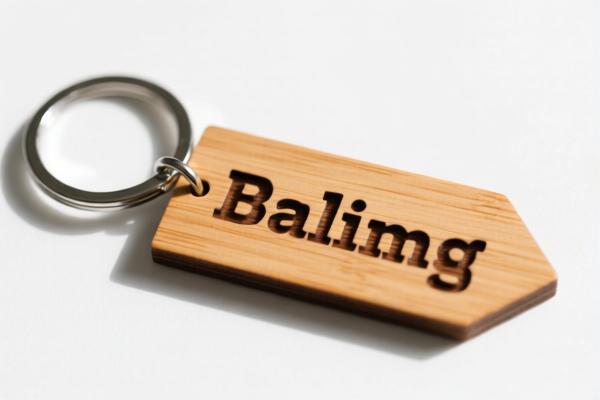
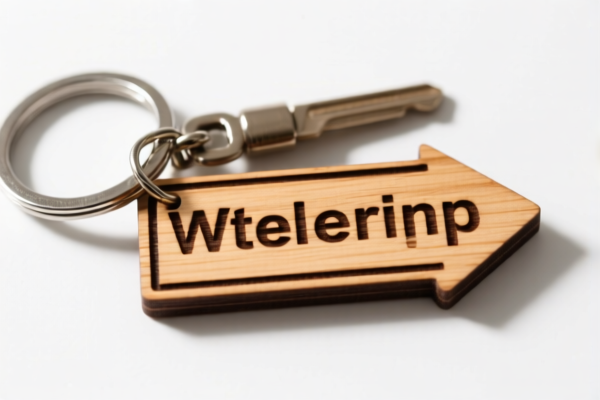


AI Analysis
🪵 DIY Wooden Sign (Decorative Wooden Labels/Plaque)
🌐 HS Code Reference & Clearance Guide | 2026 Latest Tariff Analysis | Professional Customs Strategy
📌 I. Product Definition & Classification: What is a "DIY Wooden Sign"?
A DIY Wooden Sign typically refers to finished or semi-finished wooden products used for decoration, labeling, or signage. In international trade, these are generally categorized under Chapter 44 (Wood and Articles of Wood) or Chapter 48 (Paper and Paperboard), depending on their primary material and form.
Based on the provided data, the goods are primarily Wooden and fall into the category of finished articles. They are distinct from raw lumber because they are cut, shaped, or processed into specific forms like plates, sheets, or finished labels.
⚠️ Key Distinction:
- If the product is a raw wood board intended for further processing → It might fall under Chapter 44 (Unprocessed/Semi-processed).
- If the product is a finished label/plaque ready for use (decorative or informational) → It falls under Chapter 48 (Other made-up articles) or specific Chapter 44 subheadings for finished wood articles.
- Critical Note: The provided data clearly lists three specific HS codes for "Wooden Labels/Signs," all of which are finished or semi-finished wooden articles.
📦 II. HS Code Classification Details (2026 Latest Tariff Alignment)
| HS Code | Product Description | Applicable Scenario | Tax Rate Summary |
|---|---|---|---|
4823.90.86.80 |
Wooden Labels, finished articles | Finished wooden signs, decorative plaques, pre-cut labels | 35.0% |
4410.11.00.60 |
Wooden Signboards, Plate/Sheet form | Raw or semi-finished wood plates/sheets for signs | 35.0% |
4410.19.00.60 |
Wooden Signboards, Other (Catch-all) | Other wooden signboards not specified above | 35.0% |
🔍 Detailed Explanation:
1.4823.90.86.80: This code is used for finished wooden labels or other made-up paper/wood articles. If your DIY sign is a complete, ready-to-hang decorative item with a specific shape, this is the most likely fit for "finished" goods.
2.4410.11.00.60: This code applies to Wood Labels/Signs in the form of plates or sheets. If the product is essentially a flat wooden board (even if pre-drilled or sanded) intended to be written on or decorated, it falls here.
3.4410.19.00.60: This is the catch-all category for wooden signboards that do not fit into the specific "plate/sheet" definition. If the sign has complex shapes, 3D elements, or is not a simple flat board, it likely falls here.
💰 III. 2026 Latest Tariff Rate Details (Including Surtaxes & Policy Add-ons)
✅ Applicable Country: United States (US)
✅ Country of Origin: China (CN)
✅ Effective Date: 2025年11月10日起 (Including subsequent imports)
🎯 1. General Tariff Structure for Wooden Signs
All three HS codes (4823.90.86.80, 4410.11.00.60, 4410.19.00.60) share the same tariff structure based on the provided data.
| Item | Content |
|---|---|
| Base Tariff | 0.0% (Ad Valorem) |
| Section 301 Surtax | +25.0% (From USITC Footnote 9903.88.01) |
| Section 122 Tariff | +10.0% (Specific to certain Chinese-origin goods) |
| Total Tax Rate | 35.0% |
| Tax Calculation | CIF Value × 35% |
| De Minimis Exemption | ❌ Not Applicable (High risk of penalty) |
| Legal Basis Path | IEEPA:9903.01.25 → USITC:4410/4823 → FOOTNOTE:122 |
📌 Interpretation:
- Base Tariff (0%): Wooden signs are not subject to the standard MFN (Most Favored Nation) duty.
- Section 301 Surcharge (+25%): This is the standard punitive tariff on Chinese wood products under Trade Action 301.
- Section 122 Tariff (+10%): This is an additional surcharge applied to specific categories of goods from China.
- Total Effective Rate: 35%. This is a high tariff rate that must be factored into your pricing strategy.
🛠️ IV. Customs Clearance Practical Advice (Real-World Pitfall Avoidance)
✅ 1. Required Documentation Checklist (Mandatory)
| Document | Must Provide | Description |
|---|---|---|
| ✅ Product Specification Sheet | ✔️ | Dimensions, wood type (e.g., pine, oak), finish (painted, stained, raw) |
| ✅ Product Photos (Clear) | ✔️ | Show front, back, and any text/graphics on the sign |
| ✅ Commercial Invoice | ✔️ | Clearly state "DIY Wooden Sign" or "Wooden Label" |
| ✅ Packing List | ✔️ | Weight, dimensions, number of pieces per box |
| ✅ Origin Certificate (CO) | ✔️ | Prove Chinese origin to avoid misclassification |
| ✅ Material Declaration | ✔️ | Specify if the wood is solid, plywood, or MDF |
✅ 2. Declaration Tips (Key Mantra)
🔥 "Material First, Form Second, Description Accurate, Rate Avoids Error!"
| Scenario | Correct Declaration | Wrong Practice |
|---|---|---|
| Finished decorative plaque | 4823.90.86.80 |
Misclassify as raw wood → Risk of penalty |
| Flat wooden board for signs | 4410.11.00.60 |
Call it "furniture" → Wrong chapter |
| Complex 3D wooden sign | 4410.19.00.60 |
Call it "paper sign" → Wrong material |
✅ 3. Special Case Handling
| Situation | Handling Advice |
|---|---|
| Painted/Stained Signs | Still classified as wood. Provide paint composition if asked. |
| Combined Materials | If the sign has metal hooks or plastic parts, declare as "Wooden sign with accessories" → Usually still falls under wood chapter if wood is dominant. |
| OEM Custom Signs | Provide client order and design files to prove it's a finished article. |
| Small Quantity Imports | Even small samples are subject to 35% tariff. Do not rely on "gift" exemptions if sold or used for business. |
🌍 V. Global Market Clearance Comparison (2026 Latest)
| Country/Region | Recommended HS Code | Tariff Rate | Certification Requirements | Notes |
|---|---|---|---|---|
| 🇺🇸 USA | 4410.11.00.60 / 4823.90.86.80 |
35% | None specific (but check for lead paint if toys) | High tariff due to Section 301 & 122 |
| 🇨🇳 China | 4410.11.00.60 |
~5-10% | CCC (if applicable) | Lower tariff, no surcharge |
| 🇪🇺 EU | 4410.11.00.60 |
~0-2.5% | CE (if electrical, not applicable here) | No surcharge |
| 🇬🇧 UK | 4410.11.00.60 |
~0-2.5% | UKCA | Post-Brexit rules apply |
| 🇨🇦 Canada | 4410.11.00.60 |
~0% | None | CUSMA agreement |
📌 Conclusion:
- USA is the most expensive market for wooden signs due to 35% total tariff.
- EU, UK, and Canada have significantly lower tariffs (0-2.5%).
- If you are exporting to the US, consider supply chain diversification (e.g., manufacturing in Vietnam or Mexico) to avoid the 35% surcharge, if feasible.
📌 VI. Common Mistakes & Pitfall Guide (Blood-Teachings)
❌ Mistake 1: Declaring wooden signs as "Paper Labels" to avoid wood tariffs
👉 Consequence: Customs will detect wood material → Penalty + Back Tax + Seizure Risk
❌ Mistake 2: Ignoring the Section 122 Tariff (+10%)
👉 Consequence: Underpayment of duties → Audit & Fines
❌ Mistake 3: Using vague descriptions like "Wooden Item"
👉 Consequence: Customs will assign a default higher rate or delay clearance for inspection
❌ Mistake 4: Splitting shipments to avoid de minimis thresholds
👉 Consequence: De minimis does not apply to Section 301 goods. Risk of full tariff assessment on all items.
✅ Correct Practice:
"DIY Wooden Sign, Pine Wood, Painted, 10x10 inches, for Home Decor, HS Code: 4410.11.00.60"
🎯 VII. Conclusion: Professional Declaration, Cost Control!
🎯 Remember the Mantra:
🔹 "Wood is King, 35% Tax is the Rule, Section 301 & 122 are the Killers!"
🔹 "HS Code is Life, Description is Key, Avoid Splitting, Save Your Money!"
📌 Tips:
- If your wooden signs are exclusively for decorative purposes, ensure they are not classified as "toys" or "educational materials," which may have different tariff structures.
- For large-volume imports, consider applying for an Exclusion under Section 301, if available, though this is rare for basic wood products.
- Always consult a licensed customs broker for pre-clearance verification to avoid delays.
📣 Immediate Action:
📞 Contact a professional customs broker + Provide product photos + Apply for HS Code ruling
🚀 Let your wooden signs pass customs smoothly, control costs, and maximize profits!
✨ Professional clearance starts with precise classification!
💼 Your every cent of cost deserves precise calculation!
Customer Reviews
About HS Code Classification
The Harmonized System (HS) is an internationally standardized nomenclature developed by the World Customs Organization (WCO) to classify traded products. Over 200 countries use the HS system as the basis for customs tariffs, trade statistics, and import/export regulations.
Each HS code follows a hierarchical structure:
- Chapter (2 digits) — Broad category of goods (e.g., Chapter 84: Machinery and Mechanical Appliances)
- Heading (4 digits) — More specific grouping within the chapter
- Subheading (6 digits) — Internationally standardized breakdown, used by all WCO member countries
- National subdivisions (8-10 digits) — Country-specific extensions for further classification, such as US HTSUS 10-digit codes
Correct HS code classification is essential for smooth customs clearance, accurate duty payment, and compliance with trade regulations. Misclassification can lead to customs delays, overpayment of duties, or penalties.
When importing from CN to US, the applicable tariff rates may include:
- Most-Favored-Nation (MFN) rate — The standard duty rate applied to WTO members
- General rate — Applied to countries without trade agreements
- Trade remedy duties — Additional tariffs such as Section 301 (anti-dumping), Section 232 (national security), or countervailing duties
The information provided on this page is for reference purposes only. For official classification, please consult with your local customs authority or a licensed customs broker.