DSLR Camera
CN → US| HS Code | Tariff Rate | Origin | Destination | Doc |
|---|---|---|---|---|
| 8525894000 | 17.5% | CN | US | Official Doc |
| 8525895050 | 35.0% | CN | US | Official Doc |
| 9006599100 | 17.5% | CN | US | Official Doc |
| 9006596000 | 16.8% | CN | US | Official Doc |
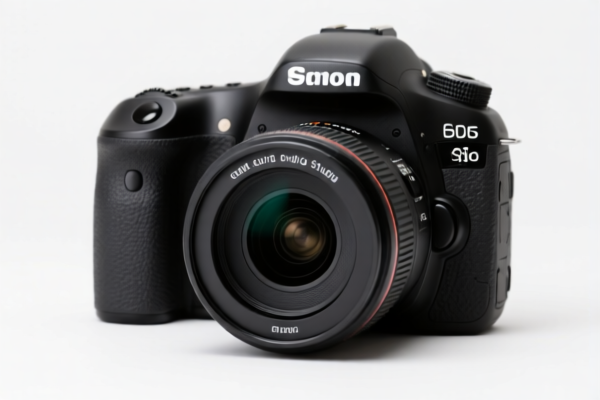
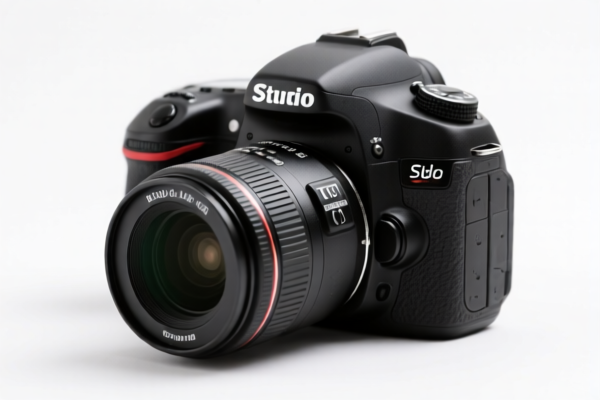
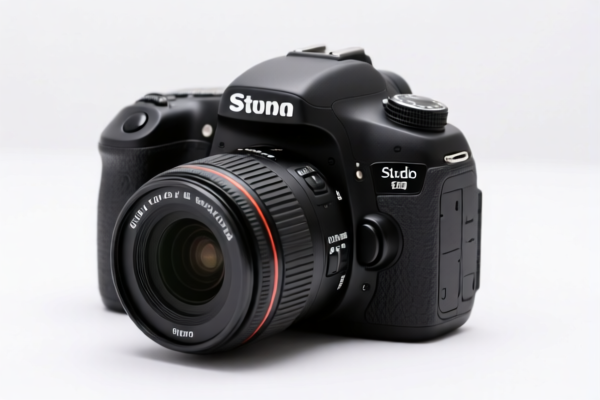
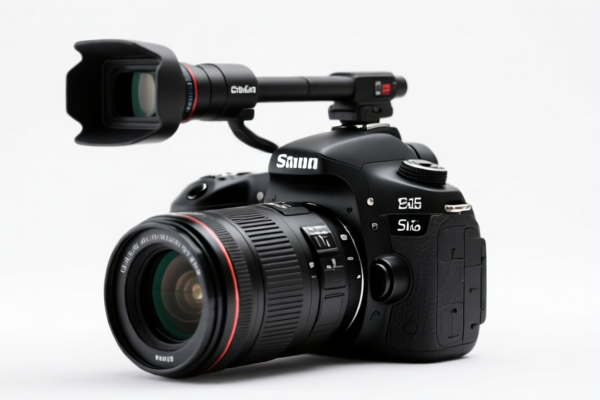
Product Images
AI Analysis
📸 DSLR Camera (Digital Single-Lens Reflex Camera)
🌐 HS Code Reference & Customs Clearance Guide | 2026 Latest Tariff Analysis | Professional Clearance Strategy
📌 I. Product Definition & Classification: Do You Really Understand "DSLR"?
A DSLR camera is a digital imaging device that combines an optical viewfinder with a mirror and prism system. In international trade, it is primarily classified under Chapter 90 (Optical, Photographic, Cinematographic Articles) or Chapter 85 (Electrical Machinery), depending on the specific technical characteristics and the exact wording of the tariff headings.
Key Distinction: * Digital Static Image Cameras: Often falls under 8525 (Video cameras, digital cameras, etc.) if explicitly defined as "digital cameras" in the specific national tariff schedule. * Optical Cameras: Falls under 9006 (Photographic cameras) if classified based on its optical nature (lens, mirror, film/sensor mechanism).
⚠️ Critical Differentiation:
- If the customs authority explicitly lists "Digital Cameras" under 8525, use 8525.
- If classified as "Photographic Cameras" regardless of digital format, use 9006.
- Material/Format Conflict: None. DSLRs are standard digital optical devices.
📦 II. HS Code Classification Details (2026 Latest Tariff Authority Comparison)
| HS Code | Product Description | Application Scenario | Tax Profile (China Origin to US) |
|---|---|---|---|
8525.89.40.00 |
Digital Cameras: Digital static image cameras, categorized under digital video cameras. | General DSLRs/Mirrorless cameras classified as "Digital Video Cameras" in broad terms. | 17.5% (0% Base + 7.5% Sec 301 + 10% IEEPA) |
8525.89.50.50 |
Digital Cameras: Specifically defined as Digital Cameras & Video Camera Recorders. | High-end DSLRs explicitly listed under "Digital Cameras" sub-heading. | 35.0% (0% Base + 25% Sec 301 + 10% IEEPA) |
9006.59.91.00 |
Photographic Cameras: Non-focusless cameras, photographic cameras. | DSLRs classified as optical photographic equipment (non-fixed focus). | 17.5% (0% Base + 7.5% Sec 301 + 10% IEEPA) |
9006.59.60.00 |
Photographic Cameras: Non-focusless cameras, photographic cameras. | DSLRs classified as optical photographic equipment. | 16.8% (6.8% Base + 0% Sec 301 + 10% IEEPA) |
🔍 Key Reminder:
- 8525 Codes: Classify DSLRs as "Digital Electronic Equipment." Higher volatility in tax rates (7.5% vs 25% Sec 301).
- 9006 Codes: Classify DSLRs as "Optical Instruments." Generally lower base tariffs for some sub-headings (e.g., 9006.59.60.00).
- No Material Conflict: DSLRs do not involve conflicting materials (e.g., mixed media) that would force a different classification.
💰 III. 2026 Latest Tariff Rate Detailed Breakdown (Including Surtaxes, Policy Add-ons)
✅ Applicable Country: United States (US)
✅ Origin: China (CN)
✅ Effective Date: Post-November 10, 2025 (Including subsequent imports)
🎯 1. 8525.89.40.00 —— Digital Cameras (Digital Static Image Category)
| Item | Content |
|---|---|
| Base Tariff | 0% (ad valorem) |
| USITC Surtax (Sec 301) | +7.5% (Section 301 Duties) |
| IEEPA Surtax | +10% (H中对华加征关税, effective from Nov 10, 2025) |
| Total Rate | 17.5% |
| Tax Calculation | CIF Value × 17.5% |
| De Minimis Eligibility | ❌ No (Deny de minimis) |
| Legal Basis Path | IEEPA:9903.01.24 → USITC:8525.89.40.00 |
📌 Explanation:
- This classification treats the DSLR as a "Digital Static Image Camera" within the broader "Digital Video Camera" heading.
- The 7.5% surtax is significantly lower than the 25% tier for other electronics.
- Total 17.5% is moderately high but manageable compared to the 35% tier.
🎯 2. 8525.89.50.50 —— Digital Cameras (Explicit Digital Camera Category)
| Item | Content |
|---|---|
| Base Tariff | 0% (ad valorem) |
| USITC Surtax (Sec 301) | +25.0% (Section 301 Duties) |
| IEEPA Surtax | +10% (H中对华加征关税, effective from Nov 10, 2025) |
| Total Rate | 35.0% |
| Tax Calculation | CIF Value × 35.0% |
| De Minimis Eligibility | ❌ No (Deny de minimis) |
| Legal Basis Path | IEEPA:9903.01.24 → USITC:8525.89.50.50 |
📌 Note:
- This is the highest tax bracket for DSLRs.
- Applies when customs strictly define the product under a sub-heading that attracts the 25% Section 301 tariff.
- High Risk: Significant cost impact. Must be carefully evaluated against profit margins.
🎯 3. 9006.59.91.00 —— Photographic Cameras (Optical Classification)
| Item | Content |
|---|---|
| Base Tariff | 0% (ad valorem) |
| USITC Surtax (Sec 301) | +7.5% (Section 301 Duties) |
| IEEPA Surtax | +10% (H中对华加征关税, effective from Nov 10, 2025) |
| Total Rate | 17.5% |
| Tax Calculation | CIF Value × 17.5% |
| De Minimis Eligibility | ❌ No (Deny de minimis) |
| Legal Basis Path | IEEPA:9903.01.24 → USITC:9006.59.91.00 |
📌 Explanation:
- Classifying as an Optical Camera (Chapter 90) can sometimes attract lower Section 301 rates (7.5%) compared to the 25% rate for some electronic classifications.
- Total 17.5% is favorable if customs accept the optical classification.
🎯 4. 9006.59.60.00 —— Photographic Cameras (Optical Classification with Base Tariff)
| Item | Content |
|---|---|
| Base Tariff | 6.8% (ad valorem) |
| USITC Surtax (Sec 301) | 0.0% (Section 301 Exempt/Low) |
| IEEPA Surtax | +10% (H中对华加征关税, effective from Nov 10, 2025) |
| Total Rate | 16.8% |
| Tax Calculation | CIF Value × 16.8% |
| De Minimis Eligibility | ❌ No (Deny de minimis) |
| Legal Basis Path | IEEPA:9903.01.24 → USITC:9006.59.60.00 |
📌 Key Advantage:
- This is the LOWEST effective tax rate (16.8%) among all options.
- Although it has a 6.8% Base Tariff, it avoids the Section 301 surtax (0%) entirely, relying only on the 10% IEEPA.
- Recommendation: If customs allow classification under this sub-heading, it offers the best cost efficiency.
🛠️ IV. Customs Clearance Practical Advice (Real-World Pitfall Avoidance)
✅ 1. Documentation Checklist (Essential)
| Document | Mandatory | Explanation |
|---|---|---|
| ✅ Product Specifications | ✔️ | Must include: Sensor type, lens mount, mirror mechanism, digital features. |
| ✅ Technical Manual | ✔️ | Shows internal components (sensor, processor) to justify "Digital" vs "Optical." |
| ✅ Product Photos | ✔️ | Clear shots of front, back, lens mount, and label (Model/Serial #). |
| ✅ Commercial Invoice | ✔️ | Must state: "DSLR Camera, Digital, [Model Number], Chinese Origin." |
| ✅ Packing List | ✔️ | List all items: Body, Lens, Battery, Charger, Strap. Do not split body/lens if sold as a kit. |
| ✅ FCC Certification | ✔️ | Required for electronic components (digital sensors, Wi-Fi/Bluetooth). |
✅ 2. Declaration Strategy (Key Tips)
🔥 "Classify by Function, Not Just Name! Optical vs. Digital Matters!"
| Scenario | Correct HS Code | Wrong Practice |
|---|---|---|
| DSLR with digital sensor, clear "Digital Camera" definition | 8525.89.40.00 or 9006.59.60.00 (Best Rate) |
Misclassify as "Video Camera" → 8525.89.50.50 (35%) |
| DSLR sold as "Photographic Camera" | 9006.59.60.00 (16.8%) |
Force into 9006.59.91.00 (17.5%) if 60 is available |
| Kit (Body + Lens) | Single Declaration | Split Body (9006) and Lens (9002) → Higher complexity & potential errors |
| Mirrorless vs. DSLR | Both fall under same codes | Ensure description matches "Digital Imaging Device" |
📌 Pro Tip:
-9006.59.60.00is the sweet spot (16.8%) due to 0% Sec 301. Try to justify optical classification if possible.
-8525.89.40.00is a safe fallback (17.5%) if customs insist on electronic classification.
- Avoid8525.89.50.50(35%) unless no other option exists.
✅ 3. Special Cases
| Situation | Handling Advice |
|---|---|
| Mirrorless Cameras | Same codes as DSLRs (9006 or 8525). No special "Mirrorless" code. |
| Camera Bodies Only | Declare as "Camera Body." Do not include lens unless sold together. |
| Lenses | Separate HS Code (9002.11, 9002.19). Do not mix with camera body unless kit. |
| Accessories (Batteries, Chargers) | Often classified separately (8507, 8543). Check if they qualify for de minimis (unlikely for China origin post-2025). |
| Used DSLRs | May have different duty treatments or restrictions. Declare as "Used." |
🌍 V. Global Market Comparison (2026 Latest)
| Country/Region | Recommended HS Code | Tariff (China Origin) | Certification | Notes |
|---|---|---|---|---|
| 🇺🇸 USA | 9006.59.60.00 (Best) / 8525.89.40.00 |
16.8% / 17.5% | FCC + CE | Avoid 8525.89.50.50 (35%) |
| 🇨🇳 China | 9006.59.60.00 |
5% - 6.8% | CCC | Low tariff, high volume |
| 🇪🇺 EU | 9006.30.00 / 9006.40.00 |
0% - 4.5% | CE + RoHS | No Section 301/IEEPA |
| 🇬🇧 UK | 9006.30.00 |
0% - 4.5% | UKCA | Post-Brexit rules apply |
| 🇯🇵 Japan | 9006.30.00 |
0% | PSE | Favorable tariff |
📌 Conclusion:
- USA is the most complex market due to Section 301 and IEEPA surtaxes.
- Optical Classification (9006) is key to minimizing tariffs in the US.
- EU/UK/Japan have much lower tariffs and no additional surtaxes.
📌 VI. Common Errors & Pitfall Guide (Blood & Tears Lessons)
❌ Error 1: Declaring DSLR as "Video Camera" under 8525.89.50.50
👉 Consequence: 35% tariff → Massive cost increase!
❌ Error 2: Splitting "Camera Body + Lens" into two declarations
👉 Consequence: Lens may be classified incorrectly, leading to delayed clearance or audits.
❌ Error 3: Ignoring FCC Certification for digital DSLRs
👉 Consequence: Seizure or Return by US Customs (CBP).
❌ Error 4: Using "Camera" as a generic description
👉 Consequence: Customs may ask for technical documentation to determine Chapter 85 vs 90 → Delays.
✅ Correct Approach:
"Digital Single-Lens Reflex (DSLR) Camera, Body Only, Model XYZ, Digital Sensor, With FCC Certification, Chinese Origin"
🎯 VII. Conclusion: Smart Classification Saves Money!
🎯 Remember the Golden Rule:
🔹 "Optical (9006) = 16.8-17.5%"
🔹 "Digital Electronic (8525) = 17.5-35%"
🔹 "Avoid 8525.89.50.50 at all costs!"
🔹 "Get Pre-Ruling if unsure!"
📌 Pro Tip:
- If your DSLR has Wi-Fi/Bluetooth, it is still classified as a camera, not a "communication apparatus."
- Pre-Ruling (CBP Ruling) is highly recommended for large shipments to lock in the 16.8% or 17.5% rate.
- Keep technical manuals handy to prove the optical nature (mirror/prism system) if challenged.
📣 Immediate Action:
📞 Contact a Customs Broker + Provide Product Specs + Apply for CBP Ruling
🚀 Clearance Smoothly, Cost Efficiently, Profit Maximized!
✨ Professional Clearance Starts with Precise Classification!
💼 Every Percent of Tariff Matters!
Customer Reviews
About HS Code Classification
The Harmonized System (HS) is an internationally standardized nomenclature developed by the World Customs Organization (WCO) to classify traded products. Over 200 countries use the HS system as the basis for customs tariffs, trade statistics, and import/export regulations.
Each HS code follows a hierarchical structure:
- Chapter (2 digits) — Broad category of goods (e.g., Chapter 84: Machinery and Mechanical Appliances)
- Heading (4 digits) — More specific grouping within the chapter
- Subheading (6 digits) — Internationally standardized breakdown, used by all WCO member countries
- National subdivisions (8-10 digits) — Country-specific extensions for further classification, such as US HTSUS 10-digit codes
Correct HS code classification is essential for smooth customs clearance, accurate duty payment, and compliance with trade regulations. Misclassification can lead to customs delays, overpayment of duties, or penalties.
When importing from CN to US, the applicable tariff rates may include:
- Most-Favored-Nation (MFN) rate — The standard duty rate applied to WTO members
- General rate — Applied to countries without trade agreements
- Trade remedy duties — Additional tariffs such as Section 301 (anti-dumping), Section 232 (national security), or countervailing duties
The information provided on this page is for reference purposes only. For official classification, please consult with your local customs authority or a licensed customs broker.