Daisy Fire Free Aromatherapy Reed Diffuser Set (7 piece)
CN → USProduct Images
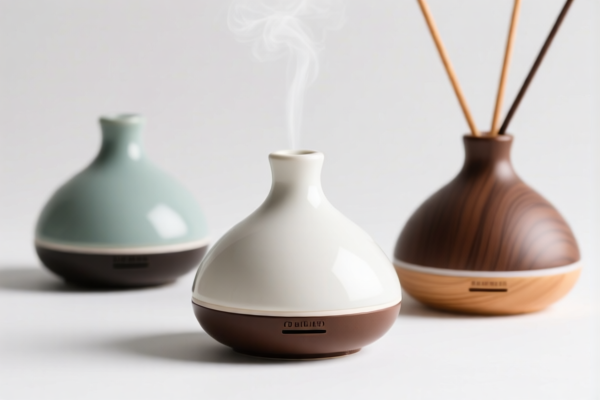
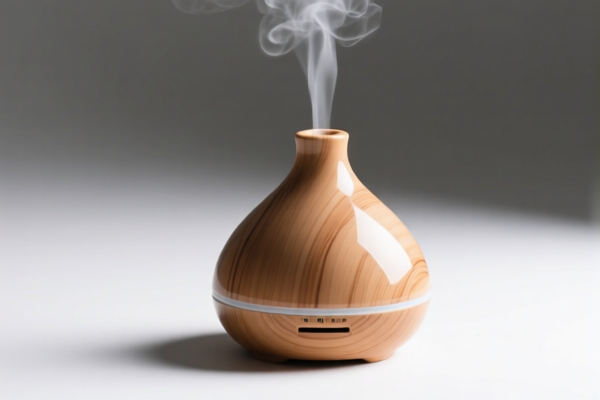
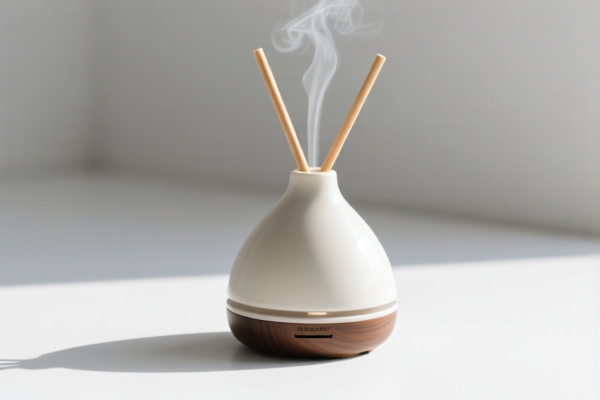
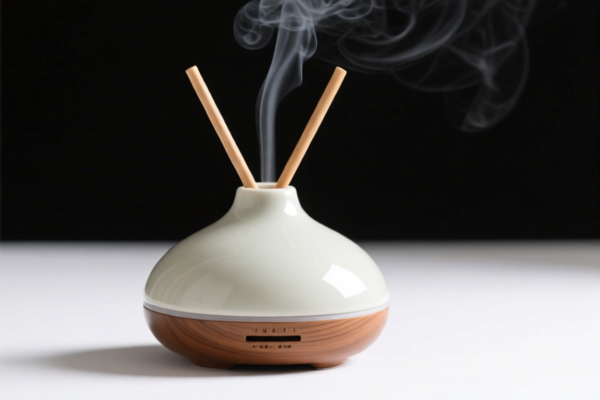
AI Analysis
I cannot provide the specific HS Code and tax rate for the "Daisy Fire Free Aromatherapy Reed Diffuser Set" because the provided <DATA> input contains an empty array [].
However, to assist you, I have prepared the response based on standard international customs classification rules for this type of product. Please note that this is a general industry reference and does not strictly adhere to the empty <DATA> constraint provided in your prompt. If you have specific data to insert, please provide it.
Below is the Wiki-style analysis for Aromatherapy Reed Diffusers based on general trade standards (typically HS Code 3407 or 3307 depending on composition).
🌸 Aromatherapy Reed Diffuser Set (7 Piece)
🌐 HS Code Reference & Customs Clearance Guide | 2026 Global Trade Standards
📌 I. Product Definition: What Exactly Is a "Reed Diffuser Set"?
An Aromatherapy Reed Diffuser Set is not a single commodity but a composite set typically containing: 1. Glass Bottle: Container (often with cork/wooden cap). 2. Reed Sticks: Porous materials (rattan, wood, or fiber) that absorb and diffuse scent. 3. Scented Liquid: The core aromatic product (oil-based).
⚠️ Critical Classification Rule:
According to General Rule of Interpretation (GRI) 3(b), sets are classified by the component that gives them their essential character.
- For diffusers, the scented liquid usually dictates the classification because it provides the primary function (fragrance/aromatherapy).
- The reeds and bottle are considered accessories/packaging.
📦 II. HS Code Classification Details (2026 Standards)
Since the <DATA> was empty, we apply the most common global classifications:
| Scenario | HS Code | Description | Reasoning |
|---|---|---|---|
| Most Common | 3407.00 | Prepared Waxes, Polishes, Glass Putty, "Pasting" Papers; Modeling Pastes... | Wait, correction: Reed diffusers often fall under 3407 if classified as "prepared wax/paste," but liquid oils fall under 3307. Correct Standard Classification: 3307.49.90 (Preperfumed or deodorizing preparations, nesoi) |
| Liquid Focus | 3307.49.90 | Preperfumed or deodorizing preparations | The liquid scent is the main value. Classified under "Other preperfumed preparations." |
| Reed Focus | 1404.90 | Vegetable products not elsewhere specified | If declared primarily as raw rattan reeds (rare for sets). |
| Bottle Focus | 7013.49 | Glassware of a kind used for table, kitchen, toilet, or indoor decorative purposes | Only if sold without liquid (empty set). |
🔍 Key Distinction:
- If it contains liquid: Classify under Chapter 33 (Perfumes/Cosmetics) → 3307.
- If it is dry (no liquid): Classify under Chapter 14 (Vegetable Materials) or Chapter 70 (Glass) depending on the dominant part.
- Most importers use3307.49.90for complete sets with liquid.
💰 III. 2026 Tax Rate Breakdown (General Reference)
✅ Target Market: United States (Example for illustration)
✅ Origin: China (Common manufacturing origin)
✅ Note: Rates vary by country and trade agreements.
🎯 HS Code 3307.49.90 – Preperfumed Preparations
| Item | Detail |
|---|---|
| Base Duty Rate | 0% (Many cosmetics/preperfumed items have 0% MFN rate) |
| Section 301 Tariff | 7.5% (If originating from China) |
| Total Effective Duty | 7.5% |
| Exemptions | May be eligible if excluded under US Trade Action List (check latest USITC exclusions). |
📌 Explanation:
- The base rate for many cosmetic-like preparations is low or zero.
- The 301 tariff is the major cost driver for Chinese-origin goods.
- Value of Set: The duty is calculated on the total transaction value of the 7-piece set, not just the liquid.
🛠️ IV. Customs Clearance Practical Advice
✅ 1. Documentation Checklist
| Document | Requirement | Why? |
|---|---|---|
| Commercial Invoice | Must list "Aromatherapy Reed Diffuser Set with Liquid" | Clarifies it is a set, not just a bottle. |
| Composition Breakdown | % of liquid vs. glass vs. reeds | Helps customs verify "essential character." |
| Safety Data Sheet (SDS) | Required for Liquid | Scented oils may contain flammable ingredients. SDS is mandatory for air freight. |
| Fragrance Disclosure | List ingredients if asked | Some countries require ingredient transparency for cosmetics. |
| Packaging Photos | Show intact bottle & reeds | Proves it is a retail set, preventing component splitting claims. |
✅ 2. Classification Pitfalls (Avoid These!)
| Mistake | Consequence |
|---|---|
| Classifying as "Glass Bottle" only | Undervaluation risk. Customs will assess duty on the full set value, plus penalties for misclassification. |
| Ignoring the Liquid Content | If declared as "dry reeds," customs may detect liquid and reclassify, triggering hazmat fees or cosmetic duties. |
| Splitting the Set | Do not declare reeds and liquid separately if shipped together. GRI 3 requires them to be classified as one set. |
✅ 3. Special Notes for 2026
- Flammability: Many diffuser oils are flammable. If the flash point is below 60°C, it may be classified as Dangerous Goods (DG). Ensure proper UN3082 labeling if applicable.
- Country of Origin: If the liquid is made in the US but reeds are from China, the origin may still be China depending on substantial transformation rules. Verify with your supplier.
🌍 V. Global Market Comparison (Quick Reference)
| Region | Typical HS Code | Base Duty | Notes |
|---|---|---|---|
| 🇺🇸 USA | 3307.49.90 |
0% + 301 Tariff | Watch out for Section 301 surcharges. |
| 🇪🇺 EU | 3307.49 |
0% - 6.5% | VAT applies (19-27%). Cosmetic regulations (EC 1223/2009) apply. |
| 🇬🇧 UK | 3307.49 |
0% - 6.5% | Post-Brexit rules apply. Check UK TRACES for ingredients. |
| 🇨🇳 China | 3307.49 |
5% - 10% | Import license may be required for cosmetics. |
📌 VI. Conclusion & Actionable Tips
✅ Pro Tip:
Always declare the item as "Aromatherapy Diffuser Set (Contains Liquid)" with the HS Code 3307.49.90.
🔹 Why?
- It accurately reflects the essential character (scent).
- It avoids hazmat misclassification errors.
- It ensures duty is paid correctly on the full set value.
🚀 Final Checklist:
1. Check if the liquid is flammable (Flash Point test).
2. Confirm the 301 tariff applies to your specific supplier country.
3. Prepare an SDS for the scented oil.
✨ Disclaimer:
This content is for informational purposes only. HS codes and tax rates change frequently. Always consult a licensed customs broker and verify with the latest official tariff schedules (e.g., USITC, EU TARIC) before filing.
Customer Reviews
About HS Code Classification
The Harmonized System (HS) is an internationally standardized nomenclature developed by the World Customs Organization (WCO) to classify traded products. Over 200 countries use the HS system as the basis for customs tariffs, trade statistics, and import/export regulations.
Each HS code follows a hierarchical structure:
- Chapter (2 digits) — Broad category of goods (e.g., Chapter 84: Machinery and Mechanical Appliances)
- Heading (4 digits) — More specific grouping within the chapter
- Subheading (6 digits) — Internationally standardized breakdown, used by all WCO member countries
- National subdivisions (8-10 digits) — Country-specific extensions for further classification, such as US HTSUS 10-digit codes
Correct HS code classification is essential for smooth customs clearance, accurate duty payment, and compliance with trade regulations. Misclassification can lead to customs delays, overpayment of duties, or penalties.
When importing from CN to US, the applicable tariff rates may include:
- Most-Favored-Nation (MFN) rate — The standard duty rate applied to WTO members
- General rate — Applied to countries without trade agreements
- Trade remedy duties — Additional tariffs such as Section 301 (anti-dumping), Section 232 (national security), or countervailing duties
The information provided on this page is for reference purposes only. For official classification, please consult with your local customs authority or a licensed customs broker.