Dark Red Mahogany
CN → US| HS Code | Tariff Rate | Origin | Destination | Doc |
|---|---|---|---|---|
| 4403410000 | 35.0% | CN | US | Official Doc |
| 4403490200 | 35.0% | CN | US | Official Doc |
| 4407210000 | 35.0% | CN | US | Official Doc |
| 4407290206 | 35.0% | CN | US | Official Doc |
Product Images
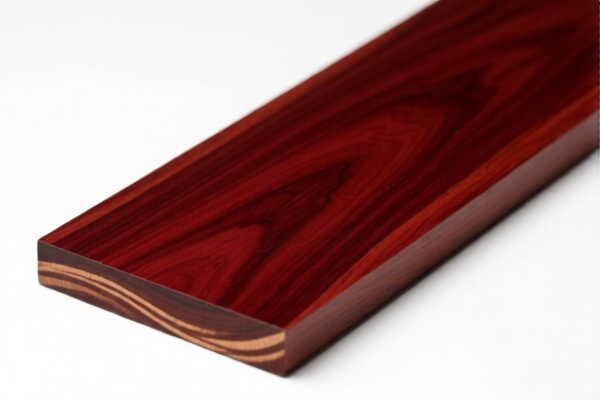
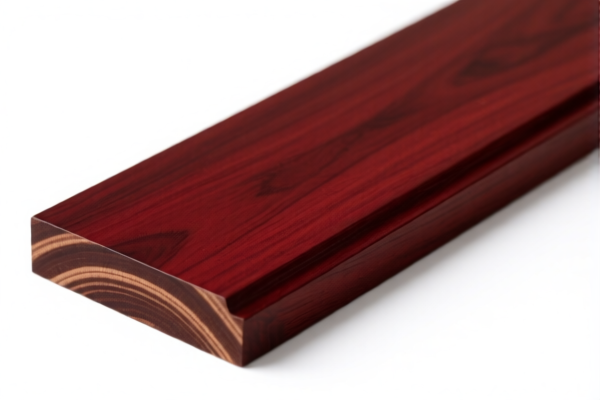
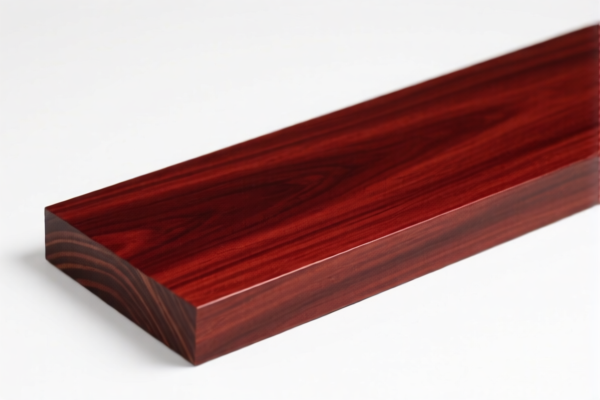
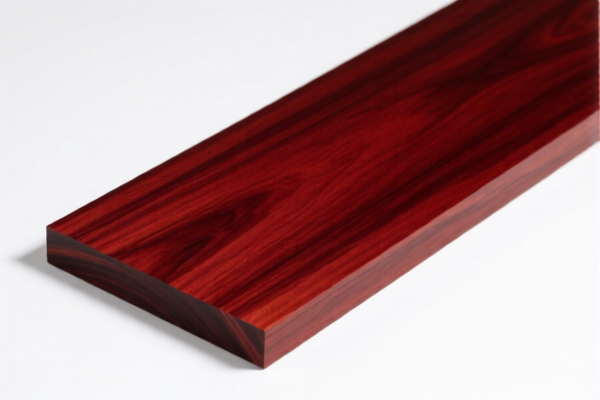
AI Analysis
🌳 Dark Red Mahogany (Tropical Wood Products)
🌐 HS Code Reference & Customs Clearance Guide | 2026 Latest Tariff Analysis | Professional Clearance Strategy
📌 I. Product Definition & Classification: What is "Dark Red Mahogany"?
In international trade, "Dark Red Mahogany" is a commercial term primarily referring to Dark Red Meranti (part of the Shorea genus) and related tropical hardwoods. It is crucial to distinguish between Rough Wood (logs/square timber) and Sawn Wood (processed lumber), as they fall under different HS Code headings with specific tariff implications.
⚠️ Key Distinction Point:
- Rough Wood (Logs/Squared): Unprocessed or roughly squared logs, stripped of bark or sapwood. → Classified under 4403.
- Sawn Wood: Processed lumber (>6mm thickness), planed, sanded, or end-jointed. → Classified under 4407.
- Specific Species: "Dark Red Meranti," "Light Red Meranti," and "Meranti Bakau" are grouped together. "Other Acajou d'Afrique (Khaya spp.)" is classified separately as "Other African Mahogany."
📦 II. HS Code Classification Details (2026 Latest Tariff Authority Comparison)
| HS Code | Product Description | Applicable Scenario | Tax Rate |
|---|---|---|---|
4403.41.00.00 |
Wood in the rough: Other, of tropical wood: Dark Red Meranti, Light Red Meranti and Meranti Bakau | Logs, squared timber, raw timber for export | 25.0% |
4403.49.02.00 |
Wood in the rough: Other, of tropical wood: Other | Other tropical woods not listed in 4403.41 | 25.0% |
4407.21.00.00 |
Wood sawn/sliced >6mm: Of tropical wood: Mahogany (Swietenia spp.) | Genuine Mahogany lumber (Swietenia genus) | 25.0% |
4407.29.02.06 |
Wood sawn/sliced >6mm: Of tropical wood: Other Acajou d'Afrique (Khaya spp.) | African Mahogany lumber | 25.0% |
🔍 Important Reminder:
- All items listed in have a Total Tax Rate of 25.0%.
- This comprises 0% Base Tariff + 25% Additional Tariff.
- Do not confuse "Dark Red Meranti" (4403.41.00.00) with "Genuine Mahogany" (4407.21.00.00, Swietenia). Commercial "Dark Red Mahogany" usually refers to Meranti species, which may fall under 4403.41.00.00 or 4407.29.x depending on processing and species identification.
💰 III. 2026 Latest Tariff Rate Breakdown (Including Additional Taxes & Policy Supplements)
✅ Applicable Country: United States (US)
✅ Country of Origin: China (CN)
✅ Effective Date: From November 10, 2025 (including subsequent imports)
🎯 1. 4403.41.00.00 – Dark Red Meranti, Light Red Meranti, Meranti Bakau (Rough Wood)
| Item | Content |
|---|---|
| Base Tariff | 0.0% (ad valorem) |
| Additional Tariff | +25.0% (from USITC Footnote for Section 44 Wood) |
| Total Tax Rate | 25.0% |
| Tax Calculation | CIF Value × 25% |
| De Minimis Exemption | ❌ Not Applicable (Deny de minimis for wood products from CN) |
| Legal Basis Path | USITC:4403.41.00.00 → FOOTNOTE:Section 44 Additional Tariff |
📌 Explanation:
- The 0% Base Tariff reflects the standard MFN (Most Favored Nation) rate for rough tropical wood.
- The 25% Additional Tariff is imposed under US trade policy measures against specific Chinese goods.
- Total Effective Rate: 25%. This is a significant cost component that must be factored into landed cost calculations.
🎯 2. 4403.49.02.00 – Other Tropical Wood (Rough Wood, Not Dark Red Meranti)
| Item | Content |
|---|---|
| Base Tariff | 0.0% |
| Additional Tariff | +25.0% |
| Total Tax Rate | 25.0% |
| Tax Calculation | CIF Value × 25% |
| De Minimis Exemption | ❌ Not Applicable |
| Legal Basis Path | USITC:4403.49.02.00 → FOOTNOTE:Section 44 Additional Tariff |
📌 Note:
- Same tariff structure as above. Any tropical wood in rough form not specifically listed under 4403.41.00.00 falls here.
- Includes other Shorea species or unlisted tropical hardwoods in log/squared form.
🎯 3. 4407.21.00.00 – Mahogany (Swietenia spp.) (Sawn Wood)
| Item | Content |
|---|---|
| Base Tariff | 0.0% |
| Additional Tariff | +25.0% |
| Total Tax Rate | 25.0% |
| Tax Calculation | CIF Value × 25% |
| De Minimis Exemption | ❌ Not Applicable |
| Legal Basis Path | USITC:4407.21.00.00 → FOOTNOTE:Section 44 Additional Tariff |
📌 Critical Note:
- Genuine Mahogany (Swietenia species) is highly regulated due to CITES (Convention on International Trade in Endangered Species).
- While the tariff rate is 25%, CITES permits are mandatory for import. Failure to provide CITES documentation will result in seizure or return, regardless of tax payment.
- Ensure the scientific name (Swietenia) is clearly stated on the commercial invoice and packing list.
🎯 4. 4407.29.02.06 – Other Acajou d'Afrique (Khaya spp.) (Sawn Wood)
| Item | Content |
|---|---|
| Base Tariff | 0.0% |
| Additional Tariff | +25.0% |
| Total Tax Rate | 25.0% |
| Tax Calculation | CIF Value × 25% |
| De Minimis Exemption | ❌ Not Applicable |
| Legal Basis Path | USITC:4407.29.02.06 → FOOTNOTE:Section 44 Additional Tariff |
📌 Note:
- "African Mahogany" (Khaya spp.) is different from "American/Mahogany" (Swietenia spp.).
- No CITES restrictions typically apply to Khaya spp., but correct species identification is still required for accurate HS Code classification.
🛠️ IV. Customs Clearance Practical Advice (Battle-Tested Pitfall Avoidance Guide)
✅ 1. Required Documents Checklist (Mandatory)
| Document | Must Provide | Explanation |
|---|---|---|
| ✅ Commercial Invoice | ✔️ | Must specify species (e.g., "Dark Red Meranti," "Swietenia mahagoni") |
| ✅ Packing List | ✔️ | Clear weight, volume, and number of packages |
| ✅ Wood Declaration Form | ✔️ | Confirming wood is free from pests/disease (ISPM 15 compliance if applicable) |
| ✅ CITES Permit | ✔️ | Required for Swietenia spp. (Genuine Mahogany). Not required for Meranti/Khaya. |
| ✅ Fumigation Certificate | ✔️ | Proof of treatment for rough wood |
| ✅ Country of Origin Certificate | ✔️ | To confirm CN origin (triggers 25% additional tariff) |
✅ 2. Declaration Tips (Key Mnemonic)
🔥 "Species Matter, CITES Checks, Tariff Flat 25%!"
| Scenario | Correct Declaration Method | Incorrect Approach |
|---|---|---|
| Dark Red Meranti Logs | 4403.41.00.00 + "Dark Red Meranti" |
Mislabel as "Oak" or "Pine" → Fraud penalty |
| Genuine Mahogany Lumber | 4407.21.00.00 + "Swietenia spp." + CITES Permit |
Declare as "African Mahogany" → Seizure due to CITES violation |
| African Mahogany Lumber | 4407.29.02.06 + "Khaya spp." |
Mislabel as "Swietenia" → Unnecessary CITES scrutiny delays |
| Rough vs. Sawn | Clearly state "Rough" or "Sawn >6mm" in description | Vague terms like "Wood" → Audit risk, misclassification |
✅ 3. Special Handling
| Situation | Handling Advice |
|---|---|
| CITES Compliance | For Swietenia spp., ensure the CITES Permit matches the invoice species and quantity exactly. Any discrepancy leads to detention. |
| Species Identification | Use scientific names (Shorea spp., Swietenia spp., Khaya spp.) alongside commercial names. Customs officers rely on scientific names for accuracy. |
| Moisture Content | Ensure wood moisture content is declared if relevant for transport or specific trade agreements. |
| Fumigation | Rough wood must be fumigated or heat-treated per ISPM 15 standards. Provide valid certificate. |
🌍 V. Global Major Market Clearance Comparison (2026 Latest)
| Country/Region | Recommended HS Code | Tariff | Certification Requirement | Notes |
|---|---|---|---|---|
| 🇺🇸 USA | 4403.41.00.00 / 4407.21.00.00 |
25% (CN Origin) | CITES (if Swietenia), ISPM 15 | High tariff impact on cost |
| 🇨🇳 China | 4403.41.00.00 / 4407.21.00.00 |
0-10% (Varies) | CITES (if Swietenia) | Import duties vary by wood type |
| 🇪🇺 EU | 4403.41.00.00 / 4407.21.00.00 |
0% (Most) | CITES, EUTR (EU Timber Regulation) | Strict legality due diligence required |
| 🇬🇧 UK | 4403.41.00.00 / 4407.21.00.00 |
0% (Most) | CITES, UK Timber Regulation | Post-Brexit regulations apply |
📌 Conclusion:
- USA imposes a flat 25% additional tariff on these wood products from China, significantly increasing landed cost.
- CITES is the biggest compliance hurdle for Genuine Mahogany (Swietenia).
- EU/UK focus on legality (EUTR/UKTR) rather than just tariffs; ensure supply chain transparency.
📌 VI. Common Errors & Pitfall Avoidance Guide (Lessons Learned)
❌ Error 1: Misidentifying "Dark Red Meranti" as "Genuine Mahogany"
👉 Consequence: If declared as Swietenia, you will face CITES permit requirements. If declared as Meranti but actually Swietenia, you face CITES fraud penalties and seizure.
❌ Error 2: Ignoring CITES for Swietenia spp.
👉 Consequence: Shipment seizure, heavy fines, and potential criminal liability.
❌ Error 3: Vague Description ("Wood Planks")
👉 Consequence: Customs may classify under a higher-tariff or restricted code, leading to delays and additional audits.
❌ Error 4: Not separating Rough Wood from Sawn Wood in documentation
👉 Consequence: Misclassification between 4403 and 4407. While tax rate is same (25%), regulatory requirements differ (e.g., CITES applies more strictly to processed sawn wood of certain species).
✅ Correct Practice:
"Shorea spp. (Dark Red Meranti), Rough Wood, Logs, Fumigated, ISPM 15 Compliant"
OR
"Swietenia macrophylla (Genuine Mahogany), Sawn Lumber, CITES Permit No. XXXX, Fumigated"
🎯 VII. Conclusion: Professional Clearance, Cost Control, and Compliance!
🎯 Remember the Mnemonic:
🔹 "Species First, CITES Check, Tariff 25%, Docs Right, No Delay!"
🔹 "HS Code Defines Tax, CITES Defines Legality, One Mistake, Shipment Blocked!"
📌 Pro Tip:
- If your wood is not from China, the 25% additional tariff may not apply. Check the Country of Origin carefully.
- For Swietenia spp., start the CITES permit process early as it can take weeks.
- Consider Advance Rulings from US Customs and Border Protection (CBP) for complex species identification cases.
📣 Immediate Action:
📞 Contact a licensed customs broker + Provide Scientific Names + Secure CITES Permits (if needed)
🚀 Ensure smooth clearance, avoid seizures, and manage costs effectively!
✨ Professional Clearance Starts with Accurate Classification!
💼 Every Percent of Tariff and Every Day of Delay Counts!
Customer Reviews
About HS Code Classification
The Harmonized System (HS) is an internationally standardized nomenclature developed by the World Customs Organization (WCO) to classify traded products. Over 200 countries use the HS system as the basis for customs tariffs, trade statistics, and import/export regulations.
Each HS code follows a hierarchical structure:
- Chapter (2 digits) — Broad category of goods (e.g., Chapter 84: Machinery and Mechanical Appliances)
- Heading (4 digits) — More specific grouping within the chapter
- Subheading (6 digits) — Internationally standardized breakdown, used by all WCO member countries
- National subdivisions (8-10 digits) — Country-specific extensions for further classification, such as US HTSUS 10-digit codes
Correct HS code classification is essential for smooth customs clearance, accurate duty payment, and compliance with trade regulations. Misclassification can lead to customs delays, overpayment of duties, or penalties.
When importing from CN to US, the applicable tariff rates may include:
- Most-Favored-Nation (MFN) rate — The standard duty rate applied to WTO members
- General rate — Applied to countries without trade agreements
- Trade remedy duties — Additional tariffs such as Section 301 (anti-dumping), Section 232 (national security), or countervailing duties
The information provided on this page is for reference purposes only. For official classification, please consult with your local customs authority or a licensed customs broker.