Dark Red Mahogany Raw Wood
CN → US| HS Code | Tariff Rate | Origin | Destination | Doc |
|---|---|---|---|---|
| 4403490200 | 35.0% | CN | US | Official Doc |
| 4412314200 | 43.0% | CN | US | Official Doc |
| 4418214000 | 39.8% | CN | US | Official Doc |
| 4418110000 | 38.2% | CN | US | Official Doc |
Product Images
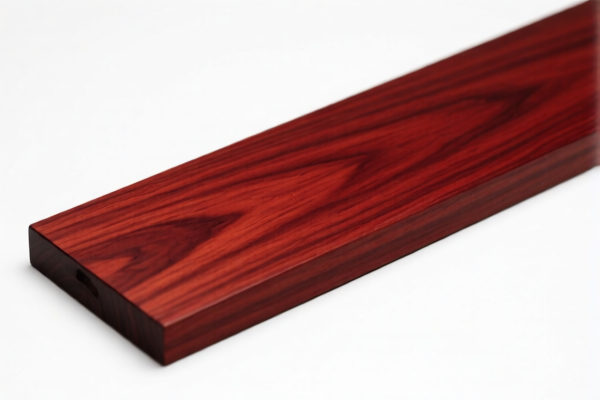
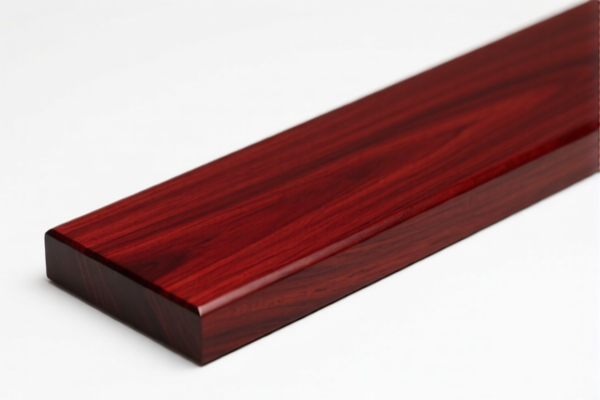
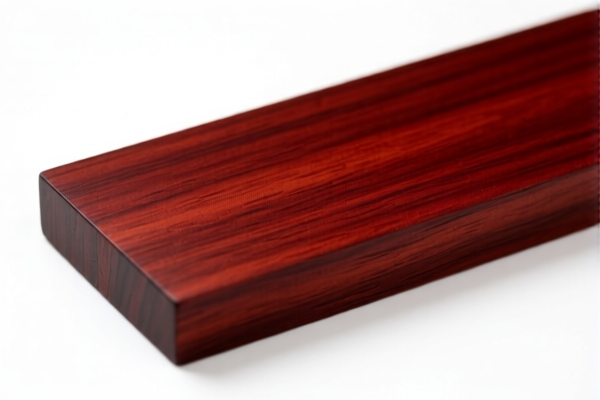
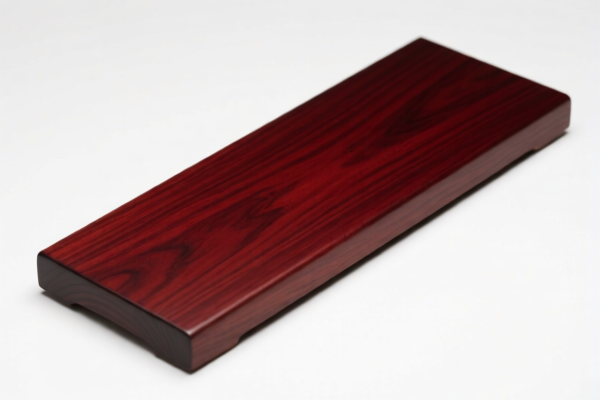
AI Analysis
🪵 Dark Red Mahogany Raw Wood (Raw Timber)
🌐 HS Code Reference & Customs Clearance Guide | 2026 Latest Tariff Analysis | Professional Clearance Strategy
📌 I. Product Definition & Classification: Is it "Timber" or "Structural Timber"?
Dark Red Mahogany (often referred to as Swietenia or Khaya species depending on origin) falls under the broad category of Tropical Wood and Roughly Squared Timber. However, the specific HS Code and resulting tax liability depend entirely on the physical state and processing level of the wood:
- Roughly Squared/Unworked (Logs/Squares): Classified as "Timber roughly squared."
- Profiling/Siding (Molded Edges): Classified as "Wood continuously shaped along any edge."
- Prefabricated Structural Elements: Classified as "Prefabricated buildings/components."
⚠️ Critical Distinction:
- If the wood is simply sawn to size (4-sided squared) but has no profile/molding → It is Rough Timber.
- If the wood has molded edges (like flooring or siding) → It is Continuously Shaped Wood.
- If it is cut to specific dimensions for a structure (beams, trusses) with joints → It is Prefabricated Structural Wood.
📦 II. HS Code Classification Matrix (2026 Latest Tariff Authority)
| HS Code | Product Description | Application Scenario | Processing Level |
|---|---|---|---|
4403.49.02.00 |
Dark Red Mahogany Rough Timber | Raw logs, square beams, unworked tropical timber | ✅ Low (Sawn only) |
4418.30.01.00 |
Pale Red Mahogany Structural Wood | Prefabricated structural components, beams | ✅ High (Shaped/Assembled) |
4418.99.91.40 |
Pale Red Mahogany Prefabricated Components | Raw material for prefabricated structural wood | ✅ High (Semi-finished) |
4409.22.90.90 |
Pale Red Mahogany Continuously Shaped | Molded siding, flooring, profiled timber | ✅ Medium (Profiled edges) |
4409.22.05.35 |
Pale Red Mahogany Continuous Profile | Endless molding, specific profiled timber | ✅ Medium (Profiled edges) |
🔍 Key Reminder:
- "Dark Red" typically maps to4403.49.02.00when raw.
- "Pale Red" variants often appear in4418(Structural) or4409(Shaped) categories.
- Do not mix: A "rough square" beam is4403, but a "molded beam" is4409or4418. Misclassification leads to severe penalties.
💰 III. 2026 Latest Tariff Rate Breakdown (Including Surtaxes & Policy Add-ons)
✅ Applicable Country: United States (US)
✅ Country of Origin: China (CN)
✅ Effective Time: Post-2025 Trade Policies (Section 301 + IEEPA)
🎯 1. 4403.49.02.00 —— Dark Red Mahogany Rough Timber (Raw)
| Item | Content |
|---|---|
| Base Duty Rate | 0.0% |
| Section 301 Surtax | +25.0% |
| IEEPA Add-on Tax | +10.0% (122-Clause Tariff) |
| Total Effective Rate | 35.0% |
| Tax Calculation | CIF Value × 35% |
| De Minimis Eligible? | ❌ No (Denied due to wood/timber restrictions) |
| Legal Path | IEEPA:9903.01.25 → USITC:4403.49.02.00 → FOOTNOTE:301.01 |
📌 Explanation:
- Base tariff is often 0% for raw tropical timber to encourage import, but US surcharges apply heavily.
- The 35% total is significant for raw wood margins.
- No de minimis: Shipments under $800 are not exempt for timber products from China under current enforcement.
🎯 2. 4418.30.01.00 & 4418.99.91.40 —— Structural Wood & Prefabricated Components
| Item | Content |
|---|---|
| Base Duty Rate | 3.2% |
| Section 301 Surtax | +25.0% |
| IEEPA Add-on Tax | +10.0% (122-Clause Tariff) |
| Total Effective Rate | 38.2% |
| Tax Calculation | CIF Value × 38.2% |
| De Minimis Eligible? | ❌ No |
| Legal Path | IEEPA:9903.01.25 → USITC:4418.30.01.00 → FOOTNOTE:301.01 |
📌 Note:
- Structural wood is treated as a "finished" good compared to raw logs.
- The base rate is higher (3.2%), pushing the total to 38.2%.
- These items are often subject to stricter Phytosanitary and Fumigation Certificates.
🎯 3. 4409.22.90.90 & 4409.22.05.35 —— Continuously Shaped Wood (Molded/Profiled)
| Item | Content |
|---|---|
| Base Duty Rate | 0.0% - 3.2% (Varies by exact profile) |
| Section 301 Surtax | +25.0% |
| IEEPA Add-on Tax | +10.0% (122-Clause Tariff) |
| Total Effective Rate | 35.0% - 38.2% |
| Tax Calculation | CIF Value × (35.0% or 38.2%) |
| De Minimis Eligible? | ❌ No |
| Legal Path | IEEPA:9903.01.25 → USITC:4409.22.xx.xx → FOOTNOTE:301.01 |
📌 Explanation:
-4409.22.90.90(Base 0%) → 35.0% Total.
-4409.22.05.35(Base 3.2%) → 38.2% Total.
- Shaped wood is often used in construction/decoration. Ensure the profile shape matches the HS description exactly.
🛠️ IV. Customs Clearance Practical Advice (Pitfall Avoidance Guide)
✅ 1. Mandatory Documentation Checklist
| Document | Required? | Note |
|---|---|---|
| ✅ Phytosanitary Certificate | YES | Issued by origin country; must state no pests. |
| ✅ Fumigation Certificate | YES | ISPM 15 compliant; essential for raw wood. |
| ✅ Commercial Invoice | YES | Must specify "Dark Red Mahogany" and HS Code. |
| ✅ Packing List | YES | Detail dimensions, volume (CBM), and weight. |
| ✅ Bill of Lading | YES | Clean on-board B/L. |
| ✅ Certificate of Origin | YES | If claiming any preferential rates (rare for CN). |
✅ 2. Declaration Strategy (Key Rules)
🔥 “Be Precise: Raw vs. Shaped, Red vs. Pale”
| Scenario | Correct Declaration | Wrong Declaration | Consequence |
|---|---|---|---|
| Raw, 4-sided squared beam | 4403.49.02.00 "Roughly Squared Dark Red Mahogany" |
4418.30.01.00 (Structural) |
Overpayment of tax; audit risk |
| Molded flooring/panel | 4409.22.90.90 "Continuously Shaped Mahogany" |
4403.49.02.00 (Raw) |
Undervaluation penalty; seizure risk |
| Prefabricated wall section | 4418.99.91.40 "Prefabricated Structural Component" |
4409.22.05.35 (Shaped) |
Misclassification; delays |
| Pale Red Variant | 4418.30.01.00 or 4409.22.05.35 |
4403.49.02.00 (Dark Red) |
Tax difference (38.2% vs 35%) |
✅ 3. Special Handling Tips
| Situation | Advice |
|---|---|
| Mixed Shipments | Declare Dark Red and Pale Red separately if HS codes differ. Do not lump together. |
| Moisture Content | Specify moisture content (e.g., "Kiln Dried"). Wet wood may require additional phytosanitary checks. |
| Volume vs. Weight | Customs often checks Volume (CBM). Ensure invoice CBM matches B/L. |
| Value Assessment | CIF value must include freight and insurance. Undeclared shipping costs can lead to 100% penalty. |
🌍 V. Global Market Comparison (2026)
| Country/Region | Recommended HS Code | Tariff (China Origin) | Certification Required | Notes |
|---|---|---|---|---|
| 🇺🇸 USA | 4403.49.02.00 (Raw) |
35.0% | Phytosanitary + Fumigation | High surtax (301 + IEEPA) |
| 🇨🇳 China | 4403.49.02.00 |
~5-10% | CITES Permit (if endangered) | Import duty + VAT |
| 🇪🇺 EU | 4403.49.02.00 |
0% (if FLEGT/CEP) | FLEGT + CITES | Strict CITES enforcement |
| 🇬🇧 UK | 4403.49.02.00 |
5% | UK EUTR Compliance | Post-Brexit rules apply |
| 🇯🇵 Japan | 4403.49.02.00 |
2-5% | IPPC Mark | Strict wood pest checks |
📌 Conclusion:
- USA is the most expensive market due to layered surtaxes (35-38%).
- EU/UK focus heavily on CITES and FLEGT compliance rather than high tariffs.
- Always verify CITES status: Some "Mahogany" species are protected.
📌 VI. Common Mistakes & Pitfalls (Blood Lessons)
❌ Mistake 1: Declaring "Mahogany" generically without specifying "Dark Red" or "Pale Red"
👉 Consequence: Customs may apply the highest possible tariff or request additional proof.
❌ Mistake 2: Misclassifying Shaped Wood as Raw Timber (4403 instead of 4409)
👉 Consequence: If caught, it’s tax evasion → Heavy fines + seizure. If under-declared, you save 3.2% base but risk audits.
❌ Mistake 3: Ignoring IEEPA 10% Surtax in cost calculations
👉 Consequence: Profit margin wiped out. Always calculate 35% or 38.2% not just base rate.
❌ Mistake 4: Missing Phytosanitary/Fumigation Certs
👉 Consequence: Cargo stuck at port → Demurrage fees + return shipment costs.
✅ Correct Practice:
"Dark Red Mahogany, Roughly Squared, Kiln Dried, Fumigated, CBM: X, HS: 4403.49.02.00"
🎯 VII. Conclusion: Precision Clears, Costs Down!
🎯 Remember the Motto:
🔹 "Raw is 4403, Shaped is 4409, Structural is 4418."
🔹 "35% for Raw, 38.2% for Shaped/Structural. No De Minimis!"
🔹 "CITES & Fumigation are Non-Negotiable!"
📌 Pro Tip:
If your mahogany is sourced from South America or Africa, ensure you have CITES Documentation. US Customs and Border Protection (CBP) strictly enforces anti-illegal logging laws.
Consider applying for a Pre-Ruling (Binding Ruling) from CBP to lock in the HS Code and avoid post-import audits.
📣 Immediate Action:
📞 Consult a licensed customs broker.
📄 Ensure Phytosanitary + Fumigation + CITES docs are ready.
📉 Factor in 35-38% total tax in your pricing model.
✨ Professional Clearance Starts with Accurate Classification!
💼 Every Percent of Tax Saved is Pure Profit!
Customer Reviews
About HS Code Classification
The Harmonized System (HS) is an internationally standardized nomenclature developed by the World Customs Organization (WCO) to classify traded products. Over 200 countries use the HS system as the basis for customs tariffs, trade statistics, and import/export regulations.
Each HS code follows a hierarchical structure:
- Chapter (2 digits) — Broad category of goods (e.g., Chapter 84: Machinery and Mechanical Appliances)
- Heading (4 digits) — More specific grouping within the chapter
- Subheading (6 digits) — Internationally standardized breakdown, used by all WCO member countries
- National subdivisions (8-10 digits) — Country-specific extensions for further classification, such as US HTSUS 10-digit codes
Correct HS code classification is essential for smooth customs clearance, accurate duty payment, and compliance with trade regulations. Misclassification can lead to customs delays, overpayment of duties, or penalties.
When importing from CN to US, the applicable tariff rates may include:
- Most-Favored-Nation (MFN) rate — The standard duty rate applied to WTO members
- General rate — Applied to countries without trade agreements
- Trade remedy duties — Additional tariffs such as Section 301 (anti-dumping), Section 232 (national security), or countervailing duties
The information provided on this page is for reference purposes only. For official classification, please consult with your local customs authority or a licensed customs broker.