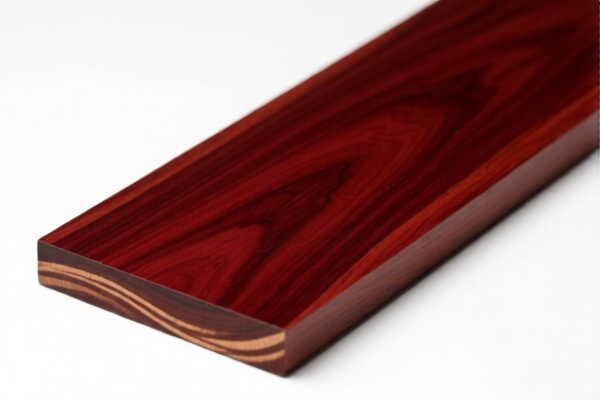
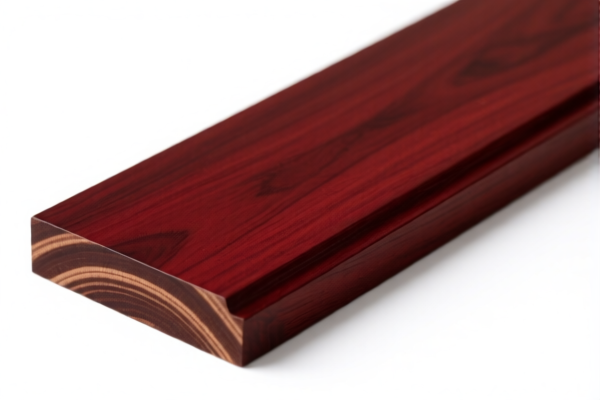
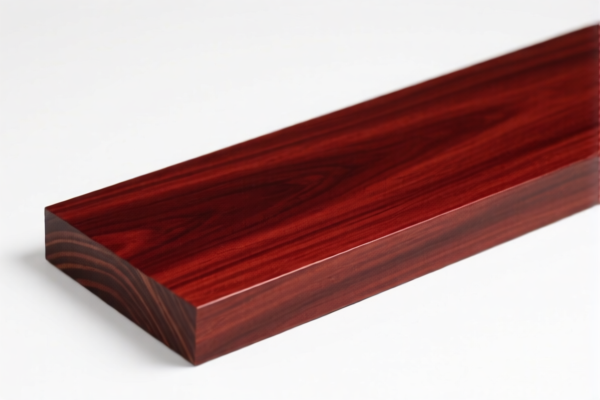
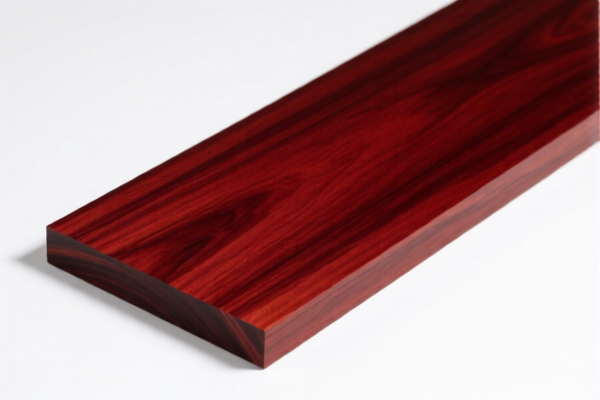
Dark Red Meranti Lumber
CN → US| HS Code | Tariff Rate | Origin | Destination | Doc |
|---|---|---|---|---|
| 4407250000 | 35.0% | CN | US | Official Doc |
| 4407290216 | 35.0% | CN | US | Official Doc |
Product Images
AI Analysis
🌳 Dark Red Meranti Lumber: The Redwood of Southeast Asia
🌐 HS Code Reference & Customs Clearance Guide | 2026 Latest Tariff Analysis | Professional Level通关 Strategy
📌 Part I: Product Definition & Classification: Do You Really Know "Dark Red Meranti"?
Dark Red Meranti is a premium tropical hardwood, primarily sourced from Southeast Asia (Malaysia, Indonesia, Philippines). It is a variety of Shorea species, known for its rich reddish-brown color, straight grain, and excellent workability. In international trade, it is often grouped with other "Meranti" types and "Meranti Bakau" under specific HS codes.
Key Characteristics: - Appearance: Heartwood is dark reddish-brown; sapwood is pale yellow. - Properties: Medium density, good strength-to-weight ratio, moderate durability. - Common Uses: Furniture, veneer, plywood, interior joinery, flooring, and general construction.
⚠️ Critical Distinction:
- Dark Red Meranti vs. Light Red Meranti: Both are high-quality Meranti types but differ slightly in color and density. However, for HS Code purposes (under 4407.25), they are often grouped together.
- Meranti Bakau: A specific type of Meranti, often used for heavier construction or marine applications.
- Keruing (Dipterocarpus spp.): A different genus. While similar in appearance, Keruing has different grain patterns and properties. It falls under a different HS Code (4407.29).
📦 Part II: HS Code Classification Details (2026 Latest Tariff Authority Comparison)
| HS Code | Product Description | Applicable Scenario | Tax Rate (China Origin → US) |
|---|---|---|---|
4407.25.00.00 |
Wood sawn/chipped of tropical wood: Dark Red Meranti, Light Red Meranti, and Meranti Bakau | Furniture-grade lumber, veneer, plywood raw material, interior joinery | 25.0% |
4407.29.02.16 |
Wood sawn/chipped of tropical wood: Other Keruing (Dipterocarpus spp.) | Similar uses to Meranti but from Dipterocarpus genus; often used in heavy construction | 25.0% |
🔍 Key Reminder:
- Both Dark Red Meranti and Keruing are subject to the same total tax rate (25%) in this dataset.
- However, misclassification can lead to customs delays. Ensure you know the botanical genus:
- Shorea spp. → 4407.25.00.00 (Meranti)
- Dipterocarpus spp. → 4407.29.02.16 (Keruing)
- If you are unsure, provide a botanical certificate or lab test to Customs to avoid penalties.
💰 Part III: 2026 Latest Tariff Rate Details (Including Surtaxes & Policy Add-ons)
✅ Applicable Country: United States (US)
✅ Origin: China (CN) [Note: If Meranti is imported from Malaysia/Indonesia, origin rules may differ, but dataset assumes China origin for tax calculation]
✅ Effective Date: Ongoing
🎯 1. 4407.25.00.00 —— Dark Red Meranti, Light Red Meranti, Meranti Bakau
| Item | Content |
|---|---|
| Base Tariff | 0.0% (ad valorem) |
| Section 301 Surcharge | +25.0% |
| Total Tax Rate | 25.0% |
| Tax Calculation | CIF Value × 25% |
| De Minimis Exemption | ❌ Not Applicable (Section 301 goods are excluded from de minimis) |
| Legal Basis | HTSUS 4407.25.00.00 → Section 301 Footnote 9903.88.01 |
📌 Explanation:
- Base Tariff: 0% for most tropical woods under Chapter 44.
- Section 301 Surcharge: 25% applies to Chinese-origin lumber products.
- No De Minimis: Packages under $800 do not qualify for tax exemption. This is a high-risk category for small parcels.
🎯 2. 4407.29.02.16 —— Other Keruing (Dipterocarpus spp.)
| Item | Content |
|---|---|
| Base Tariff | 0.0% |
| Section 301 Surcharge | +25.0% |
| Total Tax Rate | 25.0% |
| Tax Calculation | CIF Value × 25% |
| De Minimis Exemption | ❌ Not Applicable |
| Legal Basis | HTSUS 4407.29.02.16 → Section 301 Footnote 9903.88.01 |
📌 Note:
- Same tax rate as Meranti.
- Keruing is often used as a cheaper alternative to Meranti. Ensure correct botanical identification.
🛠️ Part IV: Customs Clearance Practical Advice (Battle-Tested Pitfall Avoidance Guide)
✅ 1. Required Documentation Checklist (Non-Negotiable)
| Document | Must Provide | Explanation |
|---|---|---|
| ✅ Commercial Invoice | ✔️ | Must specify "Dark Red Meranti Lumber" or "Keruing Lumber" + HS Code |
| ✅ Packing List | ✔️ | Detail dimensions, weight, and quantity per package |
| ✅ Bill of Lading/Air Waybill | ✔️ | Must match invoice and packing list |
| ✅ Phytosanitary Certificate | ✔️ | Critical for wood products. Issued by exporting country’s plant protection agency. |
| ✅ Fumigation Certificate | ✔️ | Proves wood was treated for pests (ISPM 15 standard). |
| ✅ Botanical Certificate | ✔️ | Optional but recommended to prove genus (Shorea vs. Dipterocarpus). |
| ✅ Country of Origin Certificate | ✔️ | To determine eligibility for any preferential tariffs (though unlikely for China). |
✅ 2. Declaration Tips (Key Mnemonics)
🔥 “Be Specific, Be Botanical, Be Clean!”
| Scenario | Correct Declaration | Incorrect Practice |
|---|---|---|
| Meranti Lumber | "Dark Red Meranti Lumber, 4407.25.00.00" | "Tropical Wood" or "Lumber" (Too vague → Audit) |
| Keruing Lumber | "Keruing Lumber (Dipterocarpus spp.), 4407.29.02.16" | "Meranti" (Misclassification → Penalty) |
| Plywood Core | "Meranti Veneer/Lumber for Plywood" | "Wood Chips" (If processed) |
| Small Samples | Still declare! Do not use de minimis | Assume <$800 is tax-free (❌ Wrong) |
✅ 3. Special Cases Handling
| Scenario | Handling Advice |
|---|---|
| Mixed Shipments (Meranti + Keruing) | Declare separately. Use two HS Codes. Do not lump together. |
| Untreated Wood | Will be rejected. Must have Phytosanitary + Fumigation Cert. |
| Wood with Bark | May require additional inspection. Prefer debarked wood for smoother clearance. |
| Value Under $800 | Still 25% tax. Do not attempt de minimis clearance. |
| Wood from Non-China Origin | If from Malaysia/Indonesia, check if Section 301 applies. (Dataset assumes China origin, so 25% applies.) |
🌍 Part V: Global Market Comparison (2026 Latest)
| Country/Region | Recommended HS Code | Tariff (China Origin) | Certification Requirements | Notes |
|---|---|---|---|---|
| 🇺🇸 USA | 4407.25.00.00 / 4407.29.02.16 |
25% | Phytosanitary + Fumigation | High duty, strict wood pest control |
| 🇨🇳 China | 4407.25.00.00 / 4407.29.02.16 |
~5-10% | Phytosanitary | Importing Meranti for processing |
| 🇪🇺 EU | 4407.25.00.00 / 4407.29.02.16 |
0-10% (varies) | FSC/PEFC (Optional) | No Section 301; lower duty |
| 🇬🇧 UK | 4407.25.00.00 / 4407.29.02.16 |
0-10% | FSC/PEFC | Post-Brexit rules apply |
| 🇦🇺 Australia | 4407.25.00.00 / 4407.29.02.16 |
5% | Biosecurity Check | Strict biosecurity laws |
📌 Conclusion:
- USA is the most expensive market due to Section 301 25% surcharge.
- EU/UK/AU are more favorable on duty but strict on biosecurity (fumigation is mandatory).
- China is both an exporter and importer of Meranti.
📌 Part VI: Common Errors & Pitfalls (Lessons Learned the Hard Way)
❌ Error 1: Assuming small shipments (<$800) are tax-free
👉 Consequence: Seizure + penalty + 25% back-taxed. Section 301 goods are excluded from de minimis.
❌ Error 2: Declaring as "Other Wood" or "Tropical Lumber"
👉 Consequence: Customs manual inspection → Delays of weeks. Be specific: "Dark Red Meranti".
❌ Error 3: Missing Phytosanitary Certificate
👉 Consequence: Rejected/Returned. Wood pests (e.g., termites, borers) are a major concern.
❌ Error 4: Confusing Meranti (Shorea) with Keruing (Dipterocarpus)
👉 Consequence: Classification error → Audit risk. Use botanical names if possible.
✅ Correct Practice:
"Dark Red Meranti Lumber, Sawn, 20mm Thickness, Phytosanitary Cert Attached, HS: 4407.25.00.00"
🎯 Part VII: Conclusion: Professional Declaration, Cost Control, Efficiency!
🎯 Remember the Mnemonic:
🔹 "Meranti or Keruing, 25% for US View!"
🔹 "No Phytosanitary, No Entry!"
🔹 "De Minimis? Think Again!"
📌 Pro Tip:
If you are importing large volumes, consider bonded warehouses or free trade zones to defer duties. For consistent shipments, apply for an Advance Ruling from US Customs to confirm HS Code and tax rate.
📣 Immediate Action:
📞 Contact a licensed customs broker + Provide Phytosanitary Certificate + Declare with exact botanical name.
🚀 Let your Meranti lumber clear smoothly, avoid delays, and protect your margins!
✨ Professional clearance starts with accurate classification!
💼 Every dollar of tax is worth saving with the right strategy!
Customer Reviews
About HS Code Classification
The Harmonized System (HS) is an internationally standardized nomenclature developed by the World Customs Organization (WCO) to classify traded products. Over 200 countries use the HS system as the basis for customs tariffs, trade statistics, and import/export regulations.
Each HS code follows a hierarchical structure:
- Chapter (2 digits) — Broad category of goods (e.g., Chapter 84: Machinery and Mechanical Appliances)
- Heading (4 digits) — More specific grouping within the chapter
- Subheading (6 digits) — Internationally standardized breakdown, used by all WCO member countries
- National subdivisions (8-10 digits) — Country-specific extensions for further classification, such as US HTSUS 10-digit codes
Correct HS code classification is essential for smooth customs clearance, accurate duty payment, and compliance with trade regulations. Misclassification can lead to customs delays, overpayment of duties, or penalties.
When importing from CN to US, the applicable tariff rates may include:
- Most-Favored-Nation (MFN) rate — The standard duty rate applied to WTO members
- General rate — Applied to countries without trade agreements
- Trade remedy duties — Additional tariffs such as Section 301 (anti-dumping), Section 232 (national security), or countervailing duties
The information provided on this page is for reference purposes only. For official classification, please consult with your local customs authority or a licensed customs broker.