Dark Red Meranti Sawn Timber
CN → US| HS Code | Tariff Rate | Origin | Destination | Doc |
|---|---|---|---|---|
| 4407250000 | 35.0% | CN | US | Official Doc |
| 4407290296 | 35.0% | CN | US | Official Doc |
Product Images
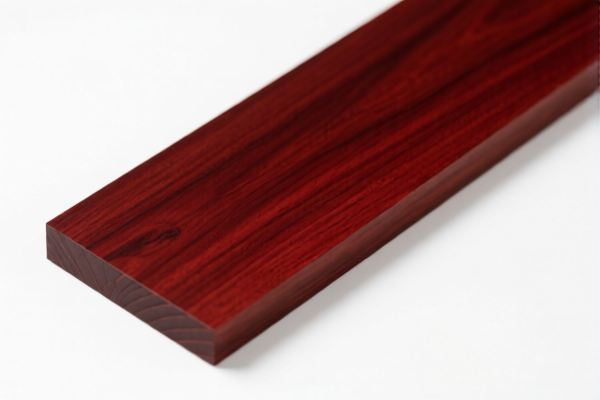
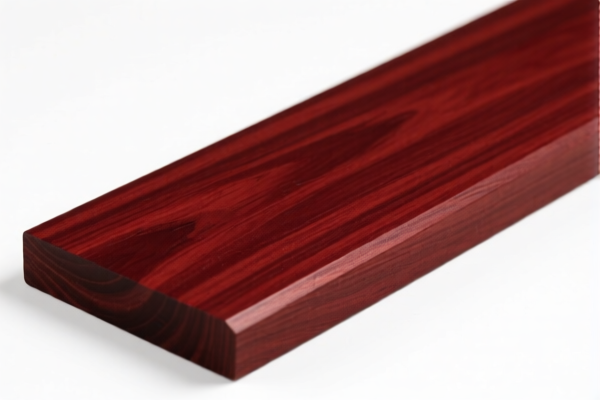
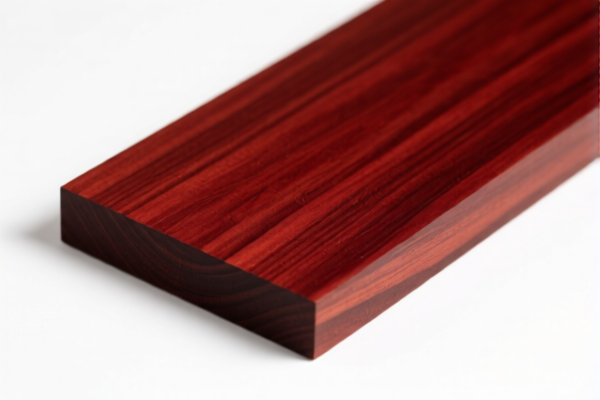
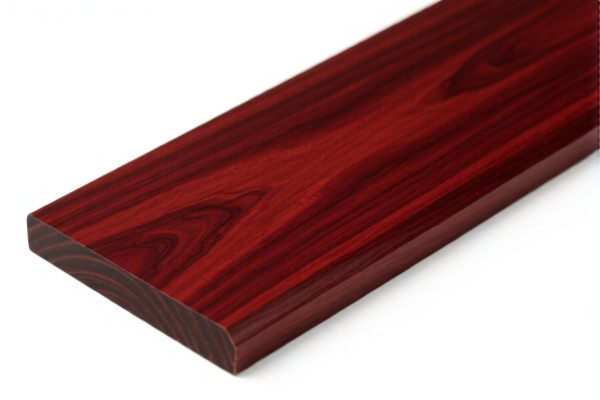
AI Analysis
🪵 Dark Red Meranti Sawn Timber (Tropical Wood)
🌐 HS Code Reference & Customs Clearance Guide | 2026 Latest Tariff Analysis | Professional Compliance Strategy
📌 I. Product Definition & Classification: Do You Know Your Timber?
Dark Red Meranti (Shorea spp.) is a premium tropical hardwood widely used in furniture, flooring, joinery, and construction. In international trade, it falls under Chapter 44: Wood and articles of wood; wood charcoal.
However, not all Meranti is treated equally. The critical distinction lies in: 1. Wood Type: Dark Red Meranti vs. Light Red Meranti vs. Other Tropical Woods. 2. Processing Level: Sawn/chipped vs. Simple/Peled vs. Veneer.
⚠️ Key Classification Point:
- If the wood is Dark Red Meranti, Light Red Meranti, or Meranti Bakau, and processed (sawn, sliced, peeled, planed, sanded, or end-jointed) with a thickness > 6mm → It falls under 4407.25.
- If it is Other Tropical Wood (not Dark/Light Red Meranti or Bakau) → It falls under 4407.29.
- Note: The DATA provided focuses on these two specific sub-categories.
📦 II. HS Code Classification Details (2026 Latest Tariff Authority Match)
Based on the provided data, here are the precise HS Codes and descriptions:
| HS Code | Product Description | Applicable Scenario | Tax Rate |
|---|---|---|---|
4407.25.00.00 |
Of tropical wood: Dark Red Meranti, Light Red Meranti and Meranti Bakau | Premium tropical hardwood planks, beams, or veneer sheets intended for high-end furniture, flooring, or interior joinery. | 25.0% |
4407.29.02.96 |
Of tropical wood: Other Other | Any tropical wood NOT specifically listed as Dark Red Meranti, Light Red Meranti, or Meranti Bakau (e.g., Lauan, Philippine Mahogany if not classified as Meranti, etc.). | 25.0% |
🔍 Critical Distinction:
- 4407.25.00.00 is for the specific "Meranti" group. This is the most common classification for high-grade Meranti timber.
- 4407.29.02.96 is a "catch-all" for other tropical woods. Do not misdeclare Dark Red Meranti as "Other" to avoid scrutiny; if it is Meranti, use 4407.25.
- Both categories share the same total tax rate of 25.0% in the provided dataset, but accurate description is vital for customs verification.
💰 III. 2026 Latest Tariff Rate Breakdown (Detailed Tax Clauses)
✅ Applicable Country: United States (US)
✅ Origin: China (CN) (Assumed based on typical 25% Section 301 context, though not explicitly stated, the tax detail implies US Section 301)
✅ Effective Time: Current (as per data)
🎯 1. 4407.25.00.00 —— Dark Red Meranti, Light Red Meranti, Meranti Bakau
| Item | Detail |
|---|---|
| Product Description | Wood sawn or chipped lengthwise, sliced or peeled, whether or not planed, sanded or end-jointed, of a thickness exceeding 6 mm: Of tropical wood: Dark Red Meranti, Light Red Meranti and Meranti Bakau |
| Base Tariff | 0.0% |
| Additional Tariff (Section 301) | +25.0% |
| Total Tariff | 25.0% |
| Tax Calculation | CIF Value × 25.0% |
| De Minimis Exemption | ❌ Not Applicable (Section 301 tariffs generally apply regardless of value for these goods) |
| Legal Basis | USHTS 4407.25.00.00 + Section 301 List 4A |
📌 Explanation:
- The 0.0% base rate reflects the standard Most Favored Nation (MFN) rate for wood products.
- The 25.0% additional tariff is imposed under Section 301 of the Trade Act of 1974 against Chinese-origin goods.
- Total Cost Impact: For every $10,000 CIF value, you pay $2,500 in duties. This is a significant cost factor.
🎯 2. 4407.29.02.96 —— Other Tropical Wood
| Item | Detail |
|---|---|
| Product Description | Wood sawn or chipped lengthwise, sliced or peeled, whether or not planed, sanded or end-jointed, of a thickness exceeding 6 mm: Of tropical wood: Other Other |
| Base Tariff | 0.0% |
| Additional Tariff (Section 301) | +25.0% |
| Total Tariff | 25.0% |
| Tax Calculation | CIF Value × 25.0% |
| De Minimis Exemption | ❌ Not Applicable |
| Legal Basis | USHTS 4407.29.02.96 + Section 301 List 4A |
📌 Note:
- Same tax structure as above. The "Other Other" category is broader and may include less common tropical species.
- Ensure the scientific name and common name on the invoice match the customs declaration to avoid penalties.
🛠️ IV. Customs Clearance Practical Advice (Avoid Pitfalls)
✅ 1. Required Documentation Checklist
| Document | Must Provide | Explanation |
|---|---|---|
| ✅ Commercial Invoice | ✔️ | Must clearly state "Dark Red Meranti Sawn Timber" or "Tropical Wood Sawn Timber". |
| ✅ Packing List | ✔️ | Detail quantity, weight, and dimensions. |
| ✅ Phytosanitary Certificate | ✔️ | Crucial for wood products. Must confirm treatment against pests (ISPM 15 standard). |
| ✅ Fumigation Certificate | ✔️ | If required by destination country, even if Phytosanitary is provided. |
| ✅ Bill of Lading/Air Waybill | ✔️ | Standard shipping documents. |
| ✅ Product Specifications | ✔️ | Thickness, dimensions, treatment type (sawn, planed, etc.). |
✅ 2. Declaration Tips (Key Mnemonics)
🔥 "Accurate Name, Phytosanitary Check, No Hidden Costs!"
| Scenario | Correct Declaration | Incorrect Practice |
|---|---|---|
| Dark Red Meranti | 4407.25.00.00 - "Dark Red Meranti" |
Mislabeling as "Other Wood" → Risk of classification error & penalties. |
| Light Red Meranti | 4407.25.00.00 - "Light Red Meranti" |
Declaring as "Hardwood" only → Too vague, may trigger inspection. |
| Other Tropical Wood | 4407.29.02.96 - "Other Tropical Wood Sawn Timber" |
Using generic "Wood" → High chance of customs query. |
| Thickness ≤ 6mm | Different HS Code (Veneer/Other) | Declaring as >6mm when it's not → Misclassification. |
✅ 3. Special Considerations
| Situation | Advice |
|---|---|
| End-Jointed Wood | If the wood is end-jointed, it is still classified under 4407 if it meets the thickness and processing criteria. |
| Planed/Sanded | These processes do not change the HS Code from 4407.25/29, but must be declared. |
| Treatments | Ensure wood is heat-treated or fumigated to meet ISPM 15 standards. Untreated wood will be rejected. |
| Origin Labeling | Clearly mark "Made in China" or "Origin: [Country]" on packaging and documents. |
🌍 V. Global Market Comparison (2026 Latest)
| Country/Region | Recommended HS Code | Tariff (China Origin) | Certification | Notes |
|---|---|---|---|---|
| 🇺🇸 USA | 4407.25.00.00 / 4407.29.02.96 |
25.0% (Section 301) | Phytosanitary, ISPM 15 | High tariff impact. |
| 🇨🇳 China | 4407.25.00.00 |
~5-10% | Phytosanitary | Lower tariffs, but strict biosecurity. |
| 🇪🇺 EU | 4407.25.00.00 |
0% (FSC/PEFC may affect) | FLEGT, EUTR | Strict EUTR (EU Timber Regulation) compliance. |
| 🇬🇧 UK | 4407.25.00.00 |
0% (FLEGT) | UK EUTR | Post-Brexit, strict timber legality checks. |
📌 Conclusion:
- USA imposes a 25% additional tariff on these products from China.
- EU/UK have strict legality checks (FLEGT/EUTR) but may have lower or zero tariffs if legality is proven.
- Biosecurity is the biggest hurdle globally: Phytosanitary certificates are non-negotiable.
📌 VI. Common Errors & Pitfalls (Lessons Learned)
❌ Error 1: Declaring "Wood" generically without specifying "Tropical" or "Meranti"
👉 Consequence: Customs may assign a higher default tariff or hold shipment for classification review.
❌ Error 2: Ignoring Phytosanitary Requirements
👉 Consequence: Shipment rejected, destroyed, or returned at owner's expense.
❌ Error 3: Misclassifying Dark Red Meranti as "Other" to save time
👉 Consequence: Even if the tax rate is the same (25%), the description must be accurate. Inaccurate description leads to fines and audits.
❌ Error 4: Assuming "Sawn" includes "Veneer"
👉 Consequence: Veneer sheets (<6mm or peeled for veneer) may fall under different HS codes (e.g., 4408). Ensure thickness >6mm for 4407.
✅ Correct Practice:
"Dark Red Meranti Sawn Timber, Heat Treated, ISPM 15 Compliant, Thickness 19mm, Grade A/B, Origin: [Country]"
🎯 VII. Conclusion: Precise Classification Saves Money & Time
🎯 Remember:
🔹 "Meranti is Meranti: Use 4407.25.00.00"
🔹 "Other Tropical: Use 4407.29.02.96"
🔹 "25% Tax on China Origin: Plan Your Budget"
🔹 "Phytosanitary Certificate: No Exception"
📌 Pro Tip:
- If you are shipping to the US, factor in the 25% additional duty in your cost calculations.
- Ensure Phytosanitary Certification is issued by the national plant protection organization of the exporting country.
- Consider pre-classification rulings if unsure about the wood species.
📣 Immediate Action:
📞 Contact your customs broker with the exact scientific name and common name.
📄 Prepare Phytosanitary Certificate and Fumigation Report before shipment.
🚀 Ensure clear labeling to avoid detention.
✨ Professional clearance starts with precise classification!
💼 Your timber is valuable; protect it with accurate paperwork!
Customer Reviews
About HS Code Classification
The Harmonized System (HS) is an internationally standardized nomenclature developed by the World Customs Organization (WCO) to classify traded products. Over 200 countries use the HS system as the basis for customs tariffs, trade statistics, and import/export regulations.
Each HS code follows a hierarchical structure:
- Chapter (2 digits) — Broad category of goods (e.g., Chapter 84: Machinery and Mechanical Appliances)
- Heading (4 digits) — More specific grouping within the chapter
- Subheading (6 digits) — Internationally standardized breakdown, used by all WCO member countries
- National subdivisions (8-10 digits) — Country-specific extensions for further classification, such as US HTSUS 10-digit codes
Correct HS code classification is essential for smooth customs clearance, accurate duty payment, and compliance with trade regulations. Misclassification can lead to customs delays, overpayment of duties, or penalties.
When importing from CN to US, the applicable tariff rates may include:
- Most-Favored-Nation (MFN) rate — The standard duty rate applied to WTO members
- General rate — Applied to countries without trade agreements
- Trade remedy duties — Additional tariffs such as Section 301 (anti-dumping), Section 232 (national security), or countervailing duties
The information provided on this page is for reference purposes only. For official classification, please consult with your local customs authority or a licensed customs broker.