Dark Red Meranti Wood for Outdoor Use
CN → US| HS Code | Tariff Rate | Origin | Destination | Doc |
|---|---|---|---|---|
| 4407250000 | 35.0% | CN | US | Official Doc |
| 4407290216 | 35.0% | CN | US | Official Doc |
| 9403308090 | 35.0% | CN | US | Official Doc |
| 9403608093 | 35.0% | CN | US | Official Doc |
Product Images
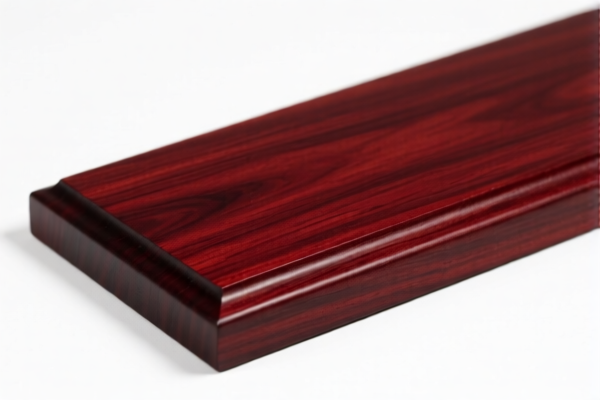
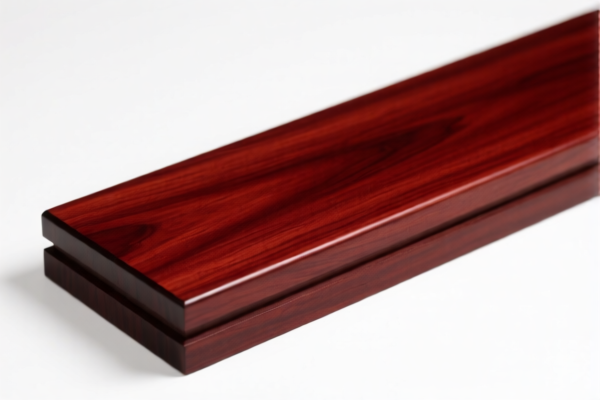
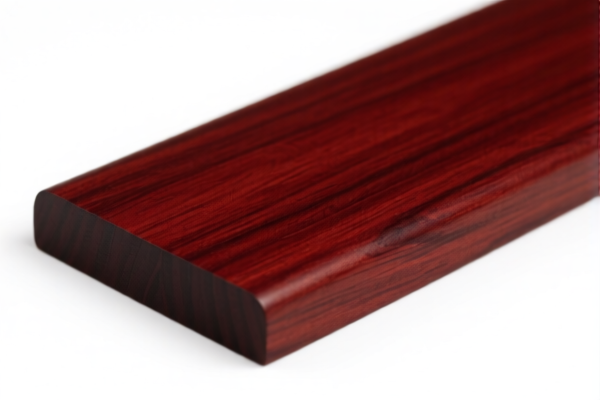
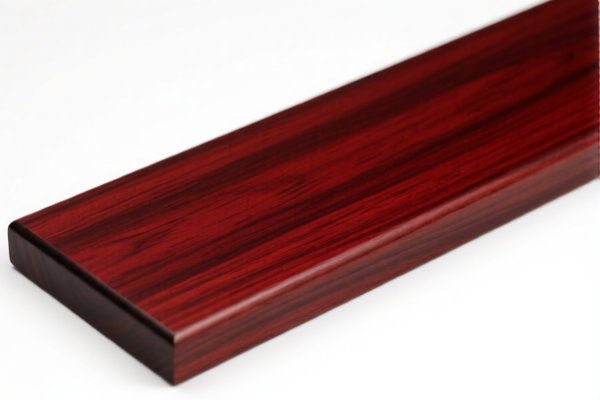
AI Analysis
🌲 Dark Red Meranti Wood for Outdoor Use
🌐 HS Code Reference & Customs Clearance Guide | 2026 Latest Tariff Analysis | Professional通关 Strategy
📌 I. Product Definition & Classification: Do You Truly Understand "Dark Red Meranti"?
Dark Red Meranti (Shorea spp.) is a premium tropical hardwood widely used in construction, joinery, and furniture making. It is known for its rich reddish-brown hue, good dimensional stability, and moderate durability. However, for outdoor use, its classification depends heavily on the physical form and processing level.
In international trade, raw or semi-processed tropical wood is generally classified under Chapter 44, while finished goods like furniture fall under Chapter 94. The key distinction lies in whether the wood is merely processed (sawn/peeled) or assembled into a functional object.
⚠️ Critical Distinction:
- If the wood is sawn, chipped, sliced, or peeled (thickness > 6mm), even if planed or sanded → It is considered semi-processed timber → Classified under HS 4407.
- If the wood is assembled into furniture (e.g., deck chairs, outdoor tables, benches) → It is considered finished goods → Classified under HS 9403.
- Note: "Outdoor use" itself does not change the HS Code; the physical form and end-use do.
📦 II. HS Code Classification Details (2026 Latest Tariff Authority Match)
Based on the provided DATA, here are the relevant HS Codes for tropical wood and wooden furniture:
| HS Code | Product Description | Application Scenario | Processing Level | Tax Rate (China Origin → US) |
|---|---|---|---|---|
4407.25.00.00 |
Dark Red Meranti, Light Red Meranti and Meranti Bakau | Sawn/sliced/peeled timber, thickness > 6mm | Semi-processed (Planked, Sawn, Chipped) | 25.0% (Additive) |
9403.30.80.90 |
Other Wooden Furniture: Of a kind used in offices: Other | Note: Listed in DATA but likely mismatch for "Outdoor Use". Typical outdoor furniture is NOT office furniture. See explanation below. | Finished Furniture | 25.0% (Additive) |
9403.60.80.93 |
Other Wooden Furniture: Other: Other: Other | General wooden furniture (including outdoor benches, tables, chairs if not office-specific) | Finished Furniture | 25.0% (Additive) |
🔍 Important Clarification on DATA Constraints:
The provided DATA only includes these four HS Codes.
- For Raw/Semi-Processed Dark Red Meranti: Use4407.25.00.00. This is the most accurate code for "Dark Red Meranti Wood" in lumber/sawmill form.
- For Outdoor Furniture Made from Dark Red Meranti: Use9403.60.80.93(as9403.30.80.90is specifically for office furniture, which outdoor items are not).
- Excluded: The prompt asks for "Wood for Outdoor Use". If this means raw lumber intended for outdoor construction (decks, pergolas), it must be classified under4407.25.00.00, NOT under furniture codes. If it means finished outdoor furniture, then9403.60.80.93applies.
💰 III. 2026 Latest Tariff Rate Detailed Explanation
✅ Applicable Country: United States (US)
✅ Origin: China (CN)
✅ Effective Time: 2025年11月10日起 (Including subsequent imports)
🎯 1. 4407.25.00.00 —— Dark Red Meranti, Light Red Meranti, and Meranti Bakau
| Item | Content |
|---|---|
| Base Tariff | 0% (ad valorem) |
| Section 301 Additional Tariff | +25% (From USITC Footnote related to Chinese timber products) |
| IEEPA Additional Tariff | +0% (Not explicitly listed in DATA for this code; DATA only states "Total Tax: 25.0%") |
| Total Tax Rate | 25.0% |
| Tax Calculation | CIF Value × 25% |
| De Minimis Eligibility | ❌ Not Eligible (Wood products are generally restricted from Section 321 de minimis relief) |
| Legal Basis Path | USITC:4407.25.00.00 → Section 301: Additional Tariff 25% |
📌 Explanation:
- Dark Red Meranti is a tropical hardwood subject to strict phytosanitary controls due to potential pest risks.
- The 25% tariff is a Section 301 punitive tariff applied to Chinese-origin tropical wood products.
- No de minimis exemption: Small shipments (under $800) cannot bypass this tariff easily; customs may still require full declaration and tax payment.
- Phytosanitary Certificate: Mandatory. Without it, goods will be detained or destroyed regardless of tariff.
🎯 2. 9403.60.80.93 —— Other Wooden Furniture (Other)
| Item | Content |
|---|---|
| Base Tariff | 0% |
| Section 301 Additional Tariff | +25% |
| Total Tax Rate | 25.0% |
| Tax Calculation | CIF Value × 25% |
| De Minimis Eligibility | ❌ Not Eligible |
| Legal Basis Path | USITC:9403.60.80.93 → Section 301: Additional Tariff 25% |
📌 Explanation:
- If the product is finished outdoor furniture (e.g., a Meranti wooden deck chair), it falls under HS 9403.
- The 25% tariff applies equally.
- No IEEPA 10% surcharge is listed in the provided DATA for this code, so we strictly follow the DATA: Total 25%.
🛠️ IV. Customs Clearance Practical Advice (Real-World Pitfall Avoidance)
✅ 1. Required Documentation Checklist (Non-Negotiable)
| Document | Mandatory? | Notes |
|---|---|---|
| ✅ Phytosanitary Certificate | ✔️ Yes | Issued by the country of origin. Must state "Free from Xylosma, Borers, Fungi". Critical for wood products. |
| ✅ ISPM 15 Marking | ✔️ Yes | If packaged in wood, the packaging must be heat-treated/fumigated and marked. |
| ✅ Commercial Invoice | ✔️ | Must clearly describe: "Dark Red Meranti Lumber" or "Dark Red Meranti Outdoor Chair". |
| ✅ Bill of Lading/Air Waybill | ✔️ | Standard shipping documents. |
| ✅ Material Test Report (Optional but Recommended) | ✔️ | To prove "Dark Red Meranti" and not a substituted cheaper wood. |
✅ 2. Declaration Tips (Key Mnemonics)
🔥 "Form Defines Code, Origin Defines Tax!"
| Scenario | Correct HS Code | Wrong Practice | Consequence |
|---|---|---|---|
| Raw/Lumber form Dark Red Meranti | 4407.25.00.00 |
Declaring as furniture (9403) |
❌ Wrong Classification: Penalty + Back Taxes |
| Finished Outdoor Chair/Table | 9403.60.80.93 |
Declaring as lumber (4407) |
❌ Wrong Classification: Missed duty on value-added product |
| Mixed Shipment (Lumber + Furniture) | Separate Lines | Combined under one code | ❌ Audit Risk: Customs will separate and tax incorrectly |
✅ 3. Special Cases
| Situation | Handling Advice |
|---|---|
| Pressure-Treated Meranti | Still 4407.25.00.00 if semi-processed. Chemical treatment must be declared. |
| Meranti Veneer | If thickness ≤ 6mm, it may fall under different HS (e.g., 4408.90). But DATA only lists >6mm. Stick to 4407.25.00.00 for >6mm. |
| Outdoor Decking Kits | If sold as flat-pack furniture → 9403.60.80.93. If raw planks → 4407.25.00.00. |
🌍 V. Global Main Market Clearance Comparison (2026 Latest)
| Country/Region | Recommended HS Code | Tariff (China Origin) | Certification Requirement | Notes |
|---|---|---|---|---|
| 🇺🇸 United States | 4407.25.00.00 (Lumber) |
25% (Section 301) | Phytosanitary Cert + ISPM 15 | High scrutiny on tropical wood |
| 🇺🇸 United States | 9403.60.80.93 (Furniture) |
25% (Section 301) | Same as above | Depends on final form |
| 🇨🇳 China | 4407.25.00.00 |
5% (Import Duty) | Phytosanitary Cert | No Section 301 |
| 🇪🇺 EU | 4407.25.00.00 |
0% (If FLEGT Licensed) | FLEGT License or EUTR Due Diligence | Strict illegal logging laws |
📌 Conclusion:
- US Market: Expect 25% additional tariff. Plan cost accordingly.
- Critical: Ensure Phytosanitary Certificate is flawless. Wood is a high-risk category for pests.
📌 VI. Common Errors & Pitfall Guide (Blood & Tears Lessons)
❌ Error 1: Declaring raw lumber as "Furniture" to avoid phytosanitary checks
👉 Consequence: Goods detained, fined, or destroyed. Never misdeclare form.
❌ Error 2: Using "Meranti" generically without specifying "Dark Red"
👉 Consequence: Customs may classify under 4407.29.02.16 (Other Keruing) or generic tropical wood, leading to audits or incorrect tax rates. Be precise: "Dark Red Meranti".
❌ Error 3: Ignoring ISPM 15 for wooden pallets/crates
👉 Consequence: Entire shipment rejected at port. Wooden packaging must be marked.
❌ Error 4: Assuming "Outdoor Use" exempts from Section 301 tariffs
👉 Consequence: No exemption. Section 301 applies to all Chinese-origin goods in these HS codes, regardless of end-use.
✅ Correct Declaration Example:
"Dark Red Meranti (Shorea spp.) Sawn Timber, Planed, Thickness 20mm, Length 2.4m, For Outdoor Decking Construction. HS Code: 4407.25.00.00. Phytosanitary Cert No. XXXXX."
🎯 VII. Conclusion: Precise Declaration, Smooth Clearance, Cost Control!
🎯 Remember the Mnemonic:
🔹 "Form Dictates Code: Lumber = 4407, Furniture = 9403."
🔹 "Origin Dictates Tax: China → +25%."
🔹 "Wood Requires Phytosanitary: No Cert = No Entry!"
📌 Pro Tip:
- For lumber, ensure the Phytosanitary Certificate matches the invoice description exactly.
- For furniture, confirm it is finished and assembled (or flat-pack ready for assembly) to justify HS 9403.
- Always declare "Dark Red Meranti" specifically, not just "Tropical Wood," to avoid customs queries.
📣 Immediate Action:
📞 Consult with a licensed customs broker to verify ISPM 15 compliance.
📄 Request Phytosanitary Certificate from supplier before shipment.
🚀 Your Dark Red Meranti products will clear US customs smoothly with 25% tariff pre-calculated.
✨ Professional Customs Clearance Starts with Accurate Classification!
💼 Every Dollar of Tariff Should Be Predicted and Planned!
Customer Reviews
About HS Code Classification
The Harmonized System (HS) is an internationally standardized nomenclature developed by the World Customs Organization (WCO) to classify traded products. Over 200 countries use the HS system as the basis for customs tariffs, trade statistics, and import/export regulations.
Each HS code follows a hierarchical structure:
- Chapter (2 digits) — Broad category of goods (e.g., Chapter 84: Machinery and Mechanical Appliances)
- Heading (4 digits) — More specific grouping within the chapter
- Subheading (6 digits) — Internationally standardized breakdown, used by all WCO member countries
- National subdivisions (8-10 digits) — Country-specific extensions for further classification, such as US HTSUS 10-digit codes
Correct HS code classification is essential for smooth customs clearance, accurate duty payment, and compliance with trade regulations. Misclassification can lead to customs delays, overpayment of duties, or penalties.
When importing from CN to US, the applicable tariff rates may include:
- Most-Favored-Nation (MFN) rate — The standard duty rate applied to WTO members
- General rate — Applied to countries without trade agreements
- Trade remedy duties — Additional tariffs such as Section 301 (anti-dumping), Section 232 (national security), or countervailing duties
The information provided on this page is for reference purposes only. For official classification, please consult with your local customs authority or a licensed customs broker.