Data Cable Organizer
CN → US| HS Code | Tariff Rate | Origin | Destination | Doc |
|---|---|---|---|---|
| 6307909891 | 24.5% | CN | US | Official Doc |
| 6307909875 | 24.5% | CN | US | Official Doc |
| 4202322000 | 55.0% | CN | US | Official Doc |
| 3926908700 | 40.3% | CN | US | Official Doc |
| 4202329300 | 52.6% | CN | US | Official Doc |
Product Images


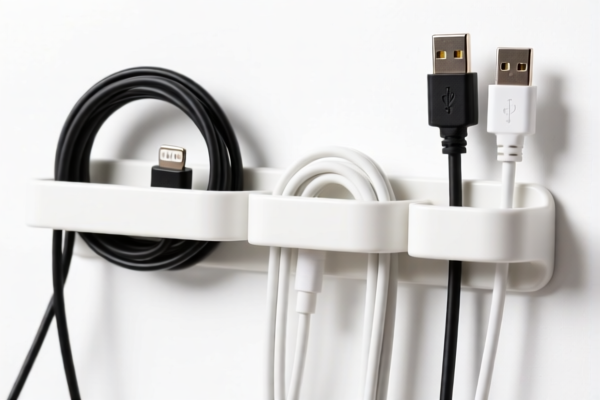
AI Analysis
🔌 Data Cable Organizer (Cable Management Solutions)
🌐 HS Code Reference & Customs Clearance Guide | 2026 Latest Tariff Analysis | Professional Strategy
📌 I. Product Definition & Classification: Do You Truly Understand "Cable Organizers"?
A Data Cable Organizer is not just a simple accessory; it is a functional container or accessory designed to store, manage, and transport electronic accessories. In international trade, its classification depends heavily on its material, form, and primary function.
Because these products often fall into a "gray area" between textiles, plastics, and general articles, misclassification is extremely common and leads to significant tariff differences. Below are the 5 most likely HS Code classifications based on the provided data, ranging from general manufactured articles to specific pouches.
⚠️ Key Distinction Point:
- If the product is a pouch/bag made of textile or plastic for carrying items → Likely Chapter 42 or 39.
- If the product is a rigid box, clip, or generic holder → Likely Chapter 63 or 39.
- Material Matters: Textile-heavy products often face higher tariffs due to specific USITC footnotes compared to plastic alternatives.
📦 II. HS Code Classification Details (Based on Provided Data)
| HS Code | Product Description (Inferred) | Key Characteristics | Material Basis |
|---|---|---|---|
6307.90.98.91 |
Other Made-Up Articles | Generic manufactured article; fits the "other made-up article" category. | Textile or Plastic (Fabric-like) |
6307.90.98.75 |
Face Masks/Respirator Accessories | Unlikely unless designed specifically as a mask cover. Functionally extends to mask-like attachments. | Textile or Non-woven |
4202.32.20.00 |
Pouches & Containers (Textile Surface) | High Priority. Shape fits "carrying containers." Outer surface is textile. | Textile/ Fabric |
3926.90.87.00 |
Other Plastic Articles (Consumer Good) | High Priority. Finished consumer good, inferred plastic material. | Plastic |
4202.32.93.00 |
Pouches & Containers (Other Textile) | Shape fits "bag/container." Outer surface is textile, but distinct from 4202.32.20. | Textile/ Fabric |
🔍 Critical Reminder:
- Pouches/Bags (4202series) are classified by their outer surface material. If it looks like a bag, it goes to Chapter 42.
- Rigid Holders/Clips often fall under 6307 (Other made-up articles) or 3926 (Plastic articles) if they are not "bags."
- Tariff Variance: The difference between4202.32.20.00(55%) and3926.90.87.00(40.3%) is significant. Material declaration is crucial.
💰 III. 2026 Latest Tariff Rate Breakdown (Including Surtaxes)
✅ Applicable Country: United States (US)
✅ Origin: China (CN)
✅ Effective Time: Current rates include Section 301, Section 232 (122 Clause), and Base Duties.
🎯 1. 6307.90.98.91 —— Other Made-Up Articles (Generic)
| Item | Content |
|---|---|
| Base Duty | 7.0% |
| Section 301 Surcharge | 7.5% |
| Section 232 (122 Clause) | 10.0% |
| Total Tax Rate | 24.5% |
| Tax Calculation | CIF Value × 24.5% |
| De Minimis Eligibility | ❌ No (Likely denied due to origin/surtax rules) |
| Legal Basis Path | Base Tariff → USITC Footnote 9903 → IEEPA Surtax |
📌 Explanation:
- This is the lowest tariff option among the listed codes.
- Suitable for rigid organizers, cable clips, or non-pouch fabric items that don't fit the "bag" definition.
- Strategy: If your product is a rigid plastic holder or a simple fabric sleeve (not a zippered pouch), argue for this classification to save ~15-30% in taxes.
🎯 2. 6307.90.98.75 —— Face Mask/Respirator Accessories
| Item | Content |
|---|---|
| Base Duty | 7.0% |
| Section 301 Surcharge | 7.5% |
| Section 232 (122 Clause) | 10.0% |
| Total Tax Rate | 24.5% |
| Tax Calculation | CIF Value × 24.5% |
| De Minimis Eligibility | ❌ No |
📌 Warning:
- This classification is risky and inappropriate for standard cable organizers unless the product is explicitly marketed as a mask storage sleeve with similar material/function.
- Misclassification here can lead to audits for "evading mask-related regulations" or inaccurate description. Use only if functionally identical to mask accessories.
🎯 3. 4202.32.20.00 —— Pouches/Containers with Textile Outer Surface
| Item | Content |
|---|---|
| Base Duty | 20.0% |
| Section 301 Surcharge | 25.0% |
| Section 232 (122 Clause) | 10.0% |
| Total Tax Rate | 55.0% |
| Tax Calculation | CIF Value × 55.0% |
| De Minimis Eligibility | ❌ No |
| Legal Basis Path | HTSUS 4202.32 → USITC Footnote 9903 → IEEPA Surtax |
📌 Explanation:
- This is the highest tariff option.
- Applies if the cable organizer is a zippered pouch, roll-up case, or carrying bag with an outer surface of textile material (e.g., nylon, canvas, polyester).
- Cost Impact: This is 2x higher than the6307classification. Critical to verify if your product can be argued as "non-container" (e.g., simple clips vs. full pouches).
🎯 4. 3926.90.87.00 —— Other Plastic Articles (Consumer Good)
| Item | Content |
|---|---|
| Base Duty | 5.3% |
| Section 301 Surcharge | 25.0% |
| Section 232 (122 Clause) | 10.0% |
| Total Tax Rate | 40.3% |
| Tax Calculation | CIF Value × 40.3% |
| De Minimis Eligibility | ❌ No |
📌 Explanation:
- Ideal for rigid plastic cable boxes, cable management trays, or plastic cable sleeves that are not "bags."
- Savings: Saves 14.7% compared to the textile pouch classification (4202.32.20.00).
- Strategy: If your product is plastic, ensure it is not described as a "pouch" but as an "organizer," "holder," or "box."
🎯 5. 4202.32.93.00 —— Other Pouches (Textile)
| Item | Content |
|---|---|
| Base Duty | 17.6% |
| Section 301 Surcharge | 25.0% |
| Section 232 (122 Clause) | 10.0% |
| Total Tax Rate | 52.6% |
| Tax Calculation | CIF Value × 52.6% |
| De Minimis Eligibility | ❌ No |
📌 Explanation:
- Similar to4202.32.20.00but falls under "other" textile containers.
- Still a high-cost classification (over 50%).
- Only use if the product is a textile pouch but doesn't meet the specific criteria for4202.32.20.00(e.g., different outer material composition).
🛠️ IV. Customs Clearance Practical Advice (Avoid Pitfalls)
✅ 1. Documentation Checklist (Essential)
| Document | Required? | Notes |
|---|---|---|
| Product Specifications | ✔️ | Must specify: Material (e.g., "100% Polyester Outer, EVA Inner"), Function (Storage vs. Protection), Structure (Zippered vs. Open). |
| Product Photos | ✔️ | Show outer surface texture. If it's woven fabric, it leans to 4202. If it's smooth/hard, it leans to 3926 or 6307. |
| Commercial Invoice | ✔️ | Description should match HS Code logic. E.g., "Plastic Cable Holder" vs. "Textile Cable Pouch." |
| Material Declaration | ✔️ | Explicitly state "Outer Surface Material: Nylon" or "Plastic" to justify HS Code. |
| Packaging List | ✔️ | Ensure no loose accessories are declared separately if they are part of the set. |
✅ 2. Classification Strategy (Key Tips)
🔥 "Material Defines Duty, Form Defines Chapter!"
| Scenario | Recommended HS Code | Reason |
|---|---|---|
| Rigid Plastic Box/Tray | 3926.90.87.00 (40.3%) |
Plastic material, not a "bag." Lower base duty than textile bags. |
| Simple Fabric Sleeve (No Zipper) | 6307.90.98.91 (24.5%) |
Not a "container" with closure; classified as "made-up article." Lowest Tax! |
| Zippered Pouch (Textile Outer) | 4202.32.20.00 (55.0%) |
Fits "pouch" definition + textile outer. Highest Tax! |
| Zippered Pouch (Plastic Outer) | 4202.32.93.00 (52.6%) or 3926... |
If plastic outer, argue for 3926 (40.3%). If textile outer, it's high tax. |
| Mask-Compatible Cable Sleeve | 6307.90.98.75 (24.5%) |
Only if functionally identical to mask storage. Risky if not marketed as such. |
📌 Critical Warning:
- Do not label a plastic box as a "pouch" to avoid the high tax. Use terms like "Holder," "Case," "Tray," or "Organizer."
- Do not label a rigid plastic item as a "bag."
✅ 3. Special Cases
| Case | Handling Advice |
|---|---|
| Mixed Materials (Fabric + Plastic) | Declaring the primary outer material is key. If the outer surface is woven fabric, it likely falls under 4202. If the outer is coated plastic, argue for 3926. |
| OEM Custom Designs | Provide design files showing material layers. Customs will inspect the actual product structure. |
| Small Cable Clips (Loose) | If sold as loose clips, argue for 6307.90.98.91 (24.5%) as "made-up articles," not containers. |
🌍 V. Global Market Comparison (2026)
| Country/Region | Recommended HS Code | Est. Tariff (China Origin) | Notes |
|---|---|---|---|
| 🇺🇸 USA | 3926.90.87.00 or 6307.90.98.91 |
24.5% - 40.3% | Avoid 4202 if possible (55%). Section 301 + 122 Clause applies. |
| 🇨🇳 China | 4202.32.20.00 |
~10-15% | Import duty is lower; focus on domestic sales. |
| 🇪🇺 EU | 4202.32.20.00 |
4% - 10% | No Section 301 surcharge. Tariff is manageable. |
| 🇬🇧 UK | 4202.32.20.00 |
4% - 10% | Post-Brexit rules apply. No US-style surtaxes. |
📌 Conclusion:
- USA is the most expensive market for textile-based cable organizers due to 55% effective rates.
- Plastic organizers are more tax-efficient in the US (40.3% vs 55%).
- Non-pouch fabric items (sleeves, clips) offer the best tax savings (24.5%).
📌 VI. Common Mistakes & Pitfalls (Lessons Learned)
❌ Mistake 1: Calling a plastic box a "pouch" to make it sound like an accessory.
👉 Consequence: Customs may reclassify to 4202 if they see plastic but assume "container," leading to disputes. Better to use 3926 explicitly.
❌ Mistake 2: Labeling a zippered fabric bag as "made-up article" (6307) to save tax.
👉 Consequence: High risk of audit. Zippered bags are clearly "containers" under 4202. Expect 55% tax + penalties.
❌ Mistake 3: Ignoring the outer surface material.
👉 Consequence: Declaring "Polyester" when it's "Nylon" is fine, but declaring "Fabric" when it's "Plastic-coated fabric" changes the code from 4202 to 3926 or 6307.
✅ Correct Declaration Example:
"Plastic Cable Organizer Tray, Model XYZ, Rigid Structure, No Closure, For Data Cables" →
3926.90.87.00
"Fabric Cable Sleeve, Open End, No Zipper, Polyester Outer" →6307.90.98.91
🎯 VII. Conclusion: Optimize Classification for Cost Efficiency
🎯 Key Takeaway:
🔹 Avoid
4202if possible! It carries the highest tax (52.6%-55%).
🔹 Aim for6307(24.5%) or3926(40.3%).
🔹 Design for Duty: If selling to the US, consider rigid plastic or open fabric sleeves over zippered textile pouches.
📌 Pro Tip:
Submit an Advance Ruling (Ruling Letter) to US Customs and Border Protection (CBP) before shipping. Provide photos and material specs to get a binding decision on whether your specific organizer qualifies as a "container" (
4202) or a "made-up article/plastic article" (6307/3926). This protects you from retroactive tax changes.
📣 Action Required:
📞 Consult a licensed customs broker.
📄 Prepare material samples and clear product descriptions.
🚀 Minimize duty, maximize profit!
✨ Accurate Classification Saves Thousands!
💼 Every percent of duty counts in 2026!
Customer Reviews
About HS Code Classification
The Harmonized System (HS) is an internationally standardized nomenclature developed by the World Customs Organization (WCO) to classify traded products. Over 200 countries use the HS system as the basis for customs tariffs, trade statistics, and import/export regulations.
Each HS code follows a hierarchical structure:
- Chapter (2 digits) — Broad category of goods (e.g., Chapter 84: Machinery and Mechanical Appliances)
- Heading (4 digits) — More specific grouping within the chapter
- Subheading (6 digits) — Internationally standardized breakdown, used by all WCO member countries
- National subdivisions (8-10 digits) — Country-specific extensions for further classification, such as US HTSUS 10-digit codes
Correct HS code classification is essential for smooth customs clearance, accurate duty payment, and compliance with trade regulations. Misclassification can lead to customs delays, overpayment of duties, or penalties.
When importing from CN to US, the applicable tariff rates may include:
- Most-Favored-Nation (MFN) rate — The standard duty rate applied to WTO members
- General rate — Applied to countries without trade agreements
- Trade remedy duties — Additional tariffs such as Section 301 (anti-dumping), Section 232 (national security), or countervailing duties
The information provided on this page is for reference purposes only. For official classification, please consult with your local customs authority or a licensed customs broker.