Data Cable Organizer Bag
CN → US| HS Code | Tariff Rate | Origin | Destination | Doc |
|---|---|---|---|---|
| 6307909891 | 24.5% | CN | US | Official Doc |
| 6307909875 | 17.0% | CN | US | Official Doc |
| 4202322000 | 55.0% | CN | US | Official Doc |
| 3926908700 | 40.3% | CN | US | Official Doc |
| 4202329300 | 52.6% | CN | US | Official Doc |
Product Images

AI Analysis
🔌 Data Cable Organizer Bag: The Ultimate HS Code & Tariff Guide (2026)
🌐 Global Customs Clearance Strategy | Smart Classification for Cable Bags | Avoid 55% Tax Traps!
📌 一、What is a "Data Cable Organizer Bag"?
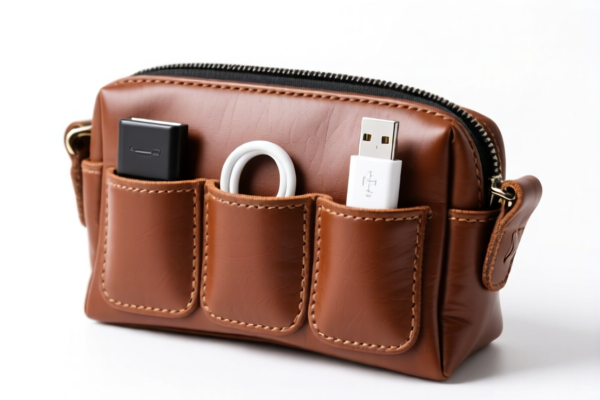
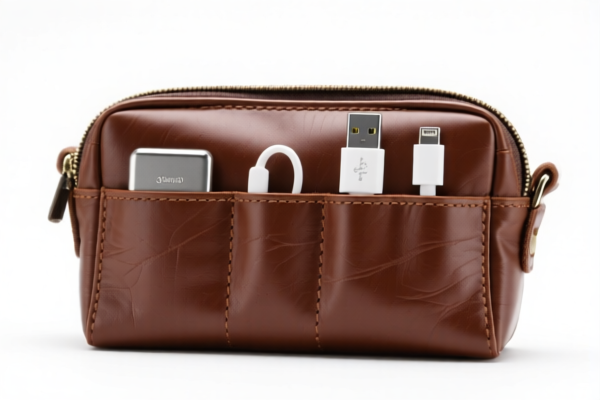
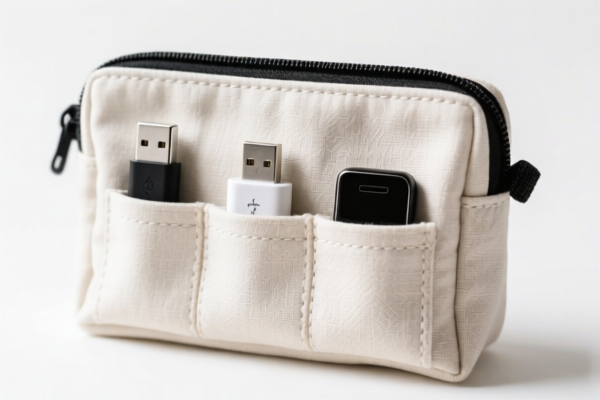
A Data Cable Organizer Bag is a small, portable container designed to store, protect, and organize electronic accessories such as USB cables, charging cords, earbuds, power adapters, and HDMI cables.
Key Characteristics: * Primary Function: Storage and Organization (not a protective case for a specific device like a laptop). * Material: Typically made of Textiles (PVC, Nylon, Canvas) or Plastic (TPU, PVC). * Form: Zippered pouch, sleeve, or multi-compartment bag. * Trade Status: Often misclassified as "cases for instruments" or "plastic articles," leading to massive tariff penalties.
⚠️ Critical Classification Warning:
- If the bag is primarily made of textile material (even with plastic lining) and designed for general cable storage → 4202.32 (Leather/Textile Cases).
- If the bag is purely plastic (no textile outer layer) → 3926.90 (Other Plastic Articles).
- If it is a generic textile pouch without specific "case" features (e.g., loose zipper pouch) → 6307.90 (Other made-up textile articles).
📦 二、HS Code Classification Matrix (2026 Tariff Schedule)
Based on current trade data and 2026 projections, here is the precise breakdown for Data Cable Organizer Bags from China to the US/EU.
| HS Code | Product Description | Material Basis | Primary Function |
|---|---|---|---|
6307.90.98.91 |
Textile Pouch (Made-up, Not Elsewhere Specified) | Fabric/Plastic Mix | General storage, loose zipper pouch |
6307.90.98.75 |
Textile Face Mask/Accessory Case | Textile (Logic Extension) | Specific accessory storage, no material conflict |
4202.32.20.00 |
Plastic/Synthetic Leather Pouch (Cases) | Textile Surface / Plastic Inner | High-Risk Category – "Cases for instruments" |
4202.32.93.00 |
Textile/Cloth Pouch (Cases) | Textile (Outer Surface) | High-Risk Category – "Cases for instruments" |
3926.90.87.00 |
Pure Plastic Organizer | Plastic Only | Other plastic articles, consumer good |
🔍 Classification Logic:
- 4202 Series applies if the bag is classified as a "Case" for instruments/appliances. Customs often views cable bags as "cases for chargers/cables" under this category, triggering the highest duties.
- 3926 Series applies if the bag is strictly plastic (e.g., clear TPU pouch with no fabric backing).
- 6307 Series applies for textile goods that are "made up" but do not fit the strict definition of a "case" (e.g., simple pouches).
💰 三、2026 Tariff Rate Breakdown (Detailed Analysis)
✅ Target Market: USA (High Risk Zone)
✅ Origin: China (CN)
✅ Effective Date: 2025–2026 (Section 301 + 122 Rules)
🎯 1. 4202.32.20.00 – The "55% Tax Trap" (Plastic/Synthetic Leather Cases)
Most common error for high-end leather-look cable organizers.
| Tax Component | Rate | Legal Basis |
|---|---|---|
| Base Duty | 20.0% | Standard MFN Rate |
| Section 301 (Add-on) | 25.0% | "China Trade Action 301" |
| 122 Clause (Special) | 10.0% | Specific China-related add-on |
| TOTAL TAX | 55.0% | Extremely High! |
📌 Why 55%?
Customs views this as a "Case for Instruments" (4202) made of plastic/synthetic leather. The 25% Section 301 tariff plus the 10% 122 Clause creates a 55% total tax burden. This is a profit-killer for low-margin cable accessories.
🎯 2. 4202.32.93.00 – The "52.6% Risk" (Textile Cases)
If the bag is primarily textile but classified as a "Case".
| Tax Component | Rate | Legal Basis |
|---|---|---|
| Base Duty | 17.6% | Standard MFN Rate |
| Section 301 (Add-on) | 25.0% | "China Trade Action 301" |
| 122 Clause (Special) | 10.0% | Specific China-related add-on |
| TOTAL TAX | 52.6% | High Risk! |
📌 Why 52.6%?
Similar to the plastic case, if Customs classifies a textile bag as a "Case for Instruments" (4202), the 25% Section 301 duty applies heavily. Even though the base duty is lower than the plastic version, the total remains devastating.
🎯 3. 3926.90.87.00 – The "40.3% Plastic" (Pure Plastic)
For clear TPU, PVC, or purely plastic organizers.
| Tax Component | Rate | Legal Basis |
|---|---|---|
| Base Duty | 5.3% | Low MFN Rate |
| Section 301 (Add-on) | 25.0% | "China Trade Action 301" |
| 122 Clause (Special) | 10.0% | Specific China-related add-on |
| TOTAL TAX | 40.3% | Moderate-High |
📌 Why 40.3%?
While the base duty is low (5.3%), the Section 301 tariff (25%) still applies. It is lower than the 4202 category, making it a slightly better option, but still expensive.
🎯 4. 6307.90.98.91 & 75 – The "17-24% Sweet Spot" (Textile Pouches)
The best strategy: Classify as a generic "Made-up Textile Article" rather than a "Case".
Case A: 6307.90.98.91 (Textile/Plastic Mix - Loose Pouch)
| Tax Component | Rate |
|---|---|
| Base Duty | 7.0% |
| Section 301 (Add-on) | 7.5% |
| 122 Clause (Special) | 10.0% |
| TOTAL TAX | 24.5% |
Case B: 6307.90.98.75 (Textile - Accessory Extension)
| Tax Component | Rate |
|---|---|
| Base Duty | 7.0% |
| Section 301 (Add-on) | 0.0% (Potential Exemption) |
| 122 Clause (Special) | 10.0% |
| TOTAL TAX | 17.0% |
📌 Strategy:
If the bag is not rigid or does not have the specific features of a "case" (e.g., molded inserts, specific instrument fit), argue for 6307. This reduces tax from 55% to 17-24%, saving 30+ percentage points!
🛠️ 四、Customs Clearance Action Plan (Practical Tips)
✅ 1. Material & Design Verification (Do This Now!)
| Feature | Implication | Recommendation |
|---|---|---|
| Outer Layer | Textile (Nylon/Polyester) | Aim for 6307 (Lower Duty) |
| Outer Layer | Synthetic Leather/Plastic | Risk 4202 (55% Duty) |
| Structure | Rigid / Molded | High risk of 4202 |
| Structure | Flexible / Soft Pouch | Stronger case for 6307 |
🔥 Golden Rule:
Avoid calling it a "Case" in invoices. Call it "Cable Storage Pouch" or "Accessory Organizer Bag".
✅ 2. Documentation Checklist (Must-Haves)
| Document | Why It Matters |
|---|---|
| Product Photos (Open & Closed) | Prove it is a flexible pouch, not a rigid case. |
| Material Composition Certificate | Verify % of textile vs. plastic (Critical for 6307 vs 3926). |
| Technical Specification Sheet | State: "Non-rigid, flexible storage for cables." |
| Commercial Invoice Description | DO NOT use "Case for Instruments." Use "Textile Pouch." |
✅ 3. Smart Declaration Strategy
WRONG: "Leather Cable Case for Charging Adapter"
RIGHT: "Textile Pouch for Data Cable Storage, Model XYZ, Made of 60% Polyester/40% PVC"
🚨 五、Critical Warnings & Pitfalls
❌ Pitfall 1: The "Case" Trap
Action: If your bag looks like a hard shell or has molded compartments for specific devices, Customs will classify it as 4202.
Cost: You will pay 55% instead of 17%.
Fix: Redesign to be a soft pouch or use textile* as the primary visible material.
❌ Pitfall 2: Mislabeling "Plastic" as "Textile"
Action: If the bag is 100% plastic but labeled as "fabric," Customs will seize it for fraud.
Fix: Be honest. If it's plastic, use 3926.90.87.00 (40.3% tax). It's better than fraud.
❌ Pitfall 3: Ignoring the 122 Clause
Action: Assuming only Section 301 applies.
Fact: The 10% 122 Clause is now standard for many Chinese textile/plastic imports. Do not forget this in your cost calculation!
🌍 六、Global Market Comparison (2026)
| Destination | Best HS Code | Total Tax (Est.) | Strategy |
|---|---|---|---|
| 🇺🇸 USA | 6307.90.98.91 |
24.5% | Argue "Flexible Pouch" |
| 🇺🇸 USA | 4202.32.20.00 |
55.0% | AVOID (High Risk) |
| 🇪🇺 EU | 6307.90 |
Low (6-10%) | Generally lower Section 301 impact |
| 🇨🇦 Canada | 6307.90 |
Moderate | Check CUSMA exemption |
🎯 七、Final Recommendation: How to Save 30%+ on Tax!
- Material Check: Ensure the outer surface is clearly textile (Nylon, Canvas).
- Design Check: Ensure the bag is flexible (no hard casing).
- Naming: Use "Textile Cable Pouch" in all shipping documents.
- Declaration: If possible, target
6307.90.98.75(17.0% tax) for specific textile applications. - Consultation: If the bag is plastic, accept 3926.90.87.00 (40.3%) and negotiate price, rather than risking a 55% "Case" classification.
💡 Pro Tip:
"A soft, textile bag is 6307 (17-24%). A rigid, plastic/leather case is 4202 (55%). Your design dictates your tax rate."
📌 Ready to Ship?
👉 Step 1: Verify material composition.
👉 Step 2: Select HS Code 6307.90.98.91 or 75.
👉 Step 3: Submit flexible pouch photos to Customs Broker.
👉 Step 4: Save the 30% tax difference!
✨ Smart Customs, Higher Margins!
💼 Don't let a 55% tariff eat your profit on a $2 bag!
Customer Reviews
About HS Code Classification
The Harmonized System (HS) is an internationally standardized nomenclature developed by the World Customs Organization (WCO) to classify traded products. Over 200 countries use the HS system as the basis for customs tariffs, trade statistics, and import/export regulations.
Each HS code follows a hierarchical structure:
- Chapter (2 digits) — Broad category of goods (e.g., Chapter 84: Machinery and Mechanical Appliances)
- Heading (4 digits) — More specific grouping within the chapter
- Subheading (6 digits) — Internationally standardized breakdown, used by all WCO member countries
- National subdivisions (8-10 digits) — Country-specific extensions for further classification, such as US HTSUS 10-digit codes
Correct HS code classification is essential for smooth customs clearance, accurate duty payment, and compliance with trade regulations. Misclassification can lead to customs delays, overpayment of duties, or penalties.
When importing from CN to US, the applicable tariff rates may include:
- Most-Favored-Nation (MFN) rate — The standard duty rate applied to WTO members
- General rate — Applied to countries without trade agreements
- Trade remedy duties — Additional tariffs such as Section 301 (anti-dumping), Section 232 (national security), or countervailing duties
The information provided on this page is for reference purposes only. For official classification, please consult with your local customs authority or a licensed customs broker.