Data Charging Cable
CN → US| HS Code | Tariff Rate | Origin | Destination | Doc |
|---|---|---|---|---|
| 8544422000 | 85.0% | CN | US | Official Doc |
| 8544429090 | 87.6% | CN | US | Official Doc |
| 8544429010 | 87.6% | CN | US | Official Doc |
| 8536904000 | 35.0% | CN | US | Official Doc |
| 3926909989 | 22.8% | CN | US | Official Doc |
Product Images
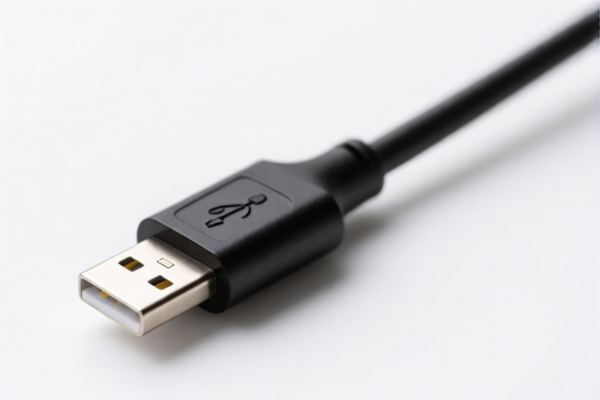
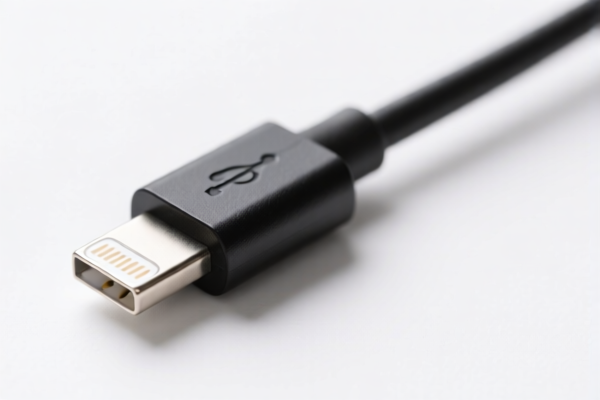
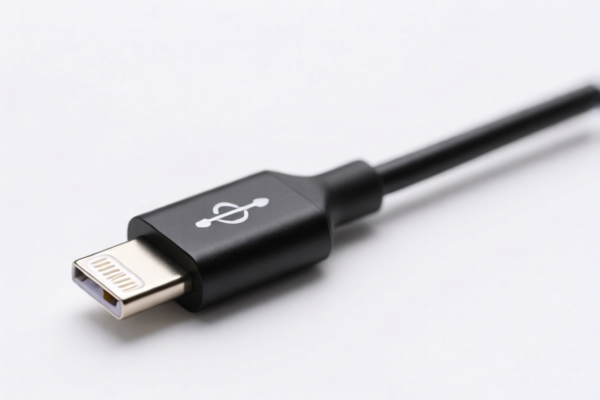
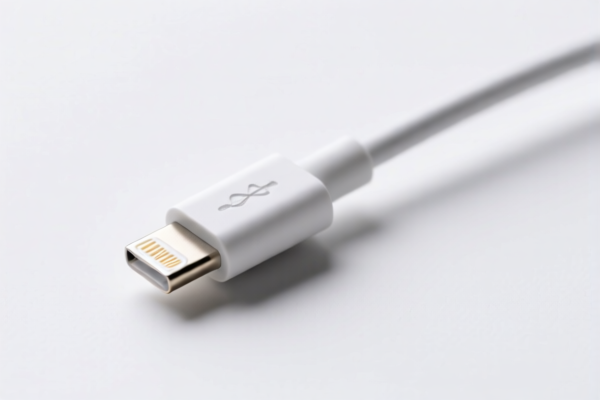
AI Analysis
🔌 Data Charging Cable: The Ultimate Cross-Border Trade & HS Code Classification Guide
🌐 HS Code Reference & Customs Clearance Guide | 2026 Latest Tariff Analysis | Professional Clearance Strategy
📌 Part 1: Product Definition & Classification – What Exactly Is a “Data Charging Cable”?
A Data Charging Cable is a fundamental electronic accessory used for power delivery (charging) and data transmission between devices (smartphones, laptops, IoT devices, etc.). In international trade, its classification is highly sensitive to material composition, structural features (e.g., connectors), and specific use cases (e.g., extension vs. direct connection).
Key Distinctions: * Pure Data/Power Cable: Focuses on conductor insulation and core wires. * Connector-Heavy Cable: If the connector assembly dominates the value/function, it may be classified as a connector/coupler. * Extension Cord: If explicitly marketed as an extension of a power source, it falls under a different subcategory. * Plastic-Jacketed Item: If the plastic sheathing is considered the primary component (rare for functional cables but possible for low-grade goods), it might mislead customs into HS Chapter 39.
⚠️ Critical Classification Point:
- If the item is primarily an electrical conductor for signaling/power → Chapter 85
- If it is essentially a connector/coupler → 8536.90.40.00
- If it is misclassified as a plastic product → 3926.90.99.89 (High Risk of Rejection)
📦 Part 2: HS Code Classification Matrix (2026 Authoritative Reference)
Based on the provided data, here are the five most likely HS Codes, their matching logic, and tax implications.
| HS Code | Product Description | Matching Logic & Summary | Key Features |
|---|---|---|---|
8544.42.20.00 |
Electrical Insulated Conductors for Telecom/Data | ✅ High Match: Matches "Data Charging Cable" via material (electrical conductor) and form (cable for telecom/data transmission). No material conflict. | Pure conductor focus; data/telecom use. |
8544.42.90.90 |
Other Electrical Insulated Conductors (≤1000V) | ✅ Common Match: Assumes standard charging cables are insulated conductors with connectors, falling under "others" (not extensions). Voltage ≤1000V. | General purpose charging/data; has connectors. |
8544.42.90.10 |
Extension Cords (Electrical Insulated Conductors) | ⚠️ Conditional Match: Only if the product is explicitly an "extension" (long cable for extending power source). Common for heavy-duty charging cables. | Explicitly defined as an "extension." |
8536.90.40.00 |
Electrical Connectors & Couplers | ⚠️ Functional Match: If the value/function is dominated by the connector (plugs/jacks) rather than the wire itself. Classified as "electrical splicing joints/couplers." | Connector-heavy; cable is secondary. |
3926.90.99.89 |
Other Plastic Articles | ❌ Low Match / Risk: Only applies if customs deems the plastic jacket (PVC/TPE) as the primary component. Usually incorrect for functional cables. | Misclassification risk; low-value plastic focus. |
🔍 Focus Alert:
- Chapter 85 (8544) is the correct classification for functional electrical cables.
- Chapter 39 (3926) is a misclassification trap for cables that are essentially plastic goods.
- Chapter 8536 applies only if the connector is the main value driver.
💰 Part 3: 2026 Detailed Tariff Rate Breakdown (US Imports from China)
✅ Applicable Country: United States (US)
✅ Origin: China (CN)
✅ Effective Date: 2025-11-10 onwards (including subsequent imports)
🎯 1. 8544.42.20.00 – Insulated Conductors for Telecom/Data Transmission
| Item | Content |
|---|---|
| Base Tariff | 0.0% |
| Section 301 Surcharge | +25.0% |
| IEEPA Surcharge (China/HK) | +10.0% |
| Section 122 Surcharge (Steel/Aluminum/Copper Products) | +50.0% |
| Total Tax Rate | 85.0% |
| Calculation Basis | CIF Value × 85.0% |
| De Minimis Eligibility | ❌ Not Eligible (Deny De Minimis) |
| Legal Path | IEEPA:9903.01.25 → USITC:8544.42.20.00 → FOOTNOTE:122 |
📌 Explanation:
- This code attracts the highest combined tax burden (85%) due to the Section 122 surcharge on copper/aluminum conductors.
- Strategic Note: If your cable uses significant copper/aluminum, this 50% surcharge applies, making it extremely expensive.
🎯 2. 8544.42.90.90 – Other Insulated Conductors (Non-Extension, ≤1000V)
| Item | Content |
|---|---|
| Base Tariff | 2.6% |
| Section 301 Surcharge | +25.0% |
| IEEPA Surcharge (China/HK) | +10.0% |
| Section 122 Surcharge (Steel/Aluminum/Copper Products) | +50.0% |
| Total Tax Rate | 87.6% |
| Calculation Basis | CIF Value × 87.6% |
| De Minimis Eligibility | ❌ Not Eligible |
| Legal Path | IEEPA:9903.01.25 → USITC:8544.42.90.90 → FOOTNOTE:122 |
📌 Explanation:
- This is the most common classification for standard USB-C/Lightning cables.
- It has a higher base rate (2.6%) than8544.42.20.00, leading to a slightly higher total rate (87.6%).
- Crucial: The +50% Section 122 surcharge is applied to copper/aluminum contents, drastically increasing costs.
🎯 3. 8544.42.90.10 – Extension Cords
| Item | Content |
|---|---|
| Base Tariff | 2.6% |
| Section 301 Surcharge | +25.0% |
| IEEPA Surcharge (China/HK) | +10.0% |
| Section 122 Surcharge (Steel/Aluminum/Copper Products) | +50.0% |
| Total Tax Rate | 87.6% |
| Calculation Basis | CIF Value × 87.6% |
| De Minimis Eligibility | ❌ Not Eligible |
| Legal Path | IEEPA:9903.01.25 → USITC:8544.42.90.10 → FOOTNOTE:122 |
📌 Explanation:
- Identical tax treatment to8544.42.90.90.
- Only use this if the product is explicitly marketed as an extension cord (e.g., 10ft+ charging extension for EVs or industrial equipment).
🎯 4. 8536.90.40.00 – Electrical Connectors & Couplers
| Item | Content |
|---|---|
| Base Tariff | 0.0% |
| Section 301 Surcharge | +25.0% |
| IEEPA Surcharge (China/HK) | +10.0% |
| Section 122 Surcharge | ❌ Not Applied (Not classified as raw metal conductor product) |
| Total Tax Rate | 35.0% |
| Calculation Basis | CIF Value × 35.0% |
| De Minimis Eligibility | ❌ Not Eligible |
| Legal Path | IEEPA:9903.01.25 → USITC:8536.90.40.00 |
📌 Strategic Advantage:
- This is the LOWEST TAX OPTION (35%).
- Condition: The product must be primarily classified as a connector/coupler (e.g., a heavy-duty industrial plug assembly with short cable).
- Risk: Customs may reject this if the cable length/value outweighs the connector. Requires strong technical justification.
🎯 5. 3926.90.99.89 – Other Plastic Articles
| Item | Content |
|---|---|
| Base Tariff | 5.3% |
| Section 301 Surcharge | +7.5% |
| IEEPA Surcharge (China/HK) | +10.0% |
| Section 122 Surcharge | ❌ Not Applied |
| Total Tax Rate | 22.8% |
| Calculation Basis | CIF Value × 22.8% |
| De Minimis Eligibility | ❌ Not Eligible |
| Legal Path | IEEPA:9903.01.25 → USITC:3926.90.99.89 |
📌 Warning:
- This appears to be the cheapest option (22.8%), but it is highly risky.
- Charging cables are electrical goods, not plastic articles. Misclassification can lead to:
- Severe Penalties for fraud/evasion.
- Seizure of goods.
- Back taxes + Interest.
- Recommendation: Avoid unless the product is non-functional plastic dummy items.
🛠️ Part 4: Customs Clearance Practical Advice (Battle-Tested Tips)
✅ 1. Documentation Checklist (Non-Negotiable)
| Document | Required? | Purpose |
|---|---|---|
| ✅ Product Specifications | ✔️ | Details: Length, connector type (USB-A/C/Lightning), material (Copper core, PVC jacket), current rating. |
| ✅ Technical Diagrams | ✔️ | Proves whether it’s a conductor (8544) or connector (8536). |
| ✅ Commercial Invoice | ✔️ | Must clearly state: "Electrical Insulated Cable" or "Electrical Connector," not just "Cable." |
| ✅ Bill of Lading/Packing List | ✔️ | Ensure quantities match. |
| ✅ FCC/CE Certifications | ✔️ | Required for electronic accessories in US/EU. |
✅ 2. Declaration Strategy (Key Mantras)
🔥 "Conductor vs. Connector: Define Function First!"
| Scenario | Recommended HS Code | Why? |
|---|---|---|
| Standard USB Charging Cable | 8544.42.90.90 |
Standard insulated conductor. |
| Heavy Industrial Extension Cable | 8544.42.90.10 |
Explicitly an extension. |
| Bulk Cable Spools (No Connectors) | 8544.42.20.00 |
Pure telecom/data conductor. |
| Cable with Large/Expensive Connectors | 8536.90.40.00 |
If connector value > cable value. |
| Cheap Plastic Toy Cable (Non-Functional) | 3926.90.99.89 |
Only if no electrical function. |
📌 Warning:
- Do not declare a functional charging cable as3926.90.99.89to save taxes. Customs brokers know this trick, and penalties are severe.
- If using8536.90.40.00, provide evidence that the connector is the primary component (e.g., industrial mating connectors).
✅ 3. Cost-Saving Opportunities
| Strategy | Action | Impact |
|---|---|---|
| Optimize Classification | If cable is short and connector-heavy, argue for 8536.90.40.00 (35% vs 87.6%). |
Saves ~52.6% |
| Supply Chain Diversification | Source from Vietnam/Mexico/Thailand to avoid Section 301/IEEPA tariffs. | Saves ~35%+ |
| Pre-Ruling Application | Apply for an Advance Ruling from US CBP for complex products. | Certainty |
🌍 Part 5: Global Market Clearance Comparison (2026)
| Region | Recommended HS Code | Base Tariff | Key Certifications | Notes |
|---|---|---|---|---|
| 🇺🇸 USA | 8544.42.90.90 |
87.6% (CN Origin) | FCC, IEC 62133 | High tariffs due to Section 301 + 122. |
| 🇨🇳 China | 8544.42.90.90 |
~10-13% | CCC (if applicable) | No Section 301. Lower risk. |
| 🇪🇺 EU | 8544.42.90.90 |
0-4% | CE, RoHS, REACH | No major surcharges. Easy clearance. |
| 🇬🇧 UK | 8544.42.90.90 |
0-4% | UKCA, RoHS | Post-Brexit rules apply. |
| 🇯🇵 Japan | 8544.42.90.90 |
3-5% | PSE, JIS | Moderate tariffs. |
📌 Conclusion:
- USA is the hardest market for Chinese-origin charging cables due to 87.6% total tax.
- EU/UK/Japan are much more favorable.
- Cost Optimization: Consider shifting production to non-China origins if exporting to the US.
📌 Part 6: Common Mistakes & Pitfalls (Lessons Learned)
❌ Mistake 1: Declaring functional cables as 3926.90.99.89 (Plastic Articles).
👉 Result: Customs flags for misclassification. Goods held, penalties imposed.
👉 Fix: Always classify functional electrical goods under Chapter 85.
❌ Mistake 2: Using 8544.42.20.00 for cables with connectors.
👉 Result: Customs may reclassify to 8544.42.90.90 (2.6% base vs 0% base), leading to back taxes.
👉 Fix: Ensure description matches "telecom/data transmission only" without emphasis on connectors if using 8544.42.20.00.
❌ Mistake 3: Ignoring Section 122 Surcharge (50%).
👉 Result: Unexpected 50% tax on copper/aluminum content.
👉 Fix: Confirm if your product qualifies for exemption or if material composition can be optimized.
✅ Correct Declaration Example:
"USB-C to Lightning Charging Cable, 1m Length, 60W Power Delivery, Copper Core, PVC Insulation, FCC Certified. HS Code: 8544.42.90.90"
🎯 Part 7: Conclusion: Precision Classification, Maximize Profit!
🎯 Key Takeaways:
🔹 USA Tariff Shock: Chinese charging cables face 35% to 87.6% in total duties.
🔹 Best Case:8536.90.40.00(35%) if connectors dominate.
🔹 Worst Case:8544.42.90.90(87.6%) for standard cables.
🔹 Avoid:3926.90.99.89(22.8%) – High risk of penalty.
📌 Pro Tip:
If your cable is not an extension cord, and not primarily a connector, it will likely fall under 8544.42.90.90. Plan for 87.6% tax in the US.
For EU/Asia markets, costs are significantly lower.
📣 Immediate Action:
📞 Consult a Customs Broker to validate HS Code for your specific product design.
📝 Request an Advance Ruling if the product has unique features (e.g., mixed material, hybrid function).
🌏 Diversify Supply Chain to mitigate US tariff risks.
✨ Professional Clearance Starts with Accurate Classification!
💼 Your Margin Depends on Your HS Code!
Customer Reviews
About HS Code Classification
The Harmonized System (HS) is an internationally standardized nomenclature developed by the World Customs Organization (WCO) to classify traded products. Over 200 countries use the HS system as the basis for customs tariffs, trade statistics, and import/export regulations.
Each HS code follows a hierarchical structure:
- Chapter (2 digits) — Broad category of goods (e.g., Chapter 84: Machinery and Mechanical Appliances)
- Heading (4 digits) — More specific grouping within the chapter
- Subheading (6 digits) — Internationally standardized breakdown, used by all WCO member countries
- National subdivisions (8-10 digits) — Country-specific extensions for further classification, such as US HTSUS 10-digit codes
Correct HS code classification is essential for smooth customs clearance, accurate duty payment, and compliance with trade regulations. Misclassification can lead to customs delays, overpayment of duties, or penalties.
When importing from CN to US, the applicable tariff rates may include:
- Most-Favored-Nation (MFN) rate — The standard duty rate applied to WTO members
- General rate — Applied to countries without trade agreements
- Trade remedy duties — Additional tariffs such as Section 301 (anti-dumping), Section 232 (national security), or countervailing duties
The information provided on this page is for reference purposes only. For official classification, please consult with your local customs authority or a licensed customs broker.