Date Stamp
CN → US| HS Code | Tariff Rate | Origin | Destination | Doc |
|---|---|---|---|---|
| 9611000000 | 20.2% | CN | US | Official Doc |
Product Images
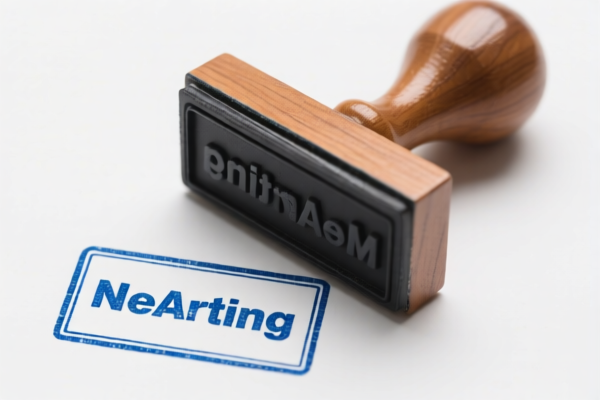
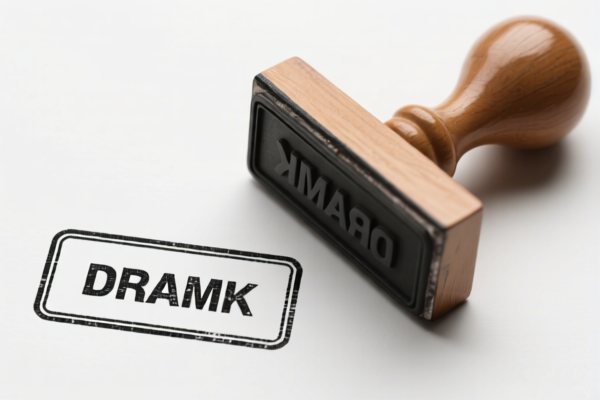


AI Analysis
📅 Date Stamp (Hand-Operated Sealing/Numbering Devices)
🌐 HS Code Reference & Customs Clearance Guide | 2026 Latest Tariff Analysis | Professional-Level Strategy
📌 I. Product Definition & Classification: Do You Really Know a "Date Stamp"?
In international trade, "Date Stamp" is not just a simple rubber stamp. It refers to mechanical or semi-mechanical devices used for imprinting dates, serial numbers, or sealing labels on documents, packages, or goods. These are strictly classified as hand-operated devices.
The key distinction lies in the operating mechanism: * Hand-Operated Devices: Devices where the operator manually provides the force to create the impression (e.g., traditional ink stamps, manual numbering machines, hand-held sealing tools). → Classified under 9611. * Automatic/Machine-Operated Devices: If the device is part of a larger automated production line, powered by electricity/motor without manual intervention for the stamping action, it may fall under different categories (e.g., Printing machinery). → Excluded from 9611.
⚠️ Key Distinction Point:
- If it is a manual tool (even if complex, like a numbering wheel) → 9611.00.00.00
- If it is an electrically powered industrial printer attached to a conveyor belt → NOT 9611 (Likely 8443 or 8471 depending on function).
📦 II. HS Code Classification Details (2026 Latest Tariff Authority)
Based on the provided data, there is only one specific classification for hand-operated date stamps:
| HS Code | Product Description | Application Scenario | Manual Operation? |
|---|---|---|---|
9611.00.00.00 |
Date, sealing or numbering stamps and the like, (including devices for printing or embossing labels), designed for operating in the hand; hand-operated composing sticks and hand printing sets incorporating such composing sticks | Manual date imprinters, serial number wheels, hand-held sealing labels, office ink stamps | ✅ Yes |
🔍 Critical Reminder:
- The description explicitly includes "devices for printing or embossing labels" and "numbering stamps".
- The phrase "designed for operating in the hand" is the absolute boundary. If the device requires a machine to operate, it does not fit here.
- Do not confuse with "Rubber Stamps" (which are often parts of office supplies). Complex mechanical date/numbering stamps go to 9611, while simple rubber stamps on a handle may sometimes be debated, but mechanical hand-operated ones firmly belong to 9611.
💰 III. 2026 Latest Tariff Rate Details (Detailed Tax Clause)
✅ Applicable Country: United States (US)
✅ Origin: China (CN)
✅ HS Code:9611.00.00.00
🎯 1. 9611.00.00.00 —— Hand-Operated Date/Numbering Stamps
| Item | Content |
|---|---|
| Base Tariff | 0.0% |
| Section 301 / Additional Tariff | 0.0% |
| Total Effective Tariff | 0.0% |
| Tax Calculation | CIF Value × 0.0% = $0 |
| De Minimis Eligibility | ✅ Yes (Likely eligible for Section 321 de minimis if value < $800, subject to current policy) |
| Legal Basis Path | HTSUS:9611.00.00 → General Tariff Schedule |
📌 Interpretation:
- This is a zero-tariff item under the current 2026 framework provided in the data.
- Unlike electronics or steel products, manual office/mechanical tools like date stamps are exempt from the heavy Section 301 and IEEPA surcharges that affect high-tech goods.
- Total Tax Burden: 0%. This makes date stamps a very low-risk, low-cost item for customs clearance.
🛠️ IV. Customs Clearance Practical Advice (Real-World Pitfall Avoidance)
✅ 1. Required Documentation Checklist
| Document | Required? | Description |
|---|---|---|
| ✅ Product Specifications | ✔️ | Detail the mechanism (e.g., "Manual dial numbering," "Hand-held ink roller"). Must emphasize "Hand-Operated". |
| ✅ Product Photos | ✔️ | Show the device being held in hand or the manual mechanism. Avoid showing it attached to a motor. |
| ✅ Commercial Invoice | ✔️ | Clear description: "Hand-Operated Date Numbering Stamp" or "Manual Label Embossing Device". Avoid vague terms like "Printer." |
| ✅ HS Code Declaration | ✔️ | Explicitly state HS Code 9611.00.00.00. |
✅ 2. Declaration Tips (Key Mnemonic)
🔥 "Manual is Key, Machine is Not, 9611 Fits, Zero Tax Hit!"
| Scenario | Correct Declaration | Incorrect Declaration | Consequence |
|---|---|---|---|
| Hand-held date stamp | 9611.00.00.00 |
Misclassified as "Printing Machine" (8443) | Unnecessary delay, potential misclassification penalty |
| Electric label printer | NOT 9611 | Claiming 9611.00.00.00 |
High Risk: Customs may reclassify, impose higher tariffs, or seize goods |
| Rubber stamp with simple handle | Check local rules | Often still 9611 or 4911 |
Minor risk, but 9611 is safer for complex mechanisms |
✅ 3. Special Cases
| Case | Handling Advice |
|---|---|
| Electronic Date Stampers | If battery-powered but still manual action? Likely still 9611. If motor-driven? No. |
| Industrial Automatic Serial Printers | Use HS Code from Chapter 84 (Machinery). Do not use 9611. |
| Office Ink Pads + Stamps | Sold separately? Stamps may be 9611, pads 4911. Sold as a set? Consider the principal function. |
🌍 V. Global Market Comparison (2026 Latest)
| Country/Region | Recommended HS Code | Tariff | Certification | Remarks |
|---|---|---|---|---|
| 🇺🇸 United States | 9611.00.00.00 |
0.0% | None | Zero tariff, easy clearance |
| 🇨🇳 China | 9611.00.00.00 |
Low/0% | N/A | Common import category |
| 🇪🇺 European Union | 9611.00.00 |
0% - 4% | CE (if any safety risk) | Generally low duty |
| 🇬🇧 United Kingdom | 9611.00.00 |
0% | None | Post-Brexit tariff remains favorable |
📌 Conclusion:
- Date stamps are globally low-tariff items.
- The US offers 0% tariff, making them highly competitive.
- Focus on accurate description to avoid being misclassified as industrial machinery.
📌 VI. Common Errors & Pitfall Guide (Lessons Learned)
❌ Error 1: Calling an electric label printer a "Date Stamp"
👉 Consequence: Customs rejects 9611, reclassifies to 8443 or 8471, imposes higher tariffs and delays.
❌ Error 2: Vague description "Stamping Tool"
👉 Consequence: Customs may apply default higher duties or hold goods for inspection.
❌ Error 3: Ignoring the "Hand-Operated" requirement
👉 Consequence: If the device has a motor, it cannot be classified under 9611.
✅ Correct Practice:
"Manual Hand-Held Date Numbering Stamp, Mechanical Dial, Non-Electric, Model XYZ"
🎯 VII. Conclusion: Precision Declaration, Zero Risk, Zero Tax!
🎯 Remember the Mantra:
🔹 "Manual is King, 9611 is Right, Zero Tax is Sweet, Electric is Fight!"
🔹 "HS Code9611.00.00.00ensures 0% duty, just confirm it’s hand-operated!"
📌 Pro Tip:
Since the tariff is 0%, the main risk is classification error, not cost. Ensure your invoice and product photos clearly show the manual operation. If in doubt, consult a customs broker for a Pre-Ruling to lock in the 9611 classification.
📣 Immediate Action:
📞 Verify mechanism: Is it hand-operated?
📄 Declare: HS Code9611.00.00.00
🚀 Enjoy 0% Tariff and smooth customs clearance!
✨ Professional Clearance Starts with Accurate Classification!
💼 Your Cost Efficiency, Optimized!
Customer Reviews
About HS Code Classification
The Harmonized System (HS) is an internationally standardized nomenclature developed by the World Customs Organization (WCO) to classify traded products. Over 200 countries use the HS system as the basis for customs tariffs, trade statistics, and import/export regulations.
Each HS code follows a hierarchical structure:
- Chapter (2 digits) — Broad category of goods (e.g., Chapter 84: Machinery and Mechanical Appliances)
- Heading (4 digits) — More specific grouping within the chapter
- Subheading (6 digits) — Internationally standardized breakdown, used by all WCO member countries
- National subdivisions (8-10 digits) — Country-specific extensions for further classification, such as US HTSUS 10-digit codes
Correct HS code classification is essential for smooth customs clearance, accurate duty payment, and compliance with trade regulations. Misclassification can lead to customs delays, overpayment of duties, or penalties.
When importing from CN to US, the applicable tariff rates may include:
- Most-Favored-Nation (MFN) rate — The standard duty rate applied to WTO members
- General rate — Applied to countries without trade agreements
- Trade remedy duties — Additional tariffs such as Section 301 (anti-dumping), Section 232 (national security), or countervailing duties
The information provided on this page is for reference purposes only. For official classification, please consult with your local customs authority or a licensed customs broker.