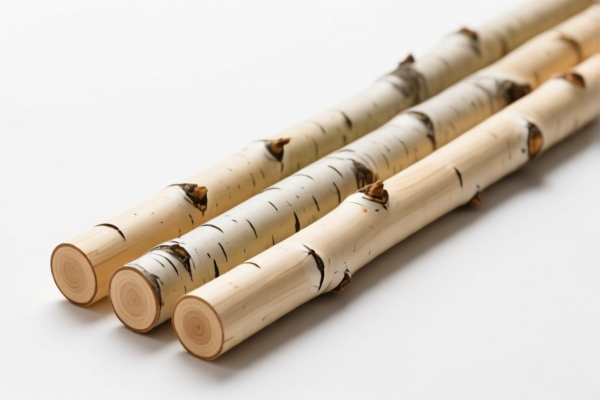
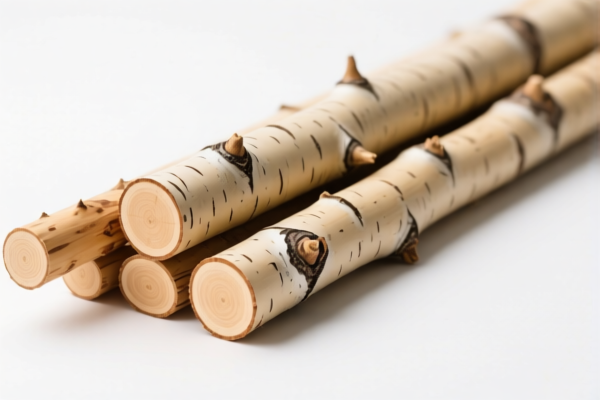
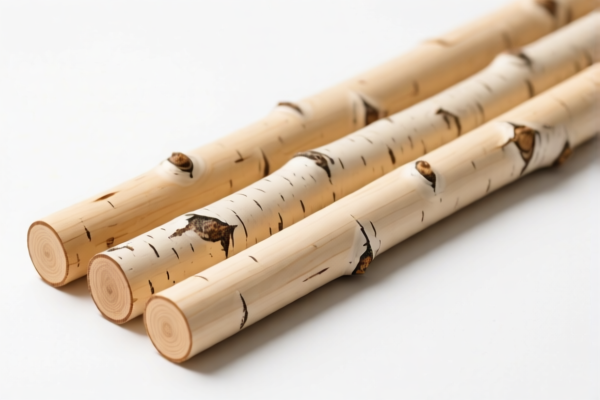
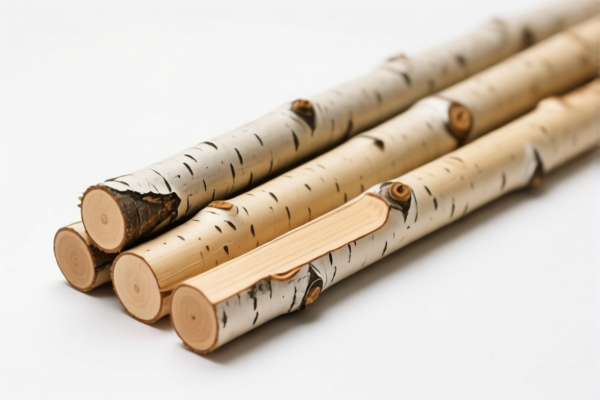
Debarked Aspen Wood Poles
CN → US| HS Code | Tariff Rate | Origin | Destination | Doc |
|---|---|---|---|---|
| 4407970079 | 35.0% | CN | US | Official Doc |
| 4407970072 | 35.0% | CN | US | Official Doc |
Product Images
AI Analysis
🌲 Debarked Aspen Wood Poles (Populus spp.)
🌐 HS Code Reference & Clearance Guide | 2026 Latest Tariff Analysis | Professional Clearance Strategy for Wood Products
📌 I. Product Definition & Classification: Are You Handling "Wood Poles" or "Sawn Wood"?
Debarked Aspen Wood Poles are vertical wooden structures typically used for utility lines, fencing, or construction. In international trade, classification depends heavily on whether the wood is processed into simple shapes (sawn/peeled) or engineered into specific forms.
For Aspen Wood Poles, if they are simply cut to length, debarked, and tapered (common for utility poles), they are often classified under "Wood sawn or chipped lengthwise, sliced or peeled".
⚠️ Critical Distinction:
- If the poles are plain, debarked, and cut → They fall under Chapter 44 (Wood and articles of wood); specifically HS Code 4407. - If they are treated, painted, or fitted with metal plates → Additional regulations apply (see Section V). - Key Species: Aspen and Poplar (Populus spp.) are distinct from other softwoods like Pine or Spruce.
📦 II. HS Code Classification Details (2026 Latest Tariff Alignment)
Based on the provided data, Debarked Aspen Wood Poles are classified under two specific subheadings depending on the exact type of Aspen/Poplar and the processing method (sliced/peeled vs. other).
| HS Code | Product Description | Key Characteristics | Applicable To |
|---|---|---|---|
4407.97.00.72 |
Yellow Poplar (Liriodendron tulipifera) Sawn/sliced/peeled, >6mm thick |
Often confused with "Aspen" in common trade terms, but botanically distinct. If "Aspen poles" are mislabeled as Yellow Poplar, this code may apply. | Note: True Aspen is Populus. This code is for Liriodendron. |
4407.97.00.79 |
Other Poplar; Aspen; Cottonwood (Populus spp.) Sawn/sliced/peeled, >6mm thick, other |
The most likely code for true Aspen Wood Poles. Covers all Populus species not listed elsewhere (like Yellow Poplar). | ✅ Primary Match for "Aspen Wood Poles" |
🔍 Important Clarification:
- Aspen belongs to the genus Populus.
- Yellow Poplar (Liriodendron tulipifera) is technically a tulip tree, not a true poplar, though called "Yellow Poplar" in trade.
- Recommendation: Unless your poles are specifically Liriodendron tulipifera, use4407.97.00.79.
💰 III. 2026 Tariff Rate Breakdown (Detailed Tax Terms)
✅ Applicable Country: United States (US)
✅ Origin: China (CN)
✅ Effective Date: November 10, 2025 onwards
🎯 1. 4407.97.00.79 – Other Poplar; Aspen; Cottonwood (True Aspen)
| Item | Details |
|---|---|
| Base Tariff | 0.0% (Ad Valorem) |
| Additional Duty (Section 301) | +25.0% |
| Total Tax Rate | 25.0% |
| Tax Calculation | CIF Value × 25% |
| De Minimis Exemption | ❌ Not Eligible (Deny de minimis) |
| Legal Basis | HS Code 4407.97.00.79 → Subject to USITC Footnote 9903.88.01 |
📌 Explanation:
- Although the base tariff is 0%, the 25% additional duty applies to all wood products from China under Section 301. - No basic tax exemption for this category; the 25% is fully payable. - This is a high-cost import category compared to untreated raw logs (which may have different codes).
🎯 2. 4407.97.00.72 – Yellow Poplar (Liriodendron tulipifera)
| Item | Details |
|---|---|
| Base Tariff | 0.0% |
| Additional Duty (Section 301) | +25.0% |
| Total Tax Rate | 25.0% |
| Tax Calculation | CIF Value × 25% |
| De Minimis Exemption | ❌ Not Eligible |
| Legal Basis | HS Code 4407.97.00.72 → Subject to USITC Footnote 9903.88.01 |
📌 Note:
- Same tax structure as Aspen (79). The 25% duty is consistent across these softwood/powdery wood categories.
🛠️ IV. Clearance Practical Advice (Pitfall Avoidance Guide)
✅ 1. Required Documentation Checklist
| Document | Mandatory? | Notes |
|---|---|---|
| Commercial Invoice | ✔️ | Must specify "Debarked Aspen Wood Poles", Country of Origin (China), and HS Code 4407.97.00.79. |
| Packing List | ✔️ | Include dimensions, weight, and number of poles. |
| Fumigation Certificate | ✔️ | CRITICAL: Wood products must be treated against pests (ISPM 15 standard). Without it, shipment will be rejected. |
| Phytosanitary Certificate | ✔️ | Issued by the country of export’s plant quarantine authority. |
| Product Specifications | ✔️ | Detail thickness (>6mm), length, taper, and debarking status. |
| Bill of Lading/Air Waybill | ✔️ | Standard shipping documents. |
✅ 2. Declaration Tips (Key Mantras)
🔥 “Debark & Define, Or Face Rejection! Aspen = Populus, Not Yellow Poplar!”
| Scenario | Correct Declaration | Wrong Approach |
|---|---|---|
| True Aspen Poles | HS 4407.97.00.79Desc: "Aspen Wood Poles, Debarked, Sawn" |
Mislabeling as "Yellow Poplar" (4407.97.00.72) → Risk of misclassification penalty. |
| Wood with Metal Fittings | Still 4407.97.00.79 if wood is essential character |
Do NOT split into "wood" and "metal" parts unless wood is minor. |
| Unfinished vs. Finished | If planed/sanded, still 4407 |
If painted/stained heavily, may move to Chapter 44 or 46; check specific finish rules. |
| Thickness <6mm | Not covered in this data | If <6mm, different HS code; ensure thickness is >6mm for this classification. |
✅ 3. Special Cases
| Case | Handling Advice |
|---|---|
| Treated Poles (Copper Chrome Arsenate) | Must declare chemical treatment. May require EPA registration or additional docs. |
| Mixed Species Poles | If poles are mixed Aspen/Pine, classify based on principal material or split shipments. |
| Re-export from Third Country | Origin is still China if processed there. No tariff benefit unless substantial transformation occurs. |
🌍 V. Global Market Comparison (2026)
| Country/Region | Recommended HS Code | Tariff Rate (China Origin) | Key Requirements | Notes |
|---|---|---|---|---|
| 🇺🇸 USA | 4407.97.00.79 |
25% (25% Add'l + 0% Base) | Fumigation, Phytosanitary | High Tariff. No de minimis. |
| 🇨🇳 China | 4407.97.00.79 |
~5-10% (Import) | Phytosanitary | Standard import duty. |
| 🇪🇺 EU | 4407.97.00 |
~5-10% | Fumigation, EUTR Compliance | Wood Regulation (EUTR) requires due diligence. |
| 🇯🇵 Japan | 4407.97.00 |
~5-8% | Fumigation | Strict wood pest checks. |
📌 Conclusion:
- USA is the most expensive market due to the 25% Section 301 tariff.
- No duty-free options exist for Chinese-origin Aspen poles in the US.
- Compliance is key: Fumigation and phytosanitary certificates are non-negotiable.
📌 VI. Common Errors & Pitfalls (Lessons Learned)
❌ Error 1: Classifying Aspen as "Yellow Poplar" (4407.97.00.72)
👉 Consequence: Misclassification penalty + potential delay. Aspen is Populus; Yellow Poplar is Liriodendron.
❌ Error 2: Ignoring Fumigation Requirements
👉 Consequence: Shipment rejected or destroyed by USDA APHIS. Wood is a high-risk category for pests.
❌ Error 3: Not Specifying "Debarked"
👉 Consequence: Ambiguity in description may lead to customs query. Always specify "Debarked" or "Barked" as it affects processing value.
❌ Error 4: Assuming De Minimis Exemption
👉 Consequence: No small-package exemption for wood products from China. 25% tax applies to all values.
✅ Correct Declaration Example:
"Aspen Wood Poles, Debarked, Sawn, Length 10ft, Diameter 6in, Country of Origin: China, Fumigated per ISPM 15"
🎯 VII. Conclusion: Professional Clearance, Cost Control, Risk Mitigation
🎯 Remember the Mantra:
🔹 "Aspen = Populus, Code 79."
🔹 "25% Tax is Inescapable for US Imports."
🔹 "Fumigation is Non-Negotiable."
📌 Pro Tip:
If your wood is treated, ensure the treatment chemical is EPA-approved for use in the US. If using pressure-treated poles, additional regulatory filings may be required.
📣 Immediate Action:
📞 Engage a licensed customs broker to verify the botanical species (Aspen vs. Yellow Poplar).
🚀 Ensure fumigation certificates are issued by an authorized provider in China.
💰 Budget for 25% additional duty in your landed cost calculations.
✨ Precision in Classification Saves Thousands!
💼 Every Pole Counts – From Source to Site!
Customer Reviews
About HS Code Classification
The Harmonized System (HS) is an internationally standardized nomenclature developed by the World Customs Organization (WCO) to classify traded products. Over 200 countries use the HS system as the basis for customs tariffs, trade statistics, and import/export regulations.
Each HS code follows a hierarchical structure:
- Chapter (2 digits) — Broad category of goods (e.g., Chapter 84: Machinery and Mechanical Appliances)
- Heading (4 digits) — More specific grouping within the chapter
- Subheading (6 digits) — Internationally standardized breakdown, used by all WCO member countries
- National subdivisions (8-10 digits) — Country-specific extensions for further classification, such as US HTSUS 10-digit codes
Correct HS code classification is essential for smooth customs clearance, accurate duty payment, and compliance with trade regulations. Misclassification can lead to customs delays, overpayment of duties, or penalties.
When importing from CN to US, the applicable tariff rates may include:
- Most-Favored-Nation (MFN) rate — The standard duty rate applied to WTO members
- General rate — Applied to countries without trade agreements
- Trade remedy duties — Additional tariffs such as Section 301 (anti-dumping), Section 232 (national security), or countervailing duties
The information provided on this page is for reference purposes only. For official classification, please consult with your local customs authority or a licensed customs broker.