Debarked Birch Wood Piles
CN → US| HS Code | Tariff Rate | Origin | Destination | Doc |
|---|---|---|---|---|
| 9403910010 | 35.0% | CN | US | Official Doc |
| 4403950127 | 35.0% | CN | US | Official Doc |
| 9403910080 | 35.0% | CN | US | Official Doc |
| 4409296600 | 39.9% | CN | US | Official Doc |
| 4409296100 | 35.0% | CN | US | Official Doc |
Product Images
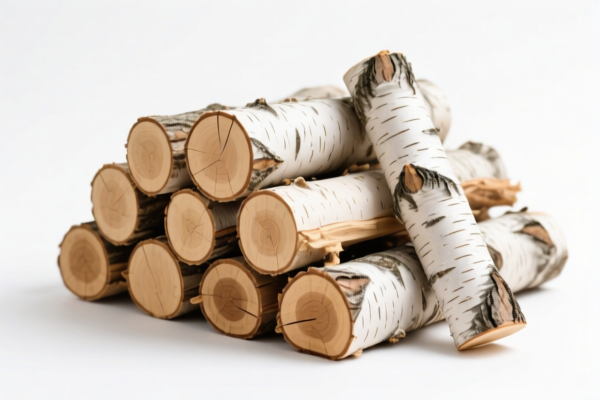
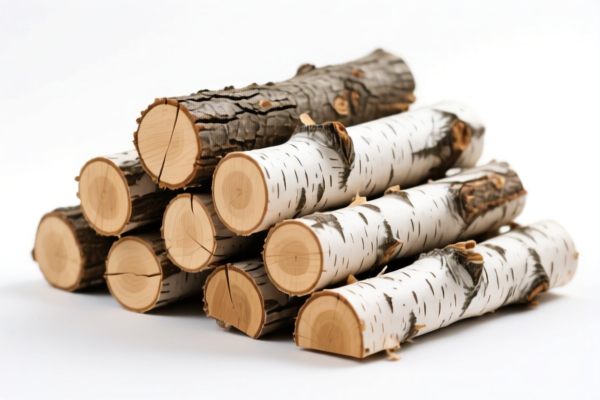
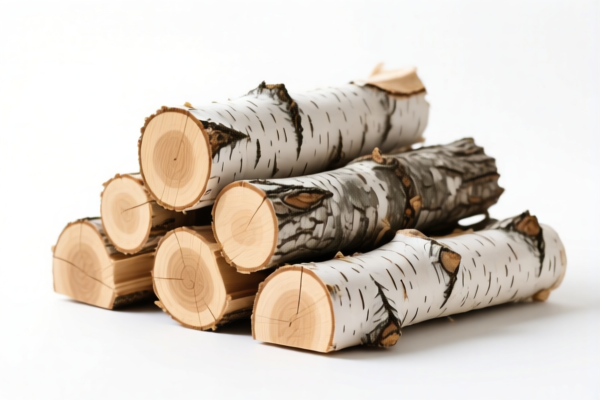
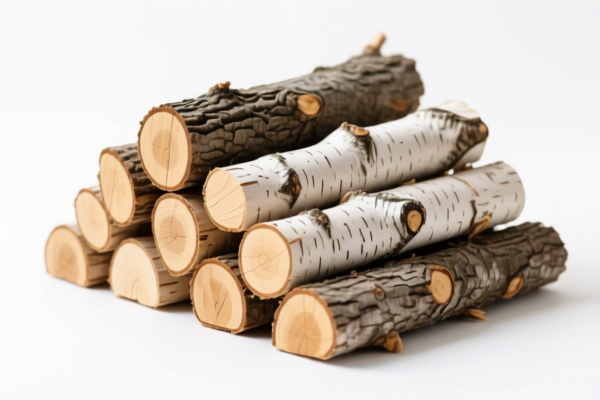
AI Analysis
🌲 Debarked Birch Wood Piles (White Birch Poles/Pilings)
🌐 HS Code Reference & Customs Clearance Guide | 2026 Latest Tariff Analysis | Professional Clearance Strategy
📌 I. Product Definition & Classification: What Exactly Are "Debarked Birch Wood Piles"?
Debarked Birch Wood Piles refer to timber harvested from birch trees (Betula species), where the bark has been removed, and the wood is formed into桩 (pilings), poles, or cylindrical shapes. In international trade, these are primarily classified based on their state of processing and end-use.
There are two main categories for customs classification: 1. Raw/Partially Processed Timber (Chapter 44): If the wood is merely sawn, round, or treated as raw material for further manufacturing (e.g., furniture parts, construction). This falls under HS 4403 or 4409. 2. Parts of Furniture (Chapter 94): If the wood is specifically shaped or intended as components for furniture (e.g., legs, supports, decorative pilings). This falls under HS 9403.
⚠️ Critical Distinction Point:
- If the item is a generic wooden piling or round wood intended for general construction, landscaping, or further processing → Classify under HS 4403.95 or 4409.29.
- If the item is a furniture part (e.g., a specific support leg or piling designed for a bed frame or table) → Classify under HS 9403.91.
📦 II. HS Code Classification Details (2026 Latest Tariff Authority Comparison)
| HS Code | Product Description | Applicable Scenario | Processing Level |
|---|---|---|---|
9403.91.00.10 |
Parts of wooden furniture, of wood | Specific furniture supports, decorative wooden pilings for furniture | ✅ Furniture Part |
4403.95.01.27 |
Wood, otherwise treated with paint, stains, creosote, etc., or in the form of piles/poles | General-purpose birch piles/poles, debarked, round or sawn | ✅ Raw/Processed Timber |
9403.91.00.80 |
Parts of wooden furniture of wood (Other) | Other wooden furniture components not specifically listed elsewhere | ✅ Furniture Part |
4409.29.66.00 |
Wood continuously shaped along its length, round (e.g., tool handles, dowels) | Birch wood turned into cylindrical shapes (rounds/dowels), non-coniferous | ✅ Continuously Shaped |
4409.29.61.00 |
Wood continuously shaped along its length, other (non-coniferous) | Birch wood in generic shaped forms, not specifically dowels/poles | ✅ Continuously Shaped |
🔍 Key Reminder:
- "Debarked" means the outer bark is removed, but it does not automatically make it a "furniture part." Context matters.
- If the product is sold as "Birch Poles for Landscaping," use 4403.95.
- If the product is sold as "Furniture Legs/Supports," use 9403.91.
- Misclassification can lead to significant duty differences or detention.
💰 III. 2026 Latest Tariff Rate Breakdown (Including Additional Duties & Policy Surcharges)
✅ Applicable Country: United States (US)
✅ Origin: China (CN)
✅ Effective Date: November 10, 2025 onwards (for subsequent imports)
🎯 1. 9403.91.00.10 & 9403.91.00.80 —— Parts of Wooden Furniture
| Item | Content |
|---|---|
| Base Tariff | 0% (ad valorem) |
| USITC Additional Duty | +25% (Under USITC Footnote 9903.88.01, Section 301) |
| IEEPA Additional Duty | +10% (Targeting China/HK products, under IEEPA Section 122) |
| Total Tariff Rate | 35.0% |
| Tax Calculation | CIF Value × 35% |
| De Minimis Exemption Available? | ❌ No (deny_de_minimis) |
| Legal Basis Path | IEEPA:9903.01.25 → IEEPA:9903.01.24 → USITC:9403.91.00.xx → FOOTNOTE:9903.88.01 |
📌 Explanation:
- These HS codes carry a 35% total tariff due to the combination of base zero duty + 25% Section 301 duty + 10% IEEPA duty.
- This is a high tariff bracket, so accurate classification is crucial to avoid overpaying if a lower-rate code applies.
🎯 2. 4403.95.01.27 —— Wood, Otherwise Treated (Piles/Poles)
| Item | Content |
|---|---|
| Base Tariff | 0% (ad valorem) |
| USITC Additional Duty | +25% |
| IEEPA Additional Duty | +10% |
| Total Tariff Rate | 35.0% |
| Tax Calculation | CIF Value × 35% |
| De Minimis Exemption Available? | ❌ No |
| Legal Basis Path | IEEPA:9903.01.25 → IEEPA:9903.01.24 → USITC:4403.95.01.27 → FOOTNOTE:9903.88.01 |
📌 Explanation:
- Standard debarked birch poles/piles fall here.
- Like furniture parts, they incur 35% total duty.
🎯 3. 4409.29.66.00 —— Wood Continuously Shaped (Round/Dowels)
| Item | Content |
|---|---|
| Base Tariff | 4.9% |
| USITC Additional Duty | +25% |
| IEEPA Additional Duty | +10% |
| Total Tariff Rate | 39.9% |
| Tax Calculation | CIF Value × 39.9% |
| De Minimis Exemption Available? | ❌ No |
| Legal Basis Path | IEEPA:9903.01.25 → IEEPA:9903.01.24 → USITC:4409.29.66.00 |
📌 Explanation:
- If the birch wood is machined into exact cylinders (like dowels or tool handles), it moves to Chapter 4409.
- Warning: The base duty is 4.9%, making the total 39.9% — the highest rate in this dataset. Avoid this classification unless the product is strictly a dowel/round shape.
🎯 4. 4409.29.61.00 —— Wood Continuously Shaped (Other)
| Item | Content |
|---|---|
| Base Tariff | 0% |
| USITC Additional Duty | +25% |
| IEEPA Additional Duty | +10% |
| Total Tariff Rate | 35.0% |
| Tax Calculation | CIF Value × 35% |
| De Minimis Exemption Available? | ❌ No |
| Legal Basis Path | IEEPA:9903.01.25 → IEEPA:9903.01.24 → USITC:4409.29.61.00 |
📌 Explanation:
- Similar to4409.29.66.00but with 0% base duty. Total remains 35%.
🛠️ IV. Customs Clearance Practical Advice (Battle-Tested Pitfall Guide)
✅ 1. Documentation Checklist (Non-Negotiable)
| Document | Required | Notes |
|---|---|---|
| ✅ Product Specification Sheet | ✔️ | Detail: Wood species (Betula alba/silver birch), debarked status, dimensions, moisture content. |
| ✅ Commercial Invoice | ✔️ | Clearly state "Debarked Birch Wood Piles" or "Birch Wood Furniture Parts." Avoid vague terms like "Wooden Rods." |
| ✅ Bill of Lading | ✔️ | Ensure weight and quantity match invoice. |
| ✅ Phytosanitary Certificate | ✔️ | Critical for Wood Products: Must be issued by the exporting country’s plant protection agency to prove freedom from pests. |
| ✅ ISPM 15 Mark (if applicable) | ✔️ | If packed in wood pallets, pallets must be heat-treated and marked. |
| ✅ Country of Origin Certificate | ✔️ | Required to confirm Chinese origin for IEEPA/301 duty application. |
✅ 2. Declaration Tips (Key Mnemonics)
🔥 "Species Clear, Shape Precise, Use Defined, Duty Avoided!"
| Scenario | Correct Declaration | Wrong Practice |
|---|---|---|
| General Poles for Fencing | 4403.95.01.27 - "Birch Poles, Debarked" |
Misdeclaring as "Furniture Parts" → No change in duty, but risk of audit. |
| Furniture Legs/Supports | 9403.91.00.10 - "Birch Wood Furniture Parts" |
Declaring as "Raw Timber" → May trigger higher scrutiny or incorrect duty assessment. |
| Exact Cylindrical Dowels | 4409.29.66.00 - "Birch Dowels" |
❌ Avoid unless necessary; highest duty (39.9%). |
| Raw Birch Logs (Barked) | Not in this dataset (Likely 4403.91) | Ensure bark status is accurate; "Debarked" changes classification. |
✅ 3. Special Handling Cases
| Case | Handling Advice |
|---|---|
| Mixed Shipments | If shipment contains both furniture parts and raw poles, split the HS codes in the declaration. Do not lump them under one code. |
| Wood Treatment | If the birch wood is painted, stained, or creosote-treated, it may fall under 4403 (treated wood), not 4409. Specify treatment in description. |
| OEM Custom Shapes | If the wood is custom-milled for a specific customer’s furniture design, provide design drawings to support 9403.91 classification. |
| Wooden Pallets in Shipment | Ensure pallets are ISPM 15 compliant (heat-treated). Non-compliant pallets can lead to rejection or fumigation costs. |
🌍 V. Global Customs Comparison (2026 Latest)
| Country/Region | Recommended HS Code | Tariff (CN Origin) | Certification Requirements | Notes |
|---|---|---|---|---|
| 🇺🇸 USA | 4403.95.01.27 / 9403.91.00.xx |
35% - 39.9% | Phytosanitary Certificate | High duties due to 301 + IEEPA. |
| 🇨🇳 China | 4403.95.01.27 |
~5-10% | None (if domestic) | Low duty if imported back. |
| 🇪🇺 EU | 4403.95.00 |
~4.9% | Fumigation Certificate | No IEEPA/301 equivalent. |
| 🇬🇧 UK | 4403.95.00 |
~4.9% | Fumigation Certificate | Post-Brexit rules apply. |
| 🇦🇺 Australia | 4403.95.00 |
~5% | MAFIS Permit | Strict biosecurity controls. |
📌 Conclusion:
- The US market is the most expensive for birch wood imports due to the 35%+ tariff burden.
- EU/UK/AU offer lower base duties (~4.9-5%) but have strict phytosanitary requirements.
- Always prioritize Phytosanitary Certificates to avoid border delays.
📌 VI. Common Errors & Pitfall Guide (Lessons Learned)
❌ Error 1: Declaring "Birch Poles" as "General Wood" without specifying species or debarked status.
👉 Consequence: Customs may reclassify to a higher duty rate or demand additional documentation.
❌ Error 2: Failing to provide a Phytosanitary Certificate.
👉 Consequence: Shipment held at port, fumigated at owner’s expense, or returned.
❌ Error 3: Misclassifying "Furniture Parts" as "Raw Timber" to guess wrong duties.
👉 Consequence: Audit risk, penalties, and potential seizure if intent is proven.
❌ Error 4: Using "Dowels" (4409.29.66.00) for simple poles.
👉 Consequence: Unnecessary 39.9% tariff instead of 35%. Only use if truly machined to exact cylindrical tolerances.
✅ Correct Practice:
"Debarked Birch Wood Poles, Species: Betula alba, Length: 2m, Diameter: 5cm, No Bark, Used for Fencing."
🎯 VII. Conclusion: Professional Declaration, Cost Control, Smooth Clearance!
🎯 Remember the Mantra:
🔹 "Species clear, shape precise, use defined, duty avoided!"
🔹 "Phytosanitary is king, 35% duty is real, declare right, stay clean!"
📌 Pro Tip:
- If you are exporting to the US, budget for 35% total duty.
- If possible, consider sourcing from non-Chinese origins (e.g., Russia, Canada) to avoid IEEPA duties, but note that birch is less common there compared to birch from China/Eastern Europe.
- Pre-ruling (Advance Ruling): Apply for an HS Code advance ruling with US CBP if the product’s classification is ambiguous (e.g., is it a furniture part or raw material?).
📣 Immediate Action:
📞 Consult a licensed customs broker + Provide product photos + Obtain Phytosanitary Certificate
🚀 Ensure your Debarked Birch Wood Piles clear customs smoothly, efficiently, and cost-effectively!
✨ Professional Customs Clearance Starts with Accurate Classification!
💼 Every dollar of duty saved is profit earned!
Customer Reviews
About HS Code Classification
The Harmonized System (HS) is an internationally standardized nomenclature developed by the World Customs Organization (WCO) to classify traded products. Over 200 countries use the HS system as the basis for customs tariffs, trade statistics, and import/export regulations.
Each HS code follows a hierarchical structure:
- Chapter (2 digits) — Broad category of goods (e.g., Chapter 84: Machinery and Mechanical Appliances)
- Heading (4 digits) — More specific grouping within the chapter
- Subheading (6 digits) — Internationally standardized breakdown, used by all WCO member countries
- National subdivisions (8-10 digits) — Country-specific extensions for further classification, such as US HTSUS 10-digit codes
Correct HS code classification is essential for smooth customs clearance, accurate duty payment, and compliance with trade regulations. Misclassification can lead to customs delays, overpayment of duties, or penalties.
When importing from CN to US, the applicable tariff rates may include:
- Most-Favored-Nation (MFN) rate — The standard duty rate applied to WTO members
- General rate — Applied to countries without trade agreements
- Trade remedy duties — Additional tariffs such as Section 301 (anti-dumping), Section 232 (national security), or countervailing duties
The information provided on this page is for reference purposes only. For official classification, please consult with your local customs authority or a licensed customs broker.