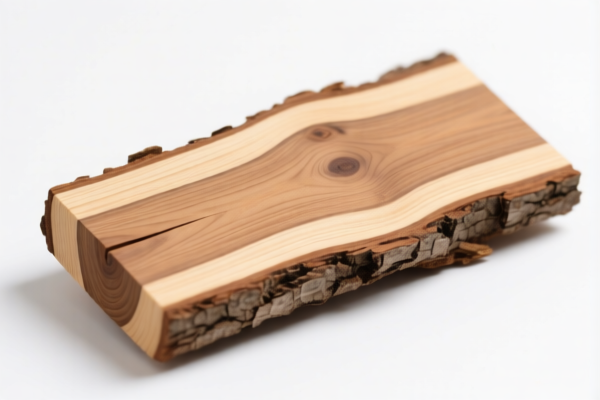
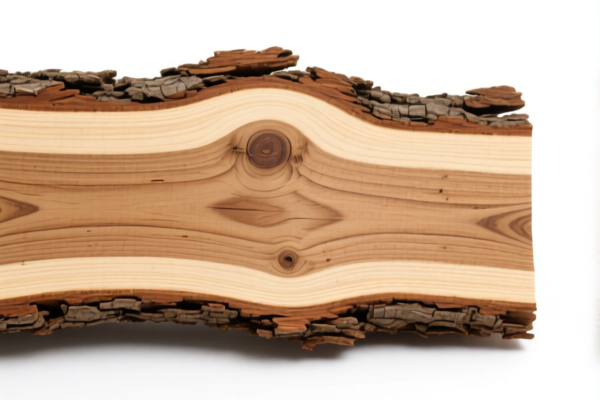
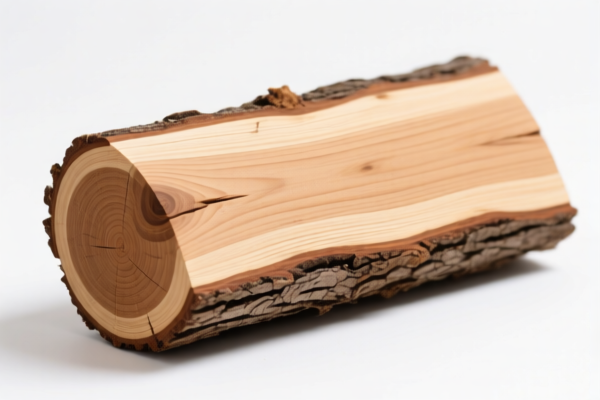
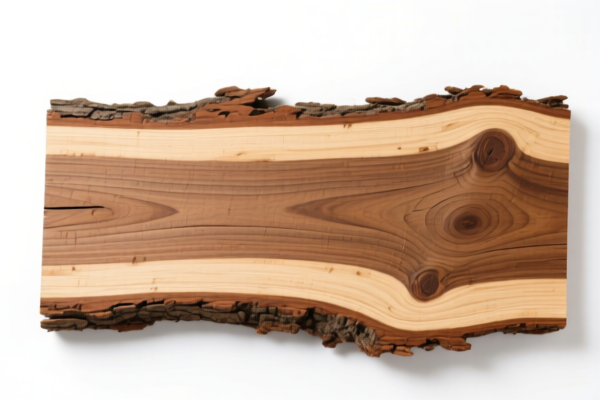
Debarked Rough Ash Wood
CN → US| HS Code | Tariff Rate | Origin | Destination | Doc |
|---|---|---|---|---|
| 4403990140 | 35.0% | CN | US | Official Doc |
| 4403990195 | 35.0% | CN | US | Official Doc |
Product Images
AI Analysis
🌳 Debarked Rough Ash Wood (Fraxinus spp.)
🌐 HS Code Reference & Customs Clearance Guide | 2026 Latest Tariff Analysis | Professional Entry Strategy
📌 I. Product Definition and Classification: What Exactly is "Debarked Rough Ash Wood"?
"Debarked Rough Ash Wood" refers to timber that has been cut into logs or rounds, with the bark removed, but not planed, squared, or further processed into lumber. It is in its natural or "rough" state.
Key Distinctions: * Ash (Fraxinus spp.) vs. Other Woods: Ash is a specific genus of deciduous tree. If the wood is not Ash, it falls under different subheadings (e.g., "Other"). * Debarked vs. Stripped of Bark/Sapwood: "Debarked" means the outer bark is removed. "Roughly squared" means edges are trimmed but it is not yet dimensioned lumber. * Raw State: This is primary timber, not sawn wood (Chapter 4403) or wood charcoal (Chapter 4402).
⚠️ Critical Classification Point:
- If the wood is Ash (Fraxinus spp.), it is classified under 4403.99.01.40.
- If the wood is NOT Ash (e.g., Oak, Pine, Maple, or unidentified), it falls under 4403.99.01.95.
- Misclassification Risk: Declaring non-Ash wood as Ash to seek lower duties is fraud. Ensure species verification (botanical name) is accurate.
📦 II. HS Code Breakdown (2026 Latest Tariff Authority)
Based on the provided data, here are the two applicable HS Codes for Debarked Rough Ash Wood and related rough timber:
| HS Code | Product Description | Species | Key Characteristics |
|---|---|---|---|
4403.99.01.40 |
Wood in the rough... Of Ash (Fraxinus spp.) | Ash (Fraxinus) | Debarked, rough, not squared. Specific to Ash genus. |
4403.99.01.95 |
Wood in the rough... Other | Non-Ash | Any other hardwood or softwood, debarked, rough. Includes Oak, Maple, Beech, etc. |
🔍 Explanation for Classification:
- Chapter 44: Wood and articles of wood.
- Heading 4403: Wood, roughly squared or roughly trimmed, whether or not stripped of bark or sapwood, or roughly squared.
- Subheading 4403.99: Other wood (not oak, beech, pine, etc., which have their own specific codes).
- 8-Digit Suffix:
-.40: Specifically designated for Ash (Fraxinus).
-.95: Designated for Other woods not specifically listed in .40-.49.
💰 III. 2026 Tariff Rate Detailed Breakdown (USA Import from China)
✅ Applicable Country: United States (US)
✅ Origin: China (CN)
✅ Effective Time: Ongoing (Section 301 & IEEPA measures)
🎯 1. 4403.99.01.40 — Rough Ash Wood (Fraxinus spp.)
| Item | Content |
|---|---|
| Base Tariff Rate | 0.0% (ad valorem) |
| Additional Tariff (Section 301) | +25.0% |
| Total Tax Rate | 25.0% |
| Tax Calculation | CIF Value × 25% |
| De Minimis Exemption | ❌ Not Applicable (High-value timber usually exceeds $800 threshold; even if under, Section 301 goods are often excluded) |
| Legal Basis | HTSUS 4403.99.01.40 + USITC Footnote (Section 301 List 4A/4B depending on exact year update) |
📌 Explanation:
- The base duty for Ash wood is 0%, making it relatively low-tariff in normal trade.
- However, due to US-China trade tensions, a 25% additional tariff is applied under Section 301.
- Total Effective Duty: 25%. This is a significant cost factor for importers.
🎯 2. 4403.99.01.95 — Rough Wood (Other, Non-Ash)
| Item | Content |
|---|---|
| Base Tariff Rate | 0.0% (ad valorem) |
| Additional Tariff (Section 301) | +25.0% |
| Total Tax Rate | 25.0% |
| Tax Calculation | CIF Value × 25% |
| De Minimis Exemption | ❌ Not Applicable |
| Legal Basis | HTSUS 4403.99.01.95 + USITC Footnote |
📌 Explanation:
- Similar to Ash, "Other" rough woods also enjoy 0% base duty.
- The 25% additional tariff applies equally to non-Ash rough hardwoods.
- Total Effective Duty: 25%.
- Note: There is no difference in tariff rate between Ash and Other woods in this specific subheading range under current US law. The classification difference is purely for statistical and regulatory tracking.
🛠️ IV. Customs Clearance Practical Advice (Pitfall Avoidance Guide)
✅ 1. Required Documentation Checklist
| Document | Required | Notes |
|---|---|---|
| ✅ Botanical Name | ✔️ | Must specify Fraxinus spp. for Ash. Vague terms like "Hardwood" are risky. |
| ✅ Commercial Invoice | ✔️ | Clearly state: "Debarked Rough Ash Wood Logs" or "Other Rough Wood". |
| ✅ Packing List | ✔️ | Include volume (cubic meters/board feet), weight, and quantity. |
| ✅ Phytosanitary Certificate | ✔️ | Critical! Wood imports require proof of no pests (ISPM 15 compliance). |
| ✅ Fumigation Certificate | ✔️ | Proof of treatment if required by USDA APHIS. |
| ✅ Bill of Lading | ✔️ | Must match invoice and packing list details. |
✅ 2. Classification Strategy & Risk Management
| Scenario | Correct Action | Risk of Error |
|---|---|---|
| Ash vs. Other | Verify species with wood expert or lab test if uncertain. | Misclassifying Ash as "Other" (or vice versa) may not change tax but can cause regulatory scrutiny for species-specific restrictions (e.g., CITES, endangered species). |
| Rough vs. Sawn | Ensure wood is not planed/squared. If squared, it may fall under 4407 (Sawn Wood). | Misclassifying as 4403 (Rough) when it's 4407 (Sawn) can lead to different duty rates and documentation requirements. |
| Bark Removal | Confirm wood is "debarked." If bark is present, it may still be 4403, but description must match. | Inconsistent description leads to customs holds for inspection. |
✅ 3. Special Considerations
- ISPM 15 Compliance: All wood packaging and raw wood must comply with International Standards for Phytosanitary Measures. Ensure marks are present.
- CITES Check: While Fraxinus (Ash) is generally not CITES-listed, always verify if specific sub-species are protected.
- Volume Measurement: US Customs may verify volume (board feet vs. cubic meters). Discrepancies can lead to audits.
🌍 V. Global Market Comparison (2026)
| Country | Recommended HS Code | Base Tariff | Additional Tariffs (China) | Total Effective Rate | Notes |
|---|---|---|---|---|---|
| 🇺🇸 USA | 4403.99.01.40 / .95 |
0.0% | +25.0% (Section 301) | 25.0% | High duty due to trade war. |
| 🇨🇳 China (Export) | N/A | 0% | N/A | 0% | China exports these goods; no export duty. |
| 🇪🇺 EU | 4403.99.50 | ~2.7% | None (generally) | ~2.7% | No Section 301 equivalent. Lower cost. |
| 🇬🇧 UK | 4403.99.50 | ~2.5% | None | ~2.5% | Post-Brexit, similar to EU. |
| 🇨🇦 Canada | 4403.99.50 | 0% | None (CUSMA) | 0% | Free trade under USMCA/CUSMA. |
📌 Conclusion:
- The US is the most expensive market for Chinese Ash wood due to the 25% Section 301 tariff.
- Consider sourcing from Canada or Europe if targeting the US market to avoid duties (if origin rules allow).
- EU and UK offer significantly lower tariff burdens (~2.5-2.7%).
📌 VI. Common Mistakes & Pitfalls (Lessons Learned)
❌ Mistake 1: Declaring "Wood" without specifying species.
👉 Consequence: Customs may reject the entry or assign a default higher tariff code.
❌ Mistake 2: Not providing a Phytosanitary Certificate.
👉 Consequence: Immediate rejection by USDA APHIS. Goods will be destroyed or re-exported at importer's expense.
❌ Mistake 3: Confusing "Debarked" with "Sawed."
👉 Consequence: If wood is sawn, it should be 4407. Misclassification leads to penalties for incorrect declaration.
❌ Mistake 4: Ignoring the 25% Additional Duty.
👉 Consequence: Underestimating landed cost by 25%. Budgeting errors can lead to financial loss.
✅ Correct Practice:
"Rough Ash Wood Logs, Debarked, Fraxinus spp., ISPM 15 Compliant, Fumigated, CIF Value $X, HS Code 4403.99.01.40, Subject to 25% Additional Duty."
🎯 VII. Conclusion: Professional Clearance, Cost Control, Risk Mitigation
🎯 Key Takeaways:
🔹 "Species Matters, But Tax Doesn't" – Ash vs. Other doesn't change the 25% duty, but accurate species identification is legally required.
🔹 "25% is the Floor" – Expect a 25% total duty for US imports from China.
🔹 "Phytosanitary is Non-Negotiable" – No certificate = No entry.
🔹 "Rough vs. Sawn" – Ensure the description matches the physical state. Rough = 4403. Sawn = 4407.
📌 Pro Tip:
If you are importing large volumes, consider applying for a Section 301 Exclusion (if still available) or exploring transshipment from non-China countries (e.g., Canada) to mitigate the 25% duty. Always consult a licensed customs broker for pre-import rulings.
📣 Action Step:
📞 Engage a Customs Broker
📋 Verify Botanical Name
📄 Secure Phytosanitary Certificate
💰 Budget for 25% Additional Duty
✨ Precision in Classification, Savings in Tariffs!
💼 Your Timber Shipment, Smoothly Cleared!
Customer Reviews
About HS Code Classification
The Harmonized System (HS) is an internationally standardized nomenclature developed by the World Customs Organization (WCO) to classify traded products. Over 200 countries use the HS system as the basis for customs tariffs, trade statistics, and import/export regulations.
Each HS code follows a hierarchical structure:
- Chapter (2 digits) — Broad category of goods (e.g., Chapter 84: Machinery and Mechanical Appliances)
- Heading (4 digits) — More specific grouping within the chapter
- Subheading (6 digits) — Internationally standardized breakdown, used by all WCO member countries
- National subdivisions (8-10 digits) — Country-specific extensions for further classification, such as US HTSUS 10-digit codes
Correct HS code classification is essential for smooth customs clearance, accurate duty payment, and compliance with trade regulations. Misclassification can lead to customs delays, overpayment of duties, or penalties.
When importing from CN to US, the applicable tariff rates may include:
- Most-Favored-Nation (MFN) rate — The standard duty rate applied to WTO members
- General rate — Applied to countries without trade agreements
- Trade remedy duties — Additional tariffs such as Section 301 (anti-dumping), Section 232 (national security), or countervailing duties
The information provided on this page is for reference purposes only. For official classification, please consult with your local customs authority or a licensed customs broker.