Debarked Yellow Poplar Rough Wood
CN → US| HS Code | Tariff Rate | Origin | Destination | Doc |
|---|---|---|---|---|
| 4407970072 | 35.0% | CN | US | Official Doc |
| 4407970079 | 35.0% | CN | US | Official Doc |
Product Images
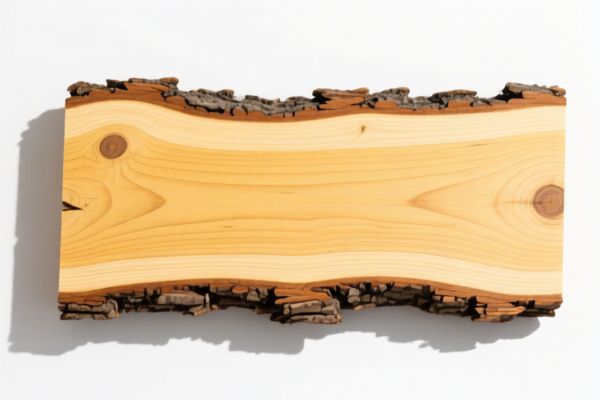
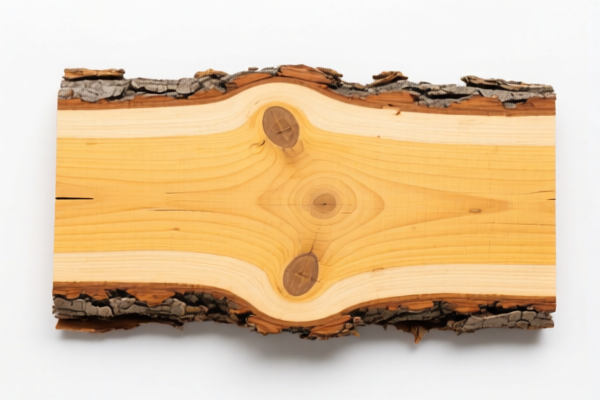
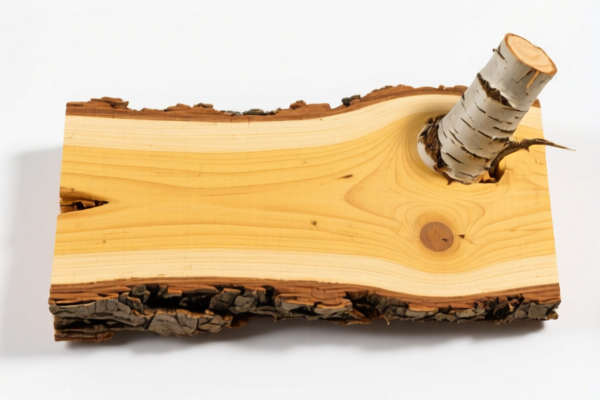
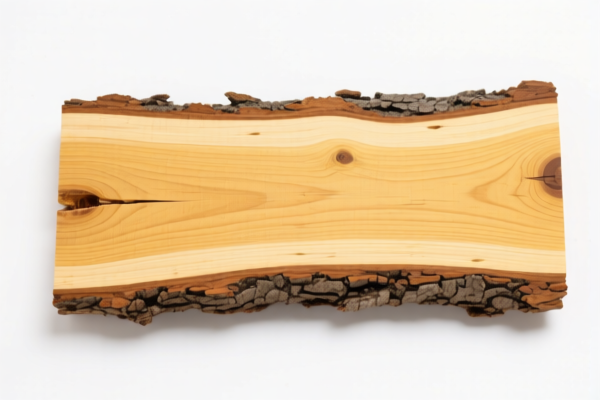
AI Analysis
🌲 Yellow Poplar Rough Wood (Debarked) – US Customs Classification Guide 2026
🌐 HS Code Reference & Customs Clearance Strategy | 2026 Updated Tariff Analysis | Professional Entry Tips
📌 1. Product Definition & Classification: What Exactly is "Yellow Poplar Rough Wood"?
Yellow Poplar Rough Wood, specifically debarked, is a type of processed lumber primarily used for furniture, cabinetry, musical instruments, and veneer. In international trade, it falls under Chapter 44 (Wood and articles of wood; wood charcoal).
Key Characteristics: - Material: Yellow Poplar (Liriodendron tulipifera) or similar Poplar/Aspen species. - Process: Sawn or chipped lengthwise, sliced, or peeled. - Condition: Debarked (bark removed), whether or not planed, sanded, or end-jointed. - Thickness: Exceeding 6 mm. This is a critical threshold. If the thickness is ≤ 6 mm, it may fall under a different subheading (e.g., wood veneers).
⚠️ Critical Distinction:
- If the wood is ≤ 6 mm thick and intended for veneer sheets, it may be classified differently.
- If the wood is > 6 mm thick, regardless of whether it is planed, sanded, or end-jointed, it falls under HS Code 4407.
- "Rough Wood" in this context refers to the form after sawing/peeling but before final finishing (e.g., painting or staining).
📦 2. HS Code Classification Details (2026 Official Tariff)
Based on the provided data, the specific HS Codes for Yellow Poplar Rough Wood (> 6 mm) are:
| HS Code | Product Description | Applicable Material | Key Conditions |
|---|---|---|---|
4407.97.00.72 |
Wood sawn/chipped lengthwise, sliced or peeled (> 6 mm): Other: Of poplar and aspen (Populus spp.) Yellow poplar (Liriodendron tulipifera) | Liriodendron tulipifera (Yellow Poplar) | Specific species identification required |
4407.97.00.79 |
Wood sawn/chipped lengthwise, sliced or peeled (> 6 mm): Other: Of poplar and aspen (Populus spp.) Other poplar; aspen; cottonwood | Populus spp. (Poplar, Aspen, Cottonwood) | Generic Poplar/Aspen/Cottonwood |
🔍 Key Note:
- Yellow Poplar (Liriodendron tulipifera) is NOT botanically a true poplar (Genus Populus), but it is commonly grouped with them in trade. The US Customs Service distinguishes it specifically in4407.97.00.72.
- If you cannot prove the wood is Liriodendron tulipifera, it defaults to the "Other" category (4407.97.00.79).
- Thickness must be > 6 mm. If ≤ 6 mm, check subheadings under 4408 (Veneer sheets).
💰 3. 2026 Latest Tariff Rate Breakdown (Including Section 301 & IEEPA Surcharges)
✅ Applicable Country: United States (US)
✅ Country of Origin: China (CN)
✅ Effective Date: From November 10, 2025 (and subsequent imports)
🎯 1. 4407.97.00.72 – Yellow Poplar (Liriodendron tulipifera)
| Item | Content |
|---|---|
| Base Tariff Rate | 0% (ad valorem) |
| Section 301 Surcharge | +25% (Under USITC Footnote 9903.88.01) |
| IEEPA Surcharge | +0% (Not applicable to this specific subheading under current IEEPA orders as per provided data) |
| Total Tariff Rate | 25% |
| Tax Calculation | CIF Value × 25% |
| De Minimis Exemption | ❌ Not Eligible (For shipments > $800, standard duties apply) |
| Legal Authority Path | USITC:4407.97.00.72 → FOOTNOTE:9903.88.01 |
📌 Explanation:
- The base tariff for most wood products is low (0-5%), but Section 301 tariffs impose an additional 25% on many Chinese wood products.
- No IEEPA 10% surcharge applies to this specific HS code according to the provided data.
- Total Import Duty: 25% of the CIF value.
🎯 2. 4407.97.00.79 – Other Poplar/Aspen/Cottonwood
| Item | Content |
|---|---|
| Base Tariff Rate | 0% (ad valorem) |
| Section 301 Surcharge | +25% (Under USITC Footnote 9903.88.01) |
| IEEPA Surcharge | +0% (Not applicable) |
| Total Tariff Rate | 25% |
| Tax Calculation | CIF Value × 25% |
| De Minimis Exemption | ❌ Not Eligible |
| Legal Authority Path | USITC:4407.97.00.79 → FOOTNOTE:9903.88.01 |
📌 Note:
- Identical tariff treatment to4407.97.00.72.
- If the wood is not Yellow Poplar (Liriodendron tulipifera), but another type of Poplar or Aspen, it falls here.
- Total Import Duty: 25% of the CIF value.
🛠️ 4. Customs Clearance Practical Advice (Real-World Pitfall Guide)
✅ 1. Required Documentation Checklist (Mandatory)
| Document | Required? | Explanation |
|---|---|---|
| ✅ Commercial Invoice | ✔️ | Must clearly state: "Wood, Sawn/Peeled, > 6mm, Debarked, Species: Liriodendron tulipifera or Populus spp." |
| ✅ Packing List | ✔️ | Must list total weight, number of bundles, and dimensions. |
| ✅ Fumigation Certificate | ✔️ | Mandatory for wood products. Must comply with ISPM 15 standards (heat treatment or methyl bromide). |
| ✅ Phytosanitary Certificate | ✔️ | Issued by the country of origin’s agricultural authority. |
| ✅ Species Declaration | ✔️ | Must specify if it is Liriodendron tulipifera (Yellow Poplar) or Populus spp. (Other Poplar). |
| ✅ Thickness Certificate | ✔️ | Proof that thickness exceeds 6 mm. If ≤ 6 mm, HS Code changes to 4408. |
✅ 2. Declaration Tips (Key Formulas)
🔥 "Species Matters, Thickness is King, Fumigation is Key!"
| Scenario | Correct Declaration | Incorrect Declaration |
|---|---|---|
| Yellow Poplar | 4407.97.00.72 |
Mislabeling as "Other Wood" → 25% still applies, but risk of audit |
| Other Poplar/Aspen | 4407.97.00.79 |
Mislabeling as Yellow Poplar → Same rate, but scientific mismatch |
| Thickness ≤ 6 mm | 4408.xxxxxx.xxxx (Veneer) |
Declaring as 4407 → Wrong classification, penalties |
| Unprocessed Logs | 4403.42 (Roundwood) |
Declaring as "Sawn Wood" → Wrong HS Code, different rate |
✅ 3. Special Cases & Handling
| Scenario | Handling Advice |
|---|---|
| Mixed Species | If the shipment contains both Yellow Poplar and Other Poplar, separate the shipments or declare the majority species. If mixed, US Customs may apply the higher scrutiny rate. |
| End-Jointed Boards | If the wood is end-jointed (e.g., finger-jointed lumber), it still falls under 4407 as long as it is > 6 mm thick. |
| Planed/Sanded | Planing or sanding does not change the HS Code under 4407, as long as it remains > 6 mm thick. |
| Fumigation Failure | Without a valid ISPM 15 certificate, the shipment will be rejected or re-exported at the importer’s expense. |
🌍 5. Global Market Comparison (2026)
| Country/Region | Recommended HS Code | Tariff (China Origin) | Certification | Notes |
|---|---|---|---|---|
| 🇺🇸 USA | 4407.97.00.72 or .79 |
25% (Section 301) | ISPM 15 Fumigation | High duty, strict phytosanitary checks |
| 🇨🇳 China | 4407.97.00.72 or .79 |
5-8% (Import Duty) | N/A | Lower duty, standard inspection |
| 🇪🇺 EU | 4407.97.00 |
0-6.5% (MFN Rate) | EU Fitosanitary Regulations | No Section 301 equivalent, but strict eco-labels |
| 🇯🇵 Japan | 4407.97.00 |
0-3.2% | Phytosanitary Cert | Low duty, strict pest control |
📌 Conclusion:
- The US imposes a significant 25% additional tariff on Chinese Yellow Poplar and Other Poplar wood products.
- No duty-free options exist under current US trade policies for this category.
- Phytosanitary compliance is non-negotiable.
📌 6. Common Mistakes & Pitfalls (Lessons Learned)
❌ Mistake 1: Failing to specify the species (Liriodendron tulipifera vs. Populus).
👉 Consequence: Customs may classify under a default "Other Wood" code, potentially triggering higher scrutiny or audits.
❌ Mistake 2: Ignoring the 6 mm thickness rule.
👉 Consequence: If the wood is ≤ 6 mm, it is considered veneer, not sawn wood. Declaring it as sawn wood leads to wrong classification and potential penalties.
❌ Mistake 3: Missing ISPM 15 Fumigation Certificate.
👉 Consequence: Shipment held at port or returned. Fumigation costs can exceed the tariff itself.
❌ Mistake 4: Using generic terms like "Wood Planks" without species details.
👉 Consequence: Customs will request additional documentation, causing delays.
✅ Correct Practice:
"Wood, Sawn, Yellow Poplar (Liriodendron tulipifera), Debarked, Thickness 19mm, Fumigated per ISPM 15, Country of Origin: China"
🎯 7. Conclusion: Professional Declaration, Time-Saving, Cost-Effective!
🎯 Remember the Formula:
🔹 "Species + Thickness > 6mm = 4407"
🔹 "Section 301 = 25% Extra Tax"
🔹 "Fumigation = Mandatory"
🔹 "De Minimis = Not Applicable"
📌 Tips:
- If your Yellow Poplar is originating from Vietnam, Malaysia, or Indonesia, you may avoid the 25% Section 301 tariff. Verify the country of origin carefully.
- Consider applying for an Advance Ruling from US Customs to confirm the HS Code before shipment, especially for large volumes.
📣 Immediate Action Required:
📞 Consult a licensed customs broker + Provide Species Declaration + Ensure ISPM 15 Compliance
🚀 Ensure your Yellow Poplar wood clears US customs smoothly, efficiently, and cost-effectively!
✨ Professional customs clearance starts with precise classification!
💼 Every percentage point of duty counts!
Customer Reviews
About HS Code Classification
The Harmonized System (HS) is an internationally standardized nomenclature developed by the World Customs Organization (WCO) to classify traded products. Over 200 countries use the HS system as the basis for customs tariffs, trade statistics, and import/export regulations.
Each HS code follows a hierarchical structure:
- Chapter (2 digits) — Broad category of goods (e.g., Chapter 84: Machinery and Mechanical Appliances)
- Heading (4 digits) — More specific grouping within the chapter
- Subheading (6 digits) — Internationally standardized breakdown, used by all WCO member countries
- National subdivisions (8-10 digits) — Country-specific extensions for further classification, such as US HTSUS 10-digit codes
Correct HS code classification is essential for smooth customs clearance, accurate duty payment, and compliance with trade regulations. Misclassification can lead to customs delays, overpayment of duties, or penalties.
When importing from CN to US, the applicable tariff rates may include:
- Most-Favored-Nation (MFN) rate — The standard duty rate applied to WTO members
- General rate — Applied to countries without trade agreements
- Trade remedy duties — Additional tariffs such as Section 301 (anti-dumping), Section 232 (national security), or countervailing duties
The information provided on this page is for reference purposes only. For official classification, please consult with your local customs authority or a licensed customs broker.