Decanter
CN → US| HS Code | Tariff Rate | Origin | Destination | Doc |
|---|---|---|---|---|
| 7013415000 | 20.5% | CN | US | Official Doc |
| 7013496010 | 24.7% | CN | US | Official Doc |
| 6912004100 | 13.9% | CN | US | Official Doc |
| 6912004810 | 19.8% | CN | US | Official Doc |
| 6911104100 | 16.3% | CN | US | Official Doc |
| 6911108010 | 38.3% | CN | US | Official Doc |
Product Images
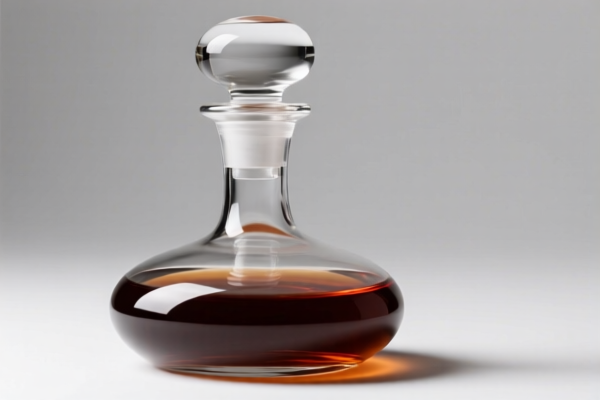
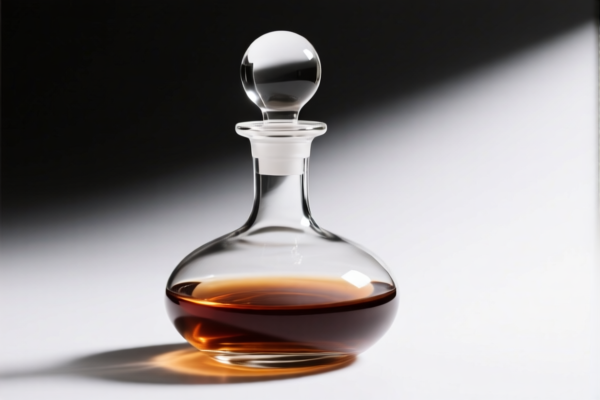
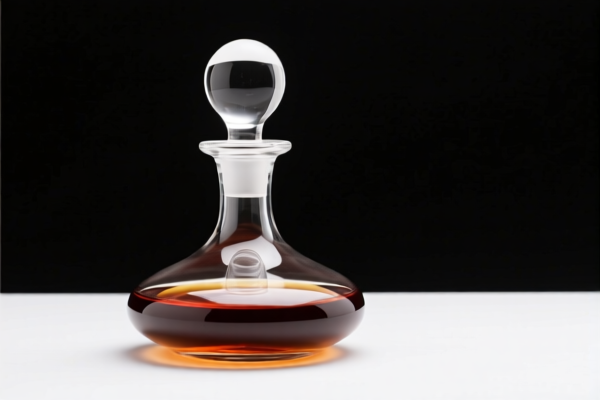
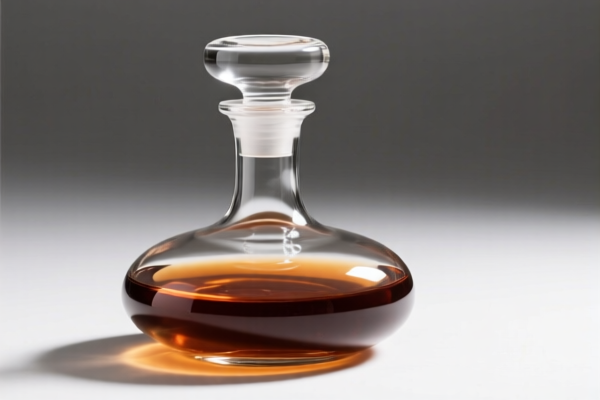
AI Analysis
🍷 Decanters (Wine & Spirit Decanters)
🌐 HS Code Reference & Clearance Guide | 2026 Latest Tariff Analysis | Professional Customs Strategy
📌 I. Product Definition & Classification: What Exactly is a "Decanter"?
A Decanter is a vessel with a wide base and narrow neck, used primarily for pouring aged wine or spirits, allowing them to breathe and separate from sediment. In international trade, the classification depends entirely on two critical factors: 1. Material: Is it Porcelain/China (6911) or Ceramic other than porcelain (6912)? 2. Functionality: Is it a specialized decorative/form piece (specifically listed as "decanters" under subheading 41) or a general food/drink container (generic "other suitable for food contact" under subheading 80)?
⚠️ Key Distinction:
- If the item is specifically described as a "Decanter" (often ornate, crystal-style, or specific shape) AND is Ceramic → It falls under 6912.00.41.00 or 6911.10.41.00.
- If it is a generic glass or ceramic jug that could be a decanter but isn't specifically named as such in the "specialized" list → It may fall under 6912.00.48.10 or 6911.10.80.10.
- Note: Glass decanters are NOT covered in the provided set. The data strictly covers Ceramic and Porcelain tableware (Headings 6911 & 6912).
📦 II. HS Code Classification Details (2026 Latest Tariff对照)
Based strictly on the provided , here are the applicable HS Codes for Ceramic/Porcelain Decanters:
| HS Code | Material | Specific Description | Tax Rate (Total) | Base Tariff | Additional Tariff |
|---|---|---|---|---|---|
6912.00.41.00 |
Ceramic (Non-Porcelain) | Decanters (listed with steins, candy boxes, etc.) | 0.0% | 0.0% | 0.0% |
6912.00.48.10 |
Ceramic (Non-Porcelain) | Other tableware suitable for food/drink contact (Generic) | 9.8% | 9.8% | 0.0% |
6911.10.41.00 |
Porcelain/China | Decanters (listed with steins, candy boxes, etc.) | 6.3% | 6.3% | 0.0% |
6911.10.80.10 |
Porcelain/China | Other tableware suitable for food/drink contact (Generic) | 28.3% | 20.8% | 7.5% |
🔍 Critical Insight:
- Specificity Wins: The US Harmonized Tariff Schedule (HTSUS) has specific subheadings (.41) for "decanters" alongside other specific shapes (steins, egg cups). If your product is clearly a decanter, use the.41code to benefit from lower tariffs (0% for Ceramic, 6.3% for Porcelain).
- Avoid Generic Codes: Using the generic "Other" codes (.48.10or.80.10) results in significantly higher taxes, especially for Porcelain (up to 28.3%).
💰 III. 2026 Tariff Rate Breakdown (Detailed Tax Analysis)
✅ Applicable Country: United States (US)
✅ Origin: China (CN) (Note: Tax details imply US import from China)
✅ Validity: 2026 Tariff Schedule
🎯 1. 6912.00.41.00 —— Ceramic Decanter (Best Case Scenario)
| Item | Content |
|---|---|
| Product Type | Ceramic (Not Porcelain/China) Decanter |
| Base Tariff | 0.0% |
| Section 301 Additional Tariff | 0.0% |
| Total Effective Rate | 0.0% |
| Tax Calculation | CIF Value × 0% = $0 |
| De Minimis Eligibility | ✅ Yes (Low duty threshold allows simplified clearance) |
| Legal Path | HTSUS 6912.00.41.00 |
📌 Explanation:
- Ceramic tableware (excluding porcelain) has a preferential status for specific items like decanters.
- Zero duty makes this the most cost-effective option for ceramic decanters.
- Ensure the material is truly "ceramic" (stoneware, earthenware) and NOT "porcelain" to maintain this 0% rate.
🎯 2. 6912.00.48.10 —— Generic Ceramic Tableware (Risk Warning)
| Item | Content |
|---|---|
| Product Type | Ceramic Tableware (Generic, not specifically listed) |
| Base Tariff | 9.8% |
| Section 301 Additional Tariff | 0.0% |
| Total Effective Rate | 9.8% |
| Tax Calculation | CIF Value × 9.8% |
| De Minimis Eligibility | ❌ No (Likely exceeds de minimis value thresholds for duty) |
| Legal Path | HTSUS 6912.00.48.10 |
📌 Explanation:
- If customs determines your "decanter" is not specifically a "decanter" but a generic jug, it falls here.
- 9.8% duty is significant. Always argue for the specific.41classification if the shape is distinctly a decanter.
🎯 3. 6911.10.41.00 —— Porcelain/China Decanter
| Item | Content |
|---|---|
| Product Type | Porcelain/China Decanter |
| Base Tariff | 6.3% |
| Section 301 Additional Tariff | 0.0% |
| Total Effective Rate | 6.3% |
| Tax Calculation | CIF Value × 6.3% |
| De Minimis Eligibility | ❌ No |
| Legal Path | HTSUS 6911.10.41.00 |
📌 Explanation:
- Porcelain is a higher-grade material than ceramic. It attracts a 6.3% base tariff.
- No additional USITC or IEEPA tariffs apply to this specific code.
- Much better than the generic porcelain code (.80.10).
🎯 4. 6911.10.80.10 —— Generic Porcelain Tableware (High Risk!)
| Item | Content |
|---|---|
| Product Type | Porcelain/China Tableware (Generic) |
| Base Tariff | 20.8% |
| Section 301 Additional Tariff | 7.5% |
| Total Effective Rate | 28.3% |
| Tax Calculation | CIF Value × 28.3% |
| De Minimis Eligibility | ❌ No |
| Legal Path | HTSUS 6911.10.80.10 |
📌 Explanation:
- DANGER ZONE: If your porcelain decanter is misclassified as "Other" tableware, the tariff jumps to 28.3%.
- This includes a 7.5% Section 301 additional tariff on top of the 20.8% base.
- Action: Never use this code for a clearly identifiable decanter.
🛠️ IV. Customs Clearance Practical Advice (Pitfall Avoidance)
✅ 1. Documentation Checklist (Must-Haves)
| Document | Requirement | Purpose |
|---|---|---|
| ✅ Product Photos | ✔️ Clear images showing the shape (wide base, narrow neck) | Proves it is a "Decanter" and not a generic jug |
| ✅ Material Certificate | ✔️ Certificate of Origin/Material | Confirms "Ceramic" vs. "Porcelain" (crucial for 0% vs 6.3%) |
| ✅ Commercial Invoice | ✔️ Description: "Ceramic Decanter" or "Porcelain Decanter" | Matches HS Code .41 specific description |
| ✅ Packing List | ✔️ Weight, dimensions | For freight and duty calculation |
✅ 2. Classification Strategy (Key Mantra)
🔥 “Name it Decanter, Shape it Clearly, Ceramic 0%, Porcelain 6%!”
| Scenario | Correct HS Code | Tariff | Why? |
|---|---|---|---|
| Ceramic Decanter (Stoneware/Earthenware) | 6912.00.41.00 |
0% | Specific list includes "Decanters" |
| Porcelain Decanter (White, translucent) | 6911.10.41.00 |
6.3% | Specific list includes "Decanters" |
| Generic Ceramic Jug | 6912.00.48.10 |
9.8% | Not specifically a decanter in description |
| Generic Porcelain Vase/Jug | 6911.10.80.10 |
28.3% | Misclassified or generic; avoid! |
✅ 3. Special Notes for Glass Decanters
⚠️ Important: The provided does NOT include Glass Decanters (Heading 7013).
- Glass decanters are classified under 7013.41.50.00 (Lead Crystal, >$5) or 7013.49.60.10 (Non-lead crystal).
- Do NOT force a glass decanter into HS Code 6912/6911. It will be rejected.
- If you are exporting Glass Decanters, you must refer to separate glass tariff schedules.
📌 V. Common Errors & Pitfalls (Lessons Learned)
❌ Error 1: Labeling a Porcelain Decanter as "Ceramic" to get 0% tax.
👉 Consequence: Customs inspection reveals it is high-fire porcelain → Back taxes at 6.3% + Penalties.
👉 Fix: Accurately declare material. Porcelain has specific physical characteristics (translucency, whiteness).
❌ Error 2: Using the generic "Other" code (.80.10) for a Porcelain Decanter.
👉 Consequence: Paying 28.3% instead of 6.3%.
👉 Fix: Always use the specific subheading .41 if the item is a decanter, stein, or egg cup.
❌ Error 3: Claiming "Tableware" for a decorative Decanter used only for display.
👉 Consequence: Customs may still classify it as tableware if it looks usable.
👉 Fix: If it is non-food-safe (decorative), it might fall under 6913 or 6914 (Statuettes/Ornaments), which may have different tariffs. However, for food-contact decanters, use Headings 6911/6912.
✅ Correct Declaration Example:
"PORCELAIN DECANTER, FOOD GRADE, 750ML, WHITE, WITH TIN LID, MODEL XYZ" → HS: 6911.10.41.00
🎯 VI. Conclusion: Precision Saves Money!
🎯 Remember:
🔹 "Decanter is Specific: Use .41 Code!"
🔹 "Ceramic = 0%, Porcelain = 6.3%"
🔹 "Avoid Generic 'Other' Codes to Save 20%+!"
📌 Pro Tip:
If your decanter is made of Glass, do not use the codes above. Seek classification under 7013.41.50.00 (Lead Crystal) or 7013.49.60.10 (Non-Lead). Glass tariffs differ significantly.
📣 Immediate Action:
📞 Confirm material (Ceramic vs. Porcelain).
📸 Take clear photos showing the "Decanter" shape.
📄 Declare as "Decanter" specifically in commercial invoice.
🚀 Clear Customs Smoothly, Minimize Duty, Maximize Profit!
✨ Professional Customs Clearance Starts with Accurate Classification!
💼 Every percentage point counts. Choose the right HS Code!
Customer Reviews
About HS Code Classification
The Harmonized System (HS) is an internationally standardized nomenclature developed by the World Customs Organization (WCO) to classify traded products. Over 200 countries use the HS system as the basis for customs tariffs, trade statistics, and import/export regulations.
Each HS code follows a hierarchical structure:
- Chapter (2 digits) — Broad category of goods (e.g., Chapter 84: Machinery and Mechanical Appliances)
- Heading (4 digits) — More specific grouping within the chapter
- Subheading (6 digits) — Internationally standardized breakdown, used by all WCO member countries
- National subdivisions (8-10 digits) — Country-specific extensions for further classification, such as US HTSUS 10-digit codes
Correct HS code classification is essential for smooth customs clearance, accurate duty payment, and compliance with trade regulations. Misclassification can lead to customs delays, overpayment of duties, or penalties.
When importing from CN to US, the applicable tariff rates may include:
- Most-Favored-Nation (MFN) rate — The standard duty rate applied to WTO members
- General rate — Applied to countries without trade agreements
- Trade remedy duties — Additional tariffs such as Section 301 (anti-dumping), Section 232 (national security), or countervailing duties
The information provided on this page is for reference purposes only. For official classification, please consult with your local customs authority or a licensed customs broker.