Deck Box
CN → US| HS Code | Tariff Rate | Origin | Destination | Doc |
|---|---|---|---|---|
| 3926908700 | 40.3% | CN | US | Official Doc |
| 4421999880 | 38.3% | CN | US | Official Doc |
| 4823908680 | 35.0% | CN | US | Official Doc |
| 4421919880 | 38.3% | CN | US | Official Doc |
| 3926909989 | 22.8% | CN | US | Official Doc |
Product Images
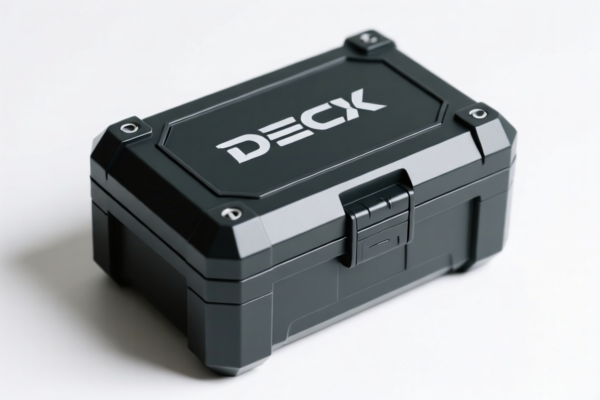
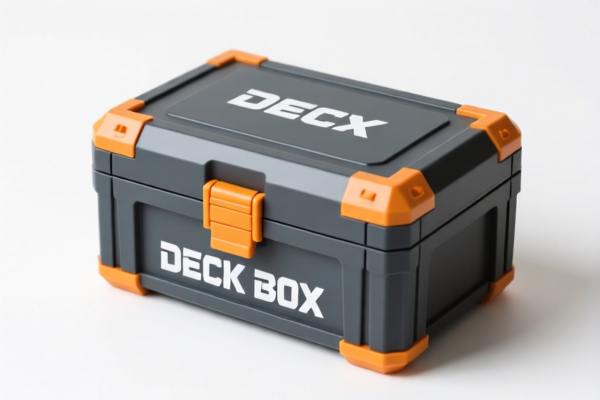
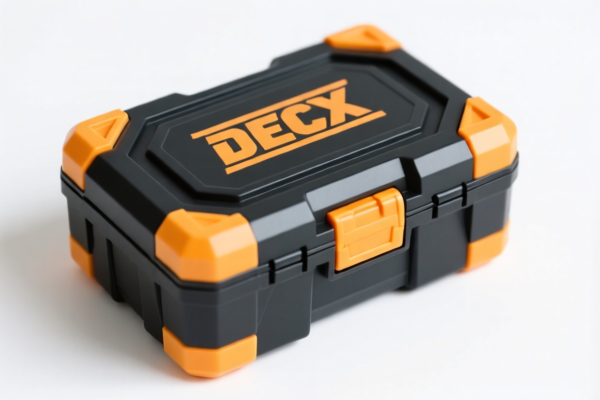
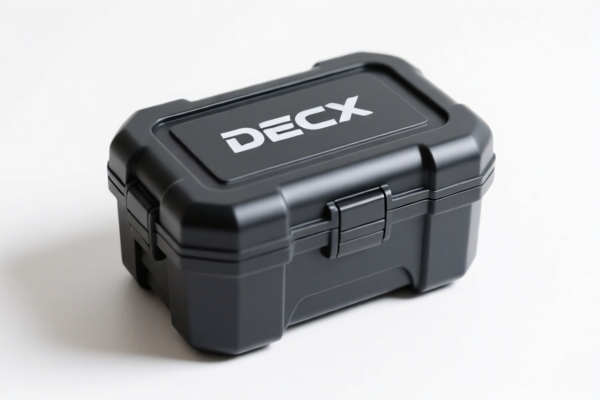
AI Analysis
📦 Deck Box (Card Storage Solutions)
🌐 HS Code Reference & Customs Clearance Guide | 2026 Latest Tariff Analysis | Strategic Compliance Strategy
📌 I. Product Definition & Classification: Do You Really Know a "Deck Box"?
In the world of trading card games (TCG), collecting, and hobbyist markets, a "Deck Box" is a specialized storage container designed to hold and protect playing cards. While the function is simple, the HS Code classification is entirely dependent on the MATERIAL OF CONSTRUCTION. Customs authorities do not classify based on "purpose" (i.e., "for cards") but on the raw material itself.
Key Distinction: * Plastic: Regarded as general plastic articles. * Wood/Bamboo: Regarded as general wood products. * Paper/Cardboard: Regarded as general paper products.
⚠️ Critical Point:
- You cannot use a single HS Code for all deck boxes.
- Misclassification (e.g., classifying a wooden box as plastic) will lead to severe penalties and delayed clearance.
- The specific subheading within the material chapter is crucial because it determines the duty rate.
📋 II. HS Code Classification Details (Based on Provided Data)
| HS Code | Product Description | Material | Category Summary | Total Tax Rate* |
|---|---|---|---|---|
3926.90.87.00 |
Deck Box, Plastic | Plastic | Other plastic articles | 40.3% |
4421.99.98.80 |
Deck Box, Wooden | Wood | Other wood articles | 38.3% |
4823.90.86.80 |
Deck Box, Cardboard/Paper | Paper | Other paper articles | 35.0% |
4421.91.98.80 |
Deck Box, Bamboo | Bamboo | Other wood articles (Bamboo) | 38.3% |
3926.90.99.89 |
Deck Box, Plastic | Plastic | Other plastic articles (Alternative Subheading) | 22.8% |
🔍 Key Observation:
- There are two different HS codes for Plastic deck boxes.3926.90.87.00has a 40.3% rate, while3926.90.99.89has a 22.8% rate.
- Bamboo (4421.91.98.80) is classified similarly to wood (4421.99.98.80) with a 38.3% rate.
- Paper/Cardboard (4823.90.86.80) offers the lowest base tax rate at 35.0%.
💰 III. Detailed Tax Breakdown (All Scenarios)
✅ Applicable Country: United States (US)
✅ Origin: China (CN)
✅ Effective Date: 2025/2026 (Based on provided data structure)
The tax structure is consistent across all categories: 1. Base Duty: Varies by material (0% for paper, 3.3% for wood/bamboo, 5.3% for plastic). 2. Section 301 Tariff (Added Tariff): 25.0% (Standard for most Chinese imports) OR 7.5% (Specific to one plastic subheading). 3. Section 122 Tariff (IEEPA): 10% (Targeted import surcharge).
🎯 1. Plastic Deck Box (Standard Classification)
HS Code: 3926.90.87.00
Summary: Other plastic articles.
| Item | Detail |
|---|---|
| Base Duty | 5.3% |
| Section 301 Tariff | 25.0% |
| Section 122 Tariff | 10.0% |
| Total Tax Rate | 40.3% |
| Tax Calculation | CIF Value × 40.3% |
| De Minimis Exemption? | ❌ NO (Section 301 and 122 duties generally negate 804(a)(1)(A) de minimis exemptions for China-origin goods). |
📌 Explanation:
- This is the standard "Other Plastic Articles" code.
- The 25% Section 301 tariff is the biggest cost driver.
- Total 40.3% is extremely high. Profit margins must account for this.
🎯 2. Plastic Deck Box (Alternative/Lower Rate Classification)
HS Code: 3926.90.99.89
Summary: Other plastic articles (Alternative subheading).
| Item | Detail |
|---|---|
| Base Duty | 5.3% |
| Section 301 Tariff | 7.5% |
| Section 122 Tariff | 10.0% |
| Total Tax Rate | 22.8% |
| Tax Calculation | CIF Value × 22.8% |
| De Minimis Exemption? | ❌ NO (Likely excluded due to Section 122/301 overlap). |
📌 Explanation:
- This code has a lower Section 301 rate (7.5% vs 25%).
- Total 22.8% is significantly cheaper than the 40.3% option.
- Caution: You must justify why this product fits99.89and not87.00. If customs disagrees, they will reassess to 40.3%.
🎯 3. Wooden Deck Box
HS Code: 4421.99.98.80
Summary: Other wood articles.
| Item | Detail |
|---|---|
| Base Duty | 3.3% |
| Section 301 Tariff | 25.0% |
| Section 122 Tariff | 10.0% |
| Total Tax Rate | 38.3% |
| Tax Calculation | CIF Value × 38.3% |
📌 Explanation:
- Base duty is low (3.3%), but the 25% Section 301 tariff brings the total to nearly 40%.
- No advantage over the 22.8% plastic code if misclassified.
🎯 4. Bamboo Deck Box
HS Code: 4421.91.98.80
Summary: Other wood articles (Bamboo).
| Item | Detail |
|---|---|
| Base Duty | 3.3% |
| Section 301 Tariff | 25.0% |
| Section 122 Tariff | 10.0% |
| Total Tax Rate | 38.3% |
| Tax Calculation | CIF Value × 38.3% |
📌 Explanation:
- Treated exactly like wood for tariff purposes.
- 38.3% total.
🎯 5. Paper/Cardboard Deck Box
HS Code: 4823.90.86.80
Summary: Other paper articles.
| Item | Detail |
|---|---|
| Base Duty | 0.0% |
| Section 301 Tariff | 25.0% |
| Section 122 Tariff | 10.0% |
| Total Tax Rate | 35.0% |
| Tax Calculation | CIF Value × 35.0% |
📌 Explanation:
- Base duty is 0%, which helps.
- However, the 25% Section 301 tariff still applies.
- 35.0% is the lowest total rate among the high-duties, but still higher than the preferred plastic code (3926.90.99.89at 22.8%).
🛠️ IV. Customs Clearance Practical Advice (Real-World Pitfall Guide)
✅ 1. Material Verification is Non-Negotiable
| Material | Required Documentation | Risk if Incorrect |
|---|---|---|
| Plastic | Material Safety Data Sheet (MSDS), Composition Certificate | Misclassification → Audit + Back Dues |
| Wood/Bamboo | Phytosanitary Certificate, Fumigation Certificate | Seizure/Quarantine if untreated |
| Paper | Recycled Content Declaration (if applicable) | Minor delay |
📌 Note: For Wood and Bamboo, you MUST provide a Phytosanitary Certificate or proof of heat treatment/fumigation. Customs will inspect physical samples. If pests are found, the entire shipment will be destroyed or returned.
✅ 2. Strategic HS Code Selection (Cost Optimization)
| Strategy | Action | Outcome |
|---|---|---|
| Lowest Cost | Use Plastic with HS 3926.90.99.89 |
22.8% Tax (Best Option) |
| Second Best | Use Paper/Cardboard with HS 4823.90.86.80 |
35.0% Tax |
| Avoid | Use Wood/Bamboo or Plastic (87.00) | 38.3% - 40.3% Tax (High Cost) |
🔥 Pro Tip:
- If you are importing from China, avoid3926.90.87.00(40.3%) unless absolutely necessary.
- Negotiate with your supplier to use Plastic formulations that qualify for3926.90.99.89or consider Paper packaging for eco-friendly branding (lower tax than wood).
- Bamboo is NOT cheaper than plastic in this specific tax scenario.
✅ 3. Special Cases & Precautions
| Situation | Handling Advice |
|---|---|
| Mixed Material Boxes (e.g., Plastic lid, Wood base) | Classify by the major constituent material by weight/value. If equal, classify as "Other." Provide a detailed BOM (Bill of Materials). |
| Decorative/Collectible Boxes | If heavily decorated with non-card-related items, customs may classify as "Decorative Article" (higher duty). Keep design simple. |
| Sample Shipments | Even if duty-free for "samples," Section 301/122 duties often still apply. Do not assume de minimis exemption. |
🌍 V. Global Market Comparison (2026 Outlook)
| Market | Recommended HS Code (Plastic) | Approx. Duty (China Origin) | Key Requirement |
|---|---|---|---|
| 🇺🇸 USA | 3926.90.99.89 |
22.8% | FCC (if electronic), Prop 65 |
| 🇪🇺 EU | 3926.90.99 |
~6-10% | REACH, CE Marking |
| 🇨🇳 China | 3926.90.99 |
~5-6% | No 301/122 tariffs |
| 🇬🇧 UK | 3926.90.99 |
~4-6% | UKCA Marking |
📌 Conclusion:
- The US market is uniquely punitive due to Section 301 and 122 tariffs.
- Profitability in the US depends entirely on accurate HS code selection (3926.90.99.89vs3926.90.87.00can mean a 17.5% difference in cost!).
📌 VI. Common Mistakes & Pitfalls (Blood-Tea Lessons)
❌ Mistake 1: Using a generic "Storage Box" HS Code without specifying material.
👉 Consequence: Customs will assign the highest applicable rate (often 40%+) and issue a 122/301 duty assessment.
❌ Mistake 2: Ignoring Phytosanitary Requirements for Wood/Bamboo.
👉 Consequence: Shipment held at port, fumigation costs ($500+), or destruction.
❌ Mistake 3: Assuming Paper Boxes are "Duty-Free."
👉 Consequence: 35% tax still applies due to Section 301/122. Paper is not immune.
❌ Mistake 4: Classifying Bamboo as "Plastic" because it's laminated.
👉 Consequence: Fraud suspicion, audits, and penalties. Bamboo is wood.
✅ Correct Approach:
"Deck Box, Plastic, 100% Recycled PET, Model XYZ, Compliant with Prop 65"
→ Use3926.90.99.89(22.8%) if justified.
→ OR
"Deck Box, Cardboard, 100% Kraft Paper, Recyclable, Model ABC"
→ Use4823.90.86.80(35.0%).
🎯 VII. Conclusion: Strategic Sourcing for US Market
🎯 Remember the Golden Rule:
🔹 "Plastic 99.89 is King (22.8%)"
🔹 "Paper is Prince (35.0%)"
🔹 "Wood/Bamboo is Poor (38.3%)"
🔹 "Plastic 87.00 is Poverty (40.3%)"
📌 Action Plan:
1. Audit Your Current HS Codes: Are you paying 40.3% when you should be paying 22.8%?
2. Consult a Customs Broker: File a Pre-Ruling (Prelinary Determination) for your specific product to lock in the 22.8% rate if using plastic.
3. Material Sourcing: If volume is high, switch to Paper or Qualified Plastic to save 15-17% in tariffs.
📣 Immediate Action Required:
📞 Contact Your Customs Broker TODAY with product samples and material breakdowns.
🚀 Optimize Your Supply Chain to avoid the 40%+ tax trap.
💼 Every Percent Saved is Pure Profit!
✨ Professional Clearance, Starts with Accurate Classification!
💼 Your Bottom Line Depends on Your HS Code!
Customer Reviews
About HS Code Classification
The Harmonized System (HS) is an internationally standardized nomenclature developed by the World Customs Organization (WCO) to classify traded products. Over 200 countries use the HS system as the basis for customs tariffs, trade statistics, and import/export regulations.
Each HS code follows a hierarchical structure:
- Chapter (2 digits) — Broad category of goods (e.g., Chapter 84: Machinery and Mechanical Appliances)
- Heading (4 digits) — More specific grouping within the chapter
- Subheading (6 digits) — Internationally standardized breakdown, used by all WCO member countries
- National subdivisions (8-10 digits) — Country-specific extensions for further classification, such as US HTSUS 10-digit codes
Correct HS code classification is essential for smooth customs clearance, accurate duty payment, and compliance with trade regulations. Misclassification can lead to customs delays, overpayment of duties, or penalties.
When importing from CN to US, the applicable tariff rates may include:
- Most-Favored-Nation (MFN) rate — The standard duty rate applied to WTO members
- General rate — Applied to countries without trade agreements
- Trade remedy duties — Additional tariffs such as Section 301 (anti-dumping), Section 232 (national security), or countervailing duties
The information provided on this page is for reference purposes only. For official classification, please consult with your local customs authority or a licensed customs broker.