Decoder
CN → US| HS Code | Tariff Rate | Origin | Destination | Doc |
|---|---|---|---|---|
| 8543709860 | 37.6% | CN | US | Official Doc |
| 9031808085 | 35.0% | CN | US | Official Doc |
| 8543704500 | 37.6% | CN | US | Official Doc |
| 9031909195 | 85.0% | CN | US | Official Doc |
Product Images
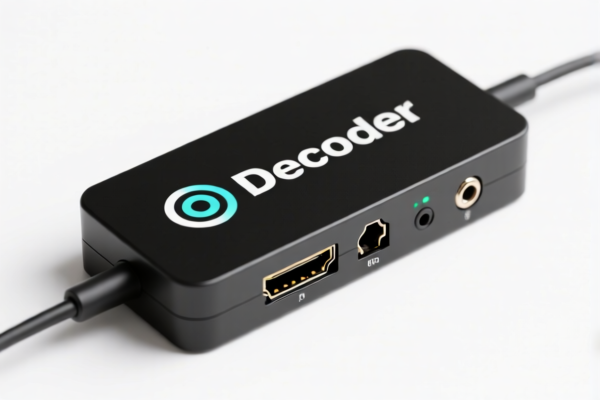
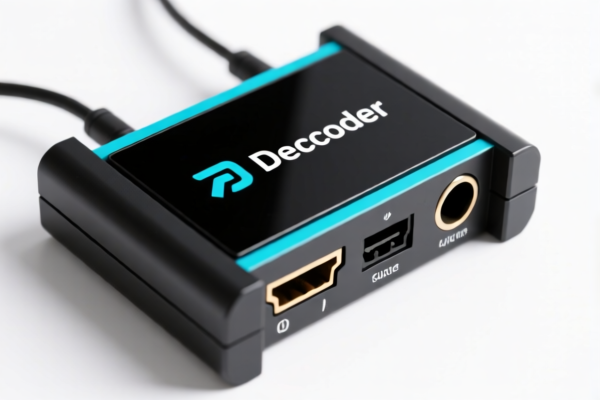
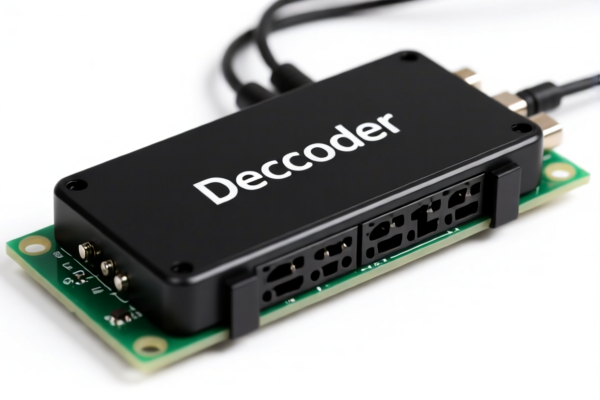
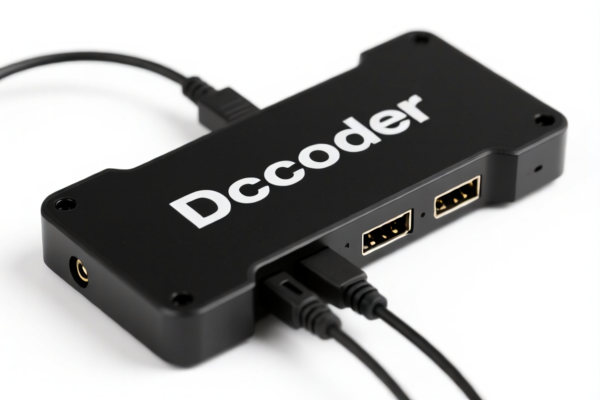
AI Analysis
📡 Decoder (Industrial Encoders & Sensors)
🌐 HS Code Reference & Customs Clearance Guide | 2026 Latest Tariff Analysis | Professional Clearance Strategy
📌 Part I: Product Definition & Classification: Do You Truly Understand "Decoder" (Encoder)?
In the world of automation, robotics, and industrial control, the term "Decoder" often colloquially refers to an Encoder (specifically, Position/Speed Sensors). This component is the "eye" of motion control systems, converting mechanical motion (rotation or linear) into electrical signals for feedback.
In international trade, encoders are classified based on their function: 1. As Standalone Measuring Instruments: If the device is primarily used for precision measurement, testing, or inspection. 2. As Electrical Machines/Generators: If the device functions as an electrical apparatus generating signals or synchronizing machinery, falling under broader electrical machinery categories.
⚠️ Critical Distinction:
- Measurement/Testing Focus: Classify under Chapter 90 (Optical, Photographic, Cinematographic, Measuring, Checking, Precision, Medical or Surgical Instruments).
- Electrical/Motor Focus: Classify under Chapter 85 (Electrical machinery and equipment).
- Material Matters: While encoders are typically metal or plastic, the primary function dictates the chapter, not the material.
📦 Part II: HS Code Classification Details (2026 Latest Tariff Authority Comparison)
Based on the provided data, here are the four most likely HS Codes for Industrial Encoders/Decoders, along with their specific logical justifications and tax implications.
| HS Code | Product Description | Classification Logic (Why this code?) | Total Tax Rate (US/CN) |
|---|---|---|---|
8543.70.98.60 |
Electrical Apparatus Having Individual Functions | The encoder is viewed as an independent electrical device/electro-mechanical component. It does not conflict with other items in this "Other" category. Base assumption: Metal/Plastic material. | 37.6% (Base 2.6% + 25% Sec 301 + 10% IEEPA) |
9031.80.80.85 |
Other Measuring or Checking Instruments | The encoder is a precision sensor/instrument for measurement. Its function aligns with "Other Measuring/Checking Instruments." Uses the "Residual/Catch-all" principle for unlisted specific items. | 35.0% (Base 0.0% + 25% Sec 301 + 10% IEEPA) |
8543.70.45.00 |
Electric Synchronous Machines & Sensors | Specifically matches the description of "Electric synchronous machines and sensors." Assumed electronic/metal component with no material conflict. | 37.6% (Base 2.6% + 25% Sec 301 + 10% IEEPA) |
9031.90.91.95 |
Parts & Accessories of Measuring Instruments | The encoder is a core component/part of a larger measuring system. Applies the "Default Tendency for Parts" principle. Note: Higher base risk due to specific metal/alloy rules. | 85.0% (Base 0.0% + 25% Sec 301 + 10% IEEPA + 50% Steel/Aluminum/Copper if applicable) |
🔍 Key Insight:
- Codes8543.xxtreat the encoder as a standalone electrical apparatus.
- Codes9031.xxtreat the encoder as a precision instrument or its part.
- Tax Variance: The difference between 35% and 85% is massive! The 85% rate triggers additional penalties for steel, aluminum, or copper components under Section 232/Trade Act provisions.
💰 Part III: 2026 Latest Tariff Rate Breakdown (Including Surcharges & Policies)
✅ Applicable Market: United States (US)
✅ Origin: China (CN)
✅ Effective Date: Ongoing (Post-2025 adjustments)
🎯 1. 9031.80.80.85 —— Best Value: Other Measuring Instruments (Recommended)
| Item | Detail |
|---|---|
| Base Tariff | 0.0% |
| Section 301 Surcharge | +25.0% |
| IEEPA Surcharge | +10.0% |
| Total Effective Rate | 35.0% |
| Tax Calculation | CIF Value × 35% |
| De Minimis Exemption | ❌ Not Eligible (High-risk commodity) |
| Legal Basis Path | USITC:9031.80.80.85 → FOOTNOTE:301 → IEEPA:9903.01.24 |
📌 Explanation:
- This is the most favorable classification for pure encoder/sensor devices because the base tariff is 0%.
- You only pay the punitive tariffs (35% total).
- Justification: The device is a "Measuring Instrument" (Chapter 90), not just a generic electrical machine.
🎯 2. 8543.70.98.60 & 8543.70.45.00 —— Electrical Apparatus Alternative
| Item | Detail |
|---|---|
| Base Tariff | 2.6% |
| Section 301 Surcharge | +25.0% |
| IEEPA Surcharge | +10.0% |
| Total Effective Rate | 37.6% |
| Tax Calculation | CIF Value × 37.6% |
| De Minimis Exemption | ❌ Not Eligible |
| Legal Basis Path | USITC:8543.70.xx → FOOTNOTE:301 → IEEPA:9903.01.24 |
📌 Explanation:
- Slightly higher than the Chapter 90 option due to the 2.6% base tariff.
- Used if customs officers view the device as a generic "Electrical Machine" rather than a "Measuring Instrument."
🎯 3. 9031.90.91.95 —— HIGH RISK: Parts of Measuring Instruments (AVOID IF POSSIBLE)
| Item | Detail |
|---|---|
| Base Tariff | 0.0% |
| Section 301 Surcharge | +25.0% |
| IEEPA Surcharge | +10.0% |
| Section 232/Metal Surcharge | +50.0% (If Steel/Aluminum/Copper) |
| Total Effective Rate | 85.0% (Max) |
| Tax Calculation | CIF Value × 85% |
| De Minimis Exemption | ❌ Not Eligible |
| Legal Basis Path | USITC:9031.90.91.95 → FOOTNOTE:232 → IEEPA |
🚨 WARNING:
- If the encoder contains steel, aluminum, or copper parts and is classified as a "Part" (9031.90), it triggers the additional 50% metal tariff.
- Total tax jumps to 85%. This is extremely costly.
- Strategy: Argue for "Complete Instrument" (9031.80) rather than "Part" (9031.90) to avoid the 50% metal surcharge.
🛠️ Part IV: Customs Clearance Practical Advice (Battle-Tested Pitfall Guide)
✅ 1. Documentation Checklist (Non-Negotiable)
| Document | Required? | Purpose |
|---|---|---|
| ✅ Technical Specification Sheet | ✔️ | Must explicitly state: "Position Sensor," "Rotary Encoder," "Signal Converter." Avoid vague terms like "Decoder Module" without context. |
| ✅ Circuit Diagram / Schematic | ✔️ | Proves it is a self-contained electronic device (supports 8543/9031.80) vs. a raw part. |
| ✅ Product Photographs | ✔️ | Show the complete unit, label, input/output connectors. |
| ✅ Commercial Invoice | ✔️ | Description: "Industrial Rotary Encoder for Automation Control." |
| ✅ Origin Certificate (CO) | ✔️ | To confirm China origin and apply correct Section 301/IEEPA rates. |
✅ 2. Declaration Strategy (The Golden Rules)
🔥 "Function First, Parts Last, Metal Surcharges Avoided!"
| Scenario | Recommended HS Code | Why? |
|---|---|---|
| Standalone Encoder Unit (Ready to plug into PLC/CNC) | 9031.80.80.85 |
Lowest total tax (35%). Classified as a measuring instrument. |
| Encoder with Built-in Processor/Sync Function | 8543.70.45.00 |
Acceptable alternative (37.6%). |
| Raw Encoder Core Only (No housing, sold as spare part) | 9031.90.91.95 |
⚠️ High Risk. Triggers 50% metal tariff if ferrous/non-ferrous metals present. Total 85%. Avoid unless unavoidable. |
| Encoder Integrated into a Larger Machine | Do Not Declare Separately | Declare as part of the main machine (e.g., CNC machine code). |
✅ 3. Critical Clarification on "Decoder" vs. "Encoder"
In English, "Decoder" usually means converting codes (e.g., BCD to Decimal). In industrial automation, users often say "Decoder" when they mean Encoder (converting motion to pulses). - Action: If your product is an Encoder, declare it as "Rotary Encoder" or "Linear Encoder". - If it is a true Decoder (e.g., digital signal decoder): Ensure it fits "Electric Apparatus" (8543) or "Measuring" (9031) based on function. - Do Not use the word "Decoder" ambiguously in the invoice without adding "(Encoder Sensor)" to prevent classification disputes.
🌍 Part V: Global Market Comparison (2026 Snapshot)
| Region | Recommended HS Code | Est. Tariff (China Origin) | Key Requirement |
|---|---|---|---|
| 🇺🇸 USA | 9031.80.80.85 |
35% | Section 301 + IEEPA. Avoid "Parts" classification to save 50%. |
| 🇪🇺 EU | 9031.80 |
~0-2% | CE Marking, RoHS Compliance. No retaliatory tariffs on electronics. |
| 🇨🇳 China | 9031.80 |
~0-6% | CCC Certification (if applicable). Low import duties. |
| 🇬🇧 UK | 9031.80 |
~0-5% | UKCA Marking. Post-Brexit tariffs vary but generally lower than US. |
📌 Conclusion:
- The US market is the most expensive due to layered tariffs (301 + IEEPA + potential 232 metal tax).
- EU/UK/Asia are significantly cheaper. If possible, diversify supply chains to avoid US-origin tariffs.
📌 Part VI: Common Mistakes & Pitfalls (Lessons Learned)
❌ Mistake 1: Declaring a complete Encoder as a "Part" (9031.90).
👉 Result: Triggers the additional 50% tariff on metal components. Tax jumps from 35% to 85%.
💡 Fix: Declare as "Measuring Instrument" (9031.80).
❌ Mistake 2: Using generic term "Electronic Component."
👉 Result: Customs may assign a higher default duty or delay inspection.
💡 Fix: Use precise terms: "Rotary Encoder," "Incremental Encoder," "Synchronous Resolver."
❌ Mistake 3: Ignoring Material Composition.
👉 Result: If classified as a part, hidden steel/aluminum casing triggers Section 232 duties.
💡 Fix: Ensure the product is classified as a Complete Instrument to bypass the material-specific surcharges.
🎯 Part VII: Conclusion: Smart Classification Saves Money!
🎯 Final Strategy:
🔹 Best Choice:
9031.80.80.85(35% Total).
🔹 Why: Base tariff 0%, avoids metal surcharges, aligns with "Measuring Instrument" function.
🔹 Backup:8543.70.45.00(37.6% Total).
🔹 Avoid:9031.90.91.95(85% Total) unless it is a bare, raw part with no housing.
📌 Pro Tip:
If your encoder contains significant steel or aluminum (e.g., heavy metal housing), INSIST on the 9031.80 (Instrument) or 8543 (Apparatus) classification. Do NOT allow it to fall under 9031.90 (Parts) or you will pay an extra 50%.
📣 Immediate Action Required:
📞 Pre-Arrival Ruling: Submit a request to CBP for an Advance Ruling using HS Code
9031.80.80.85.
📄 Invoice Language: "Industrial Rotary Encoder (Measuring Sensor), Model XYZ,不含金属附加税适用 (Metal Surcharge Applicable Exemption)."
✨ Precision in Classification, Precision in Profit!
💼 Don't let a 50% metal tariff erase your margin!
Customer Reviews
About HS Code Classification
The Harmonized System (HS) is an internationally standardized nomenclature developed by the World Customs Organization (WCO) to classify traded products. Over 200 countries use the HS system as the basis for customs tariffs, trade statistics, and import/export regulations.
Each HS code follows a hierarchical structure:
- Chapter (2 digits) — Broad category of goods (e.g., Chapter 84: Machinery and Mechanical Appliances)
- Heading (4 digits) — More specific grouping within the chapter
- Subheading (6 digits) — Internationally standardized breakdown, used by all WCO member countries
- National subdivisions (8-10 digits) — Country-specific extensions for further classification, such as US HTSUS 10-digit codes
Correct HS code classification is essential for smooth customs clearance, accurate duty payment, and compliance with trade regulations. Misclassification can lead to customs delays, overpayment of duties, or penalties.
When importing from CN to US, the applicable tariff rates may include:
- Most-Favored-Nation (MFN) rate — The standard duty rate applied to WTO members
- General rate — Applied to countries without trade agreements
- Trade remedy duties — Additional tariffs such as Section 301 (anti-dumping), Section 232 (national security), or countervailing duties
The information provided on this page is for reference purposes only. For official classification, please consult with your local customs authority or a licensed customs broker.