Decoration Item
CN → US| HS Code | Tariff Rate | Origin | Destination | Doc |
|---|---|---|---|---|
| 3926400090 | 15.3% | CN | US | Official Doc |
| 9703100000 | 17.5% | CN | US | Official Doc |
| 7117909000 | 28.5% | CN | US | Official Doc |
| 3926400010 | 15.3% | CN | US | Official Doc |
| 9703900000 | 17.5% | CN | US | Official Doc |
Product Images
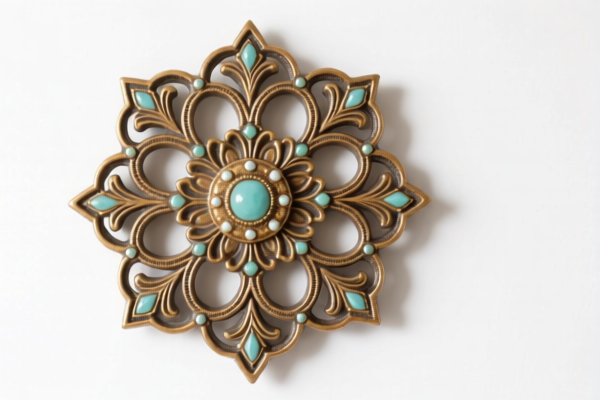
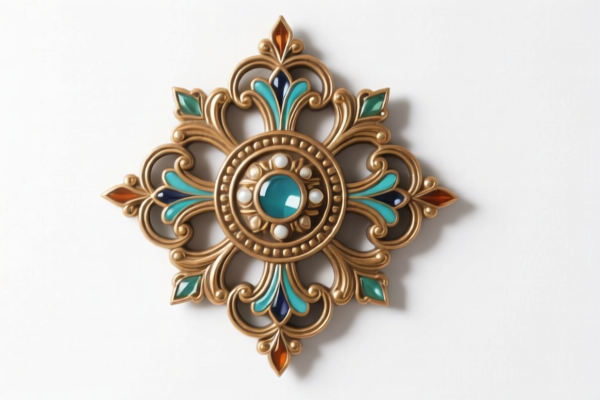
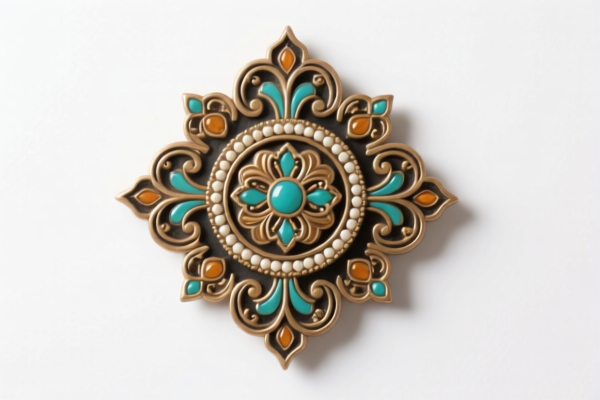
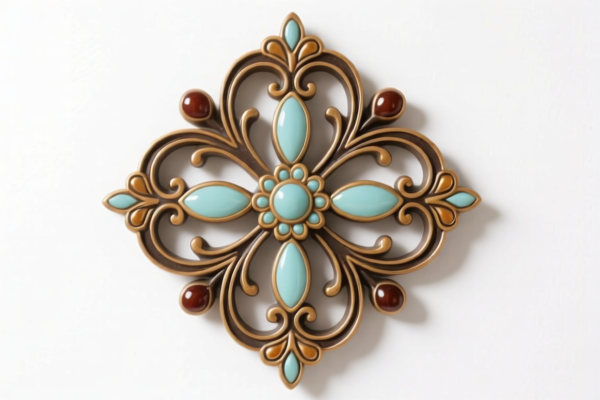
AI Analysis
🎨 Decoration Item (Ornamental Articles)
🌐 HS Code Reference & Customs Clearance Guide | 2026 Latest Tariff Analysis | Professional Clearance Strategy
📌 I. Product Definition & Classification: Do You Really Understand "Decoration Items"?
Decoration items, also known as ornamental articles, are non-functional goods primarily used for aesthetic enhancement in homes, offices, or public spaces. In international trade, their classification is complex because they lack a single dedicated "Decoration" chapter in the Harmonized System (HS). Instead, they are classified based on material, form, and usage.
Key Classification Dimensions: * Material-Based: Plastic, Ceramic, Glass, Metal, Resin, etc. * Form-Based: Statues, figurines, vases, abstract sculptures, jewelry-like ornaments. * Usage-Based: General decor, tableware decor, or specific ornamental use.
⚠️ Critical Distinction:
- If the item is made of plastic and used for ornamentation → Often falls under 3926.40 (Statuettes and other ornamental articles of plastic).
- If the item is a sculpture/statue regardless of material (often used as a legal "catch-all" for art-like decor) → Often falls under 9703.90 (Sculptures and statues).
- If the item is ceramic → Falls under 6913 (Statuettes and other ornamental ceramic articles).
- If the item resembles jewelry but is not precious metal → Falls under 7117 (Imitation jewelry).
📦 II. HS Code Classification Details (2026 Latest Tariff Authority Match)
Based on the provided data, here are the potential HS codes for "Decoration Items," categorized by material and form:
| HS Code | Product Description & Logic | Material/Form Characteristics |
|---|---|---|
3926.40.00.10 |
Plastic Ornamental Articles Summary: Decoration items fitting the purpose of ornamental articles, inferred to be made of plastic or other materials. |
✅ Plastic Statuettes, figurines, plastic decor |
9703.90.00.00 |
Sculptures & Statues (Catch-All) Summary: Decoration items similar in form to sculptures and statues; inferred based on the "catch-all" principle for artistic forms. |
✅ Any Material (Artistic) Statues, sculptures, artistic decor |
3926.40.00.90 |
Plastic Ornamental Articles (Other) Summary: Use consistent with Statuettes and other ornamental articles; inferred to be plastic or other materials. |
✅ Plastic Other plastic decorative items |
9703.10.00.00 |
Sculptures & Statues (Other) Summary: Form matches sculpture/statue decorative use; matched based on "other/catch-all" category. |
✅ Any Material (Artistic) Other statues, decorative sculptures |
7117.90.90.00 |
Imitation Jewelry (Non-Precious Metal) Summary: Inferred as imitation jewelry of non-precious metals; matched with "other" catch-all attributes. |
✅ Non-Precious Metal/Imitation Jewelry-like ornaments, brooches, pins |
6913.10.50.00 |
Ceramic Ornamental Articles Summary: Decorative摆件 inferred as ceramic decorative items; use consistent with decorative ceramic products. |
✅ Ceramic Ceramic vases, figurines, statues |
🔍 Key Insight:
- Plastic Decor: Use 3926.40 series.
- Artistic/Sculptural Decor: Use 9703 series (often preferred for high-value artistic pieces to avoid "plastic" stigma, but tax implications vary).
- Ceramic Decor: Use 6913.
- Jewelry-Like Decor: Use 7117.
💰 III. 2026 Latest Tariff Rate Breakdown (Including Additional Taxes & Policy Surcharges)
✅ Applicable Country: United States (US)
✅ Country of Origin: China (CN)
✅ Effective Date: Post-November 2025 (Including subsequent imports)
🎯 1. 3926.40.00.10 & 3926.40.00.90 —— Plastic Ornamental Articles
| Item | Content |
|---|---|
| Base Tariff | 5.3% (ad valorem) |
| Section 301 Additional Tariff | 0.0% (Note: Section 301 may apply to some plastics, but data shows 0.0% for this specific subheading) |
| Section 122 Tariff (IEEPA) | +10% (Specific China tariff provision) |
| Total Tariff | 15.3% |
| Tax Calculation | CIF Value × 15.3% |
| De Minimis Exemption | ❌ Not Eligible (Section 122 taxes usually negate de minimis) |
| Legal Basis Path | IEEPA:122 → USITC:3926.40.00 → FOOTNOTE:3926 |
📌 Explanation:
- These items are classified as plastic statuettes/ornaments.
- The 15.3% total rate consists of a 5.3% base and a 10% Section 122 surcharge.
- Warning: Plastic decor is heavily scrutinized for anti-dumping, but here the main cost driver is the 10% political tariff.
🎯 2. 9703.90.00.00 & 9703.10.00.00 —— Sculptures & Statues (Catch-All)
| Item | Content |
|---|---|
| Base Tariff | 0.0% (ad valorem) |
| Section 301 Additional Tariff | +7.5% (Applicable to certain art/sculpture items from China) |
| Section 122 Tariff (IEEPA) | +10% (Specific China tariff provision) |
| Total Tariff | 17.5% |
| Tax Calculation | CIF Value × 17.5% |
| De Minimis Exemption | ❌ Not Eligible |
| Legal Basis Path | IEEPA:122 → USITC:9703 → FOOTNOTE:9703 |
📌 Explanation:
- Classifying decor as "Sculptures" may lower the base tariff to 0%, but it incurs a 7.5% Section 301 surcharge.
- Total rate is 17.5%, which is slightly higher than plastic decor (15.3%) due to the 301 tariff.
- Strategy: This classification is useful for high-value artistic pieces where "plastic" classification is inaccurate.
🎯 3. 6913.10.50.00 —— Ceramic Ornamental Articles
| Item | Content |
|---|---|
| Base Tariff | 0.0% (ad valorem) |
| Section 301 Additional Tariff | +7.5% (Applicable to certain ceramic items) |
| Section 122 Tariff (IEEPA) | +10% (Specific China tariff provision) |
| Total Tariff | 17.5% |
| Tax Calculation | CIF Value × 17.5% |
| De Minimis Exemption | ❌ Not Eligible |
| Legal Basis Path | IEEPA:122 → USITC:6913.10.50 |
📌 Explanation:
- Ceramic decor enjoys a 0% base tariff.
- However, like sculptures, it faces a 7.5% Section 301 surcharge.
- Total: 17.5%.
🎯 4. 7117.90.90.00 —— Imitation Jewelry (Non-Precious Metal)
| Item | Content |
|---|---|
| Base Tariff | 11.0% (ad valorem) |
| Section 301 Additional Tariff | +7.5% (Applicable to imitation jewelry) |
| Section 122 Tariff (IEEPA) | +10% (Specific China tariff provision) |
| Total Tariff | 28.5% |
| Tax Calculation | CIF Value × 28.5% |
| De Minimis Exemption | ❌ Not Eligible |
| Legal Basis Path | IEEPA:122 → USITC:7117.90.90 |
📌 Explanation:
- This is the most expensive category at 28.5%.
- If your "decoration item" looks like jewelry (e.g., decorative brooches, pins, ornamental pins), it may be misclassified as jewelry if not careful.
- Avoid this classification unless the item is strictly jewelry, as the tax burden is nearly double that of plastic or ceramic decor.
🛠️ IV. Customs Clearance Practical Advice (Real-World Pitfall Avoidance Guide)
✅ 1. Documentation Checklist (None Missing)
| Document | Required | Explanation |
|---|---|---|
| ✅ Product Description | ✔️ | Must clearly state "Ornamental Article," "Statue," or "Decorative Item." Avoid vague terms like "Gift." |
| ✅ Material Composition | ✔️ | Explicitly state: "100% PVC," "Ceramic," "Resin," etc. |
| ✅ Product Photos | ✔️ | Show full product, details, and any branding. |
| ✅ Commercial Invoice | ✔️ | Must match HS Code description. E.g., for 3926.40, use "Plastic Statuette." |
| ✅ Packing List | ✔️ | Detail net/gross weight and dimensions. |
| ✅ Origin Certificate | ✔️ | Proof of China origin (if applicable) for Section 122/301 assessment. |
✅ 2. Declaration Tips (Key Mantra)
🔥 "Material First, Form Second, Name Precise, Tax Correct!"
| Scenario | Correct Declaration | Incorrect Practice |
|---|---|---|
| Plastic Figurine | 3926.40.00.10 "Plastic Ornamental Statue" |
"Plastic Toy" → Different HS, potential duty change |
| Ceramic Vase | 6913.10.50.00 "Ceramic Ornamental Vase" |
"Home Decor" → Too vague, risk of audit |
| Artistic Resin Sculpture | 9703.90.00.00 "Resin Sculpture" |
"Plastic Ornament" → Misses artistic classification |
| Decorative Pin/Brooch | 7117.90.90.00 "Imitation Jewelry Pin" |
"Pin Button" → May be classified as textile accessory (lower tax) if not jewelry-like |
✅ 3. Special Case Handling
| Scenario | Handling Advice |
|---|---|
| Mixed Material Items | If an item has plastic and ceramic parts, classify based on essential character. If ceramic dominates, use 6913. |
| Kit Assemblies | If sold as a kit (e.g., paint-your-own statue), classify as the finished product. |
| Gift Sets | If decor is part of a gift set, declare the primary item. Do not split unless necessary for duty optimization. |
| Small Value Items | ❌ De Minimis Does Not Apply: Due to Section 122 tariffs, even small items (under $800) are not exempt from duties. |
🌍 V. Global Major Market Clearance Comparison (2026 Latest)
| Country/Region | Recommended HS Code | Tariff (China Origin) | Certification Requirements | Notes |
|---|---|---|---|---|
| 🇺🇸 USA | 3926.40 / 9703 / 6913 |
15.3% – 28.5% | No specific certs, but accurate classification is critical | High taxes due to Section 122 & 301 |
| 🇨🇳 China | Same HS | 5% – 13% | N/A | No Section 301/122 |
| 🇪🇺 EU | Varies | 0% – 4% | CE (if applicable), REACH | No US-style punitive tariffs |
| 🇬🇧 UK | Varies | 0% – 6% | UKCA (if applicable) | Post-Brexit rules apply |
| 🇦🇺 Australia | Varies | 5% – 10% | No special certs | Moderate tariffs |
📌 Conclusion:
- USA is the most challenging market for decoration items due to Section 122 (10%) and Section 301 (0-7.5%) tariffs.
- EU and Asia are more favorable, with lower or zero tariffs.
- Strategic Suggestion: If shipping to the US, consider non-China origins (e.g., Vietnam, Indonesia) to avoid Section 122 tariffs, if possible.
📌 VI. Common Errors & Pitfall Guide (Lessons Learned)
❌ Error 1: Declaring "Plastic Ornament" as "Plastic Toy"
👉 Consequence: Different HS code, potential duty discrepancy, and customs detention for misclassification.
❌ Error 2: Using "Home Decor" as the product name
👉 Consequence: Customs officer will guess the material, leading to highest possible duty rate (e.g., 28.5% if guessed as jewelry).
❌ Error 3: Assuming De Minimis ($800) applies
👉 Consequence: All goods from China to US are subject to Section 122 tariffs, regardless of value. No exemption!
❌ Error 4: Classifying Ceramic as Plastic (or vice versa)
👉 Consequence: 17.5% vs 15.3%. Minor difference, but if misdeclared, it triggers an audit and potential penalties.
✅ Correct Practice:
"Decorative Ceramic Statue, Hand-Painted, 12-inch Height, HS Code 6913.10.50.00, Made in China"
🎯 VII. Conclusion: Professional Declaration, Save Time & Money!
🎯 Remember the Mantra:
🔹 "Material Defines HS, Form Defines Subheading, Section 122 Applies to All!"
🔹 "Don't Guess 'Home Decor' – Specify 'Plastic Statue' or 'Ceramic Vase'!"
📌 Pro Tip:
If your decoration items are not made in China (e.g., sourced from Thailand, India, or Vietnam), you may avoid Section 122 tariffs, reducing the total rate to Base + Section 301 only (e.g., 5.3% + 0% = 5.3% for plastic).
Recommendation: Always verify the Country of Origin on the Bill of Lading and Invoice.
📣 Immediate Action:
📞 Consult a licensed customs broker + Provide Product Photos + Request Pre-Ruling if shipment value is high.
🚀 Ensure smooth clearance, avoid unexpected taxes, and maximize profit margins!
✨ Professional Clearance Starts with Accurate Classification!
💼 Every Dollar of Duty Costs Matters!
Customer Reviews
About HS Code Classification
The Harmonized System (HS) is an internationally standardized nomenclature developed by the World Customs Organization (WCO) to classify traded products. Over 200 countries use the HS system as the basis for customs tariffs, trade statistics, and import/export regulations.
Each HS code follows a hierarchical structure:
- Chapter (2 digits) — Broad category of goods (e.g., Chapter 84: Machinery and Mechanical Appliances)
- Heading (4 digits) — More specific grouping within the chapter
- Subheading (6 digits) — Internationally standardized breakdown, used by all WCO member countries
- National subdivisions (8-10 digits) — Country-specific extensions for further classification, such as US HTSUS 10-digit codes
Correct HS code classification is essential for smooth customs clearance, accurate duty payment, and compliance with trade regulations. Misclassification can lead to customs delays, overpayment of duties, or penalties.
When importing from CN to US, the applicable tariff rates may include:
- Most-Favored-Nation (MFN) rate — The standard duty rate applied to WTO members
- General rate — Applied to countries without trade agreements
- Trade remedy duties — Additional tariffs such as Section 301 (anti-dumping), Section 232 (national security), or countervailing duties
The information provided on this page is for reference purposes only. For official classification, please consult with your local customs authority or a licensed customs broker.