Decorative Ball
CN → US| HS Code | Tariff Rate | Origin | Destination | Doc |
|---|---|---|---|---|
| 4601942000 | 41.6% | CN | US | Official Doc |
| 3926400010 | 15.3% | CN | US | Official Doc |
| 4602193500 | 35.0% | CN | US | Official Doc |
| 4602191200 | 40.8% | CN | US | Official Doc |
| 4601999000 | 38.3% | CN | US | Official Doc |
| 3926400090 | 15.3% | CN | US | Official Doc |
Product Images
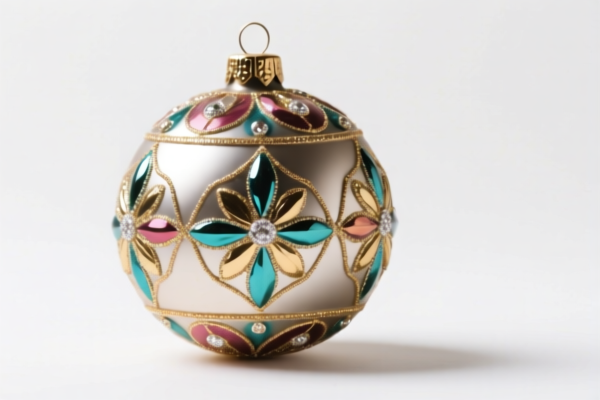



AI Analysis
🎈 Decorative Ball (Wicker/Natural Fiber)
🌐 HS Code Reference & Customs Clearance Guide | 2026 Latest Tariff Analysis | Professional Clearance Strategy
📌 I. Product Definition & Classification: What Exactly is a "Decorative Ball"?
The "Decorative Ball" is a versatile home decor item, often used for floral arrangements, festive displays, or packaging accents. In international trade, its classification hinges critically on Material Composition and Structural Form.
While it appears to be a simple sphere, customs authorities distinguish between: 1. Woven Products (Chapter 46): Made from natural materials like wicker, rattan, willow, or reeds, woven into a lattice structure. 2. Articles of Plastics/Other Materials (Chapter 39): If the material is synthetic plastic molded into a ball shape. 3. General Decorative Articles (Chapter 39/95): Depending on the specific material classification under Chapter 39 if not specifically covered as woven.
⚠️ Key Distinction Point:
- If the material is natural plant fiber (wicker/willow) and the structure is woven → It falls under Chapter 46 (Woven Products).
- If the material is plastic or treated to mimic natural fibers but lacks traditional weaving structure → It may fall under Chapter 39 (Plastics) or Chapter 95 (Articles of Plastics).
- Note on Data: The provided data strongly suggests two primary classification paths: Woven Wicker (Ch 46) and Plastic/Natural Fiber Composite (Ch 39).
📦 II. HS Code Classification Details (Based on Provided Data)
The following HS Codes are derived strictly from the provided <DATA> input, which outlines six potential classifications with corresponding tax details.
| HS Code | Product Description (from Data) | Category/Logic | Total Tax Rate |
|---|---|---|---|
4601.94.20.00 |
Wicker decorative ball, woven material, extended application of woven products | Woven Products (Ch 46) | 41.6% |
3926.40.00.10 |
Infer natural plant fiber, decorative sphere, gift packaging category | Plastics/Other (Ch 39) | 15.3% |
4602.19.35.00 |
Wicker material, decorative ball form, woven制品范畴 | Woven Products (Ch 46) | 35.0% |
4602.19.12.00 |
Name "Wicker" matches material, decorative ball is a woven form | Woven Products (Ch 46) | 40.8% |
4601.99.90.00 |
Wicker is woven material, ball is a similar product of woven material | Woven Products (Ch 46) | 38.3% |
3926.40.00.90 |
Decorative item form, wicker material, fits other material categories | Plastics/Other (Ch 39) | 15.3% |
🔍 Key Observation:
- Chapter 46 (Woven) codes (4601,4602) carry higher taxes (35% - 41.6%) due to significant additional tariffs.
- Chapter 39 (Plastics/Other) codes (3926.40.00.10&.90) carry lower taxes (15.3%).
- Critical Risk: The large disparity (25% difference) means misclassification can lead to massive duty discrepancies or penalties.
💰 III. 2026 Latest Tariff Rate Breakdown (Detailed Tax Clauses)
✅ Applicable Country: United States (US)
✅ Origin: China (CN)
✅ Effective Date: From November 10, 2025 (and subsequent imports)
The tax structure consists of three components: 1. Base Tariff (MFN Rate): The standard duty rate. 2. Section 301 Additional Tariff: 25% additional duty on many Chinese goods. 3. Section 122 / IEEPA Additional Tariff: 10% additional duty for specific categories of Chinese goods (often applied to plastics or specific woven goods depending on the year's enforcement).
🎯 1. Chapter 46: Woven Products (High Tax Bracket)
These codes apply if the goods are strictly classified as "Woven" under Chapter 46.
🅰️ 4601.94.20.00 - Wicker Decorative Ball (Woven Mat)
- Summary: Wicker decorative ball, material is wicker, form is decorative ball, extended application of woven products.
- Tax Breakdown:
- Base Tariff: 6.6%
- Section 301 Tariff: 25.0%
- Section 122 Tariff: 10.0%
- Total Rate: 41.6%
- Legal Path:
USITC:4601.94.20.00→FOOTNOTE:301→IEEPA:122
🅱️ 4602.19.35.00 - Wicker Woven Item
- Summary: Commodity material is wicker, form is decorative ball, belongs to the category of woven products.
- Tax Breakdown:
- Base Tariff: 0.0%
- Section 301 Tariff: 25.0%
- Section 122 Tariff: 10.0%
- Total Rate: 35.0%
- Legal Path:
USITC:4602.19.35.00→FOOTNOTE:301→IEEPA:122
🆎 4602.19.12.00 - Wicker Decorative Ball
- Summary: "Wicker" in name matches material, decorative ball is a woven form category.
- Tax Breakdown:
- Base Tariff: 5.8%
- Section 301 Tariff: 25.0%
- Section 122 Tariff: 10.0%
- Total Rate: 40.8%
- Legal Path:
USITC:4602.19.12.00→FOOTNOTE:301→IEEPA:122
🆓 4601.99.90.00 - Other Woven Products
- Summary: Wicker is woven material, decorative ball is a similar product made of woven material.
- Tax Breakdown:
- Base Tariff: 3.3%
- Section 301 Tariff: 25.0%
- Section 122 Tariff: 10.0%
- Total Rate: 38.3%
- Legal Path:
USITC:4601.99.90.00→FOOTNOTE:301→IEEPA:122
🎯 2. Chapter 39: Plastics/Other Articles (Low Tax Bracket)
These codes apply if the goods are classified under Chapter 39, often implying a plastic composition or a specific "other" classification for natural fibers not meeting Chapter 46 strictures.
🅱️ 3926.40.00.10 - Other Articles of Plastic (Decorative)
- Summary: Infers material is natural plant fiber, form is decorative sphere, fits decorative products and gift packaging categories.
- Tax Breakdown:
- Base Tariff: 5.3%
- Section 301 Tariff: 0.0% (Note: Data shows 0% additional tariff here)
- Section 122 Tariff: 10.0%
- Total Rate: 15.3%
- Legal Path:
USITC:3926.40.00.10→IEEPA:122
🅱️ 3926.40.00.90 - Other Articles of Plastic (General)
- Summary: Commodity form is decorative ball, is a decorative item, material is wicker, fits other material categories.
- Tax Breakdown:
- Base Tariff: 5.3%
- Section 301 Tariff: 0.0%
- Section 122 Tariff: 10.0%
- Total Rate: 15.3%
- Legal Path:
USITC:3926.40.00.90→IEEPA:122
📌 Explanation:
- The 15.3% rate is significantly lower because the Section 301 (25%) tariff appears to be 0% for these specific subheadings in the provided data. This could be due to specific exclusions or different chapter interpretations.
- The 10% Section 122 tariff is still applied, reflecting the general additional tariff on Chinese goods.
🛠️ IV. Customs Clearance Practical Advice (Avoiding Pitfalls)
✅ 1. Preparation Checklist (Essential Documents)
| Document | Required | Explanation |
|---|---|---|
| ✅ Product Photos | ✔️ | Clear images showing the weaving structure. If it's woven, it supports Ch 46. If it's molded plastic, it supports Ch 39. |
| ✅ Material Composition Statement | ✔️ | Must specify if "Wicker" is natural willow/rattan (Ch 46) or synthetic polymer mimicking wicker (Ch 39). |
| ✅ Process Description | ✔️ | Describe if it is hand-woven, machine-woven, or injection-molded. |
| ✅ Commercial Invoice | ✔️ | Clearly state "Decorative Ball" and specify material (e.g., "100% Natural Wicker" vs. "Plastic Wicker-Effect"). |
| ✅ Packing List | ✔️ | Confirm quantity and weight. |
✅ 2. Classification Strategy (Crucial Decision)
🔥 "Material Defines Chapter, Weaving Defines Subheading!"
| Scenario | Recommended HS Code | Tax Rate | Reasoning |
|---|---|---|---|
| 100% Natural Wicker, Hand-Woven | 4602.19.35.00 or 4601.94.20.00 |
35.0% - 41.6% | Fits Chapter 46 definition of woven products. High risk of high duty. |
| Synthetic Plastic, Wicker-Look | 3926.40.00.10 or 3926.40.00.90 |
15.3% | Falls under Chapter 39 (Plastics). Lower duty, but requires proof of plastic material. |
| Mixed Material (Frame + Plastic) | 3926.40.00.90 |
15.3% | If plastic component is significant, Ch 39 may apply. |
📌 Warning:
- Do NOT declare "Wicker" goods as "Plastic" if they are truly natural fiber. This is customs fraud and can lead to seizures, fines, and loss of import privileges.
- If the product is genuinely natural wicker, you MUST use Chapter 46 codes (4601or4602), accepting the higher tax rate.
- If the product is plastic, you MUST use Chapter 39 codes (3926) to benefit from the 0% Section 301 rate (as per data).
✅ 3. Special Handling Tips
| Situation | Advice |
|---|---|
| OEM Custom Wicker Balls | Provide supplier's material certificate proving natural origin. If it's reed/rattan, Ch 46 is correct. |
| "Wicker-Effect" Plastic | Provide material safety data sheet (MSDS) or plastic resin identification code to prove it's plastic, not natural fiber. |
| Hybrid Items (Wicker + Ribbon) | Generally classified by the principal material (Wicker). If ribbon is negligible, still Ch 46. |
| Packaging Items | If sold as part of a gift set, declare the main item (Ball). Do not split shipment unless advised by broker. |
🌍 V. Global Market Comparison (2026 Latest)
| Country/Region | Recommended HS Code (if Wicker) | Tax Rate (China Origin) | Certification | Note |
|---|---|---|---|---|
| 🇺🇸 USA | 4602.19.35.00 / 4601.94.20.00 |
35.0% - 41.6% | None specific | High tariffs due to 301 + 122. Check if Ch 39 applies (if plastic). |
| 🇨🇳 China | 4602.19.35.00 |
~0% (Export) | N/A | Export duty is usually 0%. |
| 🇪🇺 EU | 4602.19.35.00 |
~0% - 5% | CE (if applicable) | Lower tariffs in EU compared to US. |
| 🇬🇧 UK | 4602.19.35.00 |
~0% - 5% | UKCA | Post-Brexit tariffs generally favorable for natural fibers. |
📌 Conclusion:
- USA is the most expensive market for these items due to the 301 (25%) and 122 (10%) tariffs.
- Cost Saving Strategy: If your product can be legitimately classified as Plastic (Ch 39), the duty drops from ~40% to 15.3%. This is a 25%+ savings.
- However, this requires the product to be plastic, not natural wicker. Misclassification is a serious offense.
📌 VI. Common Errors & Pitfalls (Lessons Learned)
❌ Error 1: Declaring Natural Wicker as Plastic to save tax.
👉 Consequence: Customs audit reveals natural fibers → Seizure, heavy fines, and criminal charges for fraud.
❌ Error 2: Using a vague HS Code like "Other Decorative Items" (9507/3926).
👉 Consequence: Customs reclassifies to the most accurate code, which is likely Ch 46 → Back taxes + penalties.
❌ Error 3: Ignoring the Section 122 (10%) tariff.
👉 Consequence: Underpayment of duties → Interest and penalties on the unpaid 10%.
✅ Correct Approach:
"If it's woven natural fiber, pay the 35-41% tax. If it's plastic, use Ch 39. Be honest about material."
🎯 VII. Conclusion: Professional Declaration, Cost Efficiency
🎯 Remember the Golden Rule:
🔹 "Wicker = Chapter 46 = High Tax (35-41%). Plastic = Chapter 39 = Low Tax (15.3%)."
🔹 "Don't lie about material. The savings aren't worth the risk of fraud charges."
📌 Pro Tip:
If your product is genuinely natural wicker, consider:
1. Applying for a Tariff Exclusion (if available for specific woven goods).
2. Using a Foreign Trade Zone (FTZ) to defer duty payment.
3. Consulting a Customs Broker to see if any minor modifications (e.g., adding significant plastic components) could change the classification legitimately.
📣 Immediate Action:
📞 Contact your customs broker with photos and material specs.
🚀 Clarify Material First, Then Declare!
💼 Your duty bill depends on the truth of your material!
✨ Professional Clearance Starts with Accurate Classification!
💼 Every Dollar Saved is Legally Earned!
Customer Reviews
About HS Code Classification
The Harmonized System (HS) is an internationally standardized nomenclature developed by the World Customs Organization (WCO) to classify traded products. Over 200 countries use the HS system as the basis for customs tariffs, trade statistics, and import/export regulations.
Each HS code follows a hierarchical structure:
- Chapter (2 digits) — Broad category of goods (e.g., Chapter 84: Machinery and Mechanical Appliances)
- Heading (4 digits) — More specific grouping within the chapter
- Subheading (6 digits) — Internationally standardized breakdown, used by all WCO member countries
- National subdivisions (8-10 digits) — Country-specific extensions for further classification, such as US HTSUS 10-digit codes
Correct HS code classification is essential for smooth customs clearance, accurate duty payment, and compliance with trade regulations. Misclassification can lead to customs delays, overpayment of duties, or penalties.
When importing from CN to US, the applicable tariff rates may include:
- Most-Favored-Nation (MFN) rate — The standard duty rate applied to WTO members
- General rate — Applied to countries without trade agreements
- Trade remedy duties — Additional tariffs such as Section 301 (anti-dumping), Section 232 (national security), or countervailing duties
The information provided on this page is for reference purposes only. For official classification, please consult with your local customs authority or a licensed customs broker.