Decorative Catgut String
CN → US| HS Code | Tariff Rate | Origin | Destination | Doc |
|---|---|---|---|---|
| 4206001910 | 13.9% | CN | US | Official Doc |
| 5609004000 | 38.9% | CN | US | Official Doc |
| 9601908000 | 21.2% | CN | US | Official Doc |
| 9601906000 | 17.5% | CN | US | Official Doc |
| 4206001930 | 13.9% | CN | US | Official Doc |
Product Images
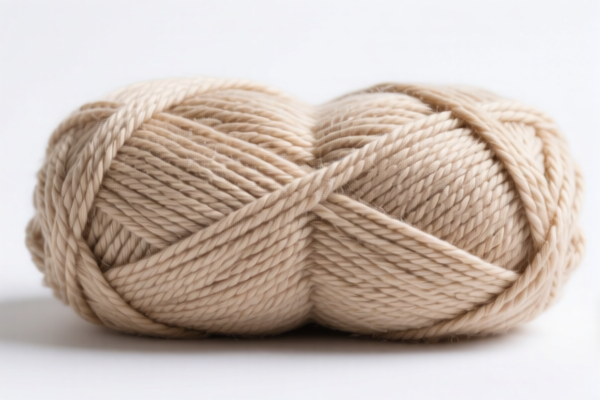
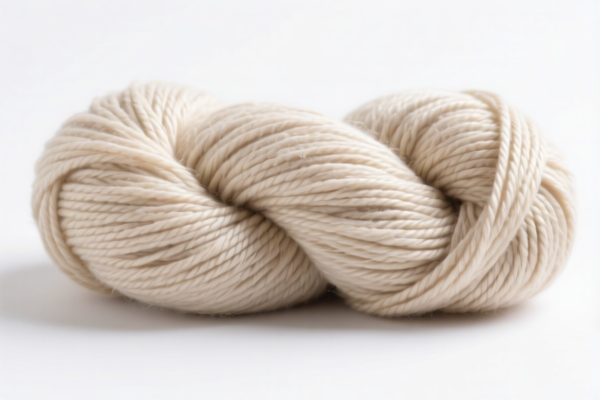
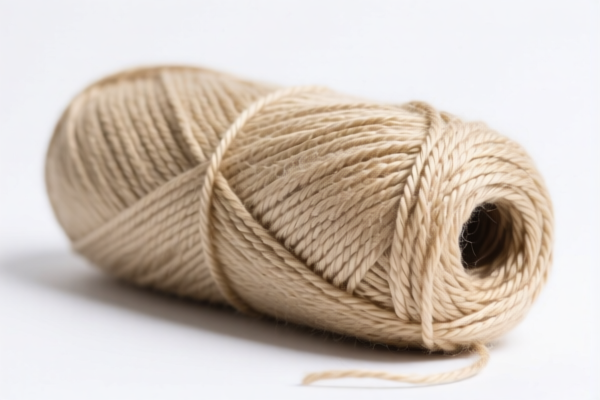
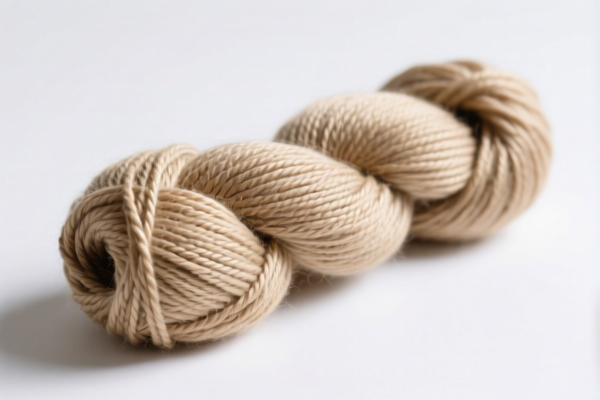
AI Analysis
🎻 Decorative Catgut String (Decorative Gut String)
🌐 HS Code Reference & Customs Clearance Guide | 2026 Latest Tariff Analysis | Professional Classification Strategy
📌 I. Product Definition and Classification: What is "Decorative Catgut"?
Decorative Catgut String refers to strings made from processed animal intestines (typically sheep or calf), used not for musical instruments (which would fall under heading 92 or 95), but specifically for decoration, crafting, or aesthetic purposes. In international trade, these items are classified based on their material composition and end-use, leading to several potential HS Code classifications.
⚠️ Key Distinction:
- If used for musical instruments (guitars, violins) → Heading 9202 or 9504 (NOT covered in this dataset).
- If used for decoration/crafting → Classified under Heading 42 (Leather goods) or Heading 96 (Miscellaneous manufactured articles), depending on the specific material interpretation and form.
📦 II. HS Code Classification Details (Based on Provided Data)
| HS Code | Product Description | Applicable Scenario | Material/Feature |
|---|---|---|---|
4206.00.19.10 |
Decorative catgut, classified as "gut material" products under Chapter 42 (Articles of leather) | Craft supplies, decorative trims | ✅ Gut/Material |
5609.00.40.00 |
Decorative catgut, classified as animal fiber/yarn products (strings, bands) | String-based decorations, ribbons | ✅ Yarn/String |
9601.90.80.00 |
Decorative catgut, classified as animal-derived carving materials | Artistic carvings, organic material crafts | ✅ Animal-derived |
9601.90.60.00 |
Decorative catgut, classified as animal casing/organic material crafts (like bone, horn) | Ornamental items, organic handicrafts | ✅ Organic/Casing |
4206.00.19.30 |
Decorative catgut, classified as "other gut products" under Chapter 42 | General decorative gut items | ✅ Gut/Other |
🔍 Critical Note:
- The classification depends heavily on whether customs views the product as a "gut article" (Ch 42), a "textile/yarn" (Ch 56), or an "organic material craft" (Ch 96).
- Misclassification risk is HIGH due to similar physical appearance but different tariff treatments.
💰 III. 2026 Tariff Rate Breakdown (Including Surtaxes & Policy Add-ons)
✅ Applicable Country: United States (US)
✅ Origin: China (CN)
✅ Effective Date: From Nov 10, 2025 (for subsequent imports)
🎯 1. 4206.00.19.10 & 4206.00.19.30 —— Gut Articles (Chapter 42)
| Item | Content |
|---|---|
| Base Tariff | 3.9% |
| Section 301 Surcharge | 0.0% |
| IEEPA Add-on (122 Clause) | +10% |
| Total Tariff Rate | 13.9% |
| Tax Calculation | CIF Value × 13.9% |
| De Minimis Exemption | ❌ Not Available (Deny De Minimis) |
| Legal Path | IEEPA:9903.01.25 → IEEPA:9903.01.24 → USITC:4206.00.19.10/30 |
📌 Explanation:
- These codes fall under "Articles of leather" but specifically for "gut."
- Only the 10% IEEPA add-on applies; no 25% Section 301 tariff.
- Lowest risk/lowest cost among the options provided.
🎯 2. 5609.00.40.00 —— Animal Fiber/String Products (Chapter 56)
| Item | Content |
|---|---|
| Base Tariff | 3.9% |
| Section 301 Surcharge | +25.0% |
| IEEPA Add-on (122 Clause) | +10% |
| Total Tariff Rate | 38.9% |
| Tax Calculation | CIF Value × 38.9% |
| De Minimis Exemption | ❌ Not Available |
| Legal Path | IEEPA:9903.01.25 → IEEPA:9903.01.24 → USITC:5609.00.40.00 |
📌 Note:
- Classified as a "yarn or string" product.
- Suffers from the full 25% Section 301 tariff + 10% IEEPA.
- High cost, avoid if a better classification exists.
🎯 3. 9601.90.80.00 & 9601.90.60.00 —— Organic Material Crafts (Chapter 96)
| HS Code | Base | 301 Surcharge | IEEPA | Total Rate |
|---|---|---|---|---|
9601.90.80.00 |
3.7% | +7.5% | +10% | 21.2% |
9601.90.60.00 |
0.0% | +7.5% | +10% | 17.5% |
📌 Legal Path:
-IEEPA:9903.01.25→IEEPA:9903.01.24→USITC:9601.90.x0→FOOTNOTE:9903.88.01
-9601.90.60.00is the cheapest option at 17.5% (Base 0% + 7.5% + 10%).
- This code is for "works of art, collectors' pieces, or antiques" made from organic materials (bone, horn, ivory, gut).
- Crucial: Must be declared as a craft/art item, not raw material.
🛠️ IV. Customs Clearance Operational Advice (Avoiding Pitfalls)
✅ 1. Required Documentation Checklist
| Document | Required | Explanation |
|---|---|---|
| ✅ Product Specifications | ✔️ | Detail material (sheep/calf gut), diameter, length, decorative use. |
| ✅ Photos (Clear) | ✔️ | Show product shape, packaging, and any "decorative" features. |
| ✅ Commercial Invoice | ✔️ | Must clearly state: "Decorative Gut String, Not for Musical Instruments". |
| ✅ Certificate of Origin | ✔️ | To prove CN origin (triggers surcharges). |
| ✅ Usage Declaration | ✔️ | Written statement: "For decorative/craft purposes only, not for musical instruments." |
| ✅ Packaging List | ✔️ | Ensure no musical instrument parts are included. |
✅ 2. Declaration Strategy (Key Keywords)
🔥 Golden Rule: "Decoupled from Music, Classified by Material or Craft"
| Scenario | Recommended HS Code | Reasoning |
|---|---|---|
| Raw gut strings, sold as craft material | 4206.00.19.10 or 4206.00.19.30 |
Best if viewed as "leather/gut articles." Low tax (13.9%). |
| Finished decorative items (e.g., garlands) | 9601.90.60.00 |
Best if viewed as "organic material crafts." Lowest tax (17.5%) if base is 0%. |
| Bulk string, sold by the meter | 5609.00.40.00 |
High risk. Avoid unless necessary. Tax 38.9%. |
| Musical Strings (forbidden in this dataset) | N/A | Must NOT use these codes for musical use. Incorrect declaration = Fraud/Seizure. |
📌 Declaration Example:
"Decorative gut strings made from sheep intestine, for DIY craft and ornamentation. Not intended for musical instruments."
✅ 3. Special Considerations
| Situation | Advice |
|---|---|
| Animal Product Restrictions | Ensure no CITES restrictions apply (sheep/calf gut is generally fine, but verify). |
| Biosecurity | US Customs (CBP) may require APHIS clearance for animal-derived products. Declare as "Processed/Dried Gut." |
| Pre-Ruling | Highly Recommended: Apply for an Advance Ruling from CBP to confirm if 9601.90.60.00 or 4206.00.19.10 is appropriate for your specific form factor. |
| Avoid Misclassification | Do NOT declare as "Textile Yarn" (5609) if it’s clearly a rigid craft item. Do NOT declare as "Musical String" (9202) as it triggers different regulations and is not in this tax dataset. |
🌍 V. Global Market Comparison (2026)
| Country/Region | Recommended HS Code | Tariff (China Origin) | Notes |
|---|---|---|---|
| 🇺🇸 USA | 9601.90.60.00 |
17.5% | Lowest rate in dataset. Requires craft classification. |
| 🇺🇸 USA | 4206.00.19.10 |
13.9% | If classified as "Gut Article." |
| 🇨🇳 China | Varies | Low (~3-5%) | No 301/IEEPA surcharges. |
| 🇪🇺 EU | 9601.10 or 4206 |
~0-3% | EU has different sub-headings. Check EU TARIC. |
| 🇬🇧 UK | 9601.90 |
~0-5% | Post-Brexit UK Tariff Book. |
📌 Conclusion:
- US is the highest-cost market due to 301/IEEPA surcharges.
- Best US Classification:9601.90.60.00(17.5%) or4206.00.19.10(13.9%).
- Worst Classification:5609.00.40.00(38.9%).
📌 VI. Common Errors & Pitfalls (Lessons Learned)
❌ Error 1: Declaring as "Musical String"
👉 Consequence: Wrong HS Code (9202), potential seizure, or higher duties if misclassified.
✅ Fix: Explicitly state "DECORATIVE USE ONLY".
❌ Error 2: Declaring as "Textile Yarn" (5609)
👉 Consequence: 38.9% tariff. Unnecessary penalty.
✅ Fix: Argue for "Gut Article" (4206) or "Organic Craft" (9601).
❌ Error 3: Failing to disclose animal origin
👉 Consequence: APHIS hold, delay, or destruction.
✅ Fix: Provide proof of processing/sterilization (dried/guttreated).
🎯 VII. Conclusion: Strategic Declaration for Cost Savings
🎯 Remember the Hierarchy:
- Best Option:
9601.90.60.00(17.5%) — If it looks like an art/craft item.- Good Option:
4206.00.19.10(13.9%) — If it’s sold as raw gut material.- Avoid:
5609.00.40.00(38.9%) — Unless it’s strictly a yarn product.
📌 Pro Tip:
Always include a Letter of Explanation with your invoice:
"These are decorative catgut strings made from sheep intestine. They are processed, dried, and intended for non-musical decorative purposes. They do not function as musical instrument strings."
📣 Immediate Action:
📞 Contact your customs broker BEFORE shipment.
📸 Provide photos of the product and packaging.
📝 Request an Advance Ruling if the volume is high.
✨ Professional Clearance, Start with Accurate Classification!
💼 Your Margin Depends on Your HS Code!
Customer Reviews
About HS Code Classification
The Harmonized System (HS) is an internationally standardized nomenclature developed by the World Customs Organization (WCO) to classify traded products. Over 200 countries use the HS system as the basis for customs tariffs, trade statistics, and import/export regulations.
Each HS code follows a hierarchical structure:
- Chapter (2 digits) — Broad category of goods (e.g., Chapter 84: Machinery and Mechanical Appliances)
- Heading (4 digits) — More specific grouping within the chapter
- Subheading (6 digits) — Internationally standardized breakdown, used by all WCO member countries
- National subdivisions (8-10 digits) — Country-specific extensions for further classification, such as US HTSUS 10-digit codes
Correct HS code classification is essential for smooth customs clearance, accurate duty payment, and compliance with trade regulations. Misclassification can lead to customs delays, overpayment of duties, or penalties.
When importing from CN to US, the applicable tariff rates may include:
- Most-Favored-Nation (MFN) rate — The standard duty rate applied to WTO members
- General rate — Applied to countries without trade agreements
- Trade remedy duties — Additional tariffs such as Section 301 (anti-dumping), Section 232 (national security), or countervailing duties
The information provided on this page is for reference purposes only. For official classification, please consult with your local customs authority or a licensed customs broker.