Decorative Clip
CN → US| HS Code | Tariff Rate | Origin | Destination | Doc |
|---|---|---|---|---|
| 3926305000 | 22.8% | CN | US | Official Doc |
| 8302306000 | 38.5% | CN | US | Official Doc |
| 3926908500 | 24.0% | CN | US | Official Doc |
| 8708295160 | 0.0% | CN | US | Official Doc |
| 8708998180 | 37.5% | CN | US | Official Doc |
Product Images
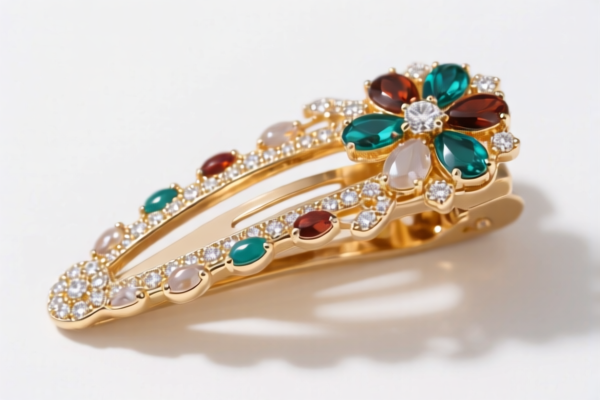
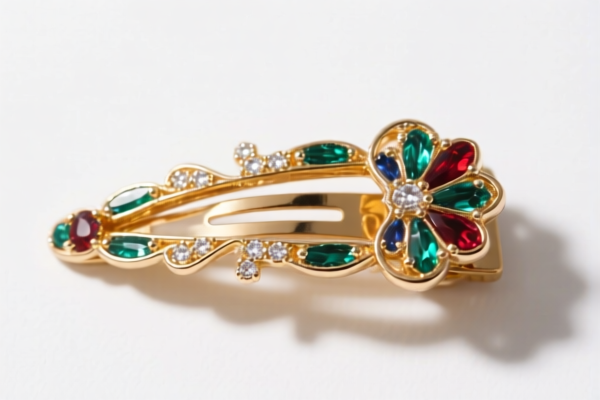


AI Analysis
🖇️ Decorative Clip (Automotive Fasteners & Accessories)
🌐 HS Code Reference & Customs Clearance Guide | 2026 Latest Tariff Analysis | Professional-Level Compliance Strategy
📌 I. Product Definition & Classification: Do You Really Understand "Decorative Clip"?
In the automotive industry, the term "Decorative Clip" is a highly ambiguous classification trap. In international trade, these small components are rarely classified by their "decorative" appearance alone. Instead, they are classified by Material and Function.
A "Clip" can be: 1. Plastic Fasteners/Trim Retainers: Used to hold interior panels, emblems, or trims in place. These are typically "plastic articles" or "parts of plastic." 2. Metal Brackets/Clamps: Used for exterior mounting or structural attachment of trim pieces. These are "base metal articles" or "parts of vehicles."
⚠️ Key Distinction Point:
- If the item is a plastic push-pin, retainer, or trim clip used for interior/exterior aesthetic attachment → It likely falls under Chapter 39 (Plastics) or Chapter 83 (Base Metal Articles - Miscellaneous).
- If the item is a structural automotive part (even if decorative, like a chrome garnish clip) made of metal → It likely falls under Chapter 87 (Vehicle Parts).
- CRITICAL WARNING: The US imposes heavily different tariffs on Plastic vs. Metal vs. Vehicle Parts. Misclassification can lead to a 15-30% tax difference.
📦 II. HS Code Classification Details (2026 Latest Tariff Authority Cross-Reference)
Based on the provided data, here are the three possible classifications for "Decorative Clips" depending on their exact material and application:
| HS Code | Product Description | Application Scenario | Material |
|---|---|---|---|
3926.30.50.00 |
Plastic fittings/fixtures for vehicles | Interior trim clips, plastic emblems, plastic molding retainers | ✅ Plastic |
8302.30.60.00 |
Mountings, fittings, and similar articles of base metal, for vehicles | Chrome/Metal clips, metal brackets for exterior trim | ✅ Base Metal |
3926.90.85.00 |
Other articles of plastics: Plastic clip fasteners | Specific "clip-style" plastic fasteners (e.g., spring clips) | ✅ Plastic |
8708.29.51.60 |
Body parts and accessories (Metal/Plastic) | Structural body clips, metal/plastic composite body attachments | ✅ Mixed/Metal |
8708.99.81.80 |
Other parts and accessories of motor vehicles | General automotive trim clips not specified elsewhere | ✅ Mixed/Metal |
🔍 Important Reminder:
- Plastic Clips generally enjoy lower base tariffs (5.3%-6.5%) but face 7.5%-10% additional taxes.
- Metal Clips (8302) face a massive 25% additional tariff, pushing the total to 38.5%.
- Vehicle Parts (8708) have complex rules: Steel/Aluminum/Copper clips face a 50% additional tariff (Total ~87.5%), while plastic/composite body parts face 25% additional (Total ~37.5%).
💰 III. 2026 Latest Tariff Rate Detailed Breakdown (Including Surcharges & Policy Add-ons)
✅ Applicable Country: United States (US)
✅ Country of Origin: China (CN)
✅ Effective Date: From November 10, 2025 (including subsequent imports)
🎯 1. 3926.30.50.00 —— Plastic Fittings/Fixtures for Vehicles (e.g., Plastic Trim Clips)
| Item | Content |
|---|---|
| Base Rate | 5.3% (Ad Valorem) |
| Section 301 Surcharge | +7.5% |
| Section 301 (122 Clause) Surcharge | +10% |
| Total Tax Rate | 22.8% |
| Tax Calculation | CIF Value × 22.8% |
| De Minimis Exemption | ❌ Not Eligible (High-risk category for automotive parts) |
| Legal Basis Path | USITC:3926.30.50.00 → Section 301: 7.5% → 122 Clause: 10% |
📌 Explanation:
- This is the most favorable rate for plastic decorative clips.
- It is classified under "Plastics" rather than "Vehicle Parts," avoiding the higher auto-parts surcharges.
- Key Requirement: The item must be clearly identified as a plastic fitting/fixture, not a structural vehicle part.
🎯 2. 8302.30.60.00 —— Base Metal Mountings/Fittings for Vehicles (e.g., Metal Chrome Clips)
| Item | Content |
|---|---|
| Base Rate | 3.5% (Ad Valorem) |
| Section 301 Surcharge | +25.0% |
| Section 301 (122 Clause) Surcharge | +10% |
| Total Tax Rate | 38.5% |
| Tax Calculation | CIF Value × 38.5% |
| De Minimis Exemption | ❌ Not Eligible |
| Legal Basis Path | USITC:8302.30.60.00 → Section 301: 25% → 122 Clause: 10% |
📌 Note:
- Metal clips are significantly more expensive to import.
- The 25% Section 301 surcharge is the primary driver of cost.
- Do not try to classify metal clips as "Plastic" to avoid this rate; customs will reject it based on material analysis.
🎯 3. 3926.90.85.00 —— Other Plastic Articles: Clip Fasteners (e.g., Spring Plastic Clips)
| Item | Content |
|---|---|
| Base Rate | 6.5% (Ad Valorem) |
| Section 301 Surcharge | +7.5% |
| Section 301 (122 Clause) Surcharge | +10% |
| Total Tax Rate | 24.0% |
| Tax Calculation | CIF Value × 24.0% |
| De Minimis Exemption | ❌ Not Eligible |
| Legal Basis Path | USITC:3926.90.85.00 → Section 301: 7.5% → 122 Clause: 10% |
📌 Note:
- Slightly higher base rate than3926.30.50.00but still much lower than metal.
- Use this code if the clip is a general-purpose plastic fastener not specifically defined as a "vehicle fitting."
🎯 4. 8708.29.51.60 & 8708.99.81.80 —— Vehicle Body Parts/Accessories (Complex Rates)
| Item | Content |
|---|---|
| Base Rate | 2.5% (Ad Valorem) |
| Section 301 Surcharge | +25.0% |
| Section 301 (122 Clause) Surcharge | +10% |
| Special Metal Surcharge | +50% (For Steel, Aluminum, Copper components) |
| Total Tax Rate (Plastic/Composite) | 37.5% |
| Total Tax Rate (Metal Component) | 87.5% (2.5% + 25% + 10% + 50%) |
| Tax Calculation | CIF Value × Rate |
| De Minimis Exemption | ❌ Not Eligible |
| Legal Basis Path | USITC:8708.29.51.60 / 8708.99.81.80 → Section 301: 25% → 122 Clause: 10% → Metal Surcharge: 50% |
📌 CRITICAL WARNING:
- If your "decorative clip" is made of steel, aluminum, or copper, and classified as a vehicle part (8708), you will face an additional 50% tariff on top of the 35% standard surcharge.
- Total Tax: 87.5%. This is likely not commercially viable.
- Strategy: Try to classify metal clips under8302.30.60.00(38.5%) if possible, as it avoids the 50% "122 Clause" metal surcharge. Consult a customs broker to verify if "trim clips" can be classified as "miscellaneous base metal articles" rather than "vehicle parts."
🛠️ IV. Customs Clearance Practical Advice (Battle-Tested Pitfall Avoidance)
✅ 1. Preparation Checklist (No Omissions Allowed)
| Document | Mandatory | Explanation |
|---|---|---|
| ✅ Product Specification Sheet | ✔️ | Must clearly state Material (e.g., "ABS Plastic," "Stainless Steel") and Function (e.g., "Trim Retainer," "Emblem Clip"). |
| ✅ Product Photos (Clear & Detailed) | ✔️ | Show the clip from multiple angles, including any metal/plastic components. |
| ✅ Commercial Invoice | ✔️ | Describe as "Plastic Decorative Trim Clip" or "Metal Mounting Clip for Vehicle Trim." Avoid vague terms like "Automotive Accessory." |
| ✅ Bill of Lading (B/L) | ✔️ | Ensure package count and weight match invoice. |
| ✅ HS Code Pre-Ruling (Optional but Recommended) | ✔️ | If classification is borderline (Plastic vs. Vehicle Part), apply for a pre-ruling to avoid audits. |
✅ 2. Declaration Tips (Key Mantra)
🔥 "Material First, Function Second, Name Specific, Tax Optimized!"
| Scenario | Correct Declaration | Wrong Practice |
|---|---|---|
| Plastic Trim Clip | 3926.30.50.00 (Plastic Fitting) |
Misclassify as "Vehicle Part" (8708) → 37.5% or 87.5% |
| Metal Chrome Clip | 8302.30.60.00 (Base Metal Fitting) |
Misclassify as "Plastic" → Fraud Risk + Seizure |
| Mixed Metal/Plastic Clip | Analyze Primary Material | If >50% metal by weight/value, lean towards 8302 or 8708 |
| Generic "Auto Accessory" | Specify "Decorative Clip" | Vague description → Customs Holds + Inspection Delay |
✅ 3. Special Handling for "122 Clause" Metal Surcharge
| Situation | Handling Advice |
|---|---|
Metal Clips Classified as 8708 |
Avoid if possible. The 50% surcharge makes it very costly. Try to classify under 8302 (38.5%) if the clip is considered a "mounting/fitting" rather than a "body part." |
| Plastic Clips | Use 3926.30.50.00 or 3926.90.85.00. No metal surcharge. Lowest tax risk. |
| OEM Custom Clips | Provide OEM drawings. If the drawing shows plastic, emphasize plastic. If metal, justify classification under 8302 as "mounting fitting" to avoid 8708 metal surcharge. |
🌍 V. Global Market Comparison (2026 Latest)
| Country/Region | Recommended HS Code | Tariff (China Origin) | Certification Required | Notes |
|---|---|---|---|---|
| 🇺🇸 USA | 3926.30.50.00 (Plastic) / 8302.30.60.00 (Metal) |
22.8% (Plastic) / 38.5% (Metal) | N/A | High Surcharges Apply. Metal parts in 8708 face 87.5%. |
| 🇨🇳 China | 3926.30.50.00 / 8302.30.60.00 |
5-10% | N/A | Low tariffs. No additional surcharges. |
| 🇪🇺 EU | 3926.90.85.00 / 8302.30.60.00 |
0-4.5% | CE (if applicable) | No "Section 301" style surcharges. |
| 🇬🇧 UK | 3926.90.85.00 / 8302.30.60.00 |
0-4.5% | UKCA | Post-Brexit tariffs similar to EU for these items. |
📌 Conclusion:
- USA is the most challenging market due to Section 301 and 122 Clause surcharges.
- Plastic clips are the most cost-effective to export to the US (22.8% total).
- Metal clips are expensive (38.5% for8302, 87.5% for8708).
- Strategic Tip: If your clip is 80% plastic with a small metal pin, check if it can be classified as a plastic article. If it's 100% metal,8302is your best bet to avoid the 50% surcharge.
📌 VI. Common Mistakes & Pitfall Guide (Blood & Tears Lessons)
❌ Mistake 1: Classifying Metal Clips as 3926 (Plastic) to save tax.
👉 Consequence: Customs inspection reveals metal material. Penalty, Back Tax + Interest, Possible Fraud Charge.
❌ Mistake 2: Classifying Plastic Clips as 8708 (Vehicle Parts).
👉 Consequence: Tax jumps from 22.8% to 37.5% or 87.5% (if misidentified as metal part). Unnecessary Cost.
❌ Mistake 3: Using vague descriptions like "Auto Parts" on the invoice.
👉 Consequence: Customs assigns a default HS code, likely the highest tax bracket. Delay + Higher Tax.
❌ Mistake 4: Ignoring the 122 Clause Metal Surcharge for 8708.
👉 Consequence: You calculate 37.5% but owe 87.5%. Cash Flow Crisis.
✅ Correct Practice:
"Plastic Decorative Trim Clip, ABS Material, for Automotive Interior Panel Retention, Model XYZ" OR "Metal Chrome Mounting Clip, Stainless Steel, for Vehicle Exterior Trim, Model XYZ"
🎯 VII. Conclusion: Precise Classification Saves Millions!
🎯 Remember the Mantra:
🔹 "Plastic is Cheap (22.8%), Metal is Middle (38.5%), Vehicle Part Metal is Expensive (87.5%)"
🔹 "Know Your Material, Choose Your Chapter, Avoid the 50% Surcharge!"
📌 Pro Tip:
If your clips are originally from Vietnam, Mexico, or Thailand, you may qualify for Section 301 Exclusions or FTA Tariffs, reducing rates to 0%-5%.
Recommend Applying for an Advance Ruling (Pre-classification) with US Customs (CBP) if your shipment volume is high.
📣 Immediate Action:
📞 Contact a Professional Customs Broker + Provide Product Material Analysis + Apply for HS Code Pre-Ruling
🚀 Let your decorative clips pass customs smoothly, maximize profit, and scale globally!
✨ Professional Clearance Starts with Accurate Classification!
💼 Every cent of tax saved is pure profit earned!
Customer Reviews
About HS Code Classification
The Harmonized System (HS) is an internationally standardized nomenclature developed by the World Customs Organization (WCO) to classify traded products. Over 200 countries use the HS system as the basis for customs tariffs, trade statistics, and import/export regulations.
Each HS code follows a hierarchical structure:
- Chapter (2 digits) — Broad category of goods (e.g., Chapter 84: Machinery and Mechanical Appliances)
- Heading (4 digits) — More specific grouping within the chapter
- Subheading (6 digits) — Internationally standardized breakdown, used by all WCO member countries
- National subdivisions (8-10 digits) — Country-specific extensions for further classification, such as US HTSUS 10-digit codes
Correct HS code classification is essential for smooth customs clearance, accurate duty payment, and compliance with trade regulations. Misclassification can lead to customs delays, overpayment of duties, or penalties.
When importing from CN to US, the applicable tariff rates may include:
- Most-Favored-Nation (MFN) rate — The standard duty rate applied to WTO members
- General rate — Applied to countries without trade agreements
- Trade remedy duties — Additional tariffs such as Section 301 (anti-dumping), Section 232 (national security), or countervailing duties
The information provided on this page is for reference purposes only. For official classification, please consult with your local customs authority or a licensed customs broker.