Decorative Clock
CN → US| HS Code | Tariff Rate | Origin | Destination | Doc |
|---|---|---|---|---|
| 9105995000 | 0.0% | CN | US | Official Doc |
| 9105996000 | 0.0% | CN | US | Official Doc |
| 7020006000 | 40.0% | CN | US | Official Doc |
Product Images
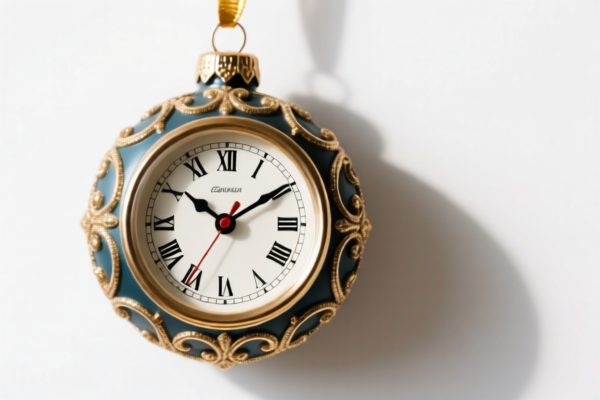
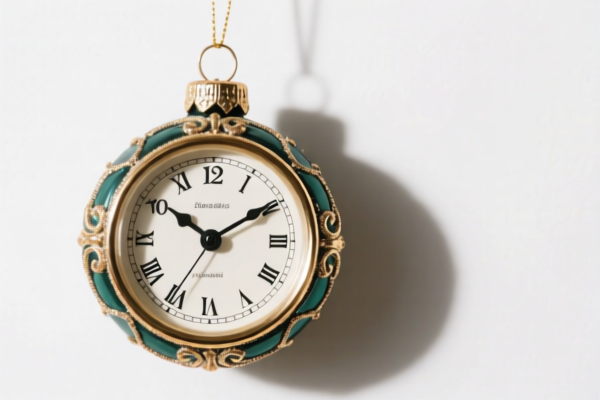
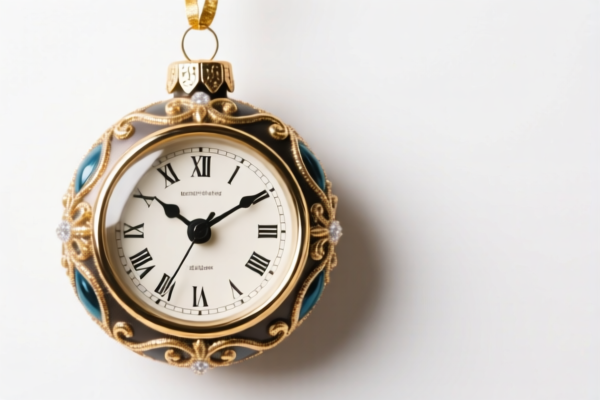
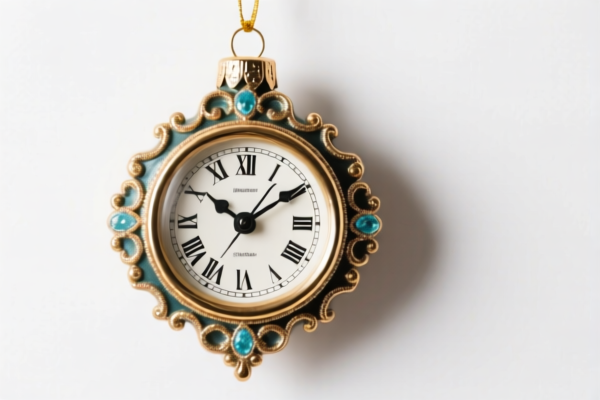
AI Analysis
🕰️ Decorative Clocks & Watch Parts: The Hidden Tariff Minefield
🌐 HS Code Reference & Customs Clearance Guide | 2026 Latest Tariff Analysis | Professional Clearance Strategy
📌 I. Product Definition & Classification: What Exactly is a "Decorative Clock"?
A "decorative clock" in international trade is not just a timepiece; it is a distinct category governed by strict structural and valuation criteria. Unlike standard wall clocks or alarm clocks (Chapter 91, Heading 9101/9102/9105), "other clocks" often fall under Heading 9105 or, if they are purely ornamental without functional timekeeping, they might be mistakenly (and dangerously) classified under Chapter 70 (Glass Articles) or Chapter 96 (Miscellaneous Manufactured Articles).
However, based on the provided data, we are focusing on functional decorative clocks and their parts under HS Codes 9105 and 9114.
⚠️ Critical Distinction:
- Functional Clocks (9105): Have a timekeeping mechanism. The tariff depends heavily on the value per unit (> $5 vs. ≤ $5).
- Clock Parts (9114): Individual components (gears, springs, dials). Tariff depends on whether they are for watches or other clocks.
- Glass Articles (7020): If the "clock" is merely a glass vacuum flask inner or a non-functional glass ornament, it falls under 7020. Note: The provided data includes 7020.00.40.00 (Glass inners for vacuum flasks), which is often confused with decorative glass clock faces or casings. Ensure the item is truly a vacuum vessel component, not a clock.
📦 II. HS Code Classification Details (2026 Latest Tariff Authority)
| HS Code | Product Description | Applicable Scenario | Key Criteria |
|---|---|---|---|
7020.00.40.00 |
Other articles of glass: Glass inners for vacuum flasks or for other vacuum vessels | Decorative glass vacuum flasks, thermos inners | Material: Glass. Function: Vacuum insulation inner. |
7020.00.60.00 |
Other articles of glass: Other | Purely decorative glass ornaments, non-functional glass art | Material: Glass. Function: Ornamental only, no specific use. |
9105.99.50.00 |
Other clocks: Other: Other: Other: Valued not over $5 each | Budget decorative wall clocks, small mantel clocks | Value: ≤ $5 per unit. Type: Non-traditional clock. |
9105.99.60.00 |
Other clocks: Other: Other: Other: Valued over $5 each | Premium decorative clocks, antique-style, branded | Value: > $5 per unit. Type: Non-traditional clock. |
9114.90.40.00 |
Other clock or watch parts: Other: Other: For watches | Watch gears, springs, crystals, bands | Component: Specific to watches. |
9114.90.50.00 |
Other clock or watch parts: Other: Other: Other | Clock hands, dials, gears for wall/floor clocks | Component: Specific to other clocks (not watches). |
🔍 Key Reminder:
- Valuation is King for Clocks: The difference between 3.2% + 7.5% and 3.2% + 7.5% + fixed fee hinges on the $5 threshold.
- Parts Separation: Never mix watch parts with clock parts.9114.90.40.00(Watch parts) has a 16.3% total tax, while9114.90.50.00(Other clock parts) has an 11.7% total tax.
- Glass vs. Clock: If a decorative item is made of glass but serves no vacuum function, it is7020.00.60.00(0% tax). If it is a clock with a glass face, it is 9105 (not 7020).
💰 III. 2026 Latest Tariff Rate Breakdown (Including Surtaxes)
✅ Applicable Country: USA
✅ Origin: China (CN)
✅ Effective Date: Current Trade Policies (Section 301 & IEEPA)
🎯 1. 9105.99.50.00 – Decorative Clocks (Value ≤ $5)
| Item | Details |
|---|---|
| Base Tariff | 7.5¢ each + 3.2% |
| Surtax (Section 301) | +0.0% |
| Total Tax | 7.5¢ each + 3.2% |
| Calculation | (0.075 × Quantity) + (0.032 × CIF Value) |
| De Minimis Exemption | ❌ Not Applicable (Specific rate per unit, cannot be waived below $800 unless under 321/601 special programs, but generally subject to tariff) |
📌 Explanation:
- This is a mixed tariff: Part specific (per unit), part ad valorem (percentage).
- Even though the surtax is 0%, the base rate is significant due to the per-unit fee.
- Risk: If you undervalue to <$5 to qualify, but customs disagrees, you face penalties.
🎯 2. 9105.99.60.00 – Decorative Clocks (Value > $5)
| Item | Details |
|---|---|
| Base Tariff | 23¢ each + 3.2% |
| Surtax (Section 301) | +7.5% |
| Total Tax | 23¢ each + 10.7% (3.2% + 7.5%) |
| Calculation | (0.23 × Quantity) + (0.107 × CIF Value) |
| De Minimis Exemption | ❌ Not Applicable |
📌 Explanation:
- High Surcharge: The 7.5% surtax applies here, unlike the <$5 category.
- Higher Per-Unit Fee: 23¢ per clock vs. 7.5¢.
- Critical: If you have 1,000 clocks worth $6 each, you pay $230 + 10.7% of CIF. This is a major cost driver for low-cost, high-volume decorative clocks.
🎯 3. 9114.90.40.00 – Clock Parts (For Watches)
| Item | Details |
|---|---|
| Base Tariff | 8.8% |
| Surtax (Section 301) | +7.5% |
| Total Tax | 16.3% |
| Calculation | 16.3% of CIF Value |
| De Minimis Exemption | ❌ Not Applicable |
📌 Note: This is a high-rate category. Even small watch parts incur 16.3% duty.
🎯 4. 9114.90.50.00 – Clock Parts (Other, e.g., Wall Clocks)
| Item | Details |
|---|---|
| Base Tariff | 4.2% |
| Surtax (Section 301) | +7.5% |
| Total Tax | 11.7% |
| Calculation | 11.7% of CIF Value |
| De Minimis Exemption | ❌ Not Applicable |
📌 Note: Slightly lower than watch parts, but still significant.
🎯 5. 7020.00.40.00 & 7020.00.60.00 – Glass Articles
| HS Code | Total Tax | Details |
|---|---|---|
7020.00.40.00 |
0.0% | Glass inners for vacuum flasks. No surtax. |
7020.00.60.00 |
0.0% | Other glass articles. No surtax. |
📌 Opportunity: If your "decorative clock" is actually a glass ornament (non-functional) or a vacuum flask inner, the tax is 0%. However, if it keeps time, it must be classified under 9105. Misclassification is fraud.
🛠️ IV. Customs Clearance Practical Advice (Avoid Pitfalls)
✅ 1. Documentation Checklist
| Document | Required | Purpose |
|---|---|---|
| Product Specifications | ✔️ | Must state timekeeping function (for 9105) or material/use (for 7020/9114). |
| Commercial Invoice | ✔️ | Must clearly list unit value to determine if >$5 or ≤$5. |
| Product Photos | ✔️ | Show mechanism (quartz/movement) to prove it’s a clock, not just glass. |
| Material Declaration | ✔️ | Specify if glass, metal, plastic. Critical for 7020 vs. 9105 distinction. |
| Parts List | ✔️ | For 9114, specify if parts are for watches (9114.90.40) or other clocks (9114.90.50). |
✅ 2. Declaration Tips
🔥 "Value Determines Rate, Function Determines Code, Material Supports Claim!"
| Scenario | Correct HS Code | Common Error | Consequence |
|---|---|---|---|
| Decorative clock worth $4 | 9105.99.50.00 |
Declare as $6 to avoid "cheap" label | Tax jump: 7.5¢+3.2% → 23¢+10.7% |
| Decorative clock worth $6 | 9105.99.60.00 |
Declare as $4 | Penalty for undervaluation |
| Glass clock face (non-functional) | 7020.00.60.00 |
Declare as clock part (9114.90.50.00) |
Overpay tax: 0% → 11.7% |
| Clock hands for a wall clock | 9114.90.50.00 |
Declare as watch parts (9114.90.40.00) |
Overpay tax: 11.7% → 16.3% |
✅ 3. Special Cases
| Case | Handling Advice |
|---|---|
| Mixed Lots | If shipping both watches and clocks, separate them. Mixing parts leads to ambiguous classification and potential 16.3% on everything. |
| Vacuum Flask with Clock Face | If the clock face is attached to a vacuum flask, it may still be considered a clock (9105). If it’s just a glass inner with a printed design, it’s 7020. Provide clear photos. |
| Antique Clocks | If value is high (> $5), expect 23¢ + 10.7%. Consider if "antique" status offers any exemption (rare for Section 301). |
| Smart Clocks | If it connects to Wi-Fi, it may fall under 8517 (telecommunications) or 8528 (monitors). Do not declare as simple decorative clock. |
🌍 V. Global Market Comparison (2026)
| Market | Recommended HS Code | Est. Total Duty (China Origin) | Notes |
|---|---|---|---|
| 🇺🇸 USA | 9105.99.60.00 |
23¢/ea + 10.7% | High surtax (7.5%) applies. |
| 🇪🇺 EU | 9105.99 |
~2.5% | No Section 301 equivalent. |
| 🇨🇳 China | 9105.99 |
0% (Import) | Import duties often 0-5%. |
| 🇬🇧 UK | 9105.99 |
~2.5% | Post-Brexit tariffs align with EU. |
📌 Conclusion:
- USA is the most expensive market for decorative clocks due to Section 301 surtaxes.
- Glass decorations (7020) offer a 0% tax loophole if they are non-functional, but must be carefully described.
- Watch parts are taxed higher (16.3%) than clock parts (11.7%) in the US.
📌 VI. Common Mistakes & Pitfalls
❌ Mistake 1: Declaring a $10 decorative clock as two $5 items.
👉 Consequence: Customs will assess the true value. If found, penalties + back duties.
❌ Mistake 2: Calling a functional clock a "Glass Ornament" (7020).
👉 Consequence: Misdeclaration. Customs will reclassify to 9105, charge 10.7% + 23¢, and possibly fine.
❌ Mistake 3: Shipping watch parts and clock parts in the same box.
👉 Consequence: Customs may classify the entire shipment under the higher rate (16.3% for watch parts). Separate shipments or clear descriptions are vital.
❌ Mistake 4: Ignoring the $5 threshold for 9105.
👉 Consequence: If your clock is $5.01, you pay 23¢ + 10.7%. If it were $4.99, you’d pay 7.5¢ + 3.2%. That’s a massive difference for high volumes.
✅ Correct Approach:
"Decorative Quartz Wall Clock, 12-inch, Metal Frame, Glass Front, Works with 1 AA Battery, Model XYZ, Valued at $4.50 per Unit"
🎯 VII. Conclusion: Precision Saves Money
🎯 Remember the Mantras:
🔹 "Under $5? Pay 7.5¢. Over $5? Pay 23¢ + Surtax."
🔹 "Glass Only? 0%. Glass + Clock? Taxable."
🔹 "Watch Parts? 16.3%. Clock Parts? 11.7%."
📌 Pro Tip:
If you are importing large quantities of low-value decorative clocks (<$5), keep documentation tight to prove the value. If you are importing premium clocks (> $5), budget for the 10.7% effective rate.
📣 Immediate Action:
📞 Contact a Customs Broker to pre-classify your exact unit value and material composition.
📦 Separate Watch Parts from Clock Parts in your invoice.
🚀 Optimize your supply chain to stay under the $5 threshold if possible, or factor in the 10.7% tax if not.
✨ Professional Clearance Starts with Accurate Classification!
💼 Your Duty Bill Reflects Your HS Code Choice!
Customer Reviews
About HS Code Classification
The Harmonized System (HS) is an internationally standardized nomenclature developed by the World Customs Organization (WCO) to classify traded products. Over 200 countries use the HS system as the basis for customs tariffs, trade statistics, and import/export regulations.
Each HS code follows a hierarchical structure:
- Chapter (2 digits) — Broad category of goods (e.g., Chapter 84: Machinery and Mechanical Appliances)
- Heading (4 digits) — More specific grouping within the chapter
- Subheading (6 digits) — Internationally standardized breakdown, used by all WCO member countries
- National subdivisions (8-10 digits) — Country-specific extensions for further classification, such as US HTSUS 10-digit codes
Correct HS code classification is essential for smooth customs clearance, accurate duty payment, and compliance with trade regulations. Misclassification can lead to customs delays, overpayment of duties, or penalties.
When importing from CN to US, the applicable tariff rates may include:
- Most-Favored-Nation (MFN) rate — The standard duty rate applied to WTO members
- General rate — Applied to countries without trade agreements
- Trade remedy duties — Additional tariffs such as Section 301 (anti-dumping), Section 232 (national security), or countervailing duties
The information provided on this page is for reference purposes only. For official classification, please consult with your local customs authority or a licensed customs broker.