Decorative Composite Panel
CN → US| HS Code | Tariff Rate | Origin | Destination | Doc |
|---|---|---|---|---|
| 4410110030 | 35.0% | CN | US | Official Doc |
| 4410110020 | 35.0% | CN | US | Official Doc |
| 7610900040 | 90.7% | CN | US | Official Doc |
| 7610900080 | 90.7% | CN | US | Official Doc |
Product Images

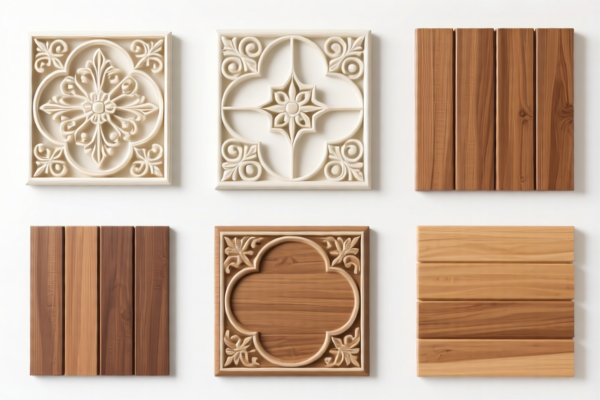

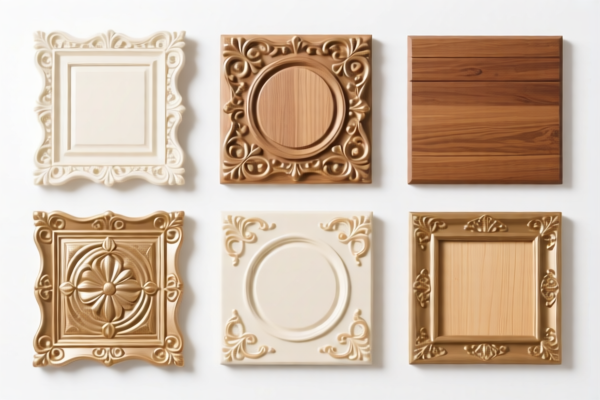
AI Analysis
🏗️ Decorative Composite Panels (Aluminum & Wood-Based)
🌐 HS Code Reference & Customs Clearance Guide | 2026 Latest Tariff Analysis | Professional Clearance Strategy
📌 I. Product Definition & Classification: Do You Really Understand "Decorative Composite Panels"?
In international trade, "Decorative Composite Panels" is a broad term that usually falls into two distinct categories based on material and application:
- Aluminum Architectural/Ornamental Work: Aluminum structures, parts of structures (roofs, facades, balustrades), and prepared aluminum profiles used for decorative or structural purposes. These are typically rigid, metallic, and used in construction.
- Wood-Based Composite Boards (Particle Board/OSB): Engineered wood products, often surface-covered with decorative laminates (plastic or melamine), used for interior furniture, cabinetry, or wall paneling.
⚠️ Key Distinction Point:
- If the panel is metallic (Aluminum) and prepared for use in structures (like cladding, ceilings, or balustrades) → Classified under Chapter 76.
- If the panel is wood-based and covered with decorative laminates → Classified under Chapter 44.
📦 II. HS Code Classification Details (2026 Latest Tariff Authority Match)
Based on the provided data, here are the specific HS Codes for "Decorative Composite Panels" depending on the material:
| HS Code | Product Description | Material Type | Application Scenario |
|---|---|---|---|
7610.90.00.40 |
Aluminum structures... Other: Other Architectural and ornamental work | Aluminum | Aluminum cladding, decorative facades, metal ceiling panels, ornamental balustrades. |
7610.90.00.80 |
Aluminum structures... Other: Other Other | Aluminum | Other aluminum structural parts prepared for structures not specifically listed in .40 (e.g., custom metal frames). |
4410.11.00.30 |
Particle board... Surface-covered with decorative laminates of plastic | Wood (Particle Board) | Melamine-faced particle board, plastic-laminated MDF/Particle board for furniture or interior walls. |
4410.11.00.20 |
Particle board... Surface-covered with melamine-impregnated paper | Wood (Particle Board) | Melamine-faced boards, commonly used for kitchen cabinets, office furniture, and interior decorative walls. |
🔍 Important Note:
- Aluminum Panels: If they are "prepared for use in structures" (e.g., pre-drilled, pre-cut for installation), they fall under 7610.90. Even if used decoratively (e.g., exterior cladding), they are not classified as simple "plates" but as "structures/parts." - Wood Panels: If it is particle board covered with a plastic laminate (rigid sheet), use4410.11.00.30. If covered with melamine-impregnated paper (thin layer), use4410.11.00.20. Misclassification here can lead to duty discrepancies.
💰 III. 2026 Latest Tariff Rate Details (Including Surcharges)
✅ Applicable Country: United States (US)
✅ Origin: China (CN)
✅ Effective Time: Current policies apply (Section 301 & IEEPA)
🎯 1. Aluminum Decorative Panels (7610.90.00.40 / 7610.90.00.80)
| Item | Content |
|---|---|
| Base Tariff | 5.7% |
| Section 301 Tariff | +25.0% (Specific to Steel, Aluminum, Copper products from China) |
| Additional USITC Surcharge | +50% (As per data: "Steel, Aluminum, Copper products additional tariff: 50%") |
| Total Tariff Rate | 80.7% |
| Tax Calculation | CIF Value × 80.7% |
| De Minimis Exemption | ❌ Not Applicable (High tariff items are generally excluded from Section 321 de minimis benefits for commercial imports) |
| Legal Basis Path | USITC: 7610.90.00.40/80 → Section 301 → Additional Surcharge |
📌 Explanation:
- Aluminum products from China face extremely high tariffs due to the combination of base duties, Section 301 tariffs, and additional surcharges for steel/aluminum/copper. - The 80.7% rate is a critical cost factor. Importers must carefully evaluate if the value-add justifies this duty burden. - Note: "Structural aluminum" definitions are broad. Even "decorative" aluminum panels prepared for installation (e.g., with mounting holes) are classified here.
🎯 2. Wood-Based Decorative Panels (4410.11.00.30 / 4410.11.00.20)
| Item | Content |
|---|---|
| Base Tariff | 0.0% |
| Section 301 Tariff | +25.0% |
| Total Tariff Rate | 25.0% |
| Tax Calculation | CIF Value × 25.0% |
| De Minimis Exemption | ❌ Not Applicable (Standard for Section 301 goods) |
| Legal Basis Path | USITC: 4410.11.00.20/30 → Section 301 |
📌 Explanation:
- Wood-based composite boards have a 0% base tariff, but the 25% Section 301 surcharge still applies to Chinese-origin wood products. - The distinction between4410.11.00.20(melamine paper) and4410.11.00.30(plastic laminate) does not affect the tariff rate (both are 25%), but it is crucial for accurate customs declaration and regulatory compliance (e.g., formaldehyde emissions standards).
🛠️ IV. Customs Clearance Practical Advice (Real-World Pitfall Avoidance Guide)
✅ 1. Document Checklist (Non-negotiable)
| Document | Required? | Description |
|---|---|---|
| ✅ Product Specification Sheet | ✔️ | Must clearly state material composition (e.g., "Aluminum Alloy 6063" or "Particle Board with Melamine Finish"). |
| ✅ Technical Drawings/Photos | ✔️ | For aluminum: Show mounting features, finishes, and dimensions. For wood: Show core material and surface layer. |
| ✅ Commercial Invoice | ✔️ | Must explicitly describe goods as "Aluminum Decorative Panel" or "Decorative Particle Board," not just "Panel." |
| ✅ Certificate of Origin (CO) | ✔️ | To prove Chinese origin (which triggers the 25% or 80.7% duty). |
| ✅ Formaldehyde Emission Certificate | ✔️ | For wood panels (4410.11): CARB Phase 2 or EPA TSCA Title VI compliance is mandatory for US import. |
| ✅ Bill of Lading | ✔️ | Ensure HS Codes are correctly referenced. |
✅ 2. Declaration Tips (Key Mantras)
🔥 "Material First, Application Second, Description Precise!"
| Scenario | Correct Declaration | Common Mistake |
|---|---|---|
| Aluminum Facade Panel | "Aluminum Architectural Ornamental Work, HS 7610.90.00.40" | Describing as "Aluminum Plate" (HS 7606/7607) → Lower duty but risk of misclassification penalty. |
| Melamine Particle Board | "Particle Board, Surface-covered with Melamine-Impregnated Paper, HS 4410.11.00.20" | Describing as "Wood Veneer" or "Laminate Sheet" → Incorrect HS Code. |
| Plastic-Laminated Board | "Particle Board, Surface-covered with Decorative Plastic Laminate, HS 4410.11.00.30" | Describing as "Furniture Part" → May be reclassified. |
📌 Critical Advice:
- Do NOT declare aluminum decorative panels as "Aluminum Plates" (7606/7607) to avoid the 80.7% tariff. If they are prepared for structures (e.g., pre-cut, pre-drilled), they must go under 7610. Misdeclaration leads to severe penalties. - Do NOT mix melamine paper and plastic laminate descriptions. While the duty is the same, the HS Code subheading must match the surface material.
✅ 3. Special Cases
| Scenario | Handling Advice |
|---|---|
| Aluminum Panels with Wood Core (Sandwich) | If the aluminum is the essential character, it may still fall under 7610. Consult a specialist. |
| Wood Panels with Aluminum Edging | If wood is the core, it likely falls under 4410. However, if aluminum components dominate, it may shift to 7610. |
| Import for Residential vs. Commercial | Tariffs are the same, but wood panels require stricter environmental compliance (CARB/EPA) for residential use. |
🌍 V. Global Market Comparison (2026)
| Country/Region | Recommended HS Code | Tariff (China Origin) | Certification Required | Notes |
|---|---|---|---|---|
| 🇺🇸 USA | 7610.90.00.40 / 4410.11.00.20 |
80.7% (Alu) / 25% (Wood) | EPA TSCA (Wood), FCC (if electronic) | High tariffs on aluminum; strict environmental rules on wood. |
| 🇨🇳 China | 7610.90 / 4410.11 |
0-5% | CCC (if applicable) | Low tariffs, but strict environmental standards for wood exports. |
| 🇪🇺 EU | 7610.90 / 4410.11 |
0-5% | CE, FSC (Wood) | No Section 301-style tariffs, but anti-dumping duties may apply to some aluminum. |
| 🇬🇧 UK | 7610.90 / 4410.11 |
0-5% | UKCA | Post-Brexit rules apply. |
📌 Conclusion:
- USA is the most challenging market for Chinese composite panels due to the 80.7% aluminum tariff and 25% wood tariff. - Strategy: Consider supply chain diversification (e.g., sourcing aluminum from Vietnam/Mexico if feasible) or focus on high-margin wood products where the tariff is lower (25% vs 80.7%).
📌 VI. Common Errors & Pitfalls (Lessons Learned)
❌ Error 1: Declaring aluminum decorative panels as "Aluminum Sheets" (7606)
👉 Consequence: If customs determines they are "prepared for structures" (e.g., pre-drilled for mounting), they will reclassify to 7610 → Back taxes + penalties + interest.
❌ Error 2: Mixing up melamine paper (4410.11.00.20) and plastic laminate (4410.11.00.30)
👉 Consequence: While the duty is the same, incorrect HS Code can lead to documentary rejection or inspection delays.
❌ Error 3: Ignoring EPA CARB compliance for wood panels
👉 Consequence: Seizure and destruction of goods at the border. Wood-based composite panels must comply with TSCA Title VI.
❌ Error 4: Under-declaring value of aluminum panels to reduce 80.7% duty
👉 Consequence: Civil fraud penalties, criminal charges, and blacklisting.
✅ Correct Approach:
"Aluminum Decorative Facade Panel, Pre-cut, Anodized Finish, for Commercial Building Exterior, HS 7610.90.00.40"
"Melamine-Faced Particle Board, E0 Grade, for Kitchen Cabinetry, HS 4410.11.00.20, CARB Phase 2 Compliant"
🎯 VII. Conclusion: Professional Declaration, Cost Control, Compliance
🎯 Remember the Mantra:
🔹 "Aluminum: 80.7% Pain, Wood: 25% Gain, Description is Key!"
🔹 "HS Code Determines Duty, Misclassification Costs More Than Duty!"
📌 Tips:
- For Aluminum Panels: Engage a customs broker to pre-classify to ensure you are not accidentally declaring as "Plates" (which may be challenged later).
- For Wood Panels: Ensure you have CARB/EPA certification documents ready before shipment.
- Cost Calculation: For aluminum, factor in the 80.7% duty. For wood, factor in 25%.
- Alternative: If possible, explore substantial transformation in third countries (e.g., Mexico) to avoid US Section 301 tariffs, but ensure origin rules are met.
📣 Immediate Action:
📞 Contact a Licensed Customs Broker
📄 Prepare Product Samples & Technical Drawings
🚀 Apply for HS Code Pre-Ruling if Possible
💼 Your Bottom Line Depends on Accurate Classification!
✨ Professional Clearance Starts with Precision!
💼 Every Dollar Saved is a Dollar Earned!
Customer Reviews
About HS Code Classification
The Harmonized System (HS) is an internationally standardized nomenclature developed by the World Customs Organization (WCO) to classify traded products. Over 200 countries use the HS system as the basis for customs tariffs, trade statistics, and import/export regulations.
Each HS code follows a hierarchical structure:
- Chapter (2 digits) — Broad category of goods (e.g., Chapter 84: Machinery and Mechanical Appliances)
- Heading (4 digits) — More specific grouping within the chapter
- Subheading (6 digits) — Internationally standardized breakdown, used by all WCO member countries
- National subdivisions (8-10 digits) — Country-specific extensions for further classification, such as US HTSUS 10-digit codes
Correct HS code classification is essential for smooth customs clearance, accurate duty payment, and compliance with trade regulations. Misclassification can lead to customs delays, overpayment of duties, or penalties.
When importing from CN to US, the applicable tariff rates may include:
- Most-Favored-Nation (MFN) rate — The standard duty rate applied to WTO members
- General rate — Applied to countries without trade agreements
- Trade remedy duties — Additional tariffs such as Section 301 (anti-dumping), Section 232 (national security), or countervailing duties
The information provided on this page is for reference purposes only. For official classification, please consult with your local customs authority or a licensed customs broker.