Decorative Fixed Feet
CN → US| HS Code | Tariff Rate | Origin | Destination | Doc |
|---|---|---|---|---|
| 6914108000 | 44.0% | CN | US | Official Doc |
| 6914908000 | 40.6% | CN | US | Official Doc |
| 3926305000 | 22.8% | CN | US | Official Doc |
| 3926301000 | 24.0% | CN | US | Official Doc |
| 8302423065 | 71.4% | CN | US | Official Doc |
| 8302496085 | 90.7% | CN | US | Official Doc |
Product Images
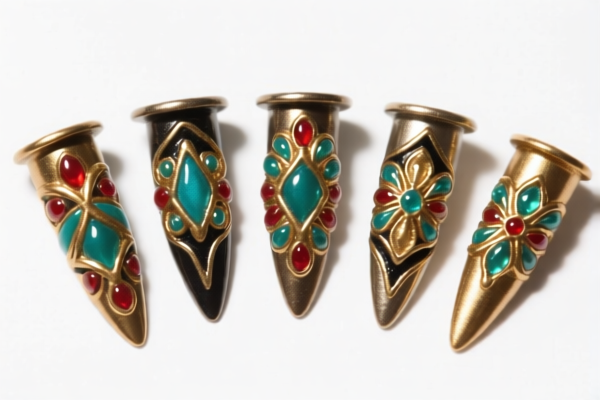
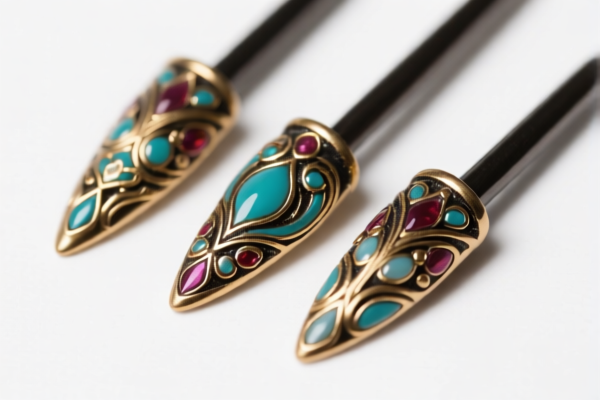
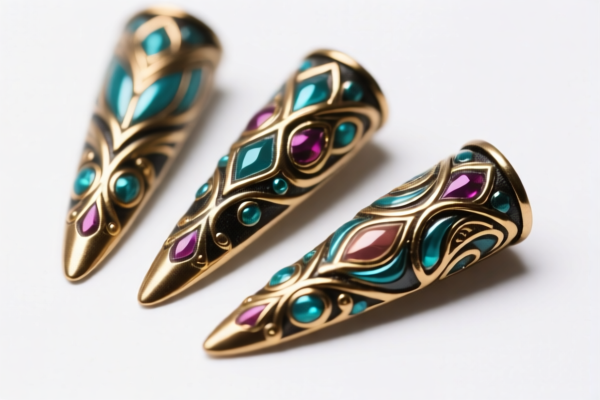
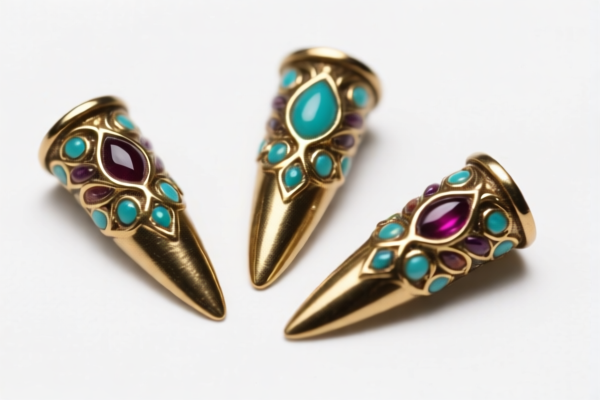
AI Analysis
🖥️ Decorative Fixed Feet (Furniture Castors & Mountings)
🌐 HS Code Reference & Customs Clearance Guide | 2026 Latest Tariff Analysis | Professional-Level Strategy
📌 I. Product Definition & Classification: What Are "Decorative Fixed Feet"?
Decorative Fixed Feet are small hardware components attached to the bottom of furniture (tables, chairs, cabinets, sofas) to provide stability, prevent floor scratching, and enhance aesthetic appeal. They are typically non-moving (unlike castors with wheels) and can be made from various materials, primarily Plastics or Base Metals.
In international trade, the HS Code classification depends entirely on the material composition and specific function:
- Plastic Feet: Often classified under heading 3926 (Other articles of plastics), specifically as "Fittings for furniture."
- Metal Feet (Brass/Steel/Aluminum): Classified under heading 8302 (Base metal mountings, fittings... suitable for furniture).
⚠️ Critical Distinction:
- If the feet are purely decorative plastic pieces → Go to 3926.
- If the feet are base metal (iron, steel, aluminum, zinc, brass) → Go to 8302.
- Note: Ceramic feet (e.g., porcelain) fall under 6914, but these are less common for standard furniture "feet" and more for tableware/decor. We will focus on Plastic and Metal as they are the primary commercial categories for "feet".
📦 II. HS Code Classification Details (2026 Latest Tariff Authority Comparison)
Based on the provided <DATA>, here are the specific HS Codes relevant to "Decorative Fixed Feet" made of different materials.
| HS Code | Product Description | Material | Typical Application | Tax Total |
|---|---|---|---|---|
| 3926.30.10.00 | Other articles of plastics: Fittings for furniture...: Handles and knobs | Plastic | Plastic decorative feet, knobs, handles | 0.0% |
| 3926.30.50.00 | Other articles of plastics: Fittings for furniture...: Other | Plastic | Other plastic furniture fittings (non-handle/knob) | 0.0% |
| 8302.42.30.65 | Base metal mountings...: Of iron/steel, aluminum, or zinc: Other, suitable for furniture | Base Metal (Steel/Aluminum/Zinc) | Metal decorative feet, brackets | 61.4% |
| 8302.49.60.85 | Base metal mountings...: Other: Of iron/steel, aluminum, or zinc: Other | Base Metal (Steel/Aluminum/Zinc) | Other metal fittings not specifically "suitable for furniture" in the narrower sense | 80.7% |
🔍 Key Insight from Data:
- Plastic Feet (3926) are extremely tariff-friendly (0.0% total tax).
- Metal Feet (8302) face heavy penalties due to Section 301 tariffs and IEEPA duties, ranging from 61.4% to 80.7%.
- The distinction between8302.42and8302.49lies in whether the item is explicitly "suitable for furniture" (42) or a more general mounting fitting (49). For decorative furniture feet, 8302.42.30.65 is often the more precise classification if it fits the "mounting/fitting" description.
💰 III. 2026 Latest Tariff Rate Breakdown (Including Add-on Taxes)
✅ Applicable Country: United States (US)
✅ Origin: China (CN)
✅ Effective Time: Post-2025 policies (including IEEPA and Section 301)
🎯 1. 3926.30.10.00 & 3926.30.50.00 —— Plastic Decorative Feet
| Item | Content |
|---|---|
| Base Tariff | 0.0% |
| Section 301 Add-on | 0.0% |
| IEEPA Add-on | 0.0% |
| Total Tax Rate | 0.0% |
| Calculation | CIF Value × 0% = $0 |
| De Minimis Eligibility | ✅ Yes (if under $800, though plastic feet often shipped in bulk, B2B shipments still benefit from 0% tariff) |
| Legal Basis | Standard USHTS Heading 3926, no special footnotes applying high add-ons. |
📌 Explanation:
- Plastic furniture fittings are not subject to the aggressive trade war tariffs applied to metals and ceramics in some contexts.
- This makes plastic decorative feet the most cost-effective material choice for import into the US.
🎯 2. 8302.42.30.65 —— Metal Decorative Feet (Base Metal)
| Item | Content |
|---|---|
| Base Tariff | 3.9% |
| Section 301 Add-on | 25.0% |
| IEEPA Add-on (Steel/Aluminum/Copper) | 50.0% |
| Total Tax Rate | 61.4% |
| Calculation | CIF Value × 61.4% |
| De Minimis Eligibility | ❌ No |
| Legal Basis Path | IEEPA:9903.01.25 → Section 301: 8302.42.30.65 → FOOTNOTE:Steel/Aluminum/Copper 50% |
📌 Explanation:
- The 50% IEEPA surcharge is critical for base metal articles (especially steel, aluminum, and copper) from China.
- Combined with the standard 25% Section 301 tariff, the total burden is massive.
- Cost Impact: On a $10,000 shipment, you pay $6,140 in taxes alone.
🎯 3. 8302.49.60.85 —— Other Metal Mountings/Fittings
| Item | Content |
|---|---|
| Base Tariff | 5.7% |
| Section 301 Add-on | 25.0% |
| IEEPA Add-on (Steel/Aluminum/Copper) | 50.0% |
| Total Tax Rate | 80.7% |
| Calculation | CIF Value × 80.7% |
| De Minimis Eligibility | ❌ No |
| Legal Basis Path | IEEPA:9903.01.25 → Section 301: 8302.49.60.85 → FOOTNOTE:Steel/Aluminum/Copper 50% |
📌 Explanation:
- If the customs officer determines the item is not strictly a "mounting suitable for furniture" under 8302.42, it may fall into the residual category 8302.49.
- This results in an even higher base rate (5.7% vs 3.9%) and the same brutal 80.7% total rate.
🎯 4. Ceramic Articles (6914) - Optional Context
- 6914.10.80.00 (Porcelain/China): 0.0% Total Tax.
- 6914.90.80.00 (Other Ceramics): 30.6% Total Tax (Base 5.6% + 25% Sec 301).
⚠️ Note: While ceramic feet exist, they are fragile and less common for standard "fixed feet" in mass-market furniture compared to plastic or metal. If used, porcelain/ceramic furniture feet fall under 6914.10 and enjoy 0% tax, but logistics risks are higher.
🛠️ IV. Customs Clearance Practical Advice (Pitfall Avoidance Guide)
✅ 1. Preparation Checklist (Non-negotiable)
| Document | Required | Notes |
|---|---|---|
| Product Spec Sheet | ✔️ | Must clearly state Material (e.g., "ABS Plastic", "Stainless Steel", "Porcelain"). This is the #1 factor for HS Code determination. |
| Product Photos | ✔️ | Show the foot attached to furniture to prove "furniture fitting" usage. |
| Commercial Invoice | ✔️ | Description must be precise: e.g., "Decorative Plastic Fixed Feet for Office Chairs" or "Metal Furniture Mounting Feet, Aluminum". Avoid vague terms like "Hardware". |
| Material Declaration | ✔️ | Explicitly declare the alloy composition if metal (e.g., "Aluminum Alloy 6063"). |
✅ 2. Classification Strategy (Key Mantra)
🔥 "Material First, Function Second! Plastic 0%, Metal 60%+, Ceramic depends!"
| Scenario | Correct HS Code | Risk if Misclassified |
|---|---|---|
| Plastic Feet | 3926.30.10.00 or 3926.30.50.00 |
If misclassified as metal → Huge tax hike |
| Metal Feet (Furniture Specific) | 8302.42.30.65 |
If misclassified as general hardware (8302.49) → Higher tax (80.7% vs 61.4%) |
| Ceramic Feet (Porcelain) | 6914.10.80.00 |
If misclassified as "other ceramic" → 30.6% tax |
| Mixed Shipment | Split Line Items | Never mix materials on one line. Plastic and Metal must be separate entries. |
✅ 3. Special Handling Tips
- For Metal Feet:
- Ensure the description emphasizes "Suitable for Furniture" to justify using
8302.42rather than the higher-tariff8302.49. - Provide photos of the feet installed on a table or chair.
- Ensure the description emphasizes "Suitable for Furniture" to justify using
- For Plastic Feet:
- Verify they are not "Handles" if they lack gripping functionality. If they are purely decorative supports,
3926.30.50.00(Other) is safer, though3926.30.10.00(Handles/Knobs) also has 0% tax.
- Verify they are not "Handles" if they lack gripping functionality. If they are purely decorative supports,
- For Ceramic Feet:
- Ensure they are classified as "Porcelain or China" (
6914.10) to get the 0% rate. If they are earthenware or stoneware, they fall under6914.90(30.6% tax).
- Ensure they are classified as "Porcelain or China" (
🌍 V. Global Market Comparison (2026 Update)
| Market | Recommended HS Code (Plastic) | Recommended HS Code (Metal) | Tax Impact (China Origin) |
|---|---|---|---|
| 🇺🇸 USA | 3926.30.xxxx (0.0%) |
8302.42.30.65 (61.4%) |
High Risk for Metal |
| 🇨🇳 China | Import Duty: ~5-10% | Import Duty: ~5-10% | No US-style add-ons |
| 🇪🇺 EU | CN Code 3926 30 (0-5%) | CN Code 8302 42 (0-3%) | No 50% IEEPA surcharge |
| 🇬🇧 UK | Heading 3926 (0-5%) | Heading 8302 (0-5%) | Post-Brexit tariffs apply, but no US Section 301 |
📌 Conclusion:
- The US market is hostile to imported metal furniture fittings due to the 50% IEEPA + 25% Section 301 tariffs.
- Plastic and Porcelain/Ceramic (if classified correctly) are the only tariff-efficient options for the US market.
📌 VI. Common Errors & Pitfalls (Lessons Learned)
❌ Error 1: Shipping mixed metal and plastic feet in one HS Code line.
👉 Consequence: Customs may classify the entire shipment under the highest tax rate (Metal) → Huge bill.
Fix: Split items by material on the commercial invoice and HS Code lines.
❌ Error 2: Calling metal feet "General Hardware" instead of "Furniture Fittings".
👉 Consequence: Classification under 8302.49.60.85 → 80.7% tax instead of 61.4%.
Fix: Prove furniture suitability with photos and product descriptions.
❌ Error 3: Assuming all ceramics are the same.
👉 Consequence: Misclassifying porcelain as "other ceramic" → 30.6% tax instead of 0%.
Fix: Verify if the material is "Porcelain or China" (6914.10) or "Other" (6914.90).
✅ Correct Description Example:
"Decorative Fixed Feet, Material: ABS Plastic, Use: Office Chair Base, HS Code: 3926.30.10.00, Origin: China"
🎯 VII. Conclusion: Smart Sourcing, Lower Taxes!
🎯 Remember the Mantra:
🔹 "Plastic is King (0%), Metal is Heavy (60%+), Porcelain is Free (0%), but Fragile."
🔹 "HS Code is determined by Material, Not Just Name!"
🔹 "Split Materials to Save Millions!"
📌 Pro Tip:
If you are importing Metal Feet, consider:
1. Transshipment: Manufacturing in a non-US-tariff country (e.g., Vietnam, Mexico) to avoid IEEPA/301.
2. Material Switch: Switching to Plastic or Wood alternatives for decorative elements.
3. Pre-Ruling: Apply for a Binding Ruling from US Customs (CBP) to confirm the correct HS Code and avoid post-import audits.
📣 Take Action Now:
📞 Consult your freight forwarder to verify material declarations.
📄 Label products clearly by material type.
🚀 Optimize your HS Codes to ensure you are not overpaying 60%+ on plastic or low-value metal items!
✨ Professional Clearance Starts with Accurate Classification!
💼 Your Profit Margin Depends on Your HS Code Choice!
Customer Reviews
About HS Code Classification
The Harmonized System (HS) is an internationally standardized nomenclature developed by the World Customs Organization (WCO) to classify traded products. Over 200 countries use the HS system as the basis for customs tariffs, trade statistics, and import/export regulations.
Each HS code follows a hierarchical structure:
- Chapter (2 digits) — Broad category of goods (e.g., Chapter 84: Machinery and Mechanical Appliances)
- Heading (4 digits) — More specific grouping within the chapter
- Subheading (6 digits) — Internationally standardized breakdown, used by all WCO member countries
- National subdivisions (8-10 digits) — Country-specific extensions for further classification, such as US HTSUS 10-digit codes
Correct HS code classification is essential for smooth customs clearance, accurate duty payment, and compliance with trade regulations. Misclassification can lead to customs delays, overpayment of duties, or penalties.
When importing from CN to US, the applicable tariff rates may include:
- Most-Favored-Nation (MFN) rate — The standard duty rate applied to WTO members
- General rate — Applied to countries without trade agreements
- Trade remedy duties — Additional tariffs such as Section 301 (anti-dumping), Section 232 (national security), or countervailing duties
The information provided on this page is for reference purposes only. For official classification, please consult with your local customs authority or a licensed customs broker.