Decorative Glass Cup
CN → US| HS Code | Tariff Rate | Origin | Destination | Doc |
|---|---|---|---|---|
| 7013371001 | 46.0% | CN | US | Official Doc |
| 7013372090 | 40.0% | CN | US | Official Doc |
| 7010905039 | 35.0% | CN | US | Official Doc |
| 7010905029 | 35.0% | CN | US | Official Doc |
| 7013376010 | 22.5% | CN | US | Official Doc |
Product Images
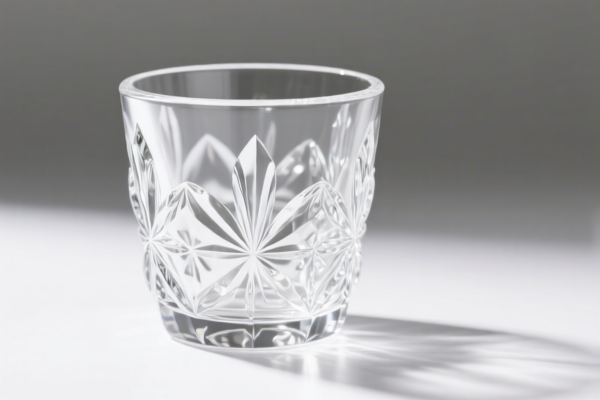

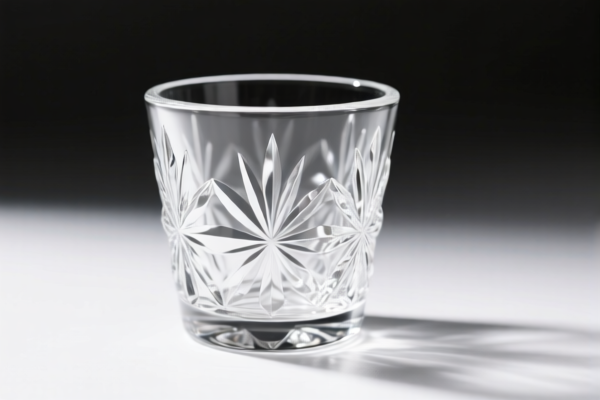
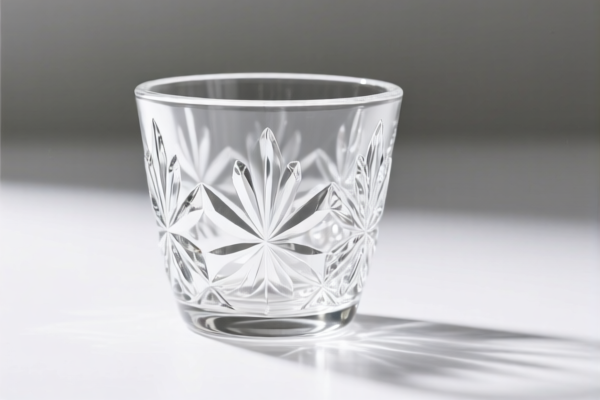
AI Analysis
🥂 Decorative Glass Cup (Glassware for Table, Kitchen, or Toilet)
🌐 HS Code Reference & Customs Clearance Guide | 2026 Latest Tariff Analysis | Strategic Entry Strategy
📌 I. Product Definition & Classification: Do You Really Understand "Glass Cups"?
A Decorative Glass Cup is a glass article intended for table, kitchen, or toilet use, or for other decorative purposes. In international trade, the classification hinges critically on material composition, intended use, and shape/finish. Unlike standard drinking glasses, "decorative" implies specific aesthetic features or non-utilitarian primary functions, which drastically alters the HS Code and tariff liability.
In the context of the provided data, we distinguish between: 1. Drinking Glasses (Tableware): Meant for consumption, typically with specific shapes (e.g., stemware, tumblers). 2. Glass Containers: Vessels primarily for holding/storing, even if used decoratively. 3. Decorative Articles: Items where aesthetic display is the primary function, not utility.
⚠️ Key Distinction Point:
- If the item is strictly for drinking and is made of pressed/molded glass → It falls under Chapter 7013.
- If the item is a bottle/jar used for decoration → It falls under Chapter 7010.
- If the item is purely for display/decoration (no functional rim for drinking) → It falls under 7013.37.60.10 (Decisive for tax optimization).
📦 II. HS Code Classification Matrix (2026 Latest Data)
Based on the provided JSON data, here are the applicable HS Codes for "Decorative Glass Cup" scenarios:
| HS Code | Product Description | Primary Function | Material/Shape | Tax Rate (Total) |
|---|---|---|---|---|
7013.37.10.01 |
Glass Drinking Cup | Drinking/Consumption | Glass, Pressed/Molded | 46.0% |
7013.37.20.90 |
Glass Drinking Cup | Drinking/Consumption | Glass, Pressed/Molded | 40.0% |
7010.90.50.39 |
Glass Container | Storage/Holding (Deemed "Other") | Glass, Other Form | 35.0% |
7010.90.50.29 |
Glass Container | Storage/Holding (Deemed "Other") | Glass, Other Form | 35.0% |
7013.37.60.10 |
Glass Decorative Item | Decoration/Display | Glass, Decorative | 22.5% |
🔍 Critical Analysis:
- The term "Decorative Glass Cup" is ambiguous. If it is used for drinking, it is NOT classified as "Decorative Article" under7013.37.60.10.
- To achieve the lower 22.5% tax rate, the item must be classified as a purely decorative object (e.g., a sculpture, a vase, or a cup with no functional drinking rim).
- If it is a functional cup, even if "decorative" in design, it risks being classified as7013.37.10.01(46%) or7013.37.20.90(40%).
💰 III. 2026 Latest Tariff Rate Breakdown (Including Additional Taxes)
✅ Applicable Country: United States (US)
✅ Origin: China (CN)
✅ Effective Date: 2025/2026 (Based on data provided)
🎯 1. 7013.37.10.01 — Glass Drinking Cup (Pressed/Molded)
Scenario: A functional glass cup with decorative elements, imported for drinking.
| Item | Detail |
|---|---|
| Base Duty | 28.5% |
| Section 301 Additional Duty | 7.5% |
| Section 122 Duty | 10.0% |
| Total Effective Tax Rate | 46.0% |
| De Minimis Exemption | ❌ Not Eligible (Deny de minimis) |
| Legal Basis | Base Tariff + USITC Footnotes + IEEPA 122 Provisions |
📌 Explanation:
- This is the highest tax bracket for glassware.
- The Section 122 tariff (10%) is a significant addition often overlooked.
- Cost Impact: For a $10,000 shipment, you pay $4,600 in duties alone.
🎯 2. 7013.37.20.90 — Glass Drinking Cup (Other)
Scenario: A functional glass cup that does not fit the specific "pressed/molded" description of 7013.37.10.01.
| Item | Detail |
|---|---|
| Base Duty | 22.5% |
| Section 301 Additional Duty | 7.5% |
| Section 122 Duty | 10.0% |
| Total Effective Tax Rate | 40.0% |
| De Minimis Exemption | ❌ Not Eligible |
📌 Explanation:
- Slightly more favorable than7013.37.10.01.
- Still subject to heavy Section 122 and Section 301 surcharges.
🎯 3. 7010.90.50.39 & 7010.90.50.29 — Glass Containers
Scenario: Glass bottles, jars, or vessels classified as "containers" rather than "tableware." Often used if the "cup" is actually a vessel for holding liquids (e.g., decanters, storage jars) and not for direct drinking.
| Item | Detail |
|---|---|
| Base Duty | 0.0% |
| Section 301 Additional Duty | 25.0% |
| Section 122 Duty | 10.0% |
| Total Effective Tax Rate | 35.0% |
| De Minimis Exemption | ❌ Not Eligible |
📌 Explanation:
- The Base Duty is 0%, which looks attractive.
- However, the Section 301 Additional Duty jumps to 25% (vs. 7.5% for tableware).
- This classification is only viable if the product can be legally argued as a "container" (e.g., a decorative bottle) rather than a "drinking vessel."
🎯 4. 7013.37.60.10 — Glass Decorative Article
Scenario: Purely decorative glass items (e.g., glass sculptures, non-functional vases, display pieces).
| Item | Detail |
|---|---|
| Base Duty | 5.0% |
| Section 301 Additional Duty | 7.5% |
| Section 122 Duty | 10.0% |
| Total Effective Tax Rate | 22.5% |
| De Minimis Exemption | ❌ Not Eligible |
📌 Explanation:
- Lowest Tax Rate (22.5%).
- Crucial Risk: Customs may reclassify this as tableware (7013.37.10/20) if the item has a functional rim or is marketed as a "cup."
- Strategy: Use this code ONLY if the item is non-functional or sold specifically as "decorative art," not for drinking.
🛠️ IV. Customs Clearance Practical Advice (Avoid Pitfalls)
✅ 1. Documentation Checklist
| Document | Mandatory | Description |
|---|---|---|
| ✅ Product Specification Sheet | ✔️ | Must clearly state intended use (e.g., "For Decoration Only" vs. "For Drinking"). |
| ✅ High-Resolution Photos | ✔️ | Show lack of functional rim if claiming 7013.37.60.10. |
| ✅ Commercial Invoice | ✔️ | Description must match HS Code. E.g., "Decorative Glass Sculpture" vs. "Glass Drinking Cup." |
| ✅ Packing List | ✔️ | Detail contents accurately. |
| ✅ Certificate of Origin | ✔️ | Required for Section 301/122 determination. |
✅ 2. Classification Strategy (The "Cup" Dilemma)
| Scenario | Recommended HS Code | Why? | Risk |
|---|---|---|---|
| Functional Cup with Decorative Pattern | 7013.37.10.01 (46%) |
It is primarily for drinking. Customs will enforce tableware rules. | Low: Accurate, but high tax. |
| Vase/Decanter sold as "Cup" | 7010.90.50.39 (35%) |
It is a container, not a tableware cup. | Medium: Must prove non-drinking intent. |
| Non-functional Glass Art Piece | 7013.37.60.10 (22.5%) |
Primary purpose is decoration. | High: Risk of reclassification if any drinking function is implied. |
🔥 Key Tip:
Do NOT use the word "Cup" in the product description if you intend to classify under7013.37.60.10. Use terms like "Decorative Glass Vessel," "Glass Ornament," or "Artistic Glass Display."
If you use "Cup," Customs will assume drinking function.
✅ 3. Special Circumstances
| Situation | Handling Suggestion |
|---|---|
| Mixed Shipment | Separate functional cups from decorative items. Do not mix 7013 and 7010 codes in one line item. |
| Bundled Sets | If a "decorative set" includes a functional cup, the entire set may be classified as tableware (7013.37.10.01). |
| Samples | No de minimis exemption. All imports subject to full duty calculation. |
🌍 V. Global Market Comparison (2026)
| Region | Recommended HS Code | Total Tax Rate | Notes |
|---|---|---|---|
| 🇺🇸 USA | 7013.37.60.10 |
22.5% | Best for decorative; 46% for drinking. |
| 🇺🇸 USA | 7013.37.10.01 |
46.0% | Highest burden for functional ware. |
| 🇪🇺 EU | 7013.37 |
~0-5% | No Section 122/301. Standard EU duties apply. |
| 🇨🇳 China | 7013.37 |
~10-20% | Import duties apply, but no US surcharges. |
📌 Conclusion:
The US market is uniquely punitive for Chinese glassware due to Section 122 and 301 tariffs.
Optimization Strategy:
1. If the product is functional, accept the 40-46% rate.
2. If the product is non-functional, strictly classify as7013.37.60.10(22.5%) and avoid the word "Cup."
3. Consider reclassifying as Container (7010) if the shape allows, but beware of the 25% Section 301 hike.
📌 VI. Common Mistakes & Pitfalls (Lessons Learned)
❌ Mistake 1: Calling a vase a "Cup" to attract buyers.
👉 Result: Customs sees "Cup," assigns 7013.37.10.01, charges 46%.
✅ Fix: Use "Vase" or "Decorative Vessel" in documentation.
❌ Mistake 2: Assuming all glass goods get 0% base duty.
👉 Result: Only 7010 (containers) has 0% base. Tableware (7013) has 5-28.5% base.
✅ Fix: Understand the base duty structure before choosing a code.
❌ Mistake 3: Ignoring Section 122 (10%).
👉 Result: Underestimating landed cost by 10%.
✅ Fix: Always add 10% for Section 122 in cost calculations for US imports.
🎯 VII. Conclusion: Professional Classification Saves Money
🎯 Remember the Golden Rule:
🔹 "Functional = Tableware (High Tax). Decorative = Art (Lower Tax). Container = Special (Mixed Tax)."
🔹 "Never call a vase a cup if you want 22.5% tax!"
📌 Pro Tip:
If your glass items are non-Chinese origin (e.g., Vietnam, EU), you may qualify for lower Section 301/122 rates.
Always request a Pre-Ruling from US Customs (CBP) for ambiguous "decorative" items to avoid post-clearance audits and penalties.
📣 Immediate Action:
📞 Contact Your Customs Broker: Provide photos and clarify "Intended Use."
🚀 Audit Your Descriptions: Remove "Cup" from decorative items.
💼 Calculate Landed Cost: Include 22.5%-46% tax in your margin planning.
✨ Accurate Classification = Competitive Advantage!
💼 Your Profit Margin Depends on Your HS Code!
Customer Reviews
About HS Code Classification
The Harmonized System (HS) is an internationally standardized nomenclature developed by the World Customs Organization (WCO) to classify traded products. Over 200 countries use the HS system as the basis for customs tariffs, trade statistics, and import/export regulations.
Each HS code follows a hierarchical structure:
- Chapter (2 digits) — Broad category of goods (e.g., Chapter 84: Machinery and Mechanical Appliances)
- Heading (4 digits) — More specific grouping within the chapter
- Subheading (6 digits) — Internationally standardized breakdown, used by all WCO member countries
- National subdivisions (8-10 digits) — Country-specific extensions for further classification, such as US HTSUS 10-digit codes
Correct HS code classification is essential for smooth customs clearance, accurate duty payment, and compliance with trade regulations. Misclassification can lead to customs delays, overpayment of duties, or penalties.
When importing from CN to US, the applicable tariff rates may include:
- Most-Favored-Nation (MFN) rate — The standard duty rate applied to WTO members
- General rate — Applied to countries without trade agreements
- Trade remedy duties — Additional tariffs such as Section 301 (anti-dumping), Section 232 (national security), or countervailing duties
The information provided on this page is for reference purposes only. For official classification, please consult with your local customs authority or a licensed customs broker.