Decorative Items
CN → US| HS Code | Tariff Rate | Origin | Destination | Doc |
|---|---|---|---|---|
| 3926400010 | 15.3% | CN | US | Official Doc |
| 9703900000 | 17.5% | CN | US | Official Doc |
| 3926400090 | 15.3% | CN | US | Official Doc |
| 9703100000 | 17.5% | CN | US | Official Doc |
| 7117909000 | 28.5% | CN | US | Official Doc |
Product Images


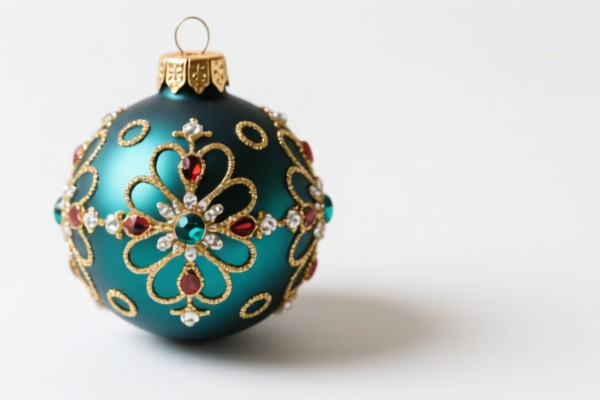
AI Analysis
🖼️ Decorative Items (Statuettes & Ornamental Articles)
🌐 HS Code Reference & Customs Clearance Guide | 2026 Latest Tariff Analysis | Strategic通关 Strategy
📌 Part 1: Product Definition & Classification – What Exactly Are "Decorative Items"?
In international trade, "Decorative Items" is a broad category covering statuettes, ornamental figures, figurines, and decorative sculptures. Their classification depends heavily on material, function, and perceived artistic value.
Key Classification Criteria: - Material: Plastic, metal (non-precious), or other composite materials. - Form: Statuettes, figurines, or general ornamental articles. - Value: Artistic pieces vs. mass-produced souvenirs.
⚠️ Critical Distinction:
- Mass-produced plastic/metal ornaments → Often fall under Chapter 39 (Plastics) or Chapter 71 (Imitation Jewelry).
- Artistic sculptures/statuettes (especially if handcrafted or limited edition) → May qualify for Chapter 97 (Art).
- Non-precious metal imitations → Classified under Chapter 71 (Imitation Jewelry).
📦 Part 2: Detailed HS Code Breakdown (2026 Latest Tariff Authority)
Based on the provided data, here are the five most relevant HS Codes for "Decorative Items" imported from China to the US:
| HS Code | Product Description | Material/Feature Inference | Tax Logic Summary |
|---|---|---|---|
3926.40.00.90 |
Statuettes and other ornamental articles | Plastic or other materials (non-precious) | Base: 5.3% + Section 301: 0% + 122 Clauses: 10% = 15.3% |
9703.10.00.00 |
Statuettes (Sculptures/Art) | Artistic form, general "other" fallback category | Base: 0% + Section 301: 7.5% + 122 Clauses: 10% = 17.5% |
7117.90.90.00 |
Imitation Jewelry (Non-precious metal) | Inferred as non-precious metal ornamental pieces | Base: 11.0% + Section 301: 7.5% + 122 Clauses: 10% = 28.5% |
3926.40.00.10 |
Ornamental Articles (Plastic/Other) | Plastic or other materials, no material conflict | Base: 5.3% + Section 301: 0% + 122 Clauses: 10% = 15.3% |
9703.90.00.00 |
Other Statuettes & Ornaments (Fallback) | Artistic form, general "other" fallback + reasonable material | Base: 0% + Section 301: 7.5% + 122 Clauses: 10% = 17.5% |
🔍 Key Insight:
- Plastic ornaments (3926.40.x0) generally have a lower base tariff (5.3%) but are still subject to the 10% "122 Clause" tariff.
- Artistic sculptures (9703.xx.xx) often have 0% base tariff but attract a higher Section 301 surcharge (7.5%), plus the 122 Clause.
- Metal imitations (7117.90.90) carry the highest burden (28.5%) due to a high base tariff (11%) combined with surcharges.
💰 Part 3: 2026 Tariff Rate Breakdown (Detailed Policy Analysis)
✅ Applicable Market: United States (US)
✅ Country of Origin: China (CN)
✅ Effective Date: 2025–2026 (Current Trade Policy Cycle)
🎯 1. 3926.40.00.90 & 3926.40.00.10 – Plastic/Material Ornaments
| Item | Detail |
|---|---|
| Base Duty | 5.3% (Standard MFN Rate) |
| Section 301 (Add-on) | 0.0% (Not applicable for this subheading under current 301 exclusions or specific tariff schedule) |
| Section 122 Clause | 10.0% (Specific "122 Clause" tariff applied to Chinese imports) |
| Total Duty Rate | 15.3% |
| Duty Calculation | CIF Value × 15.3% |
| De Minimis Exemption | ❌ No (Not eligible for Section 321 de minimis if value > $800, or if specific rules apply) |
| Legal Path | HTSUS: 3926.40 → Section 122: 10% |
📌 Explanation:
- The 0% Section 301 is crucial here. Unlike many electronics or textiles, certain plastic ornamental items are exempt from the heavy 25% Section 301 tariff.
- However, the 10% "122 Clause" remains mandatory, making the effective rate 15.3%.
🎯 2. 9703.10.00.00 & 9703.90.00.00 – Statuettes (Art/Sculptures)
| Item | Detail |
|---|---|
| Base Duty | 0.0% (Often duty-free for art/statuettes) |
| Section 301 (Add-on) | 7.5% (General 301 surcharge on Chinese goods) |
| Section 122 Clause | 10.0% |
| Total Duty Rate | 17.5% |
| Duty Calculation | CIF Value × 17.5% |
| De Minimis Exemption | ❌ No |
| Legal Path | HTSUS: 9703 → Section 301: 7.5% → Section 122: 10% |
📌 Explanation:
- Even if the base rate is 0%, the 17.5% total burden is significant due to the combined 7.5% (301) + 10% (122) surcharges.
- This applies to both specific statuettes (9703.10) and general ornamental sculptures (9703.90).
🎯 3. 7117.90.90.00 – Imitation Jewelry (Non-Precious Metal)
| Item | Detail |
|---|---|
| Base Duty | 11.0% (Higher base rate for metal items) |
| Section 301 (Add-on) | 7.5% |
| Section 122 Clause | 10.0% |
| Total Duty Rate | 28.5% |
| Duty Calculation | CIF Value × 28.5% |
| De Minimis Exemption | ❌ No |
| Legal Path | HTSUS: 7117.90 → Section 301: 7.5% → Section 122: 10% |
📌 Warning:
- This is the most expensive category for decorative items.
- If your "decoration" contains non-precious metal (e.g., zinc alloy, brass, steel figures), it will likely be classified here, jumping your duty to nearly 30%.
🛠️ Part 4: Customs Clearance Practical Advice (Avoid Pitfalls)
✅ 1. Documentation Checklist (Must-Have)
| Document | Requirement | Why It Matters |
|---|---|---|
| Product Specifications | ✔️ Detailed | Must explicitly state material (e.g., "ABS Plastic", "Zinc Alloy", "Resin") to prove classification. |
| Material Composition | ✔️ Critical | If >90% plastic → 3926.40. If metal → 7117.90. If "Art" → 9703. |
| High-Res Photos | ✔️ Multiple Angles | Show if it looks like "Statue" (Art) or "Ornament" (Plastic). |
| Commercial Invoice | ✔️ Precise Description | Use terms like "Plastic Statuettes" or "Ornamental Figures". Avoid vague "Decorations". |
| Certificate of Origin | ✔️ CO | Required to prove China origin (triggers 122/301 clauses). |
✅ 2. Declaration Strategy (Pro Tips)
🔥 "Material First, Form Second, Avoid 'Art' Traps!"
| Scenario | Correct HS Code Strategy | Risk if Wrong |
|---|---|---|
| Plastic Garden Gnome | 3926.40.00.90 (15.3%) |
If declared as "Metal" → 28.5% |
| Metal Figure (Non-Precious) | 7117.90.90.00 (28.5%) |
If declared as "Plastic" → Penalty + Audit |
| Hand-Carved Wooden Statue | 9703.10.00.00 (17.5%) |
If declared as "Plastic" → 15.3% (Lower, but risk of false declaration) |
| Mass-Produced Souvenir | 3926.40.00.10 (15.3%) |
If declared as "Art" → 17.5% (Higher, but acceptable if justified) |
📌 Crucial Tip:
- Do not over-classify as Art (9703) unless you have proof of artistic intent (e.g., limited edition, artist signature). Otherwise, customs may reject it and force you to pay the higher Section 301 tax (7.5% vs 0%).
- Do not under-classify Plastic as Metal. This is a high-risk audit trigger.
✅ 3. Special Scenarios & Mitigation
| Scenario | Action Plan |
|---|---|
| Mixed Materials (Plastic + Metal Parts) | Declare based on primary material or substantial transformation. If metal parts >50%, likely 7117. |
| "Art" Claim for Mass Production | Only use 9703 if you can prove non-mass-production. Otherwise, stick to 3926 (15.3%) to avoid 301 surcharge scrutiny. |
| Small Value Shipments (<$800) | Still subject to Section 122 Clause (10%). De minimis may not apply to "Section 122" goods. Check specific rules. |
| Re-export from Vietnam/Mexico | If re-exported from US/Third Country, origin might change, potentially avoiding China-based 122 Clause (if rules of origin are met). |
🌍 Part 5: Global Market Comparison (2026)
| Country/Region | Recommended HS Code | Tariff (China Origin) | Key Requirement | Note |
|---|---|---|---|---|
| 🇺🇸 USA | 3926.40.00.90 or 9703.10.00.00 |
15.3% – 28.5% | Detailed Material Proof | Highest combined burden (301+122). |
| 🇨🇳 China | Same as above | 5.3% – 11.0% | None | No Section 301/122. |
| 🇪🇺 EU | 9703 or 3926 |
0% – 6% | CE + Material Compliance | No Section 301; lower base rates. |
| 🇯🇵 Japan | 9703 or 3926 |
0% – 3% | JIS/PL | Very low tariffs for decor. |
📌 Conclusion:
- USA is the most expensive market for decorative items due to the 122 Clause (10%) and Section 301 (0% or 7.5%).
- Plastic items (3926.40) are the cheapest (15.3%) due to 0% Section 301.
- Metal imitations (7117) are the most expensive (28.5%) due to high base rate + surcharges.
📌 Part 6: Common Errors & Pitfalls (Lessons Learned)
❌ Error 1: Calling a metal statue "Plastic" to save tax.
👉 Result: Customs audit, penalty, and forced reclassification to 28.5%.
❌ Error 2: Claiming "Art" (9703) for mass-produced plastic figures.
👉 Result: Higher Section 301 surcharge (7.5%) applied unnecessarily.
❌ Error 3: Ignoring the "122 Clause" (10%) in cost calculations.
👉 Result: Underestimated landed cost by 10%, leading to profit loss.
❌ Error 4: Mixed shipment without clear material breakdown.
👉 Result: Customs may split the shipment and tax each part at the highest rate.
✅ Best Practice:
"Plastic Statuettes, 10cm, Resin, Hand-Painted, Model ABC, No Precious Metal"
🎯 Part 7: Conclusion – Smart Declaration, Lower Cost
🎯 Remember the Rule:
🔹 "Plastic is King (15.3%)", Metal is Queen (28.5%), Art is Prince (17.5%).
🔹 "Material Proof > Artistic Claims" to avoid 301 surcharge.
🔹 "122 Clause (10%) is Mandatory" for all China-origin goods in this category.
📌 Pro Tip:
If your decorative items are re-exported from Vietnam or Mexico, investigate if they qualify for origin change to avoid the 122 Clause.
Pre-classification Ruling is highly recommended to lock in the 15.3% rate for plastic items.
📣 Take Action Now:
📞 Contact a licensed customs broker + Submit material specs + Apply for Advance Ruling.
🚀 Ensure your decorative items sail through US customs with minimal duty!
✨ Precise Classification = Maximum Profit!
💼 Don't let a 13% difference (15.3% vs 28.5%) eat your margins!
Customer Reviews
About HS Code Classification
The Harmonized System (HS) is an internationally standardized nomenclature developed by the World Customs Organization (WCO) to classify traded products. Over 200 countries use the HS system as the basis for customs tariffs, trade statistics, and import/export regulations.
Each HS code follows a hierarchical structure:
- Chapter (2 digits) — Broad category of goods (e.g., Chapter 84: Machinery and Mechanical Appliances)
- Heading (4 digits) — More specific grouping within the chapter
- Subheading (6 digits) — Internationally standardized breakdown, used by all WCO member countries
- National subdivisions (8-10 digits) — Country-specific extensions for further classification, such as US HTSUS 10-digit codes
Correct HS code classification is essential for smooth customs clearance, accurate duty payment, and compliance with trade regulations. Misclassification can lead to customs delays, overpayment of duties, or penalties.
When importing from CN to US, the applicable tariff rates may include:
- Most-Favored-Nation (MFN) rate — The standard duty rate applied to WTO members
- General rate — Applied to countries without trade agreements
- Trade remedy duties — Additional tariffs such as Section 301 (anti-dumping), Section 232 (national security), or countervailing duties
The information provided on this page is for reference purposes only. For official classification, please consult with your local customs authority or a licensed customs broker.