Decorative Leather
CN → US| HS Code | Tariff Rate | Origin | Destination | Doc |
|---|---|---|---|---|
| 4114207000 | 36.6% | CN | US | Official Doc |
| 4114100000 | 38.2% | CN | US | Official Doc |
| 4107115000 | 12.8% | CN | US | Official Doc |
| 4107125000 | 12.8% | CN | US | Official Doc |
| 9401991010 | 17.5% | CN | US | Official Doc |
Product Images


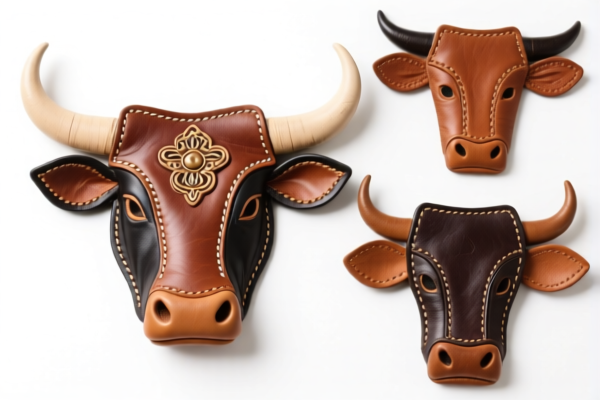

AI Analysis
🧵🎨 Decorative Leather: Global Trade Classification & Duty Strategy Guide (2026 Update)
🌐 HS Code Reference & Clearance Guide | 2026 Tax Regime Breakdown | Professional Customs Strategy
📌 I. What is "Decorative Leather"? Are You Sure?
Decorative Leather is not a single uniform product. In international trade, it is a collective term for animal leather processed and finished specifically for interior design, upholstery, automotive interiors, and architectural embellishment.
Its classification depends heavily on: 1. The Processing Method: Is it Lacquered/Varnished (漆皮)? Is it Suede/Nubuck (麂皮)? Or is it standard Chrome-tanned Cattle Leather? 2. The Final Form: Is it a raw Hide/Skin (raw material)? A Finished Panel? Or a Semi-finished Part for furniture? 3. The Specific Use: Is it strictly for furniture?
⚠️ Critical Distinction: * If the leather has a thick surface coating (Lacquer/Varnish) → Classify under 4114 (Lacquered Leather). * If the leather is split/napped (Suede) → Classify under 4114.10. * If it is standard chrome-tanned cattle hide for upholstery → Classify under 4107. * If it is a part of a chair (e.g., a pre-cut cushion cover) → Classify under 9401 (Furniture Parts).
Wrong classification leads to massive tax spikes (up to 38.2%) or customs seizures!
📦 II. Detailed HS Code Classification (2026 Latest Tariff Schedule)
Based on the provided commodity data, here are the precise classifications for Decorative Leather:
| HS Code | Product Description | Applicable Scenario | Surface/Status |
|---|---|---|---|
4114.20.70.00 |
Lacquered/Surfaced Leather (Other) | Animal leather with a heavy coating (varnish/paint), used for high-end decor. | Lacquered (漆皮) |
4114.10.00.00 |
Suede/Nubuck Leather | Animal leather with a napped surface, used for soft decorative applications. | Suede (麂皮) |
4107.11.50.00 |
Chrome-Tanned Cattle Leather (Raw Material) | Standard chrome-tanned leather, semi-processed, intended for upholstery. | Chrome-Tanned |
4107.12.50.00 |
Other Chrome-Tanned Cattle Leather | Finished leather panels, fully prepared for interior decoration use. | Finished |
9401.99.10.10 |
Parts of Seats (Leather Components) | Leather already cut/formatted as parts for chairs/sofas (semi-finished). | Semi-finished Part |
🔍 Key Insight: * Codes
4107.xx: Represent the leather material itself. * Code4114.xx: Represents special treated leather (Lacquer/Suede), often commanding higher duties due to added processing. * Code9401.99: Represents furniture parts. If you import leather that is already cut to fit a specific chair model, this code may apply, but the tax structure differs significantly.
💰 III. 2026 Tariff Rate Breakdown (USA Context)
✅ Applicable Country: United States (US)
✅ Origin: China (CN)
✅ Effective Date: 2025/2026 Regime (Based on provided data)
🎯 1. 4114.20.70.00 — Lacquered/Other Surfed Leather (High Tax)
- Base Duty: 1.6%
- Section 301 (Additional): 25.0%
- Section 122 (Trade Action): 10.0%
- 🚨 Total Tax Rate: 36.6%
- Calculation: CIF Value × 36.6%
- Legal Basis:
301(25%) +122(10%) + Base Tariff. - Analysis: This is a highly taxed category. The "Lacquered" nature triggers the Section 301 penalty, plus the 122条款 (Section 122) penalty, making it the most expensive category for decorative leather.
🎯 2. 4114.10.00.00 — Suede/Nubuck Leather (Highest Tax)
- Base Duty: 3.2%
- Section 301 (Additional): 25.0%
- Section 122 (Trade Action): 10.0%
- 🚨 Total Tax Rate: 38.2%
- Calculation: CIF Value × 38.2%
- Legal Basis:
301(25%) +122(10%) + Base Tariff. - Analysis: The "Suede" category carries the highest burden. Even with a slightly higher base rate (3.2%), the combination of 301 and 122 clauses results in the maximum tax impact (38.2%).
🎯 3. 4107.11.50.00 & 4107.12.50.00 — Standard Chrome-Tanned Leather (Moderate Tax)
- Base Duty: 2.8%
- Section 301 (Additional): 0.0% (Exempt)
- Section 122 (Trade Action): 10.0%
- 💡 Total Tax Rate: 12.8%
- Calculation: CIF Value × 12.8%
- Legal Basis: Only
122applies (10%) + Base Tariff (2.8%). - Analysis: The "Sweet Spot". These codes avoid the 25% Section 301 penalty but still carry the 122% (10%) penalty. This is the most cost-effective way to import standard decorative leather if the product is not lacquered or suede.
🎯 4. 9401.99.10.10 — Furniture Parts (Semi-finished)
- Base Duty: 0.0%
- Section 301 (Additional): 7.5%
- Section 122 (Trade Action): 10.0%
- 🚨 Total Tax Rate: 17.5%
- Calculation: CIF Value × 17.5%
- Legal Basis:
301(7.5%) +122(10%). - Analysis: While the base duty is 0%, the Section 301 rate (7.5%) is lower than the full 25% for raw leather, but still significant. This applies ONLY if the leather is a finished part (e.g., pre-cut cushion) for furniture, not just raw hide.
🛠️ IV. Customs Clearance Practical Tips (Avoiding Pitfalls)
✅ 1. Preparation Checklist (Do Not Skip)
| Document | Required? | Why? |
|---|---|---|
| Detailed Product Specs | ✅ Yes | Must specify "Lacquered," "Suede," or "Chrome-Tanned." Vague terms like "Leather" cause audits. |
| Surface Finish Photos | ✅ Yes | Proof of coating (Lacquer/Suede) vs. standard grain. |
| Usage Declaration | ✅ Yes | Explicitly state "For Interior Decoration" vs. "Raw Material." |
| Cutting Pattern Diagram | ⚠️ Conditional | If using HS Code 9401.99, prove it is a "Part" and not "Material." |
| Certificate of Origin | ✅ Yes | Essential for applying Section 122 exemptions or verifying origin. |
✅ 2. Classification Strategy (The Golden Rules)
🔥 Rule #1: "If it's Lacquered or Suede, expect ~38% Tax." If your product is standard leather, do not classify it under 4114. Push for 4107 to save 25% in duties.
🔥 Rule #2: "Parts vs. Material." * Raw Material (Rolls, hides, skins) → Go to 4107 or 4114. * Finished Part (Cut seat covers, pre-shaped armrests) → Consider 9401. * Warning: If you import rolls of leather and cut them yourself in the US, you MUST use 4107/4114. Do not declare as 9401 unless it's already a finished part upon entry.
🔥 Rule #3: "122 Clause is Mandatory." For Chinese origin leather, the 10% Section 122 tax is almost always active regardless of HS Code. Plan for this in your margin calculations.
✅ 3. Special Cases & Solutions
| Scenario | Solution |
|---|---|
| Product is "Faux Leather" | This is NOT animal leather. Check HS Codes under 4205 or 3926. You might qualify for 0% tax. |
| Lacquered Leather with Low Coating | If the coating is negligible, argue for 4107 classification to avoid the 25% penalty. Requires expert technical evidence. |
| Mixed Shipment (Leather + Wood) | Do not mix. Declare leather under 41xx/4114 and wood under its own code to avoid "Whole Product" reclassification errors. |
🌍 V. Global Market Comparison (2026)
| Market | Recommended HS Code | Total Tax (China Origin) | Key Risk |
|---|---|---|---|
| 🇺🇸 USA | 4107.11.50.00 |
12.8% (Best) / 38.2% (Worst) | Section 301 & 122 Penalties |
| 🇨🇳 China | 4107.11.50.00 |
~2.8% | No 301/122 penalties |
| 🇪🇺 EU | 4107.11.50.00 |
~2.8% | High CE standards, no 301 |
| 🇯🇵 Japan | 4107.11.50.00 |
~2.0% | Strict quality inspection |
📌 Conclusion: The USA is the only market imposing the heavy 25% Section 301 tax on "Lacquered" and "Suede" leather. If possible, source standard leather (
4107) to avoid the 25% spike.
📌 VI. Common Errors & "Blood-Soaked" Lessons
❌ Mistake 1: Calling all "Decorative Leather" "Standard Cattle Hide". 👉 Result: Customs audits the product as "Lacquered Leather" (4114), charging 38.2% retroactively + fines. ✅ Fix: Be hyper-specific about surface finish in the invoice.
❌ Mistake 2: Importing pre-cut seat covers as "Raw Leather" (4107). 👉 Result: If the form is too complex, they might classify as "Furniture Parts" (9401) or reject the entry. ✅ Fix: If it's a part, use 9401. If it's a roll, use 4107. Do not mix.
❌ Mistake 3: Ignoring the "122 Clause". 👉 Result: Budgeting for 1.6% tax, but getting hit with 36.6%. ✅ Fix: Always budget for the 10% Section 122 surcharge on Chinese leather.
🎯 VII. Final Verdict: Strategic Sourcing & Declaring
🎯 The Winning Formula:
"Avoid Lacquer & Suede. Stick to Chrome-Tanned. Declare Parts Correctly."
- Best Tax Scenario: Import Chrome-Tanned Cattle Leather (
4107.11.50.00/4107.12.50.00).- Total Duty: 12.8% (Only Base + 122).
- Worst Tax Scenario: Import Lacquered or Suede Leather.
- Total Duty: 36.6% - 38.2% (Base + 301 + 122).
📌 Pro Tip: If your product is Faux Leather (Synthetic), immediately check Chapter 39 or 4205. Synthetic leather often faces 0% or very low tariffs compared to the 38.2% on animal leather!
📣 Immediate Action Plan: 1. Review Product Specs: Is it truly Lacquered or Suede? 2. Check Origin: If not from China, 122/301 might not apply. 3. Contact Broker: Ask for a Binding Ruling on your specific leather type to lock in the 12.8% rate.
✨ Professional Customs, Precision Starts with Classification!
💼 Don't let a 25% tax difference eat your profit margin!
Customer Reviews
About HS Code Classification
The Harmonized System (HS) is an internationally standardized nomenclature developed by the World Customs Organization (WCO) to classify traded products. Over 200 countries use the HS system as the basis for customs tariffs, trade statistics, and import/export regulations.
Each HS code follows a hierarchical structure:
- Chapter (2 digits) — Broad category of goods (e.g., Chapter 84: Machinery and Mechanical Appliances)
- Heading (4 digits) — More specific grouping within the chapter
- Subheading (6 digits) — Internationally standardized breakdown, used by all WCO member countries
- National subdivisions (8-10 digits) — Country-specific extensions for further classification, such as US HTSUS 10-digit codes
Correct HS code classification is essential for smooth customs clearance, accurate duty payment, and compliance with trade regulations. Misclassification can lead to customs delays, overpayment of duties, or penalties.
When importing from CN to US, the applicable tariff rates may include:
- Most-Favored-Nation (MFN) rate — The standard duty rate applied to WTO members
- General rate — Applied to countries without trade agreements
- Trade remedy duties — Additional tariffs such as Section 301 (anti-dumping), Section 232 (national security), or countervailing duties
The information provided on this page is for reference purposes only. For official classification, please consult with your local customs authority or a licensed customs broker.