Decorative Light
CN → US| HS Code | Tariff Rate | Origin | Destination | Doc |
|---|---|---|---|---|
| 8512202040 | 10.0% | CN | US | Official Doc |
| 8531200040 | 35.0% | CN | US | Official Doc |
| 8531809051 | 17.5% | CN | US | Official Doc |
| 8512202080 | 35.0% | CN | US | Official Doc |
| 9405428440 | 38.9% | CN | US | Official Doc |
Product Images
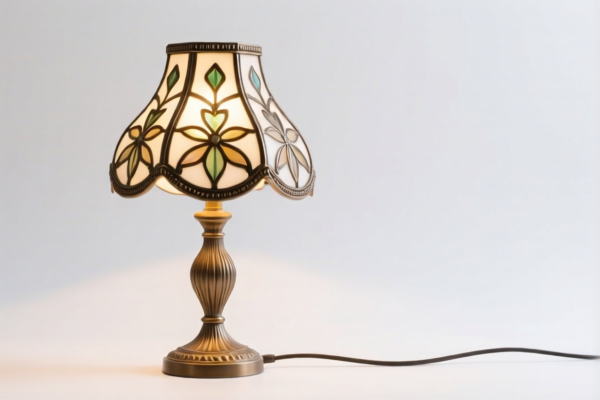
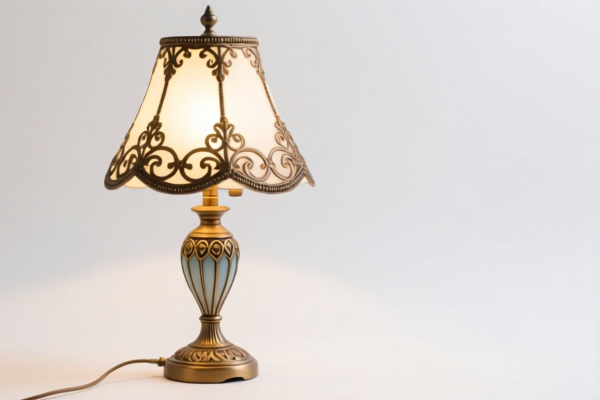
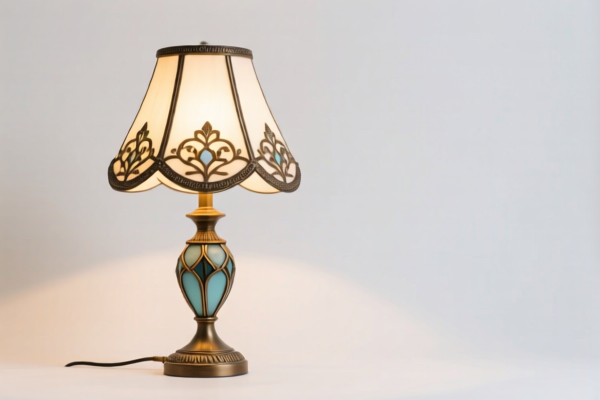
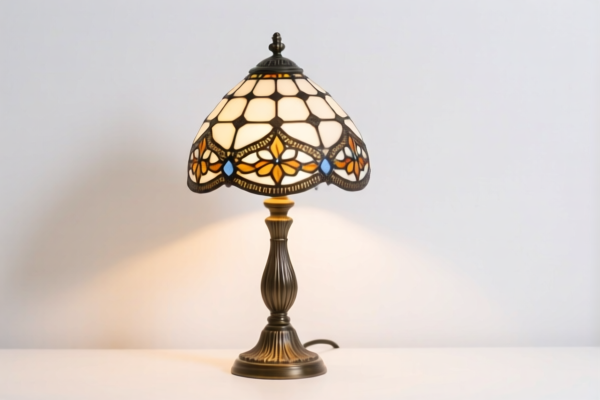
AI Analysis
💡 Decorative Lights for Automobiles (Auto Decoration Lights)
🌐 HS Code Reference & Customs Clearance Guide | 2026 Latest Tariff Analysis | Professional Clearance Strategy
📌 I. Product Definition & Classification: What Exactly Are "Auto Decoration Lights"?
Auto decorative lights are electrical lighting devices installed on vehicles for aesthetic enhancement, interior ambiance, or exterior accentuation (e.g., underglow, interior LED strips, dashboard ambient lighting). In international trade, these items often face classification ambiguity because they bridge the gap between automotive accessories and general electrical lighting/signaling equipment.
The core challenge lies in determining whether the light is a functional automotive signal (regulated under Chapter 85/87) or a general lighting fixture (regulated under Chapter 94 or 85 specific subheadings), and how additional tariffs (such as Section 301 or IEEPA measures) impact the final duty rate.
⚠️ Key Distinction Points:
- If classified as automotive lighting equipment → Lower base tariff, but potentially subject to specific automotive accessory rules.
- If classified as visual signaling equipment (LED panels/indicators) → Higher base tariffs, often subject to significant "Section 301" or "122 Clause" punitive tariffs.
- If classified as general household/office lighting → Different duty structures, often higher total tax due to base rates.
📦 II. HS Code Classification Details (Based on Provided Data)
Below are the four specific HS Codes derived from your data, along with the reasoning for their classification and corresponding tax breakdowns.
| HS Code | Product Description & Rationale | Total Tax Rate | Tax Breakdown Detail |
|---|---|---|---|
| 8512.20.20.40 | Automotive Lighting Equipment: Considered lighting equipment matching other categories; no material conflict. | 10.0% | Base: 0.0% Add'l Tariff: 0.0% Clause 122 Tariff: 10% |
| 8531.20.00.40 | Visual Signaling Equipment: Contains LED elements, fits the category of indicator panels. | 35.0% | Base: 0.0% Add'l Tariff: 25.0% Clause 122 Tariff: 10% |
| 8531.80.90.51 | Other Visual Signal Devices: Catch-all category for visual signal devices. | 17.5% | Base: 0.0% Add'l Tariff: 7.5% Clause 122 Tariff: 10% |
| 8512.20.20.80 | Automotive Electrical Lighting: Electrical lighting equipment for automobiles; material inferred as plastic or metal. | 35.0% | Base: 0.0% Add'l Tariff: 25.0% Clause 122 Tariff: 10% |
| 9405.42.84.40 | General Lighting Fixtures: Lighting appliances, likely containing LED sources; no material conflict. | 38.9% | Base: 3.9% Add'l Tariff: 25.0% Clause 122 Tariff: 10% |
🔍 Critical Analysis:
- Best Case Scenario: 8512.20.20.40 with a total tax of only 10%. This classification treats the item purely as automotive lighting with no additional punitive tariffs beyond the specific "Clause 122." - Worst Case Scenario: 9405.42.84.40 with a total tax of 38.9%. This classifies the light as a general household fixture, incurring a 3.9% base duty PLUS a 25% additional tariff. - Middle Ground: Classifications under 8531 (Signaling devices) often incur a 25% additional tariff, bringing totals to 35% or 17.5% depending on the specific sub-heading nuances.
💰 III. 2026 Latest Tariff Rate Detailed Explanation
✅ Applicable Country: United States (US)
✅ Origin: China (CN) (Implied by "122 Clause" and "Add'l Tariff" structure typical of US-China trade data)
✅ 生效时间: Data reflects current trade war/Section 301/IEEPA structures.
🎯 1. 8512.20.20.40 – The Optimal Choice (Lowest Risk)
| Item | Content |
|---|---|
| Base Duty | 0% (Ad Valorem) |
| Additional Tariff | 0% |
| Clause 122 Tariff | +10% |
| Total Rate | 10% |
| Calculation | CIF Value × 10% |
| De Minimis Exemption | ❌ Not Eligible (Likely subject to stricter scrutiny due to "122 Clause") |
| Legal Basis | Chapter 85 (Electrical Machinery), Section 8512 (Electrical lighting/signaling equipment fitted in vehicles) |
📌 Explanation:
- This code is favorable because it carries NO additional 25% punitive tariff.
- The "Clause 122 Tariff 10%" is a specific levy, making the total burden manageable.
- Strategy: Argue that the product is exclusively for automotive installation and does not function as a general signaling panel.
🎯 2. 8531.20.00.40 & 8512.20.20.80 – High Cost (Signaling/Automotive Mix)
| Item | Content |
|---|---|
| Base Duty | 0% |
| Additional Tariff | +25% |
| Clause 122 Tariff | +10% |
| Total Rate | 35% |
| Calculation | CIF Value × 35% |
| De Minimis Exemption | ❌ Not Eligible |
📌 Explanation:
- These codes trigger the 25% Additional Tariff (likely Section 301).
- Even though the base is 0%, the punitive tariffs double or triple the cost compared to Code 1.
- Risk: High. Only use if the product clearly fits "Indicator Panels" (8531) and cannot be proven as pure automotive lighting.
🎯 3. 9405.42.84.40 – General Lighting (Highest Base + Punitive)
| Item | Content |
|---|---|
| Base Duty | 3.9% |
| Additional Tariff | +25% |
| Clause 122 Tariff | +10% |
| Total Rate | 38.9% |
| Calculation | CIF Value × 38.9% |
| De Minimis Exemption | ❌ Not Eligible |
📌 Explanation:
- This is the most expensive classification.
- It applies a 3.9% base duty on top of the 25% punitive tariff.
- Warning: Avoid this unless the lights are sold as standalone home decor items not specifically designed for cars.
🎯 4. 8531.80.90.51 – Other Visual Signal Devices (Middle Ground)
| Item | Content |
|---|---|
| Base Duty | 0% |
| Additional Tariff | +7.5% |
| Clause 122 Tariff | +10% |
| Total Rate | 17.5% |
| Calculation | CIF Value × 17.5% |
📌 Explanation:
- A "catch-all" category for visual signals.
- The additional tariff here is only 7.5% (instead of 25%), making it cheaper than the other 8531 codes.
- Strategy: If the product is borderline between automotive and general signaling, this might be a viable alternative if legal arguments support "Other Visual Signal Devices."
🛠️ IV. Customs Clearance Practical Advice (Avoid Pitfalls)
✅ 1. Documentation Checklist (Crucial for Accurate Classification)
| Document | Required? | Explanation |
|---|---|---|
| ✅ Product Specification Sheet | ✔️ | Must explicitly state: "Designed exclusively for automotive installation," voltage (12V/24V), and mounting method. |
| ✅ Installation Guide/Photos | ✔️ | Show the product being installed in a car (dashboard, undercarriage, interior). |
| ✅ Circuit Diagram | ✔️ | To prove it is not a complex "indicator panel" (8531) but a simple lighting circuit (8512). |
| ✅ Commercial Invoice | ✔️ | Description must include: "Automotive Interior/Exterior Decorative LED Lights, 12V DC, For Vehicle Use Only." |
| ✅ Country of Origin Certificate | ✔️ | Essential for determining applicable "Additional Tariffs." |
✅ 2. Declaration Strategy (Key Mantra)
🔥 “Automotive Use, Low Duty; General Lighting, High Cost!”
| Scenario | Recommended HS Code | Reasoning |
|---|---|---|
| Product is clearly for cars (12V, car clips) | 8512.20.20.40 | Best tax rate (10%). No 25% punitive tariff. |
| Product is generic LEDs but marketed for cars | 8512.20.20.40 or 8531.80.90.51 | Argue for automotive use to avoid 38.9% rate. |
| Product is a complex LED display/panel | 8531.20.00.40 | If it functions as a signal/indicator panel, 35% applies. |
| Product is sold as "Home Decor" | 9405.42.84.40 | Avoid if importing for auto use! Highest tax (38.9%). |
✅ 3. Special Considerations
| Situation | Handling Advice |
|---|---|
| Mixed Shipment | If shipping auto lights with home LED strips, separate invoices and HS codes. Do not mix, or the whole shipment may be audited. |
| OEM Custom Lights | Provide the client’s (car manufacturer or accessory brand) design specs to prove automotive intent. |
| "122 Clause" Implications | This specific tariff clause suggests targeted restrictions. Ensure the product does not violate any specific embargo or restricted material lists (e.g., certain rare earth magnets in LEDs). |
| De Minimis (Section 321) | ❌ Do NOT rely on De Minimis ($800). With "Clause 122" and "Additional Tariffs" listed, these items are likely exempt from informal entry/de minimis. Formal entry is required. |
🌍 V. Global Market Comparison (2026 Overview)
| Country/Region | Recommended HS Code | Est. Duty Rate | Certification Required | Note |
|---|---|---|---|---|
| 🇺🇸 USA | 8512.20.20.40 |
10% | FCC (if RF involved), DOT (if external) | Critical: Avoid 9405 to save ~29%. |
| 🇨🇳 China | 8512.20.20.00 |
~5-10% | CCC (if applicable) | Lower punitive barriers. |
| 🇪🇺 EU | 8512.20.90 |
0-2.7% | ECE R10 (EMC), CE | No "Clause 122" style punitive tariffs. |
| 🇬🇧 UK | 8512.20.90 |
0-2.7% | UKCA | Post-Brexit rules apply. |
📌 Conclusion:
The USA market is the most challenging for auto decorative lights due to the complex layering of Base, Additional, and "Clause 122" tariffs.
Strategic Imperative: Classify under 8512.20.20.40 wherever possible to save 25-29% in duties compared to other classifications.
📌 VI. Common Mistakes & Pitfalls (Lessons Learned)
❌ Mistake 1: Classifying as 9405 (General Lighting)
👉 Result: Pay 38.9% tax instead of 10%. Loss of 28.9% profit margin!
❌ Mistake 2: Classifying as 8531.20.00.40 (Signaling Panel) when it's just an LED strip
👉 Result: Pay 35% tax due to 25% additional tariff. Avoid if automotive intent is clear.
❌ Mistake 3: Ignoring "Clause 122"
👉 Result: Underestimating cost. Even "low" base tariffs become expensive with the 10% clause.
❌ Mistake 4: Using De Minimis ($800 exemption)
👉 Result: Goods held at customs, delayed, or forced into formal entry with full duties. These goods are likely subject to formal entry.
✅ Correct Approach:
"Automotive Interior Ambient LED Light Strip, 12V DC, Plastic Housing, for Passenger Vehicle Use, Model XYZ."
🎯 VII. Conclusion: Professional Classification Saves Money
🎯 Remember the Mantra:
🔹 "Automotive = 10%; General = 38.9%; Signaling = 35%!"
🔹 "Prove Car Use, Avoid Extra Tax, Save Your Margins!"
📌 Pro Tip:
If your product has complex circuits (RGB controllers, apps, etc.), customs may lean towards 8531 or 8512.20.20.80.
Action:
📞 Consult a Customs Broker: Submit product images and specs for a Pre-Ruling.
📄 Label Clearly: "For Automotive Use Only" on packaging and invoice.
🚀 Optimize Supply Chain: If volume is high, consider tariff engineering (e.g., separating light sources from controllers if possible) to negotiate better HS codes.
✨ Expert Clearance Starts with Accurate Classification!
💼 Every percentage point saved is pure profit!
Customer Reviews
About HS Code Classification
The Harmonized System (HS) is an internationally standardized nomenclature developed by the World Customs Organization (WCO) to classify traded products. Over 200 countries use the HS system as the basis for customs tariffs, trade statistics, and import/export regulations.
Each HS code follows a hierarchical structure:
- Chapter (2 digits) — Broad category of goods (e.g., Chapter 84: Machinery and Mechanical Appliances)
- Heading (4 digits) — More specific grouping within the chapter
- Subheading (6 digits) — Internationally standardized breakdown, used by all WCO member countries
- National subdivisions (8-10 digits) — Country-specific extensions for further classification, such as US HTSUS 10-digit codes
Correct HS code classification is essential for smooth customs clearance, accurate duty payment, and compliance with trade regulations. Misclassification can lead to customs delays, overpayment of duties, or penalties.
When importing from CN to US, the applicable tariff rates may include:
- Most-Favored-Nation (MFN) rate — The standard duty rate applied to WTO members
- General rate — Applied to countries without trade agreements
- Trade remedy duties — Additional tariffs such as Section 301 (anti-dumping), Section 232 (national security), or countervailing duties
The information provided on this page is for reference purposes only. For official classification, please consult with your local customs authority or a licensed customs broker.