Decorative Pendant
CN → US| HS Code | Tariff Rate | Origin | Destination | Doc |
|---|---|---|---|---|
| 7113115000 | 22.5% | CN | US | Official Doc |
| 7116102500 | 23.0% | CN | US | Official Doc |
| 7113195095 | 23.0% | CN | US | Official Doc |
| 7117909000 | 28.5% | CN | US | Official Doc |
| 7116201500 | 24.0% | CN | US | Official Doc |
Product Images


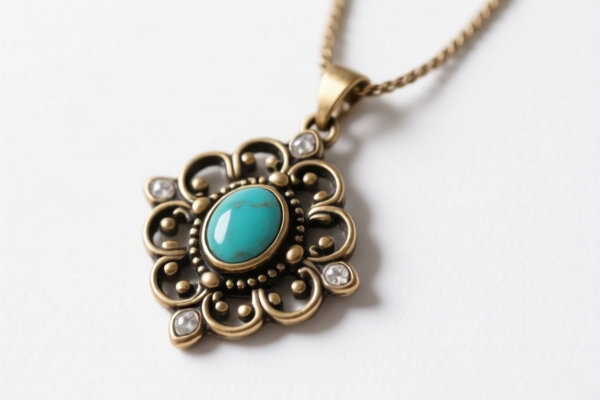
AI Analysis
💎 Decorative Pendant (Jewelry & Accessories)
🌐 HS Code Reference & Clearance Guide | 2026 Latest Tariff Analysis | Professional Clearance Strategy
📌 1. Product Definition & Classification: What Exactly is a "Decorative Pendant"?
A decorative pendant is a type of jewelry or accessory designed to be suspended from a chain, cord, or necklace. In international trade, its classification depends heavily on the material composition (precious metal, base metal, plastic, gemstones) and the nature of the item (precious jewelry vs. costume jewelry).
Key Distinction Logic: * Precious Metals/Gemstones: If made of precious metals (gold, silver, platinum) or containing natural pearls/gemstones, it falls under Chapter 71 (Articles of Jewelry), specifically heading 71.13 or 71.16. * Base Metals/Non-Precious: If made of base metals (copper, zinc, brass) without precious metal coating, it falls under Chapter 71.17. * Other Materials (Plastic, Wood, Ceramic): Often classified under Chapter 71.16 (Articles of Natural Pearls, Precious/semi-precious stones) if they mimic jewelry, or other chapters depending on specific material rules.
⚠️ Critical Classification Point:
- Precious Metal Base (e.g., Silver, Gold): Must be declared under 71.13.
- Non-Precious Base Metal (e.g., Steel, Brass): Must be declared under 71.17 (Costume Jewelry).
- Mixed Materials (Pearls, Gemstones): Often classified under 71.16 if the gemstone is the principal feature, or 71.13 if the metal setting is precious.
📦 2. HS Code Classification Details (2026 Latest Tariff Authority Comparison)
Based on the provided data, here is the detailed breakdown for Decorative Pendants. Note that all items listed are subject to high additional tariffs due to US-China trade measures.
| HS Code | Product Description | Material/Nature | Total Tax Rate | Key Tax Components |
|---|---|---|---|---|
7113.11.50.00 |
Pendant ornaments, likely Silver or other precious metal jewelry | Precious Metal (Silver/Gold) | 22.5% | Base: 5.0% + Sec 301: 7.5% + IEEPA (122): 10% |
7116.10.25.00 |
Pendant ornaments, often using pearls, precious/semi-precious stones | Gemstone/Pearl based | 23.0% | Base: 5.5% + Sec 301: 7.5% + IEEPA (122): 10% |
7113.19.50.95 |
Pendant ornaments, jewelry category, unspecified material (likely precious) | Other Precious Jewelry | 23.0% | Base: 5.5% + Sec 301: 7.5% + IEEPA (122): 10% |
7117.90.90.00 |
Pendant ornaments, decorative item, base metal/plastic (Costume Jewelry) | Base Metal/Plastic | 28.5% | Base: 11.0% + Sec 301: 7.5% + IEEPA (122): 10% |
7116.20.15.00 |
Pendant ornaments, jewelry category, precious/semi-precious materials | Precious/Semi-Precious | 24.0% | Base: 6.5% + Sec 301: 7.5% + IEEPA (122): 10% |
🔍 Key Insight:
-7117.90.90.00has the highest total tax rate (28.5%) because the base tariff (11%) is significantly higher than for precious metals (5-6.5%). This code is for costume jewelry (base metals, plastic, etc.).
-7113.11.50.00has the lowest total tax rate (22.5%), suitable for silver or precious metal pendants.
- All categories include the 10% IEEPA surcharge (Section 122) and 7.5% Section 301 tariff, plus the varying base tariffs.
💰 3. 2026 Latest Tariff Rate Breakdown (Including Surcharges)
✅ Applicable Country: United States (US)
✅ Origin: China (CN)
✅ Effective Date: 2025+ (Current Policy)
🎯 1. 7113.11.50.00 — Silver/Precious Metal Pendants (Lowest Tax)
| Item | Detail |
|---|---|
| Base Tariff | 5.0% |
| Section 301 Tariff | +7.5% |
| IEEPA (Section 122) | +10.0% |
| Total Tax Rate | 22.5% |
| Tax Calculation | CIF Value × 22.5% |
| De Minimis Eligibility | ❌ NO (Not eligible for $800 de minimis exemption) |
| Legal Basis | USITC:7113.11.50.00 → FOOTNOTE:301 → IEEPA:122 |
📌 Explanation:
- This is the most tax-efficient code for precious metal pendants.
- The low base tariff (5%) offsets the high additional tariffs.
- Warning: If misclassified as costume jewelry (7117), you will pay 28.5% instead of 22.5%.
🎯 2. 7116.10.25.00 — Pearl/Gemstone Pendants
| Item | Detail |
|---|---|
| Base Tariff | 5.5% |
| Section 301 Tariff | +7.5% |
| IEEPA (Section 122) | +10.0% |
| Total Tax Rate | 23.0% |
| Tax Calculation | CIF Value × 23.0% |
| De Minimis Eligibility | ❌ NO |
| Legal Basis | USITC:7116.10.25.00 → FOOTNOTE:301 → IEEPA:122 |
📌 Explanation:
- Applies to pendants where pearls or gemstones are the primary material.
- Slightly higher base tariff than precious metals.
🎯 3. 7113.19.50.95 — Other Precious Jewelry Pendants
| Item | Detail |
|---|---|
| Base Tariff | 5.5% |
| Section 301 Tariff | +7.5% |
| IEEPA (Section 122) | +10.0% |
| Total Tax Rate | 23.0% |
| Tax Calculation | CIF Value × 23.0% |
| De Minimis Eligibility | ❌ NO |
🎯 4. 7117.90.90.00 — Costume Jewelry Pendants (Highest Tax)
| Item | Detail |
|---|---|
| Base Tariff | 11.0% |
| Section 301 Tariff | +7.5% |
| IEEPA (Section 122) | +10.0% |
| Total Tax Rate | 28.5% |
| Tax Calculation | CIF Value × 28.5% |
| De Minimis Eligibility | ❌ NO |
| Legal Basis | USITC:7117.90.90.00 → FOOTNOTE:301 → IEEPA:122 |
📌 Explanation:
- Highest tax burden due to the high base tariff (11%) for base metals/plastics.
- Includes pendants made of stainless steel, brass, zinc alloy, plastic, resin, etc.
🎯 5. 7116.20.15.00 — Semi-Precious/Precious Mixed Pendants
| Item | Detail |
|---|---|
| Base Tariff | 6.5% |
| Section 301 Tariff | +7.5% |
| IEEPA (Section 122) | +10.0% |
| Total Tax Rate | 24.0% |
| Tax Calculation | CIF Value × 24.0% |
| De Minimis Eligibility | ❌ NO |
🛠️ 4. Clearance Practical Advice (Battle-Tested Pitfall Guide)
✅ 1. Documentation Checklist (Mandatory)
| Document | Required? | Notes |
|---|---|---|
| ✅ Product Specification Sheet | ✔️ | Must specify material composition (e.g., "Sterling Silver," "Zinc Alloy," "Cultured Pearl"). |
| ✅ Material Declaration | ✔️ | Explicitly state if precious metals are coated or solid. |
| ✅ Product Photos | ✔️ | Clear images of the pendant, including any hallmarks or stamps. |
| ✅ Commercial Invoice | ✔️ | Describe as "Decorative Pendant" with material details. Do NOT use vague terms like "Accessory." |
| ✅ Packing List | ✔️ | Include weight and quantity. |
| ✅ Origin Certificate | ✔️ | Required for US customs; confirms CN origin to apply surcharges. |
✅ 2. Declaration Strategy (Key Mantra)
🔥 "Material Determines Code, Base Tariff Changes Everything!"
| Scenario | Correct HS Code | Error if Wrong |
|---|---|---|
| Silver/Gold Pendant | 7113.11.50.00 |
Misclassify as base metal → +6.5% extra tax |
| Plastic/Steel Pendant | 7117.90.90.00 |
Misclassify as precious → Customs audit, penalties, reclassification |
| Pearl/Gemstone Pendant | 7116.10.25.00 |
Misclassify as base metal → +5.5% extra tax |
| Mixed Metal/Gemstone | 7116.20.15.00 |
Misclassify as 7113 → Potential dispute |
📌 Tip:
- If the pendant is plated (e.g., gold-plated brass), it is still classified as base metal (7117) unless the base is precious and the plating is minimal/standard.
- Costume jewelry (7117) is strictly for non-precious materials. Do not try to declare plastic as silver to save tax.
✅ 3. Special Circumstances
| Situation | Handling Advice |
|---|---|
| OEM/Custom Designs | Provide design drawings to prove material usage. |
| Gift Sets (Pendant + Chain) | Declare as a set. The classification is usually determined by the essential character (often the pendant). |
| High-Value Items | Consider Advance Ruling from US CBP to avoid misclassification disputes. |
| De Minimis ($800) | ❌ Not eligible. Even if under $800, these goods are subject to tariffs and must be formally declared. |
🌍 5. Global Market Clearance Comparison (2026 Latest)
| Country/Region | Recommended HS Code | Base Tariff | Additional Tariffs | Notes |
|---|---|---|---|---|
| 🇺🇸 USA | 7113.11.50.00 to 7117.90.90.00 |
5.0% - 11.0% | +17.5% - 17.5% | Total 22.5% - 28.5% |
| 🇨🇳 China | 7113 or 7117 |
5.0% - 11.0% | None | Import duty only |
| 🇪🇺 EU | 7113 or 7117 |
4.0% - 6.0% | VAT 19-27% | No Section 301/IEEPA |
| 🇬🇧 UK | 7113 or 7117 |
4.0% - 6.0% | VAT 20% | Post-Brexit rules apply |
| 🇦🇺 Australia | 7113 or 7117 |
5.0% - 10.0% | GST 10% | No additional tariffs |
📌 Conclusion:
- USA is the most expensive market for decorative pendants due to Section 301 and IEEPA surcharges.
- EU and UK are more cost-effective but require VAT registration and compliance with REACH/RoHS.
📌 6. Common Errors & Pitfall Guide (Blood & Tears Lessons)
❌ Mistake 1: Declaring a silver pendant as plastic (7117)
👉 Consequence: 28.5% tax instead of 22.5%. Overpayment of 6%.
❌ Mistake 2: Declaring a base metal pendant as precious (7113)
👉 Consequence: Customs seizure, fines, and reclassification penalty. Potential 3-year import ban.
❌ Mistake 3: Using vague descriptions like "Jewelry Accessory"
👉 Consequence: Customs delay for manual inspection. Requires material testing reports.
❌ Mistake 4: Assuming De Minimis ($800) applies
👉 Consequence: Goods held at border. Fines for undervaluation or undeclared tariffs. ALL jewelry from China is subject to tariffs.
✅ Correct Practice:
"Decorative Pendant, Material: 925 Sterling Silver, Stone: Natural Cubic Zirconia, Model: XYZ, Origin: China"
🎯 7. Conclusion: Professional Declaration, Cost Savings, Efficient Clearance!
🎯 Remember the Mantra:
🔹 "Material First, Code Second, Tax Third!"
🔹 "Silver is 22.5%, Steel is 28.5%, Plastic is 28.5%!"
🔹 "HS Code Saves Money, Misclassification Costs Fortune!"
📌 Pro Tip:
- If your pendants are plated (e.g., gold-plated brass), they are still costume jewelry (
7117) and taxed at 28.5%.- To reduce costs, consider shipping via air freight for high-value small items to manage cash flow, but tariffs remain the same.
- Advance Ruling is highly recommended for large shipments.
📣 Immediate Action:
📞 Contact a licensed customs broker + Provide material specs + Pre-classify HS Code
🚀 Ensure your pendants clear smoothly, avoid penalties, and maximize profit margins!
✨ Professional clearance starts with precise classification!
💼 Every cent of tax matters!
Customer Reviews
About HS Code Classification
The Harmonized System (HS) is an internationally standardized nomenclature developed by the World Customs Organization (WCO) to classify traded products. Over 200 countries use the HS system as the basis for customs tariffs, trade statistics, and import/export regulations.
Each HS code follows a hierarchical structure:
- Chapter (2 digits) — Broad category of goods (e.g., Chapter 84: Machinery and Mechanical Appliances)
- Heading (4 digits) — More specific grouping within the chapter
- Subheading (6 digits) — Internationally standardized breakdown, used by all WCO member countries
- National subdivisions (8-10 digits) — Country-specific extensions for further classification, such as US HTSUS 10-digit codes
Correct HS code classification is essential for smooth customs clearance, accurate duty payment, and compliance with trade regulations. Misclassification can lead to customs delays, overpayment of duties, or penalties.
When importing from CN to US, the applicable tariff rates may include:
- Most-Favored-Nation (MFN) rate — The standard duty rate applied to WTO members
- General rate — Applied to countries without trade agreements
- Trade remedy duties — Additional tariffs such as Section 301 (anti-dumping), Section 232 (national security), or countervailing duties
The information provided on this page is for reference purposes only. For official classification, please consult with your local customs authority or a licensed customs broker.