Decorative Stickers
CN → US| HS Code | Tariff Rate | Origin | Destination | Doc |
|---|---|---|---|---|
| 3919102055 | 40.8% | CN | US | Official Doc |
| 4811412100 | 35.0% | CN | US | Official Doc |
| 3919905060 | 40.8% | CN | US | Official Doc |
| 4811411000 | 35.0% | CN | US | Official Doc |
| 4911998000 | 17.5% | CN | US | Official Doc |
Product Images


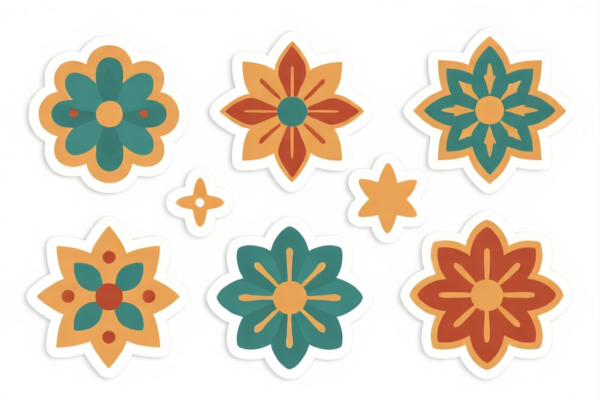

AI Analysis
🏷️ Decorative Stickers (Self-Adhesive Labels & Graphics)
🌐 HS Code Reference & Customs Clearance Guide | 2026 Latest Tariff Analysis | Professional-Level Strategy for US Imports
📌 I. Product Definition & Classification: Do You Really Understand "Decorative Stickers"?
Decorative stickers are adhesive materials used for ornamentation, branding, or labeling. They are primarily differentiated by their base material (plastic vs. paper) and function (purely adhesive vs. printed/communicative). In international trade, misclassification often leads to severe tariff discrepancies due to the specific "Section 301" and "122" clauses affecting Chinese goods.
⚠️ Key Distinction Point:
- Plastic-Based (Plastic Substrate): Includes vinyl, PVC, PET films. Treated as plastics → Higher Tariff.
- Paper/Film-Based (Paper Substrate): Includes paper stock or thin plastic films. Treated as paper/printed matter → Lower Tariff.
- Printed Matter vs. Adhesive: If it’s primarily for communication (like a book page), it’s4911. If it’s primarily for decoration/adhesion, it’s4811or3919.
📦 II. HS Code Classification Details (2026 Latest Tariff Authority Comparison)
| HS Code | Product Description | Material Type | Base Tariff | Key Attributes |
|---|---|---|---|---|
3919.10.20.55 |
Self-adhesive decorative stickers of plastics | Plastic (e.g., Vinyl, PVC, PET) | 5.8% | High-quality vinyl decals, outdoor durable stickers |
4811.41.21.00 |
Self-adhesive decorative stickers, paper or paperboard | Paper | 0.0% | Standard paper stickers, craft labels |
3919.90.50.60 |
Other self-adhesive plates, sheets, film, foil, tape, etc., of plastics | Plastic | 5.8% | Plastic decorative films not classified elsewhere |
4811.41.10.00 |
Self-adhesive paper tape and other self-adhesive articles of paper | Paper | 0.0% | Paper tape, basic paper labels |
4911.99.80.00 |
Printed matter (including printed pictures and designs) | Printed Matter | 0.0% | Stickers primarily considered "printed art" or informational |
🔍 Critical Reminder:
- Plastic (3919.xx) generally incurs higher base duties (5.8%) compared to Paper (4811.xx) which is often 0%. - Section 301 & 122 Clauses apply heavily to these categories. Do not assume "low base duty" means low total duty!
💰 III. 2026 Latest Tariff Rate Breakdown (Including Surcharges & Policy Add-ons)
✅ Applicable Country: United States (US)
✅ Country of Origin: China (CN)
✅ Effective Time: Current Trade War Clauses Active
🎯 1. 3919.10.20.55 & 3919.90.50.60 —— Plastic-Based Self-Adhesive Decorative Stickers
| Item | Content |
|---|---|
| Base Tariff | 5.8% (Ad Valorem) |
| Section 301 Surcharge | +25.0% (USITC Footnote 9903.88.01) |
| Section 122 Surcharge | +10.0% (IEEPA Provision) |
| Total Effective Rate | 40.8% |
| Tax Calculation | CIF Value × 40.8% |
| De Minimis Exemption | ❌ NOT Eligible (Section 301 goods are excluded from $800 de minimis exemption) |
| Legal Authority Path | IEEPA:9903.01.25 → Section 301:9903.88.01 → HS:3919.xx |
📌 Explanation:
- The 5.8% base duty is standard for plastic plates/sheets.
- The 25% Section 301 tariff is the primary cost driver for Chinese plastic goods.
- The 10% Section 122 tariff is an additional surcharge for certain consumer goods.
- Total 40.8% is a very high barrier. This applies to most durable vinyl decals, car wraps, and plastic holographic stickers.
🎯 2. 4811.41.21.00 & 4811.41.10.00 —— Paper-Based Self-Adhesive Stickers
| Item | Content |
|---|---|
| Base Tariff | 0.0% |
| Section 301 Surcharge | +25.0% |
| Section 122 Surcharge | +10.0% |
| Total Effective Rate | 35.0% |
| Tax Calculation | CIF Value × 35.0% |
| De Minimis Exemption | ❌ NOT Eligible (Despite 0% base, Section 301 still applies) |
| Legal Authority Path | IEEPA:9903.01.25 → Section 301:9903.88.01 → HS:4811.xx |
📌 Note:
- Even though the base duty is 0%, the 25% + 10% surcharges remain.
- Total rate is 35.0%, which is 5.8% lower than plastic-based stickers.
- This is the optimal classification for paper-based craft stickers, paper labels, and non-durable decorative items.
🎯 3. 4911.99.80.00 —— Printed Matter (Colorful Decorative Stickers)
| Item | Content |
|---|---|
| Base Tariff | 0.0% |
| Section 301 Surcharge | +7.5% |
| Section 122 Surcharge | +10.0% |
| Total Effective Rate | 17.5% |
| Tax Calculation | CIF Value × 17.5% |
| De Minimis Exemption | ❌ NOT Eligible (Section 301 applies) |
| Legal Authority Path | IEEPA:9903.01.25 → Section 301:9903.88.01 (Lower bracket) → HS:4911.xx |
📌 Strategic Insight:
- This is the LOWEST TARIFF option at 17.5%.
- To qualify, the item must be classified primarily as "Printed Matter" (e.g., printed pictures, designs, or informational sheets) rather than just an "adhesive product."
- Risk: Customs may argue it is an "adhesive sticker" (4811or3919). You must prove the primary value and function are the printed design/communication, not the adhesive backing.
🛠️ IV. Customs Clearance Practical Advice (Battle-Tested Pitfall Guide)
✅ 1. Preparation Checklist (Essential Documents)
| Document | Required? | Explanation |
|---|---|---|
| ✅ Product Specifications | ✔️ | Must specify material (e.g., "100% PVC Vinyl" vs. "Kraft Paper"). |
| ✅ Product Photos | ✔️ | Clear images showing the adhesive backing and the printed side. |
| ✅ Commercial Invoice | ✔️ | Description must be precise: "Paper-Based Self-Adhesive Decal" vs. "Plastic Vinyl Sticker." |
| ✅ Material Composition Statement | ✔️ | Critical for distinguishing between HS 3919 (Plastic) and 4811 (Paper). |
| ✅ Print Design Files | ✔️ | If claiming 4911 (Printed Matter), show complex artwork to justify "printed matter" status. |
✅ 2. Declaration Strategy (Key Mantras)
🔥 "Material Determines Base, Section 301 Determines Total, Print Justifies Low Rate!"
| Scenario | Correct Classification | Risk if Wrong |
|---|---|---|
| Vinyl Car Decal | 3919.10.20.55 (40.8%) |
If misdeclared as paper, severe penalty for fraud. |
| Paper Craft Sticker | 4811.41.21.00 (35.0%) |
If declared as plastic, overpay 5.8%. |
| Artistic/Complex Print Sticker | 4911.99.80.00 (17.5%) |
If rejected, reclassified to 4811 (35.0%). Harder to prove. |
| Plastic Film Roll | 3919.90.50.60 (40.8%) |
Must specify "other plastic" if not 3919.10. |
📌 Warning:
- Do NOT use "De Minimis" ($800 exemption) for Chinese-origin stickers. The 25% Section 301 tariff explicitly removes this exemption for these HS codes. You will pay duties on every shipment. - Be extremely careful with4911.99.80.00. Only use if the item is distinctly "printed matter." Simple logos on stickers are often deemed4811or3919.
✅ 3. Special Handling for Different Materials
| Material | Best HS Code | Total Tax | Strategy |
|---|---|---|---|
| PVC/Vinyl/Plastic | 3919.10.20.55 |
40.8% | High cost. Optimize design to minimize material use if possible. |
| Paper/Kraft/Non-Woven | 4811.41.21.00 |
35.0% | Recommended for cost-saving if durability allows. |
| Highly Artistic/Complex Print | 4911.99.80.00 |
17.5% | High Risk/High Reward. Only use if you have strong documentation proving "printed matter" status. |
🌍 V. Global Market Comparison (2026 Update)
| Region | Recommended HS | Total Tax (China Origin) | Key Requirement |
|---|---|---|---|
| 🇺🇸 USA | 4811 or 3919 |
17.5% – 40.8% | Section 301 & 122 apply. No De Minimis. |
| 🇨🇳 China (Import) | 4811 or 3919 |
5.8% – 13% | Lower base duties. No US surcharges. |
| 🇪🇺 EU | 4823 / 3919 |
0% – 6.5% | Generally no surcharges. VAT applies separately. |
| 🇨🇦 Canada | 4823 / 3919 |
0% – 5% | USMCA benefits if non-US origin. |
📌 Conclusion:
- The US is the most expensive market for Chinese stickers due to Section 301/122.
- Paper-based (4811) is cheaper than Plastic-based (3919).
- Printed Matter (4911) is the cheapest but hardest to defend.
📌 VI. Common Mistakes & Pitfalls (Lessons Learned)
❌ Mistake 1: Claiming De Minimis Exemption ($800) for Chinese stickers
👉 Consequence: Customs Seizure & Penalty. Section 301 goods are strictly excluded.
✅ Fix: Always calculate taxes on CIF value, no matter how small.
❌ Mistake 2: Declaring Plastic Stickers as "Gifts" or "Samples"
👉 Consequence: Audit & Back-taxes. Customs checks material composition.
✅ Fix: Use accurate HS Codes (3919 or 4811).
❌ Mistake 3: Using 4911 for simple logo stickers
👉 Consequence: Reclassification to 4811 (35%). Customs will argue it's an adhesive article, not printed matter.
✅ Fix: Reserve 4911 for complex, artistic, or informational printed sheets where the adhesive is secondary.
❌ Mistake 4: Ignoring Section 122 (10%)
👉 Consequence: Underpayment of 10%.
✅ Fix: Always add 10% to the 25% Section 301 for these goods.
🎯 VII. Conclusion: Precision Classification Saves Money!
🎯 Remember the Golden Rule:
🔹 "Plastic = 40.8%, Paper = 35.0%, Print = 17.5% (Risky)."
🔹 "No De Minimis for China! Taxes apply from Dollar 1."
🔹 "Material is King: PVC is expensive, Paper is cheaper, Print is tricky."
📌 Pro Tip:
If you are importing large volumes, consider Advance Rulings from CBP for borderline cases (e.g., is this 4911 or 4811?). It provides legal certainty and protects against future audits.
📣 Immediate Action:
📞 Check your material specs.
📦 If it's Vinyl/PVC → Prepare for 40.8%.
📄 If it's Paper → Prepare for 35.0%.
🎨 If it's Complex Art → Consider4911(17.5%) with legal backup.
🚀 Don't rely on De Minimis! Plan your logistics budget accordingly!
✨ Professional Clearance Starts with Accurate Classification!
💼 Every Percentage Point Counts in the Trade War Era!
Customer Reviews
About HS Code Classification
The Harmonized System (HS) is an internationally standardized nomenclature developed by the World Customs Organization (WCO) to classify traded products. Over 200 countries use the HS system as the basis for customs tariffs, trade statistics, and import/export regulations.
Each HS code follows a hierarchical structure:
- Chapter (2 digits) — Broad category of goods (e.g., Chapter 84: Machinery and Mechanical Appliances)
- Heading (4 digits) — More specific grouping within the chapter
- Subheading (6 digits) — Internationally standardized breakdown, used by all WCO member countries
- National subdivisions (8-10 digits) — Country-specific extensions for further classification, such as US HTSUS 10-digit codes
Correct HS code classification is essential for smooth customs clearance, accurate duty payment, and compliance with trade regulations. Misclassification can lead to customs delays, overpayment of duties, or penalties.
When importing from CN to US, the applicable tariff rates may include:
- Most-Favored-Nation (MFN) rate — The standard duty rate applied to WTO members
- General rate — Applied to countries without trade agreements
- Trade remedy duties — Additional tariffs such as Section 301 (anti-dumping), Section 232 (national security), or countervailing duties
The information provided on this page is for reference purposes only. For official classification, please consult with your local customs authority or a licensed customs broker.