Decorative Woven Bed Sheet
CN → US| HS Code | Tariff Rate | Origin | Destination | Doc |
|---|---|---|---|---|
| 6304920000 | 23.8% | CN | US | Official Doc |
| 6304993500 | 28.8% | CN | US | Official Doc |
Product Images
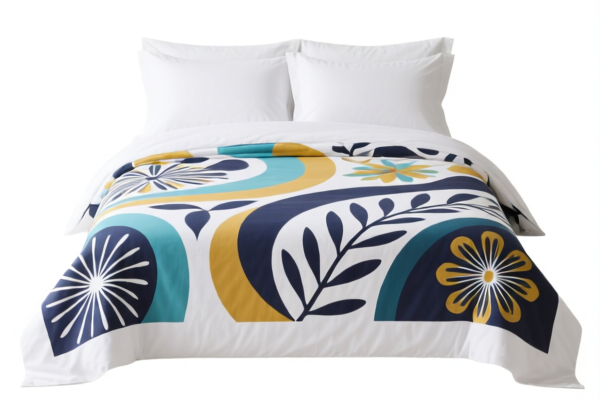
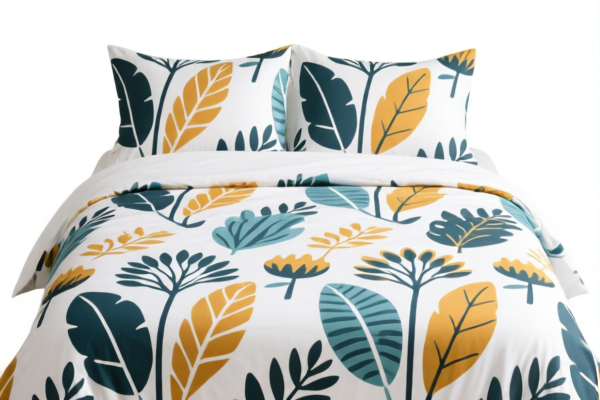
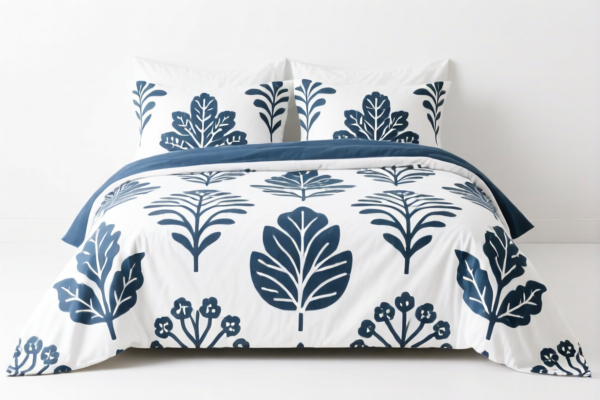
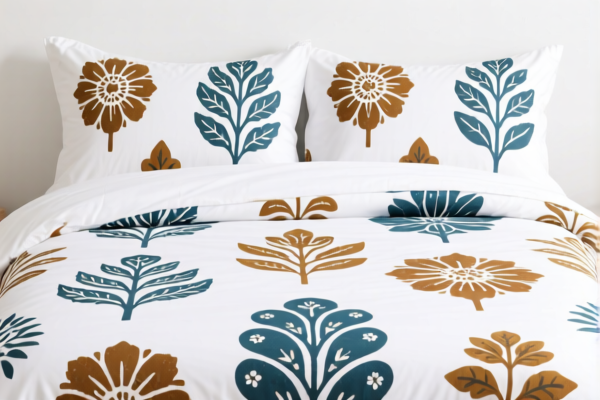
AI Analysis
🛏️ Decorative Woven Bed Sheet (Textile Furnishing Articles)
🌐 HS Code Reference & Customs Clearance Guide | 2026 Latest Tariff Analysis | Professional Compliance Strategy
📌 I. Product Definition & Classification: What Exactly Is a "Decorative Woven Bed Sheet"?
In international trade, "Decorative Woven Bed Sheets" are classified under Chapter 63, specifically as "Other furnishing articles," rather than standard bed linen (which falls under Chapter 6304 but is often distinguished by weight, fiber, and specific use).
These items are typically not knitted or crocheted (they are woven) and serve a decorative or supplementary purpose (e.g., lightweight throws, decorative top sheets, or lightweight covers) rather than heavy winter bedding.
⚠️ Key Distinction:
- If the item is 100% Cotton and woven → It falls under 6304.92.00.00.
- If the item is made of other textile materials (e.g., polyester, wool, bamboo, viscose) and woven → It falls under 6304.99.35.00 (if made of vegetable fibers other than cotton) or other sub-headings under 6304.99 depending on the specific fiber composition.
- Crucially: These are NOT classified as "Bed Linen" (6302) because they are explicitly described as "Furnishing Articles" in the provided data context, often implying a lighter, decorative, or non-standard bedding role.
📦 II. HS Code Classification Details (2026 Latest Tariff Authority Match)
Based strictly on the provided <DATA>, here are the applicable HS Codes and their tax implications.
| HS Code | Product Description | Material Composition | Key Attribute |
|---|---|---|---|
6304.92.00.00 |
Other furnishing articles: Other: Not knitted or crocheted, of cotton | 100% Cotton | Woven, Decorative, Lightweight |
6304.99.35.00 |
Other furnishing articles: Other: Not knitted or crocheted, of other textile materials (specifically vegetable fibers except cotton) | Polyester, Bamboo, Viscose, etc. (Non-Cotton Vegetable Fibers) | Woven, Decorative, Lightweight |
🔍 Critical Note:
- The provided data only lists these two specific sub-headings for "Decorative Woven Bed Sheets" under the category of "Other furnishing articles."
- Do not confuse these with Chapter 6302 (Bed Linen) unless you have specific evidence that they are heavy, standard-issue bed linens. In the context of "Decorative" items, customs often prefer 6304.
- Fiber Identity is King: You must accurately declare the fiber content. Misdeclaring a polyester sheet as cotton (or vice versa) leads to classification errors.
💰 III. 2026 Tariff Rate Detailed Explanation (Zero Duty Advantage!)
✅ Applicable Country: United States (US)
✅ Origin: China (CN)
✅ Effective Time: Current (2026)
🎯 1. 6304.92.00.00 — Cotton Decorative Woven Bed Sheet
| Item | Content |
|---|---|
| Base Tariff | 0.0% |
| Section 301 / Additional Tariff | 0.0% |
| Total Tariff Rate | 0.0% |
| Tax Detail | Base Tariff: 0.0%, Additional Tariff: 0.0% |
| Calculation Basis | CIF Value × 0% = $0 Duty |
| De Minimis Eligibility | ✅ Yes (Likely eligible for $800 de minimis exemption if value < $800, subject to current CBP rules) |
| Legal Basis | HTSUS 6304.92.00.00 |
📌 Explanation:
- Cotton furnishing articles (woven) enjoy a duty-free status in this classification.
- Unlike electronics or steel, textile "furnishing articles" are not subject to the heavy 25% or 10% tariffs listed in other categories.
- Cost Benefit: Zero duty significantly boosts profit margins for textile exporters.
🎯 2. 6304.99.35.00 — Other Textile Material Decorative Woven Bed Sheet
| Item | Content |
|---|---|
| Base Tariff | 0.0% |
| Section 301 / Additional Tariff | 0.0% |
| Total Tariff Rate | 0.0% |
| Tax Detail | Base Tariff: 0.0%, Additional Tariff: 0.0% |
| Calculation Basis | CIF Value × 0% = $0 Duty |
| De Minimis Eligibility | ✅ Yes (Likely eligible for $800 de minimis exemption if value < $800) |
| Legal Basis | HTSUS 6304.99.35.00 |
📌 Explanation:
- Even for non-cotton textile materials (like bamboo or viscose blends classified under vegetable fibers), the provided data indicates a 0.0% total tax rate.
- This is a highly competitive classification for textile exporters.
- Warning: Ensure the material is correctly identified as "other textile materials" and not synthetic fibers that might fall under different sub-headings (e.g., 6304.99.10). The provided data specifically highlights 6304.99.35.00 for "vegetable fibers (except cotton)."
🛠️ IV. Customs Clearance Practical Advice (Avoid Pitfalls)
✅ 1. Documentation Checklist (Must-Haves)
| Document | Required? | Description |
|---|---|---|
| ✅ Commercial Invoice | ✔️ | Must clearly state: "Decorative Woven Bed Sheet," Fiber Content (% Cotton / % Other), Country of Origin. |
| ✅ Packing List | ✔️ | Detailed count of pieces, weights, and dimensions. |
| ✅ Certificate of Origin (CO) | ✔️ | Crucial for proving origin (China) to ensure correct tariff application. |
| ✅ Product Description | ✔️ | Explicitly describe as "Woven" (NOT knitted) and "Decorative Furnishing Article." |
| ✅ Fiber Content Label | ✔️ | Photos of labels inside the product showing accurate fiber composition. |
✅ 2. Declaration Tips (Key Mnemonics)
🔥 "Woven Not Knit, Decorative Not Bed, Fiber Specific, Zero Duty Ready!"
| Scenario | Correct Declaration | Incorrect Practice |
|---|---|---|
| 100% Cotton, Woven, Decorative | 6304.92.00.00 |
Misdeclaring as 6302 (Bed Linen) → May trigger higher scrutiny |
| Polyester/Bamboo, Woven, Decorative | 6304.99.35.00 (if veg. fiber) |
Misdeclaring as "Textile Scrap" or wrong sub-heading |
| Knitted Sheet | ❌ NOT COVERED in this data | Do not use 6304.92/99 for knitted items; they are different HS codes |
| Heavy Winter Quilt | ❌ NOT COVERED in this data | "Decorative" implies lightweight; heavy items may fall under 6301/6302 |
✅ 3. Special Handling for Textile Items
| Situation | Handling Advice |
|---|---|
| Mixed Fiber Materials | If the sheet is 60% Cotton / 40% Polyester, you must determine the chief weight or applicable rule of origin. If it's considered "cotton" by weight, use 6304.92.00.00. |
| Sample vs. Bulk | For samples under $800, use De Minimis (Section 321) if eligible. For bulk, ensure accurate valuation. |
| Anti-Dumping/Countervailing | While the tariff is 0%, ensure no additional anti-dumping duties apply to specific cotton products from certain regions. |
🌍 V. Global Market Comparison (2026)
| Country/Region | Recommended HS Code | Tariff Rate | Key Certification | Notes |
|---|---|---|---|---|
| 🇺🇸 USA | 6304.92.00.00 / 6304.99.35.00 |
0.0% | None standard | Zero duty advantage is significant |
| 🇨🇳 China | 6304.92 / 6304.99 | Varies | GB Standards | Import tariffs may apply |
| 🇪🇺 EU | 6304.92 / 6304.99 | 0% - 12% | REACH, OEKO-TEX | OEKO-TEX certification often required for consumer safety |
| 🇬🇧 UK | 6304.92 / 6304.99 | 0% - 12% | UKCA | Post-Brexit rules may vary |
📌 Conclusion:
- The USA offers the best tariff rate (0%) for these specific classifications.
- OEKO-TEX certification is highly recommended for all markets to prove safety and quality, even if not mandatory for customs clearance.
📌 VI. Common Errors & Pitfalls (Lessons Learned)
❌ Error 1: Declaring "Knitted" sheets as "Woven"
👉 Consequence: Misclassification → Potential duty reassessment and penalties.
👉 Fix: Verify fabric structure. Woven = Cross-hatched threads. Knitted = Looping threads.
❌ Error 2: Failing to specify Fiber Content
👉 Consequence: Customs may classify under the highest duty rate or hold shipment for inspection.
👉 Fix: Always state "% Cotton" or "% Bamboo/Viscose" in the description.
❌ Error 3: Using "Bed Sheet" instead of "Decorative Furnishing Article"
👉 Consequence: May be routed to Chapter 6302 (Bed Linen) which might have different tariff rates.
👉 Fix: Use the exact phrase "Decorative Woven Bed Sheet" and reference 6304.
🎯 VII. Conclusion: Professional Declaration for Cost Savings
🎯 Remember the Rule:
🔹 "Woven & Decorative = 6304.92/99"
🔹 "Cotton = 6304.92.00.00 (0% Duty)"
🔹 "Other Veg. Fiber = 6304.99.35.00 (0% Duty)"
🔹 "Knitted? Think Again! Not in this list!"
📌 Pro Tip:
If your product is 100% Cotton, always declare under 6304.92.00.00 to maximize clarity and benefit from the 0% rate.
If you are exporting Bamboo or Viscose blends, ensure they are correctly classified under 6304.99.35.00 (as vegetable fibers) to maintain the 0% duty advantage.
📣 Immediate Action:
📞 Consult with a customs broker to verify fiber composition and woven vs. knitted structure.
🚀 Ensure your commercial invoice explicitly states "Woven" and "Decorative" to avoid misclassification.
✨ Accurate Classification Saves Money!
💼 Zero Duty is a Competitive Advantage—Don't Miss It!
Customer Reviews
About HS Code Classification
The Harmonized System (HS) is an internationally standardized nomenclature developed by the World Customs Organization (WCO) to classify traded products. Over 200 countries use the HS system as the basis for customs tariffs, trade statistics, and import/export regulations.
Each HS code follows a hierarchical structure:
- Chapter (2 digits) — Broad category of goods (e.g., Chapter 84: Machinery and Mechanical Appliances)
- Heading (4 digits) — More specific grouping within the chapter
- Subheading (6 digits) — Internationally standardized breakdown, used by all WCO member countries
- National subdivisions (8-10 digits) — Country-specific extensions for further classification, such as US HTSUS 10-digit codes
Correct HS code classification is essential for smooth customs clearance, accurate duty payment, and compliance with trade regulations. Misclassification can lead to customs delays, overpayment of duties, or penalties.
When importing from CN to US, the applicable tariff rates may include:
- Most-Favored-Nation (MFN) rate — The standard duty rate applied to WTO members
- General rate — Applied to countries without trade agreements
- Trade remedy duties — Additional tariffs such as Section 301 (anti-dumping), Section 232 (national security), or countervailing duties
The information provided on this page is for reference purposes only. For official classification, please consult with your local customs authority or a licensed customs broker.