Decorative Woven Material Bundle
CN → US| HS Code | Tariff Rate | Origin | Destination | Doc |
|---|---|---|---|---|
| 3926903300 | 16.5% | CN | US | Official Doc |
| 3926901000 | 20.9% | CN | US | Official Doc |
| 3923109000 | 38.0% | CN | US | Official Doc |
| 4819504040 | 35.0% | CN | US | Official Doc |
| 3923900080 | 38.0% | CN | US | Official Doc |
Product Images
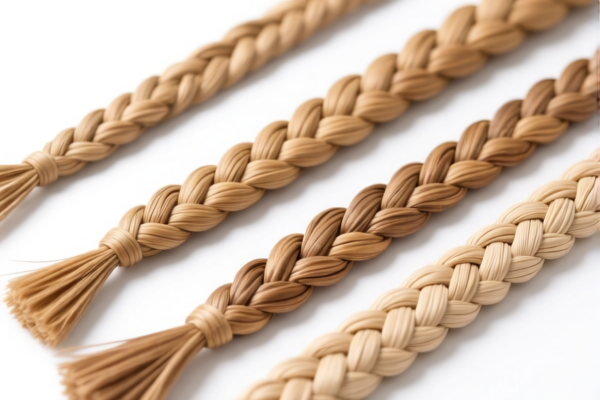


AI Analysis
🧶 Decorative Woven Material Bundle
🌐 HS Code Reference & Customs Clearance Guide | 2026 Latest Tariff Analysis | Professional Clearance Strategy
📌 I. Product Definition & Classification: What is a "Decorative Woven Material Bundle"?
A "Decorative Woven Material Bundle" is a generic term often used in cross-border e-commerce for items that combine weaving techniques with decorative aesthetics. In international trade, this category is ambiguous because it can refer to plastic bags, paper containers, or textile accessories depending on the primary material and primary function.
To ensure smooth customs clearance, you must determine the substance of the bundle: 1. Plastic-based: If the woven texture is made of plastic strips (e.g., PP/PE bags used for packaging or as accessory components). 2. Paper-based: If the woven structure is made of paper strips (e.g., decorative shopping bags or boxes). 3. Accessory/Component: If the item is a small part of a larger good (e.g., a handle for a bag, a tag, or a decorative trim).
⚠️ Critical Distinction:
- If it is a plastic bag for packaging → Chapter 39
- If it is a paper bag/box → Chapter 48
- If it is an accessory (not a bag itself) → Chapter 39 or Chapter 63 (though data limits us to Ch 39/48)
📦 II. HS Code Classification Details (Based on Provided Data)
The following five HS Codes are the most relevant classifications for "Decorative Woven Material Bundles," depending on how customs authorities interpret your specific product.
| HS Code | Product Description & Matching Logic | Applicable Scenario | Tax Implication |
|---|---|---|---|
| 3926.90.33.00 | Plastic Articles: Other Classification based on material inference: Fits "Other Plastic Products." Suitable for components of woven bags where no explicit material conflict exists. |
Decorative woven bag accessories, handles, or non-packaging plastic woven components. | 16.5% (Lowest Tax Option) |
| 3926.90.10.00 | Plastic Articles: Parts Matching basis: Accessory attribute. Fits "Parts/Components" category. Suitable for woven bag accessories without explicitly defined material. |
Generic accessories, straps, or non-specific woven parts used in bag assembly. | 20.9% (Medium Tax) |
| 3923.10.90.00 | Plastic Packaging Supplies: Other Inference based on material常识: Woven materials are commonly plastic. Fits "Plastic Packaging Articles." |
Plastic woven bags used for packaging goods (even if decorative). | 38.0% (High Tax) |
| 4819.50.40.40 | Paper Containers: Other Product purpose: Packaging. Fits "Packaging Container" use. Inferred as paper or fiber-based weaving. Fits "Catch-all" category. |
Paper-woven baskets, decorative paper bags, or fiber-based decorative bundles used for packaging. | 35.0% (Medium-High Tax) |
| 3923.90.00.80 | Plastic Packaging Supplies: Other Based on packaging use: Inferred as plastic or synthetic fiber. Fits "Plastic Packaging Supplies" catch-all category. |
General plastic woven packaging items that don't fit specific sub-headings. | 38.0% (High Tax) |
🔍 Key Insight:
- The lowest tax rate (16.5%) is achieved by classifying the item as an "Other Plastic Product" (3926.90.33.00) or an "Accessory" (3926.90.10.00).
- Classifying it as a "Packaging Bag" (3923.xx) triggers significantly higher tariffs due to Section 301/122 Clause duties.
- If the product is paper-based, it falls under 4819.50.40.40 (35.0%).
💰 III. Detailed Tariff Rate Analysis (2026 Latest)
✅ Applicable Market: United States (US)
✅ Origin: China (CN)
✅ Effective Date: November 10, 2025 (and onwards)
The total tax rate includes Base Tariff, Section 301/122 Additional Tariff, and IEEPA 122 Clause Tariff (10%).
🎯 1. 3926.90.33.00 – Best Case: Other Plastic Articles
| Item | Content |
|---|---|
| Base Tariff | 6.5% |
| Additional Tariff (Sec 301) | 0.0% |
| 122 Clause Tariff | 10.0% |
| Total Tax Rate | 16.5% |
| Calculation | CIF Value × 16.5% |
| De Minimis Eligibility | ❌ NO (High tariff prevents de minimis exemption) |
| Legal Basis | USITC 3926.90.33.00 → IEEPA 122 Clause |
📌 Strategy:
- This is the most cost-effective classification.
- Justification: The item is a component/accessory (e.g., a decorative strap, a non-packaging woven item), not the bag itself.
- Documentation Tip: Label as "Woven Accessory" or "Decorative Component," NOT "Woven Bag."
🎯 2. 3926.90.10.00 – Good Case: Plastic Parts/Accessories
| Item | Content |
|---|---|
| Base Tariff | 3.4% |
| Additional Tariff (Sec 301) | 7.5% |
| 122 Clause Tariff | 10.0% |
| Total Tax Rate | 20.9% |
| Calculation | CIF Value × 20.9% |
| De Minimis Eligibility | ❌ NO |
| Legal Basis | USITC 3926.90.10.00 → IEEPA 122 Clause |
📌 Strategy:
- If the item is clearly a part of a larger product (e.g., a handle, a tag), use this code.
- Slightly higher than 3926.90.33.00 but still competitive.
🎯 3. 4819.50.40.40 – Paper-Based Option
| Item | Content |
|---|---|
| Base Tariff | 0.0% |
| Additional Tariff (Sec 301) | 25.0% |
| 122 Clause Tariff | 10.0% |
| Total Tax Rate | 35.0% |
| Calculation | CIF Value × 35.0% |
| De Minimis Eligibility | ❌ NO |
| Legal Basis | USITC 4819.50.40.40 → IEEPA 122 Clause |
📌 Strategy:
- Only use if the product is made of paper.
- High additional tariff (25%) due to Section 301, despite 0% base tariff.
🎯 4. 3923.10.90.00 & 3923.90.00.80 – Worst Case: Packaging Bags
| Item | Content |
|---|---|
| Base Tariff | 3.0% |
| Additional Tariff (Sec 301) | 25.0% |
| 122 Clause Tariff | 10.0% |
| Total Tax Rate | 38.0% |
| Calculation | CIF Value × 38.0% |
| De Minimis Eligibility | ❌ NO |
| Legal Basis | USITC 3923.xx.xx.xx → IEEPA 122 Clause |
📌 Warning:
- These codes treat the item as a packaging bag.
- The 25% Section 301 tariff makes this very expensive.
- Avoid unless the product is explicitly a bulk shipping bag for sale as packaging.
🛠️ IV. Customs Clearance Practical Advice
✅ 1. Documentation Checklist (Must-Have)
| Document | Required? | Notes |
|---|---|---|
| Product Description | ✔️ | Use precise terms: "Decorative Woven Accessory," NOT "Woven Bag." |
| Material Composition | ✔️ | Specify: "100% Polypropylene (PP)" or "Paper." |
| Product Photos | ✔️ | Show the item in context. If it looks like a bag, customs will reclassify it. |
| Function Statement | ✔️ | State: "Used as decorative trim/accessory, NOT for retail packaging." |
| Commercial Invoice | ✔️ | List unit price clearly. Avoid vague terms like "Mixed Bundle." |
| Packing List | ✔️ | Ensure weight/volume matches invoice. |
✅ 2. Declaration Strategy (Key Mantra)
🔥 "Material First, Function Second, Accessory Not Bag!"
| Situation | Correct Declaration | Incorrect Declaration | Risk |
|---|---|---|---|
| Decorative woven strip/handle | 3926.90.33.00 (Accessory) |
"Woven Bag" | Tax jump from 16.5% to 38% |
| Paper-woven basket | 4819.50.40.40 (Paper Container) |
"Plastic Bag" | Misclassification Penalty |
| Bulk plastic woven sack | 3923.10.90.00 (Packaging) |
"Accessory" | Audit Risk, Back Taxes |
| Mixed material bundle | Separate items if possible | Mixed HS Code | Customs Rejection |
✅ 3. Special Handling Tips
| Scenario | Recommendation |
|---|---|
| Item looks like a bag | Add a label: "Decorative Item - Not for Packaging Use." |
| Paper vs. Plastic | If it’s paper, declare as paper. Plastic has higher base tariff but may have lower additional tariffs depending on classification. |
| Small vs. Large | Small decorative items (e.g., keychains, trims) are more likely to be classified as accessories (3926) than packaging (3923). |
| Composite Materials | If it’s paper + plastic, the principal material determines the HS Code. Usually, plastic dominates if >50%. |
🌍 V. Global Market Comparison (2026)
| Country/Region | Recommended HS Code | Total Tax (CN Origin) | Notes |
|---|---|---|---|
| 🇺🇸 USA | 3926.90.33.00 |
16.5% | Best option. Avoid 3923 codes (38%). |
| 🇨🇳 China | 3926.90.33.00 |
~6.5% | No additional Section 301/122 tariffs. |
| 🇪🇺 EU | 3926.90.97 |
~4-6% | Varies by member state. No IEEPA tariffs. |
| 🇬🇧 UK | 3926.90.97 |
~4-6% | Post-Brexit tariff rates apply. |
| 🇦🇺 Australia | 3926.90.90 |
~5% | Lower duties, but check anti-dumping. |
📌 Conclusion:
- The US market is the most challenging due to 122 Clause and Section 301 tariffs.
- Classification is critical: Changing from "Packaging" (38%) to "Accessory" (16.5%) saves 21.5% in taxes.
📌 VI. Common Mistakes & Pitfalls
❌ Mistake 1: Calling a woven bag a "Bag" in the description.
👉 Consequence: Customs classifies as 3923.10.90.00 → 38% tax.
👉 Fix: Call it "Woven Accessory" or "Decorative Component."
❌ Mistake 2: Ignoring the material.
👉 Consequence: If it’s paper but declared as plastic, or vice versa → Seizure/Fine.
👉 Fix: Provide material certificate.
❌ Mistake 3: Assuming all woven items are textiles (Chapter 63).
👉 Consequence: Most "woven" decorative items in e-commerce are plastic/paper, not fabric. Misclassification leads to delays.
👉 Fix: Check material composition. Plastic/Paper → Chapter 39/48.
🎯 VII. Conclusion: Smart Classification, Higher Profits!
🎯 Key Takeaway:
🔹 "Accessories = 16.5%, Packaging = 38%."
🔹 "If it’s not a bag, don’t call it a bag!"
🔹 "Paper = 35%, Plastic Accessory = 16.5%. Choose wisely."📌 Pro Tip:
If you are selling decorative woven items (e.g., basket handles, trims, decorative strips), always declare them as "Plastic Articles, Other" (3926.90.33.00) or "Plastic Parts" (3926.90.10.00) to minimize US import duties. Avoid the word "Bag" unless it is literally a bag for sale as packaging.
📣 Immediate Action:
📞 Consult a customs broker to confirm the "Accessory" status of your specific product.
📝 Update your product listings to avoid the word "Bag" if possible.
📄 Prepare material certificates to prove plastic/paper composition.
✨ Professional clearance starts with precise classification!
💼 Save 21.5% tax by choosing the right HS Code!
Customer Reviews
About HS Code Classification
The Harmonized System (HS) is an internationally standardized nomenclature developed by the World Customs Organization (WCO) to classify traded products. Over 200 countries use the HS system as the basis for customs tariffs, trade statistics, and import/export regulations.
Each HS code follows a hierarchical structure:
- Chapter (2 digits) — Broad category of goods (e.g., Chapter 84: Machinery and Mechanical Appliances)
- Heading (4 digits) — More specific grouping within the chapter
- Subheading (6 digits) — Internationally standardized breakdown, used by all WCO member countries
- National subdivisions (8-10 digits) — Country-specific extensions for further classification, such as US HTSUS 10-digit codes
Correct HS code classification is essential for smooth customs clearance, accurate duty payment, and compliance with trade regulations. Misclassification can lead to customs delays, overpayment of duties, or penalties.
When importing from CN to US, the applicable tariff rates may include:
- Most-Favored-Nation (MFN) rate — The standard duty rate applied to WTO members
- General rate — Applied to countries without trade agreements
- Trade remedy duties — Additional tariffs such as Section 301 (anti-dumping), Section 232 (national security), or countervailing duties
The information provided on this page is for reference purposes only. For official classification, please consult with your local customs authority or a licensed customs broker.