Decorative Woven Products
CN → US| HS Code | Tariff Rate | Origin | Destination | Doc |
|---|---|---|---|---|
| 6304993500 | 28.8% | CN | US | Official Doc |
| 4823908680 | 35.0% | CN | US | Official Doc |
| 6304996040 | 20.7% | CN | US | Official Doc |
Product Images
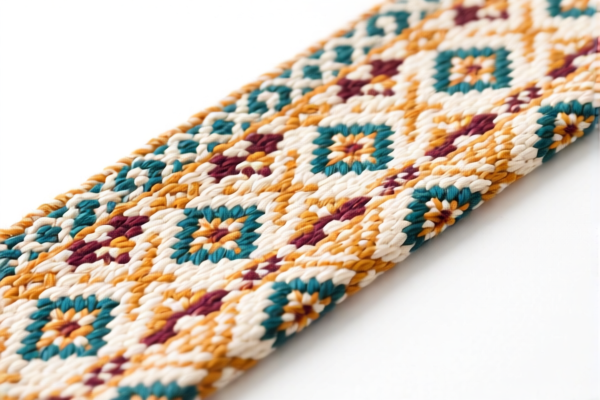
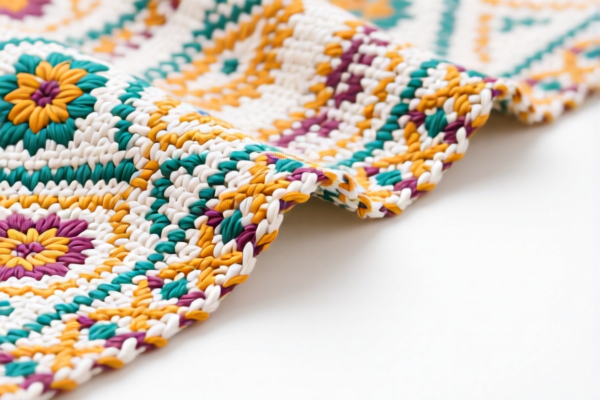
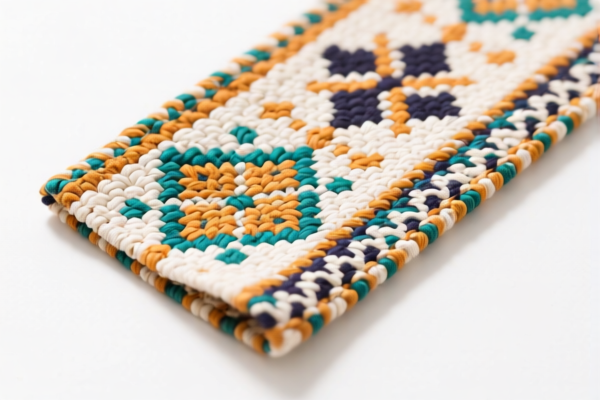
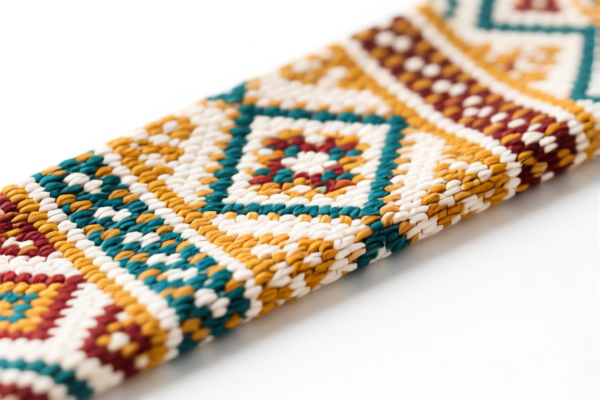
AI Analysis
🧺 Decorative Woven Products: Importing to the US (2026 Tax & Compliance Guide)
🌐 HS Code Reference & Clearance Strategy | 2026 Latest Tariff Breakdown | Professional Clearance Guide
📌 Part I: Product Definition & Classification Logic
Decorative Woven Products are non-functional items used for interior decoration, primarily crafted through weaving processes. In international trade, the correct HS Code classification is critical because it determines whether the product is viewed as a textile, a paper product, or a plant fiber decoration. The classification depends heavily on the material composition and specific manufacturing工艺 (craftsmanship).
⚠️ Key Distinction:
- If made from plant fibers (e.g., rattan, bamboo, reed) specifically for interior decor → 6304.99.35.00
- If made from fibers or pulp (paper-based woven mats, decorative wall hangings) → 4823.90.86.80
- If made from textile materials (non-knitted/钩编, generic fabric weave) → 6304.99.60.40
📦 Part II: HS Code Classification Details (2026 Latest Tariff Authority)
The following three HS Codes represent the most common classifications for "Decorative Woven Products" imported from China to the US, based on material logic:
| HS Code | Product Description | Material Basis | Application Scenario |
|---|---|---|---|
6304.99.35.00 |
Indoor Woven Decorations | Plant Fibers (e.g., rattan, wicker, reed) | Rattan baskets, woven wall art, natural fiber decor |
4823.90.86.80 |
Other Woven Fiber/Paper Products | Fibers or Pulp (Paper-based) | Paper-mache decorations, woven paper wall coverings |
6304.99.60.40 |
Other Decorative Articles | Textile Materials (Non-knitted) | Fabric tapestries, woven textile curtains, generic textile decor |
🔍 Critical Reminder:
- Do not mix materials: If a product is 50% rattan and 50% cotton thread, the primary material determines the code.
- Paper vs. Textile: Woven paper products (even if they look like fabric) fall under Chapter 48 (Paper), not Chapter 63 (Textiles).
- "Catch-all" Logic: Code6304.99.60.40is a residual category for textile-based decor that doesn’t fit specific knitted/钩编 definitions.
💰 Part III: 2026 Latest Tariff Rate Breakdown (Including Surcharge & Policy Add-ons)
✅ Applicable Country: United States (US)
✅ Origin: China (CN)
✅ Effective Time: Current 2026 Tariff Structure (Section 301 + IEEPA)
🎯 1. 6304.99.35.00 — Indoor Woven Decor (Plant Fibers)
| Item | Content |
|---|---|
| Base Tariff | 11.3% |
| Section 301 Surcharge | +7.5% |
| IEEPA Section 122 Tariff | +10% |
| Total Effective Rate | 28.8% |
| Tax Calculation | CIF Value × 28.8% |
| De Minimis Exemption? | ❌ No (Not eligible for $800 de minimis due to high tariff classification and origin) |
| Legal Basis Path | USITC:6304.99.35.00 → Section 301: +7.5% → IEEPA: +10% |
📌 Explanation:
- The Base Tariff (11.3%) applies to most woven plant fiber decor.
- The 7.5% Section 301 Surcharge is applied to specific textile/woven categories from China.
- The 10% IEEPA Tariff is a general add-on for certain Chinese imports under emergency economic powers.
- Total: 28.8% is a moderate-high burden. Plan pricing accordingly.
🎯 2. 4823.90.86.80 — Other Woven Paper/Fiber Products
| Item | Content |
|---|---|
| Base Tariff | 0.0% |
| Section 301 Surcharge | +25.0% |
| IEEPA Section 122 Tariff | +10% |
| Total Effective Rate | 35.0% |
| Tax Calculation | CIF Value × 35.0% |
| De Minimis Exemption? | ❌ No |
| Legal Basis Path | USITC:4823.90.86.80 → Section 301: +25% → IEEPA: +10% |
📌 Note:
- Although the Base Tariff is 0%, the Section 301 Surcharge is steep at 25% for paper products from China.
- This code is often used for paper-based decorative items (e.g., woven paper lanterns, paper-mache art).
- Total: 35.0% is the highest among the three options. Avoid if possible unless the product is strictly paper-based and no textile alternative exists.
🎯 3. 6304.99.60.40 — Other Decorative Textile Articles
| Item | Content |
|---|---|
| Base Tariff | 3.2% |
| Section 301 Surcharge | +7.5% |
| IEEPA Section 122 Tariff | +10% |
| Total Effective Rate | 20.7% |
| Tax Calculation | CIF Value × 20.7% |
| De Minimis Exemption? | ❌ No |
| Legal Basis Path | USITC:6304.99.60.40 → Section 301: +7.5% → IEEPA: +10% |
📌 Insight:
- This code offers the lowest total tariff (20.7%) among the three.
- It is a "catch-all" for textile-based decor that is non-knitted and non-crocheted.
- Ideal for fabric tapestries, woven wall hangings, and textile table decorations.
- Strategy: If your product can be classified as a textile (cotton, polyester, blend) rather than plant fiber or paper, this is the most cost-effective route.
🛠️ Part IV: Clearance Practical Advice (Pitfall Avoidance Guide)
✅ 1. Required Documentation Checklist
| Document | Must Provide | Notes |
|---|---|---|
| ✅ Product Specification Sheet | ✔️ | Detail material composition (e.g., "100% Cotton" vs. "Natural Rattan") |
| ✅ Material Composition Label | ✔️ | Must clearly state % of each material |
| ✅ Product Photos | ✔️ | Show texture, weave type, and usage context |
| ✅ Commercial Invoice | ✔️ | Use precise description: "Indoor Woven Decorative Textile, Non-Knitted" |
| ✅ Packing List | ✔️ | List individual units, weights, and dimensions |
| ✅ Country of Origin Certificate | ✔️ | If claiming non-China origin (e.g., Vietnam), for potential tariff reduction |
✅ 2. Declaration Tips (Key Mantra)
🔥 "Material is King, Description is Queen, Don't Split, Don't Guess!"
| Scenario | Correct Declaration | Wrong Practice |
|---|---|---|
| Rattan Basket | 6304.99.35.00 (Plant Fiber) |
Misdeclare as 6304.99.60.40 (Textile) → Risk of Penalty |
| Paper Wall Hanging | 4823.90.86.80 (Paper) |
Misdeclare as Textile → 35% vs. 20.7% (Higher Tax) |
| Cotton Tapestry | 6304.99.60.40 (Textile) |
Call it "Decorative Item" without material → Customs Delay |
| Mixed Material (e.g., Wood Frame + Fabric) | Declare as Textile Decor if fabric is primary | Split shipment → Higher administrative cost & risk |
✅ 3. Special Cases Handling
| Scenario | Handling Advice |
|---|---|
| OEM Custom Decor | Provide client design specs to prove "decorative" rather than "functional" use |
| Plant-based but dyed | Still 6304.99.35.00 if base material is plant fiber |
| Woven Plastic Strips | Check if it qualifies as "Textile-like" for 6304.99.60.40 or "Plastic Product" (Chapter 39) |
| Imported from Non-China Origin | If from Vietnam/Mexico, IEEPA 10% may be waived → Consult Customs Broker |
🌍 Part V: Global Market Clearance Comparison (2026)
| Country/Region | Recommended HS Code | Tariff Rate (China Origin) | Certification | Notes |
|---|---|---|---|---|
| 🇺🇸 USA | 6304.99.60.40 (Lowest) |
20.7% (Textile) / 28.8% (Plant) / 35% (Paper) | None Standard | Section 301 + IEEPA apply |
| 🇨🇳 China | Same | ~5-10% | CCC (if applicable) | Lower base tariffs, no Section 301 |
| 🇪🇺 EU | Same | ~4-6% | CE (if applicable) | No Section 301, but Green Deal rules |
| 🇦🇺 Australia | Same | ~5% | None | Stable trade relations |
📌 Conclusion:
- The USA is the most expensive market for Chinese decorative woven products due to Section 301 and IEEPA.
- Textile-based decor (6304.99.60.40) is the cheapest entry point.
- Paper-based decor (4823.90.86.80) is the most expensive due to 25% surcharge.
📌 Part VI: Common Errors & Pitfalls (Lessons Learned)
❌ Error 1: Declaring a Rattan Basket as "Plastic Decor"
👉 Consequence: Misclassification → Penalty + Back Duties
❌ Error 2: Splitting a Textile + Wooden Frame set into two packages
👉 Consequence: Higher logistics cost + Potential rejection of "part" declaration
❌ Error 3: Using vague description "Home Decor"
👉 Consequence: Customs flags for inspection → Delay + Demurrage Fees
❌ Error 4: Assuming "Woven" always means Textile
👉 Consequence: Paper/woven products face 35% tax vs. 20.7% for textiles → Lost Profit
✅ Correct Practice:
"Indoor Woven Decorative Textile, 100% Cotton, Non-Knitted, Model ABC, For Wall Decoration"
🎯 Part VII: Conclusion: Professional Declaration, Save Money & Time
🎯 Remember the Mantra:
🔹 "Textile Wins, Paper Loses, Plant is Middle, Material Defines!"
🔹 "HS Code Dictates Cost, 20.7% vs 35% is Huge, Declare Precisely, Avoid the Blues!"
📌 Pro Tip:
If your products are originating from Vietnam, Thailand, or Mexico, the IEEPA 10% tariff may not apply. Consider supply chain diversification to reduce costs by ~10-15%.
Recommend applying for a Pre-Ruling (Advance Ruling) from US Customs if your product material is mixed or ambiguous.
📣 Immediate Action:
📞 Contact a Professional Customs Broker + Provide Material Samples + Apply for HS Code Pre-Ruling
🚀 Ensure your decorative woven products clear customs smoothly, maximize profit, and avoid surprises!
✨ Professional Clearance Starts with Accurate Classification!
💼 Every Percent of Tax Saved is Pure Profit!
Customer Reviews
About HS Code Classification
The Harmonized System (HS) is an internationally standardized nomenclature developed by the World Customs Organization (WCO) to classify traded products. Over 200 countries use the HS system as the basis for customs tariffs, trade statistics, and import/export regulations.
Each HS code follows a hierarchical structure:
- Chapter (2 digits) — Broad category of goods (e.g., Chapter 84: Machinery and Mechanical Appliances)
- Heading (4 digits) — More specific grouping within the chapter
- Subheading (6 digits) — Internationally standardized breakdown, used by all WCO member countries
- National subdivisions (8-10 digits) — Country-specific extensions for further classification, such as US HTSUS 10-digit codes
Correct HS code classification is essential for smooth customs clearance, accurate duty payment, and compliance with trade regulations. Misclassification can lead to customs delays, overpayment of duties, or penalties.
When importing from CN to US, the applicable tariff rates may include:
- Most-Favored-Nation (MFN) rate — The standard duty rate applied to WTO members
- General rate — Applied to countries without trade agreements
- Trade remedy duties — Additional tariffs such as Section 301 (anti-dumping), Section 232 (national security), or countervailing duties
The information provided on this page is for reference purposes only. For official classification, please consult with your local customs authority or a licensed customs broker.