Decorative wood canoe paddles
CN → US| HS Code | Tariff Rate | Origin | Destination | Doc |
|---|---|---|---|---|
| 4419909100 | 20.7% | CN | US | Official Doc |
| 4421918800 | 10.0% | CN | US | Official Doc |
| 4421998800 | 17.5% | CN | US | Official Doc |
Product Images
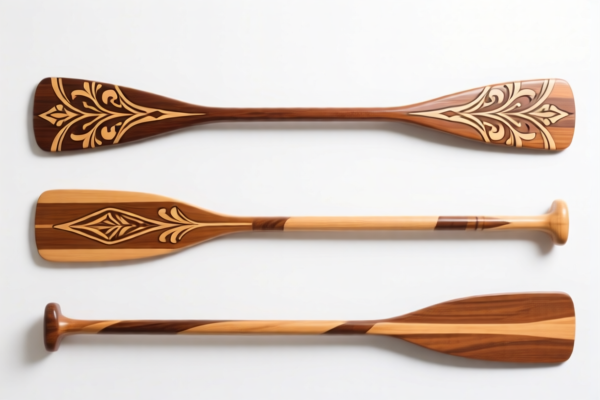
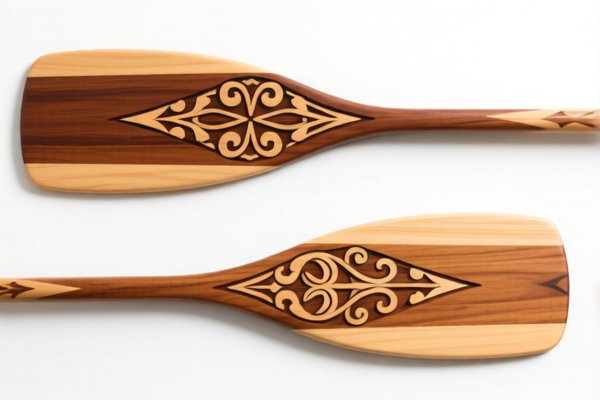
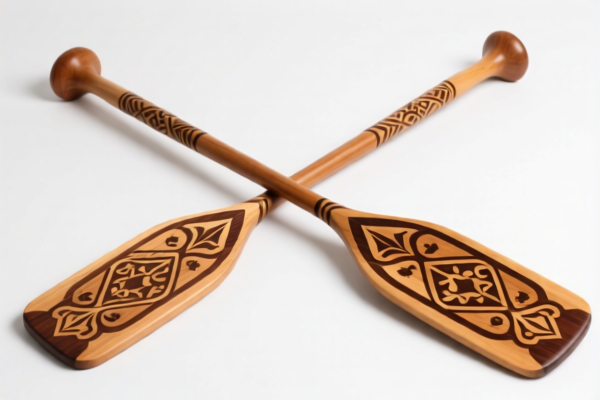
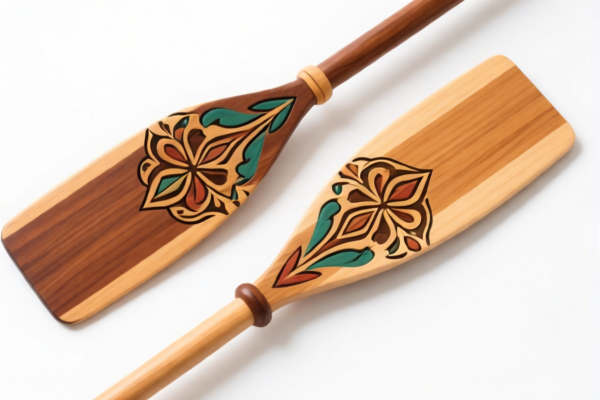
AI Analysis
🛶 Decorative Wood Canoe Paddles (Chopsticks/Utensils? No!)
🌐 HS Code Reference & Customs Clearance Guide | 2026 Latest Tariff Analysis | Professional Clearance Strategy
📌 I. Product Definition: Are You Selling Sports Gear or Kitchenware?
"Decorative Wood Canoe Paddles" represent a tricky classification challenge in international trade. While they mimic the shape of sports equipment, their primary purpose (decorative) and material (wood) often lead customs authorities to classify them under Wooden Articles or Utensils rather than Sporting Goods.
Key Distinction Points: * Functional Paddles: Used for actual canoeing/kayaking → Often classified under Chapter 95 (Sporting Goods). * Decorative/Collectible Paddles: Displayed on walls, used as wall art, or as "chopsticks-like" items → Classified under Chapter 44 (Wood & Wood Articles).
⚠️ Critical Warning:
- If the item is purely for decoration (e.g., carved, painted, mounted on a base), it falls under Wooden Articles.
- The US Harmonized Tariff Schedule (HTSUS) has specific provisions for "chopsticks" and similar wooden utensils, but canoe paddles are often grouped under "Other Wooden Articles" unless they are certified as sporting goods.
- Misclassification Risk: Declaring as "Sports Equipment" (e.g., 9506.91) when it’s decorative can lead to penalties and retroactive duties if customs determines it’s not primarily for sport.
📦 II. HS Code Classification Details (2026 Authorized Reference)
Based on the provided , here are the three potential HS Codes for Decorative Wood Canoe Paddles with their tax implications. Note that these codes reflect US Import Duties with Additional Section 301 Tariffs and Section 232/301 related surcharges (often referred to as "122 Clause" in some contexts, though technically Section 301 is the primary driver for China-origin goods).
| HS Code | Product Description | Applicable Scenario | Tax Rate (Total) | Tax Breakdown |
|---|---|---|---|---|
4419.90.91.00 |
Other Wooden Articles for Table/Kitchen Use (Broadly applied to wooden utensils/artifacts) | Decorative paddles considered as "other wooden articles" due to non-functional nature. | 20.7% | Base: 3.2% Additional (China): 7.5% Section 301 (122 Clause): 10% |
4421.91.88.00 |
Other Wooden Articles (Not specified) | Paddles classified as general wooden artifacts, similar to bamboo/wooden utensils. | 10.0% | Base: 0.0% Additional (China): 0.0% Section 301 (122 Clause): 10% |
4421.99.88.00 |
Other Wooden Articles (Not elsewhere specified) | Paddles viewed as generic wooden items with no specific sub-heading. | 17.5% | Base: 0.0% Additional (China): 7.5% Section 301 (122 Clause): 10% |
🔍 Key Insight:
-4421.91.88.00offers the lowest total duty (10%) but requires convincing customs that it’s a "general wooden article" not falling under other specific wooden utensil categories.
-4419.90.91.00is the most common fallback for wooden items, but carries a higher base duty (3.2%), leading to a 20.7% total.
-4421.99.88.00is a catch-all with a 17.5% total, often used when the item doesn’t fit neatly into other wooden article categories.
💰 III. 2026 Tariff Rate详解 (Detailed Breakdown)
✅ Applicable Country: United States (US)
✅ Origin: China (CN) (Assumed based on "122 Clause" and tariff structure in )
✅ Effective Date: 2025+ (Current Trade Policy)
🎯 1. 4419.90.91.00 – Other Wooden Articles (Table/Kitchen Use)
| Item | Detail |
|---|---|
| Base Duty | 3.2% ad valorem |
| Additional Duty (China) | +7.5% (Section 301 Tariff) |
| Section 301 Surcharge ("122 Clause") | +10% |
| Total Duty | 20.7% |
| Calculation | CIF Value × 20.7% |
| De Minimis Exemption | ❌ Not Eligible (Duty > $800 threshold does not apply to Section 301 goods from China) |
| Legal Basis | HTSUS:4419.90.91.00 → USITC:Section 301 → IEEPA:9903.01.25 |
📌 Explanation:
- This code is often used for wooden utensils (e.g., spatulas, spoons) or decorative wooden items that resemble kitchenware.
- The 10% "122 Clause" is an additional penalty on top of the standard 7.5% Section 301 tariff, specific to certain wooden articles.
🎯 2. 4421.91.88.00 – Other Wooden Articles (Bamboo/Wooden Utensils Analog)
| Item | Detail |
|---|---|
| Base Duty | 0.0% |
| Additional Duty (China) | 0.0% |
| Section 301 Surcharge ("122 Clause") | +10% |
| Total Duty | 10.0% |
| Calculation | CIF Value × 10.0% |
| De Minimis Exemption | ❌ Not Eligible |
| Legal Basis | HTSUS:4421.91.88.00 → USITC:Section 301 → IEEPA:9903.01.25 |
📌 Note:
- This code is favorable if customs accepts the paddle as a "general wooden article" similar to bamboo utensils.
- Risk: Customs may reject this if they deem it not comparable to utensils, leading to reclassification.
🎯 3. 4421.99.88.00 – Other Wooden Articles (Catch-All)
| Item | Detail |
|---|---|
| Base Duty | 0.0% |
| Additional Duty (China) | +7.5% |
| Section 301 Surcharge ("122 Clause") | +10% |
| Total Duty | 17.5% |
| Calculation | CIF Value × 17.5% |
| De Minimis Exemption | ❌ Not Eligible |
| Legal Basis | HTSUS:4421.99.88.00 → USITC:Section 301 → IEEPA:9903.01.25 |
📌 Explanation:
- This is a generic classification for wooden items not specified elsewhere.
- The 7.5% additional duty applies here, unlike4421.91.88.00.
🛠️ IV. Customs Clearance Practical Advice (Pitfall Avoidance Guide)
✅ 1. Documentation Checklist (Mandatory)
| Document | Required? | Notes |
|---|---|---|
| ✅ Product Specification Sheet | ✔️ | Include dimensions, weight, material (wood type), and clear statement: "For Decorative Purposes Only" |
| ✅ Product Photos | ✔️ | Show the paddle with any decorative elements (paintings, carvings, mounts) |
| ✅ Commercial Invoice | ✔️ | Explicitly state: "Decorative Wooden Canoe Paddle – Not for Use as Sporting Equipment" |
| ✅ Proof of Non-Functionality | ✔️ | If possible, provide a statement that the paddle is not waterproof, not designed for paddling, or is mounted for display |
| ✅ Certificate of Origin | ✔️ | Required for Section 301 duty assessment |
| ✅ Packaging List | ✔️ | Ensure no functional paddles are mixed with decorative ones |
✅ 2. Classification Strategy (Key Tips)
🔥 "Decorative, Not Functional – Declare Clearly!"
| Scenario | Recommended HS Code | Rationale |
|---|---|---|
| Wall Art/Display Piece | 4421.91.88.00 or 4421.99.88.00 |
Emphasize decorative nature; avoid "sporting goods" language |
| Carved/Collected Item | 4419.90.91.00 |
If it resembles utensils or small wooden artifacts |
| Intended for Use in Canoe | ⚠️ DO NOT USE | If it’s functional, it may fall under Chapter 95, triggering different duties and potential bans/restrictions |
📌 Critical Advice:
- Avoid using terms like "canoe paddle" in the commercial invoice if possible. Use "Decorative Wooden Artifact" or "Wooden Wall Decoration" instead.
- Highlight that the item is not made for water use (e.g., no varnish, no functional grip, decorative only).
✅ 3. Special Cases
| Scenario | Handling Advice |
|---|---|
| Mixed Shipment | Separate decorative paddles from functional ones. Declare separately to avoid misclassification of the entire shipment. |
| OEM Custom Decor | Provide design files and a statement confirming decorative intent. |
| Bamboo vs. Wood | If made of bamboo, ensure HS Code 4421.91.88.00 is appropriate; if wood, use 4421 series. |
🌍 V. Global Market Comparison (2026)
| Country/Region | Recommended HS Code | Duty Rate | Notes |
|---|---|---|---|
| 🇺🇸 USA | 4421.91.88.00 |
10.0% | Lowest duty if classified as general wooden article. Section 301 applies. |
| 🇨🇳 China | 4421.99.88.00 |
~0-5% | Low import duty, but check local regulations for wooden imports. |
| 🇪🇺 EU | 4421.99.88.00 |
~0-2.5% | No Section 301 equivalent, but CE/REACH may apply if treated as consumer goods. |
| 🇬🇧 UK | 4421.99.88.00 |
~2.5% | Post-Brexit, standard tariffs apply. |
📌 Conclusion:
- USA is the most challenging market due to Section 301 tariffs.
- EU and UK are more favorable, but ensure wood treatment certificates (ISPM 15) are provided if applicable.
📌 VI. Common Mistakes & Pitfalls (Lessons Learned)
❌ Mistake 1: Declaring "Decorative Paddles" as "Sports Equipment"
👉 Consequence: Customs may classify under Chapter 95, leading to different duties and potential rejections if not certified as sporting goods.
❌ Mistake 2: Not Clearly Stating "Decorative Use Only"
👉 Consequence: Customs may assume functional use, leading to higher duties or inspection delays.
❌ Mistake 3: Mixing Functional and Decorative Paddles in One Shipment
👉 Consequence: Entire shipment may be held for classification review.
✅ Correct Practice:
"Decorative Wooden Canoe Paddle – Wall Art, Non-Functional, For Display Only"
🎯 VII. Conclusion: Precise Classification Saves Costs!
🎯 Key Takeaway:
🔹 "Decorative ≠ Functional – Declare as Wooden Art!"
🔹 "Use4421.91.88.00for 10% Duty – Avoid4419if Possible!"
🔹 "Section 301 Applies – Plan for Additional Duties!"
📌 Pro Tip:
If your decorative paddles are exported to the US, consider pre-classification rulings from CBP (Customs and Border Protection) to confirm the correct HS Code. This can prevent costly delays and penalties.
📣 Action Item:
📞 Consult a licensed customs broker.
📄 Provide clear product descriptions emphasizing decorative intent.
🚀 Ensure accurate HS Code selection to minimize duties and ensure smooth clearance.
✨ Professional Customs Clearance Starts with Accurate Classification!
💼 Every Percent Matters – Optimize Your Duty Costs Today!
Customer Reviews
About HS Code Classification
The Harmonized System (HS) is an internationally standardized nomenclature developed by the World Customs Organization (WCO) to classify traded products. Over 200 countries use the HS system as the basis for customs tariffs, trade statistics, and import/export regulations.
Each HS code follows a hierarchical structure:
- Chapter (2 digits) — Broad category of goods (e.g., Chapter 84: Machinery and Mechanical Appliances)
- Heading (4 digits) — More specific grouping within the chapter
- Subheading (6 digits) — Internationally standardized breakdown, used by all WCO member countries
- National subdivisions (8-10 digits) — Country-specific extensions for further classification, such as US HTSUS 10-digit codes
Correct HS code classification is essential for smooth customs clearance, accurate duty payment, and compliance with trade regulations. Misclassification can lead to customs delays, overpayment of duties, or penalties.
When importing from CN to US, the applicable tariff rates may include:
- Most-Favored-Nation (MFN) rate — The standard duty rate applied to WTO members
- General rate — Applied to countries without trade agreements
- Trade remedy duties — Additional tariffs such as Section 301 (anti-dumping), Section 232 (national security), or countervailing duties
The information provided on this page is for reference purposes only. For official classification, please consult with your local customs authority or a licensed customs broker.