Deep Red Mahogany Construction Timber
CN → US| HS Code | Tariff Rate | Origin | Destination | Doc |
|---|---|---|---|---|
| 4418300100 | 38.2% | CN | US | Official Doc |
| 4418999140 | 38.2% | CN | US | Official Doc |
| 4409229090 | 35.0% | CN | US | Official Doc |
| 4409220535 | 38.2% | CN | US | Official Doc |
Product Images
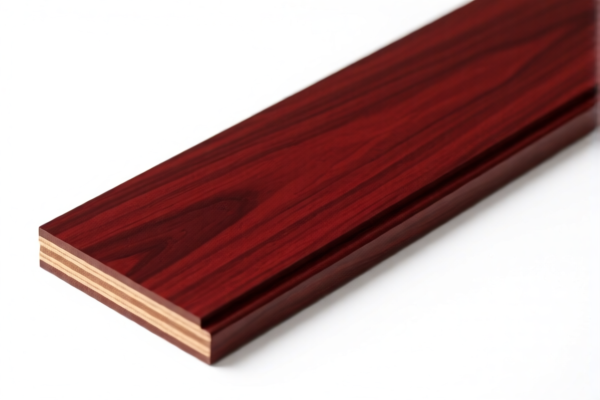

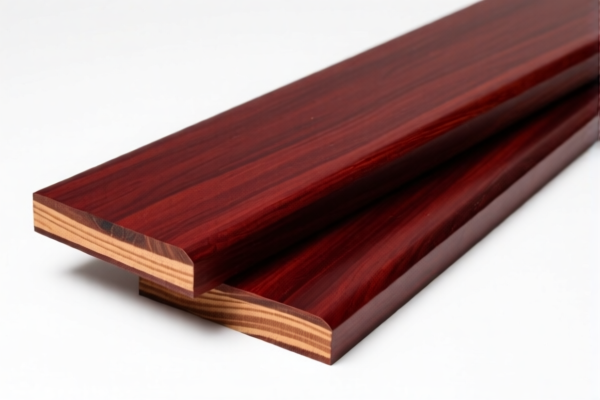
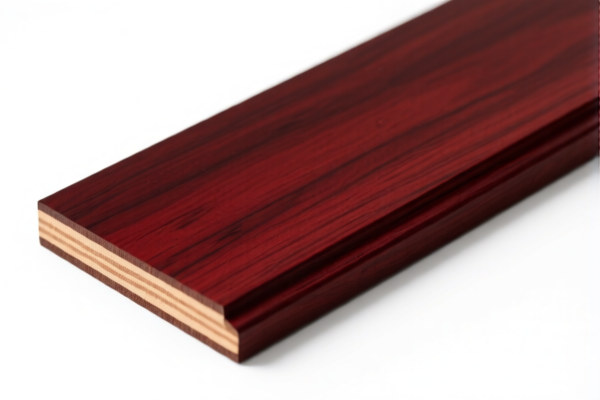
AI Analysis
🌲 Deep Red Mahogany Construction Timber (浅红桃花心木结构木材)
🌐 HS Code Reference & Customs Clearance Guide | 2026 Latest Tariff Analysis | Professional Level Logistics Strategy
📌 I. Product Definition and Classification: Do You Truly Understand "Deep Red Mahogany"?
"Deep Red Mahogany Construction Timber" is a high-value hardwood product primarily used in furniture manufacturing, interior decoration, and precision woodworking. In international trade, it is strictly regulated due to its botanical origin and processing state. The classification depends entirely on the physical form (raw, processed, or structural) and the specific botanical variety (e.g., Santos Mahogany).
⚠️ Critical Distinction Points:
- If it is raw/primary wood (logs, planks, basic sawn timber) → Classified under 4418 or 4409 depending on processing.
- If it is structural timber (prepared for building/framework) → Classified under 4418.99.91.40.
- If it is shaped/profiled wood (molded, tongued, grooved) → Classified under 4409.
- Key Risk: Misclassifying "Santos Mahogany" or "Tropical Wood" can lead to different duty structures, though current US tariffs on Chinese-origin mahogany are uniformly high due to Section 301 and Section 122 provisions.
📦 II. HS Code Classification Details (2026 Latest Tariff Authority Comparison)
Based on the provided data, here are the precise HS codes for "Deep Red Mahogany Construction Timber":
| HS Code | Product Summary | Form/State | Key Characteristics |
|---|---|---|---|
4418.30.01.00 |
Deep Red Mahogany Structural Timber | Wood / Primary Product | Raw or lightly processed structural timber; basic material form. |
4418.99.91.40 |
Deep Red Mahogany Structural Timber | Structural Timber | Finished structural beams/columns; specifically prepared for construction framing. |
4409.22.90.90 |
Deep Red Mahogany Structural Timber | Shaped Wood | Made from "Tropical Wood"; includes molded, tongued, grooved, or chamfered profiles. |
4409.22.05.35 |
Deep Red Mahogany Structural Timber | End-Continuously Profiled Wood | Specifically Santos Mahogany; end-matched or continuously profiled for flooring/paneling. |
🔍 Important Note:
- 4418 Codes: Refer to builders' joinery and carpentry.4418.30is specifically for trusses or structural members.4418.99is other builders' joinery. - 4409 Codes: Refer to wood continuously shaped along any of its edges, ends or faces. This includes tongue-and-groove, splayed, v-jointed, etc. - Material Specificity: Some codes specify the species (e.g., Santos Mahogany vs. General Tropical Wood), which affects the sub-heading but may not change the total tariff if the country of origin is the same.
💰 III. 2026 Latest Tariff Rate Detailed Breakdown (Including Surcharges & Policy Add-ons)
✅ Applicable Country: United States (US)
✅ Origin: China (CN)
✅ Effective Time: Ongoing (Section 301 & Section 122)
🎯 1. 4418.30.01.00 & 4418.99.91.40 —— Structural Timber (Primary & Structural Forms)
These two codes share the same total tax burden, indicating that the structural nature of the timber triggers the same surcharges.
| Item | Content |
|---|---|
| Basic Duty Rate | 3.2% (MFN Rate) |
| Section 301 Additional Duty | +25.0% (Trade Act of 1974, Section 301) |
| Section 122 Duty | +10.0% (Bipartisan Budget Act of 2018, Section 122) |
| Total Tax Rate | 38.2% |
| Tax Calculation Base | CIF Value × 38.2% |
| De Minimis Eligibility | ❌ No (deny_de_minimis) |
| Legal Basis Path | Section 301: 4418 → Section 122: 4418 → USITC: 4418.30.01.00 / 4418.99.91.40 |
📌 Explanation:
- The 3.2% is the standard Most Favored Nation (MFN) tariff for wood products. - The 25.0% is the Section 301 tariff targeting Chinese goods (including wood products). - The 10.0% is the Section 122 tariff, which applies to all imports for 2 years (extended/adjusted depending on current administration policies, but listed here as applicable). - Total 38.2% is a significant cost driver. Must be factored into FOB pricing.
🎯 2. 4409.22.90.90 —— Shaped Wood (Tropical Wood Variant)
Note the lower Basic Duty but same surcharges, resulting in a slightly lower total rate.
| Item | Content |
|---|---|
| Basic Duty Rate | 0.0% (MFN Rate for certain shaped tropical woods) |
| Section 301 Additional Duty | +25.0% |
| Section 122 Duty | +10.0% |
| Total Tax Rate | 35.0% |
| Tax Calculation Base | CIF Value × 35.0% |
| De Minimis Eligibility | ❌ No (deny_de_minimis) |
| Legal Basis Path | Section 301: 4409 → Section 122: 4409 → USITC: 4409.22.90.90 |
📌 Explanation:
- The 0.0% basic rate reflects that shaped tropical wood may have a preferential MFN rate. - However, the 35% total is still very high due to the 35% in additional tariffs. - Key Difference: This code requires the wood to be "continuously shaped" (e.g., tongue-and-groove). If you ship plain planks, do NOT use this code.
🎯 3. 4409.22.05.35 —— End-Continuously Profiled Wood (Santos Mahogany Specific)
| Item | Content |
|---|---|
| Basic Duty Rate | 3.2% |
| Section 301 Additional Duty | +25.0% |
| Section 122 Duty | +10.0% |
| Total Tax Rate | 38.2% |
| Tax Calculation Base | CIF Value × 38.2% |
| De Minimis Eligibility | ❌ No (deny_de_minimis) |
| Legal Basis Path | Section 301: 4409 → Section 122: 4409 → USITC: 4409.22.05.35 |
📌 Explanation:
- Although this is also a "shaped wood" code, the specific sub-heading for Santos Mahogany (4409.22.05) carries the 3.2% basic duty. - Total 38.2%. - Crucial: You must prove the wood is Santos Mahogany (Paravallea balfordiana) to use this code. Mislabeling general Deep Red Mahogany as Santos Mahogany is fraud.
🛠️ IV. Customs Clearance Practical Advice (Combat Anti-Pitfall Guide)
✅ 1. Preparation Checklist (Non-negotiable)
| Material | Must Provide | Description |
|---|---|---|
| ✅ Species Certificate | ✔️ | Must specify Deep Red Mahogany and distinguish between Santos vs. African vs. Other. |
| ✅ Processing Description | ✔️ | Clearly state: "Sawn", "Planed", "Tongued & Grooved", "End-Matched". This determines 4418 vs. 4409. |
| ✅ Commercial Invoice | ✔️ | Value in USD. Must include HS Code. |
| ✅ Packing List | ✔️ | Volume (CBM), weight, number of bundles. |
| ✅ Fumigation/Phytosanitary Certificate | ✔️ | Required for all wood products entering the US (ISPM 15 standard if pallets used). |
| ✅ Photo of Cargo | ✔️ | Show labels, end-grain (to verify species), and packaging. |
✅ 2. Declaration Strategy (Key Mantras)
🔥 "Form Dictates Code, Species Dictates Subcode, Origin Dictates Tax!"
| Scenario | Correct HS Code | Wrong Action | Consequence |
|---|---|---|---|
| Plain structural beams (no shaping) | 4418.30.01.00 or 4418.99.91.40 |
Declare as 4409 (Shaped) |
Penalty: Misclassification, potential seizure. |
| Tongued & Grooved planks | 4409.22.90.90 |
Declare as 4418 (Structural) |
Risk: Under-declaring value if basic rate differs, but here risk is audit for "shaped" proof. |
| Santos Mahogany, End-Matched | 4409.22.05.35 |
Declare as 4409.22.90.90 |
Result: Still 38.2%, but loss of specific species verification if audited. |
| Deep Red Mahogany (General) | 4409.22.90.90 (if shaped) |
Assume 0% basic rate without proof | Audit: If species cannot be proven as tropical/shaped per 4409, reclassified to higher duty. |
✅ 3. Special Handling Notes
| Situation | Handling Advice |
|---|---|
| Mixed Species Loads | If a container has Santos and African Mahogany, separate declarations are best. Mixing can lead to applying the highest duty to the whole lot. |
| Section 122 Exemption? | No. Section 122 applies to all imports from China. No specific exemption for wood. |
| ISPM 15 Compliance | Ensure wood pallets/creates are heat-treated and marked. Non-compliant packaging leads to destruction or re-export at importer's cost. |
| Species Misidentification | Common issue: "African Mahogany" (Khaya) vs. "Asian Deep Red Mahogany" (Meranti). Deep Red Mahogany usually refers to Swietenia or Paravallea (Santos). Ensure botanical name is correct. |
🌍 V. Global Market Customs Comparison (2026 Latest)
| Country/Region | Recommended HS Code | Total Tariff (Approx.) | Key Requirements | Notes |
|---|---|---|---|---|
| 🇺🇸 USA | 4418.30.01.00 / 4409.22.90.90 |
35.0% - 38.2% | Phytosanitary Cert, Fumigation | Highest duty market. 301 + 122 tariffs apply. |
| 🇨🇳 China | 4418.30.01.00 |
~5% - 10% | Import License (if applicable) | Import duty varies, but export from China may have restrictions. |
| 🇪🇺 EU | 4418.99.91 |
~0% - 5% | EUDR (Deforestation Regulation) | New: Must prove wood is deforestation-free. Heavy compliance burden. |
| 🇯🇵 Japan | 4418.99.91 |
~5% | Fumigation Certificate | Generally lower tariffs, but strict inspection on pests. |
📌 Conclusion:
- The US is the most expensive market for Deep Red Mahogany due to the 35-38.2% total tariff. - EUDR in Europe is the new biggest non-tariff barrier. Even if tariffs are low, documentation is hard. - Strategy: For US-bound goods, accurate species identification is critical to avoid penalties, as the tariff difference between 0% and 3.2% basic rate is small compared to the 35%+ surcharges.
📌 VI. Common Mistakes & Pitfall Avoidance (Lessons from Blood)
❌ Mistake 1: Declaring "Shaped Wood" (4409) when the product is just "Sawn Planks" (4418)
👉 Consequence: Customs may reject the declaration because 4409 requires evidence of continuous shaping. Delay + Inspection.
❌ Mistake 2: Using 4409.22.05.35 (Santos Mahogany) for generic Deep Red Mahogany
👉 Consequence: Fraud. Santos Mahogany is a specific species. If lab tests show it is Paravallea but not Santos, or if it is Khaya, you face civil penalties and potential criminal charges.
❌ Mistake 3: Ignoring Section 122
👉 Consequence: Calculating only 301 (25%) + Basic (3.2%) = 28.2%. Actual is 38.2%. Short payment of 10%, plus interest and penalties.
✅ Correct Approach:
"Deep Red Mahogany, Santos Species, End-Matched, Fumigated, HTS 4409.22.05.35, Country of Origin: China, Total Duty: 38.2%."
🎯 VII. Conclusion: Professional Declaration, Cost Control, Efficient Customs!
🎯 Remember the Mantra:
🔹 "Form decides 4418 vs 4409, Species decides Subcode, Origin decides 35-38%!"
🔹 "Section 301 + Section 122 = 35% Minimum. No De Minimis!"
🔹 "Santos is not generic. Prove it, or pay the price!"
📌 Pro Tip:
If your mahogany is not from China (e.g., from Brazil, Africa, or Southeast Asia), the Section 301 and Section 122 tariffs may NOT apply.
- Brazil/Africa: Typically 0-5% total duty.
- Recommendation: If possible, source from non-Chinese origins to save 35%+ in tariffs.
- Pre-Ruling: For large shipments, apply for a Binding Ruling from CBP to confirm HS code and duty rate in advance.
📣 Immediate Action:
📞 Contact a licensed Customs Broker + Provide Botanical Species Name + Verify Processing State (Shaped vs. Sawn)
🚀 Ensure your mahogany clears customs smoothly, avoids 38.2% traps, and maximizes profit!
✨ Professional Customs Clearance Starts with Precise Classification!
💼 Every percent of duty counts!
Customer Reviews
About HS Code Classification
The Harmonized System (HS) is an internationally standardized nomenclature developed by the World Customs Organization (WCO) to classify traded products. Over 200 countries use the HS system as the basis for customs tariffs, trade statistics, and import/export regulations.
Each HS code follows a hierarchical structure:
- Chapter (2 digits) — Broad category of goods (e.g., Chapter 84: Machinery and Mechanical Appliances)
- Heading (4 digits) — More specific grouping within the chapter
- Subheading (6 digits) — Internationally standardized breakdown, used by all WCO member countries
- National subdivisions (8-10 digits) — Country-specific extensions for further classification, such as US HTSUS 10-digit codes
Correct HS code classification is essential for smooth customs clearance, accurate duty payment, and compliance with trade regulations. Misclassification can lead to customs delays, overpayment of duties, or penalties.
When importing from CN to US, the applicable tariff rates may include:
- Most-Favored-Nation (MFN) rate — The standard duty rate applied to WTO members
- General rate — Applied to countries without trade agreements
- Trade remedy duties — Additional tariffs such as Section 301 (anti-dumping), Section 232 (national security), or countervailing duties
The information provided on this page is for reference purposes only. For official classification, please consult with your local customs authority or a licensed customs broker.