Deep Red Mahogany Raw Timber
CN → US| HS Code | Tariff Rate | Origin | Destination | Doc |
|---|---|---|---|---|
| 4403490200 | 35.0% | CN | US | Official Doc |
| 4412314200 | 43.0% | CN | US | Official Doc |
| 4403120060 | 35.0% | CN | US | Official Doc |
| 4418110000 | 38.2% | CN | US | Official Doc |
| 4403490200 | 35.0% | CN | US | Official Doc |
Product Images
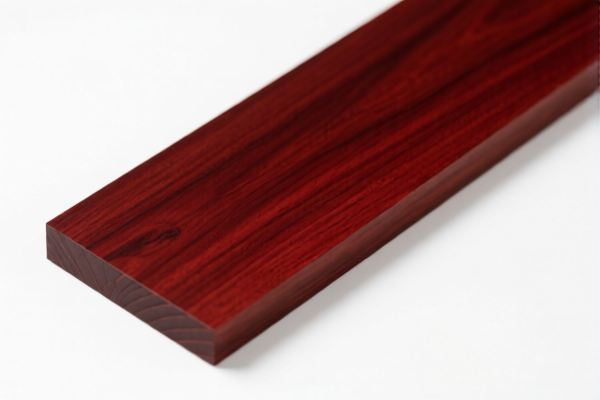
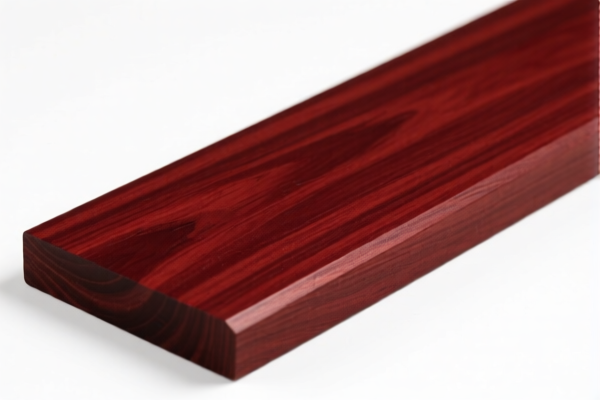
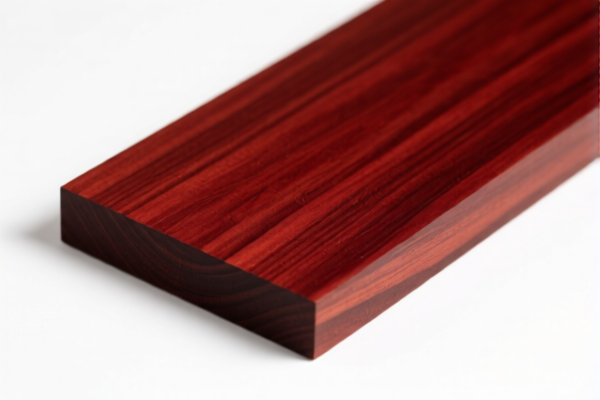
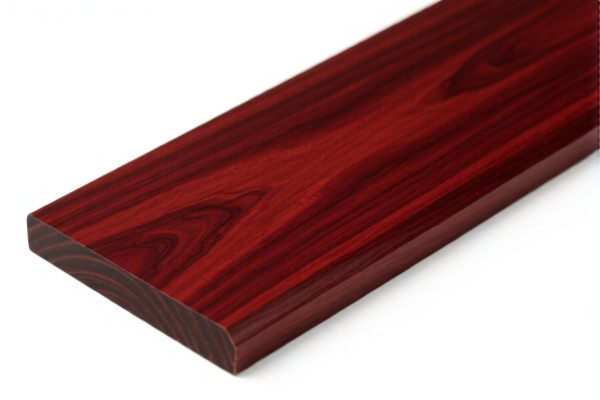
AI Analysis
🌲 Deep Red Mahogany Raw Timber: HS Code Classification & 2026 Customs Clearance Guide
🌐 HS Code Reference & Customs Strategy | 2026 Tariff Breakdown | Professional Import Compliance
📌 I. Product Definition & Classification: Understanding "Raw Timber"
Deep Red Mahogany is a high-value tropical hardwood, prized for its durability and aesthetic appeal. In international trade, its classification depends strictly on its processing level and form:
- Raw/Unprocessed Timber (Logs/Squared):
If the wood is simply cut from the tree, debarked, or squared into rough beams without significant planing, sawing to specific dimensions, or veneer production, it falls under Chapter 44, Heading 4403. - Veneer Sheets/Plywood:
If sliced into thin sheets or layered, it falls under Chapter 44, Heading 4412. - Constructed Wood Products (e.g., Windows):
If processed into specific installed components like window frames, it falls under Chapter 44, Heading 4418.
⚠️ Critical Distinction Point:
- If the timber is rough, unworked, or merely squared → It is classified as Semi-manufactured Wood (4403).
- If the timber is veneered or layered → It is classified as Plywood/veneered wood (4412).
- If the timber is manufactured into specific structures (e.g., windows) → It is classified as Builders' Joinery (4418).
📦 II. HS Code Classification Matrix (2026 Latest Tariff Reference)
| HS Code | Product Description | Application Scenario | Processing Level |
|---|---|---|---|
4403.49.02.00 |
Deep Red Mahogany, tropical wood, in raw or squared form | Rough logs, squared beams, unprocessed lumber | ✅ Raw/Coarse |
4403.12.00.60 |
Non-coniferous tropical wood (Deep Red Mahogany), unprocessed | Raw logs, unsquared timber | ✅ Raw/Coarse |
4412.31.42.00 |
Deep Red Mahogany, veneered plywood/laminated wood | Layered wood panels, plywood containing specific tropical veneers | ✅ Processed/Laminated |
4418.11.00.00 |
Deep Red Mahogany, windows & frames for outdoor use | Pre-fabricated window frames, exterior wood joinery | ✅ Manufactured/Installed |
🔍 Key Reminder:
-4403codes apply only to raw or semi-processed timber (logs, beams).
-4412applies if the wood is layered/veneered.
-4418applies if the wood is manufactured into specific building components (like windows).
- Misclassification between "raw timber" and "manufactured wood" can lead to severe customs penalties.
💰 III. 2026 Tariff Rate Breakdown (Including Duties & Surcharges)
✅ Applicable Country: United States (US)
✅ Origin: China (CN)
✅ Effective Date: From November 10, 2025 (including subsequent imports)
🎯 1. 4403.49.02.00 & 4403.12.00.60 —— Deep Red Mahogany (Raw/Unprocessed Timber)
These two codes represent the raw or roughly squared forms of Deep Red Mahogany. They share the same tariff structure.
| Item | Detail |
|---|---|
| Base Duty Rate | 0.0% (Ad Valorem) |
| Section 301 Surcharge | +25.0% (USITC Footnote: 9903.01.25) |
| Section 122 Surcharge | +10.0% (Executive Order on Illegal Logging/Trade Remedies) |
| Total Effective Rate | 35.0% |
| Tax Calculation | CIF Value × 35% |
| De Minimis Exemption? | ❌ No (deny_de_minimis applies to this category) |
| Legal Basis Path | IEEPA:9903.01.25 → IEEPA:9903.01.24 → USITC:4403.49.02.00 / 4403.12.00.60 → FOOTNOTE:9903.88.01 |
📌 Explanation:
- Base Duty: 0% because raw tropical timber often enjoys low base rates.
- 301 Tariff (25%): Applies to almost all Chinese-origin wood products under Section 301.
- Section 122 Tariff (10%): Additional surcharge for specific strategic goods, including certain wood products.
- Total 35%: This is a high-cost entry barrier. Importers must budget accordingly.
🎯 2. 4412.31.42.00 —— Deep Red Mahogany (Veneered/Laminated Plywood)
This code applies if the mahogany has been processed into veneers or layered plywood.
| Item | Detail |
|---|---|
| Base Duty Rate | 8.0% (Ad Valorem) |
| Section 301 Surcharge | +25.0% |
| Section 122 Surcharge | +10.0% |
| Total Effective Rate | 43.0% |
| Tax Calculation | CIF Value × 43% |
| De Minimis Exemption? | ❌ No |
| Legal Basis Path | IEEPA:9903.01.25 → IEEPA:9903.01.24 → USITC:4412.31.42.00 → FOOTNOTE:9903.88.01 |
📌 Note:
- Even though the base rate is higher (8%), the total rate is 43%, which is 8% higher than raw timber.
- This reflects the higher value-added nature of plywood/veneers.
🎯 3. 4418.11.00.00 —— Deep Red Mahogany (Windows/Frames for Outdoor Use)
This code applies if the mahogany has been manufactured into specific building components like windows or exterior frames.
| Item | Detail |
|---|---|
| Base Duty Rate | 3.2% (Ad Valorem) |
| Section 301 Surcharge | +25.0% |
| Section 122 Surcharge | +10.0% |
| Total Effective Rate | 38.2% |
| Tax Calculation | CIF Value × 38.2% |
| De Minimis Exemption? | ❌ No |
| Legal Basis Path | IEEPA:9903.01.25 → IEEPA:9903.01.24 → USITC:4418.11.00.00 → FOOTNOTE:9903.88.01 |
📌 Explanation:
- The base duty is lower (3.2%) than raw timber (0%) or plywood (8%), but the total rate is 38.2%.
- This is 3.2% lower than raw timber but 4.8% lower than plywood.
- Strategic Insight: If you are exporting finished window frames, this may be the most cost-effective classification compared to raw logs, provided the product meets the "outdoor use/window" definition.
🛠️ IV. Customs Clearance Practical Advice (Pitfall Avoidance Guide)
✅ 1. Required Documentation Checklist (Non-Negotiable)
| Document | Required | Explanation |
|---|---|---|
| ✅ Product Specification Sheet | ✔️ | Must specify species (Deep Red Mahogany), form (log/beam/plywood/window), and treatment. |
| ✅ Photographs | ✔️ | Clear images showing the wood's cross-section, bark (if any), and overall form. |
| ✅ Commercial Invoice | ✔️ | Must clearly state "Deep Red Mahogany" and the exact HS Code. Avoid vague terms like "Wooden Planks." |
| ✅ Packing List | ✔️ | Detail dimensions, weight, and packaging method. |
| ✅ Phytosanitary Certificate | ✔️ | Critical for wood. Proof of pest-free status required by USDA APHIS. |
| ✅ Lacey Act Declaration | ✔️ | Mandatory for all wood products in the US. Requires plant name, quantity, and country of harvest. |
✅ 2. Classification Strategy (Key Rules)
🔥 “Form Dictates Code: Raw = 4403, Plywood = 4412, Window = 4418!”
| Scenario | Correct Classification | Common Mistake |
|---|---|---|
| Raw logs or squared beams | 4403.49.02.00 or 4403.12.00.60 |
Misclassifying as plywood → Higher tax (43% vs 35%) |
| Veneered plywood panels | 4412.31.42.00 |
Misclassifying as raw timber → Lower tax risk, but audit failure |
| Pre-fabricated windows | 4418.11.00.00 |
Misclassifying as raw timber → Incorrect usage definition |
| Raw timber declared as "Furniture" | ❌ Invalid | Furniture has different HS codes and potentially different duties |
✅ 3. Special Handling Tips
| Situation | Recommendation |
|---|---|
| OEM Custom Wood | Provide customer orders and design specs to justify the specific form. |
| Mixed Shipments | If a shipment contains both raw timber and windows, separate the HS Codes. Do not lump them together. |
| Lacey Act Compliance | Ensure the Plant Name is accurately reported. Misreporting the species can lead to seizures. |
| Pest Control | Ensure the Phytosanitary Certificate is valid. Without it, goods will be held or destroyed. |
🌍 V. Global Market Comparison (2026 Update)
| Country/Region | Recommended HS Code | Tariff (China Origin) | Certification Required | Notes |
|---|---|---|---|---|
| 🇺🇸 USA | 4403.49.02.00 |
35.0% (Raw) | Lacey Act + Phytosanitary | Highest barrier due to 301+122 tariffs. |
| 🇨🇳 China | 4403.49.02.00 |
0-5% (Import Duty) | N/A | Low duty, but check export restrictions. |
| 🇪🇺 EU | 4403.49.00 |
0-6% | FLEGT License (if applicable) | EUDR (EU Deforestation Regulation) compliance required post-2025. |
| 🇬🇧 UK | 4403.49.00 |
0-6% | UK Timber Due Diligence | Similar to EU post-Brexit. |
📌 Conclusion:
- The US is the most challenging market for Chinese-origin Deep Red Mahogany due to the 35-43% effective tariff.
- EUDR (EU Deforestation Regulation) is now a major compliance hurdle for the EU market, requiring supply chain traceability.
📌 VI. Common Errors & Pitfall Guide (Lessons Learned)
❌ Mistake 1: Declaring "Mahogany Wood" without specifying the form (Raw vs. Plywood).
👉 Result: Customs will assign the highest possible duty (43%) or hold the shipment for inspection.
❌ Mistake 2: Ignoring the Lacey Act Declaration.
👉 Result: Seizure of goods, fines, and potential legal action.
❌ Mistake 3: Mislabeling Plywood as Raw Timber to avoid higher duties.
👉 Result: Customs audit reveals the truth. Penalty + Back Taxes.
❌ Mistake 4: Missing the Phytosanitary Certificate.
👉 Result: Goods rejected at the border. Destruction or re-export at importer’s cost.
✅ Correct Approach:
“Deep Red Mahogany, Raw Timber, Squared Beams, Unprocessed, Lacey Act Compliant, Phytosanitary Certificate Attached.”
🎯 VII. Conclusion: Precision Classification, Cost Optimization
🎯 Remember the Mantra:
🔹 “Raw is 35%, Plywood is 43%, Windows are 38.2%. Form matters!”
🔹 “Lacey Act & Phytosanitary are mandatory. No exceptions.”
🔹 “HS Code determines your profit margin. Get it right.”
📌 Pro Tip:
If your product qualifies for Exclusions under Section 301 (though rare for wood), ensure you have the exclusion list reference on your entry.
Consider Pre-Ruling Requests from CBP if the product’s classification is ambiguous (e.g., is it a "window frame" or "raw timber"?).
📣 Immediate Action:
📞 Engage a licensed customs broker.
📄 Prepare all documentation (Lacey, Phytosanitary, Invoice).
🚀 Clear customs smoothly, minimize costs, and scale your business!
✨ Professional Customs Compliance Starts with Accurate Classification!
💼 Every dollar in duties counts. Optimize your strategy today!
Customer Reviews
About HS Code Classification
The Harmonized System (HS) is an internationally standardized nomenclature developed by the World Customs Organization (WCO) to classify traded products. Over 200 countries use the HS system as the basis for customs tariffs, trade statistics, and import/export regulations.
Each HS code follows a hierarchical structure:
- Chapter (2 digits) — Broad category of goods (e.g., Chapter 84: Machinery and Mechanical Appliances)
- Heading (4 digits) — More specific grouping within the chapter
- Subheading (6 digits) — Internationally standardized breakdown, used by all WCO member countries
- National subdivisions (8-10 digits) — Country-specific extensions for further classification, such as US HTSUS 10-digit codes
Correct HS code classification is essential for smooth customs clearance, accurate duty payment, and compliance with trade regulations. Misclassification can lead to customs delays, overpayment of duties, or penalties.
When importing from CN to US, the applicable tariff rates may include:
- Most-Favored-Nation (MFN) rate — The standard duty rate applied to WTO members
- General rate — Applied to countries without trade agreements
- Trade remedy duties — Additional tariffs such as Section 301 (anti-dumping), Section 232 (national security), or countervailing duties
The information provided on this page is for reference purposes only. For official classification, please consult with your local customs authority or a licensed customs broker.