Deep Red Mahogany Rough Sawn Timber
CN → US| HS Code | Tariff Rate | Origin | Destination | Doc |
|---|---|---|---|---|
| 4407210000 | 35.0% | CN | US | Official Doc |
| 4407290206 | 35.0% | CN | US | Official Doc |
Product Images
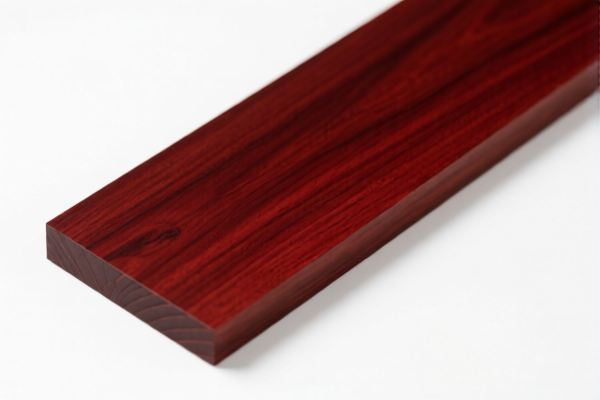
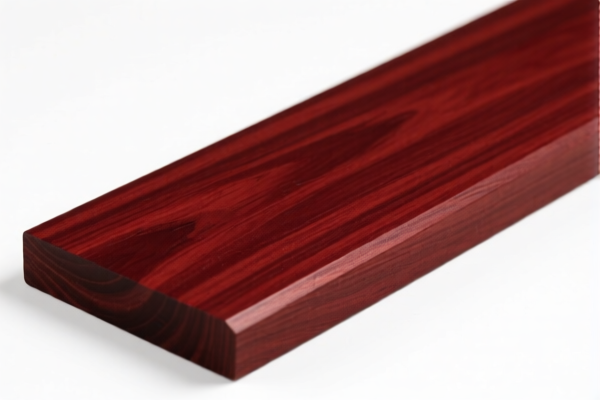
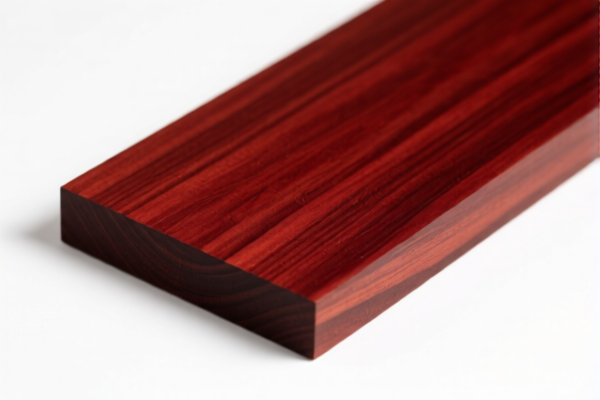
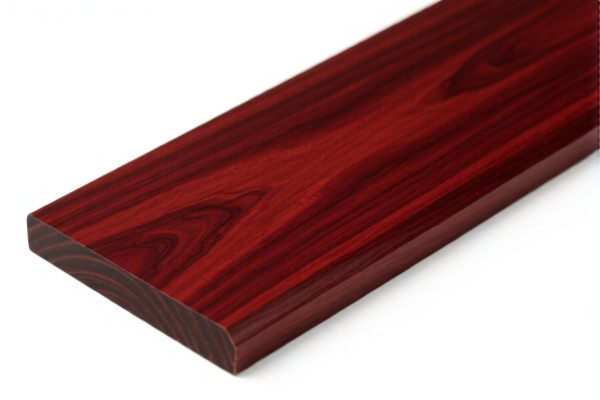
AI Analysis
🌲 Deep Red Mahogany Rough Sawn Timber (Swietenia spp.)
🌐 HS Code Reference & Customs Clearance Guide | 2026 Latest Tariff Analysis | Professional Strategy
📌 I. Product Definition & Classification: What Exactly Is "Deep Red Mahogany"?
Deep Red Mahogany, scientifically known as Swietenia spp., is a premium tropical hardwood prized for its rich color, fine texture, and stability. In international trade, it falls under the category of "Wood Sawn Lengthwise, of a Thickness Exceeding 6 mm."
However, classification is not one-size-fits-all. It is critical to distinguish between True Mahogany (Swietenia) and African Mahogany (Khaya), as they have different HS codes and potential regulatory nuances.
⚠️ Key Distinction Point:
- If the wood is botanically Swietenia spp. (True/Swietenia Mahogany) → HS Code: 4407.21.00.00
- If the wood is botanically Khaya spp. (African Mahogany) → HS Code: 4407.29.02.06
- Physical State: "Rough Sawn" implies the wood has been cut to length but not necessarily planed or sanded smooth, yet it must exceed 6mm in thickness to be classified here.
📦 II. HS Code Classification Details (2026 Latest Tariff Reference)
| HS Code | Product Description | Applicable Scenario | Tax Rate (China Origin) |
|---|---|---|---|
4407.21.00.00 |
Wood sawn lengthwise, sliced, or peeled, thickness > 6mm: Of Tropical Wood: Mahogany (Swietenia spp.) | Genuine Swietenia mahogany logs, planks, or boards. | 25.0% |
4407.29.02.06 |
Wood sawn lengthwise, sliced, or peeled, thickness > 6mm: Of Tropical Wood: Other Acajou d'Afrique (Khaya spp.), also known as African Mahogany | Khaya species timber marketed as African Mahogany. | 25.0% |
🔍 Critical Reminder:
- Both codes apply to wood exceeding 6mm in thickness. Wood ≤ 6mm is classified differently (usually as plywood or veneer).
- Rough Sawn does not exempt the wood from this classification. Even if unplaned, if it is sawn/chipped lengthwise and >6mm, it belongs here.
- Botanical Identification is Key: Customs may require botanical proof to distinguish Swietenia from Khaya. Misclassification can lead to penalties.
💰 III. 2026 Latest Tariff Rate Breakdown (Detailed)
✅ Applicable Country: United States (US)
✅ Origin: China (CN)
✅ Effective Date: Ongoing under current trade agreements (Section 301)
🎯 1. 4407.21.00.00 —— Mahogany (Swietenia spp.)
| Item | Detail |
|---|---|
| Base Tariff | 0.0% (ad valorem) |
| Additional Tariff (Section 301) | +25.0% |
| Total Tax Rate | 25.0% |
| Tax Calculation | CIF Value × 25.0% |
| De Minimis Exemption | ❌ Not Applicable (Wood products generally excluded from low-value exemptions for agricultural/timber imports) |
| Legal Basis | HTSUS 4407.21.00.00 + USITC Footnote for Section 301 |
📌 Explanation:
- The Base Tariff is 0%, which might seem favorable.
- However, the 25% Section 301 tariff is the dominant cost driver.
- This applies to all Swietenia mahogany imported from China.
- No partial exemptions apply to rough-sawn timber of this category.
🎯 2. 4407.29.02.06 —— African Mahogany (Khaya spp.)
| Item | Detail |
|---|---|
| Base Tariff | 0.0% (ad valorem) |
| Additional Tariff (Section 301) | +25.0% |
| Total Tax Rate | 25.0% |
| Tax Calculation | CIF Value × 25.0% |
| De Minimis Exemption | ❌ Not Applicable |
| Legal Basis | HTSUS 4407.29.02.06 + USITC Footnote for Section 301 |
📌 Note:
- Despite being "Other" tropical wood, Khaya (African Mahogany) is explicitly listed with the same 25% total tax rate when imported from China.
- The distinction between Swietenia and Khaya is critical for phytosanitary and CITES regulations, even if the tax rate is identical.
🛠️ IV. Customs Clearance Practical Advice (Field Guide)
✅ 1. Required Documentation Checklist (Non-Negotiable)
| Document | Required? | Description |
|---|---|---|
| ✅ Commercial Invoice | ✔️ | Must specify "Wood, Sawn, >6mm, Mahogany (Swietenia/Khaya spp.)" |
| ✅ Packing List | ✔️ | Detail dimensions, volume (CBM), and weight |
| ✅ Phytosanitary Certificate | ✔️ | Issued by country of origin. Crucial for wood. |
| ✅ CITES Permit (if applicable) | ✔️ | Swietenia species are often CITES-listed. Verify if permits are needed for Swietenia mahagoni or Swietenia macrophylla. |
| ✅ Botanical Identification | ✔️ | Expert confirmation if Swietenia vs. Khaya is ambiguous. |
| ✅ Bill of Lading/Air Waybill | ✔️ | Standard shipping docs |
| ✅ ISPM 15 Marking | ✔️ | Confirm wood packaging is heat-treated or fumigated |
⚠️ Warning:
- CITES Compliance: Swietenia species (especially S. macrophylla) are listed in CITES Appendix II. Without proper export permits from the country of origin, your shipment WILL BE SEIZED.
- Phytosanitary: Wood is highly scrutinized for pests (e.g., bark beetles). A valid phytosanitary certificate is mandatory.
✅ 2. Declaration Tips (Golden Rules)
🔥 “Specify Species, Confirm Thickness, CITES is King!”
| Scenario | Correct Declaration | Wrong Declaration |
|---|---|---|
| Swietenia spp. | 4407.21.00.00 – Mahogany (Swietenia spp.) |
Vague term "Mahogany" → May be classified under higher general rates or flagged |
| Khaya spp. | 4407.29.02.06 – African Mahogany (Khaya spp.) |
Mislabeling Khaya as Swietenia → CITES violation risk |
| Thickness ≤ 6mm | Do NOT use 4407 codes. Use veneer/plywood codes. | Using 4407 for thin wood → Incorrect classification |
| Planed/Sanded | Still 4407.xx.xx.xx if >6mm. |
Assuming planing changes HS code → It does not. |
✅ 3. Special Handling & Pitfalls
| Issue | Advice |
|---|---|
| CITES Permit | Check the country of origin. If from Brazil (for S. macrophylla), CITES permits are strictly enforced. If from sustainable sources with proper paperwork, clearance is smoother. |
| Fumigation | Ensure wood is free of living organisms. Non-compliant wood will be destroyed at importer’s expense. |
| Valuation | Customs may challenge CIF value. Keep records of raw log prices, milling costs, and transport. |
| Duty Payment | Prepare for 25% duty upfront. Factor this into your Landed Cost calculation. |
🌍 V. Global Market Comparison (2026)
| Country/Region | Recommended HS Code | Tariff (China Origin) | Key Requirement | Notes |
|---|---|---|---|---|
| 🇺🇸 USA | 4407.21.00.00 or 4407.29.02.06 |
25.0% | CITES + Phytosanitary | High scrutiny on tropical timber |
| 🇨🇳 China | 4407.21.00 / 4407.29.02 |
Varies (Check FTA) | Phytosanitary | Lower duties if under FTA (e.g., RCEP) |
| 🇪🇺 EU | 4407.21.00 / 4407.29.02 |
0%–6% | EUTR (Timber Regulation) | EUTR Compliance is mandatory |
| 🇬🇧 UK | 4407.21.00 / 4407.29.02 |
0%–6% | UK Tree Planting & Forestry Act | Similar to EU EUTR |
📌 Conclusion:
- USA: High tariff (25%) + CITES/Phytosanitary.
- EU/UK: Lower tariff but strict environmental compliance (EUTR/UKTRA).
- China: Potentially lower tariffs under FTAs, but check specific origin rules.
📌 VI. Common Mistakes & Avoidance Guide (Lessons Learned)
❌ Mistake 1: Using generic term "Mahogany" without specifying Swietenia or Khaya.
👉 Consequence: Customs may delay for botanical verification, incurring demurrage fees.
❌ Mistake 2: Ignoring CITES permits for Swietenia macrophylla.
👉 Consequence: Shipment seizure, fines, and blacklisting.
❌ Mistake 3: Misdeclaring thickness.
👉 Consequence: If <6mm, it’s not 4407. Incorrect classification leads to back-taxes and penalties.
❌ Mistake 4: Assuming "Rough Sawn" means no processing.
👉 Consequence: Incorrectly declaring as "Logs" (HS 4403) instead of "Sawn Wood" (HS 4407). Logs have different tariff rates and phytosanitary requirements.
✅ Correct Practice:
"Mahogany Timber, Rough Sawn, >6mm Thickness, Swietenia spp. (or Khaya spp.), CITES Permit #XXXX, Phytosanitary Certificate #YYYY"
🎯 VII. Conclusion: Professional Declaration Saves Money & Time
🎯 Key Takeaways:
🔹 HS Code is Species-Specific: Swietenia vs. Khaya matters for CITES, even if tax is same.
🔹 Thickness is Crucial: >6mm =4407; ≤6mm = Veneer/Plywood.
🔹 Tax is 25%: For China-origin wood into the US, expect 25% duty.
🔹 Compliance is Non-Negotiable: CITES and Phytosanitary certificates are mandatory for wood.
📌 Pro Tip:
If your mahogany is sourced from Central/South America (e.g., Brazil, Peru) and exported to the US, ensure CITES permits are perfectly aligned with the invoice and packing list. Any mismatch = Detention.
📣 Immediate Action:
📞 Contact your customs broker with the following:
1. Botanical species name (Swietenia or Khaya)
2. Exact thickness of each board/log
3. CITES permit numbers (if applicable)
4. Phytosanitary certificate
🚀 Clear customs smoothly, avoid seizures, and maximize your profit margin!
✨ Professional Clearance Starts with Accurate Classification!
💼 Your Timber, Your Rules, Your Compliance!
Customer Reviews
About HS Code Classification
The Harmonized System (HS) is an internationally standardized nomenclature developed by the World Customs Organization (WCO) to classify traded products. Over 200 countries use the HS system as the basis for customs tariffs, trade statistics, and import/export regulations.
Each HS code follows a hierarchical structure:
- Chapter (2 digits) — Broad category of goods (e.g., Chapter 84: Machinery and Mechanical Appliances)
- Heading (4 digits) — More specific grouping within the chapter
- Subheading (6 digits) — Internationally standardized breakdown, used by all WCO member countries
- National subdivisions (8-10 digits) — Country-specific extensions for further classification, such as US HTSUS 10-digit codes
Correct HS code classification is essential for smooth customs clearance, accurate duty payment, and compliance with trade regulations. Misclassification can lead to customs delays, overpayment of duties, or penalties.
When importing from CN to US, the applicable tariff rates may include:
- Most-Favored-Nation (MFN) rate — The standard duty rate applied to WTO members
- General rate — Applied to countries without trade agreements
- Trade remedy duties — Additional tariffs such as Section 301 (anti-dumping), Section 232 (national security), or countervailing duties
The information provided on this page is for reference purposes only. For official classification, please consult with your local customs authority or a licensed customs broker.