Deer Hide Splits
CN → US| HS Code | Tariff Rate | Origin | Destination | Doc |
|---|---|---|---|---|
| 4104195070 | 13.3% | CN | US | Official Doc |
| 4104195080 | 13.3% | CN | US | Official Doc |
| 4101907000 | 20.8% | CN | US | Official Doc |
| 4101905000 | 20.8% | CN | US | Official Doc |
| 4106910000 | 38.3% | CN | US | Official Doc |
| 4106920000 | 38.3% | CN | US | Official Doc |
Product Images
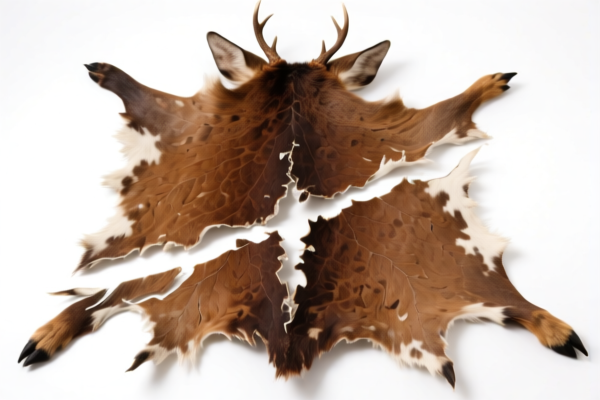
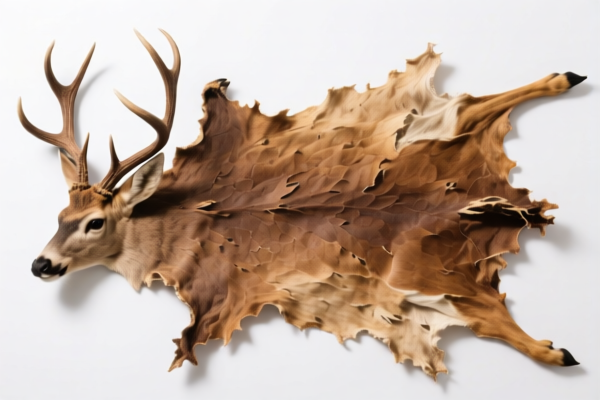
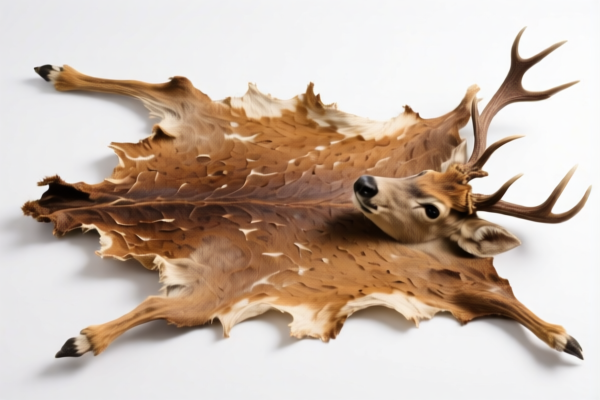

AI Analysis
🦌 Deer Hide Splits (Tanned or Crust Skins of Other Animals, Without Wool or Hair on)
🌐 HS Code Reference & Customs Clearance Guide | 2026 Updated Tariff Analysis | Professional Import Strategy
📌 One, Product Definition & Classification: What Exactly Are "Deer Hide Splits"?
Deer hide splits refer to tanned or crust skins of deer (or other non-bovine/equine animals), processed without wool or hair, and not further prepared (e.g., not finished into leather goods). These are typically split hides — meaning the hide has been cut into layers (e.g., top grain and lower split), with the split portion used for lower-grade leather products like footwear linings, upholstery, or industrial leather.
⚠️ Key Classification Clue:
- If the hide is tanned or crust, without hair, not further processed, and split → It falls under 4106.91.00.00 or 4106.92.00.00, depending on moisture state. - Not raw, not fully finished, not used for garments or accessories.
📦 Two, HS Code Classification Details (2026 Official Tariff Breakdown)
| HS Code | Product Description | Moisture State | Key Features | Applicable For |
|---|---|---|---|---|
4106.91.00.00 |
Tanned or crust skins of other animals (e.g., deer), without wool or hair, whether or not split, but not further prepared: In the wet state (including wet-blue) | Wet (including wet-blue) | High moisture content, not fully dried; often used in intermediate tanning stages | Intermediate tanning suppliers, leather processors |
4106.92.00.00 |
Tanned or crust skins of other animals (e.g., deer), without wool or hair, whether or not split, but not further prepared: In the dry state (crust) | Dry (crust) | Fully dried, stable for long-term storage and transport; ready for further processing | Exporters, tanneries, leather manufacturers |
🔍 Critical Distinction:
- Wet state =4106.91.00.00→ High moisture, not fully dried
- Dry state (crust) =4106.92.00.00→ Low moisture, stable for shipping
- Deer hides are not bovine/equine, so NOT under 4104.19.50.70 or 4104.19.50.80
💰 Three, 2026 Updated Tariff Rate Breakdown (Including附加 Taxes & Policy Add-ons)
✅ Applicable Country: United States (US)
✅ Origin: China (CN)
✅ Effective Date: November 10, 2025 (including subsequent imports)
🎯 1. 4106.91.00.00 — Wet-State Deer Hide Splits (Including Wet-Blue)
| Item | Detail |
|---|---|
| Base Tariff Rate | 3.3% (ad valorem) |
| Additional Tariff (USITC 301) | +25.0% (from Section 301 of U.S. Trade Act) |
| IEEPA Additional Tax | +0.0% (not applicable for this category) |
| Total Effective Tax Rate | 28.3% |
| Tax Calculation | CIF Value × 28.3% |
| De Minimis Threshold | ❌ Not eligible (denied under U.S. de minimis rule) |
| Legal Basis Path | USITC:4106.91.00.00 → FOOTNOTE:9903.88.01 → IEEPA:9903.01.25 (if applicable) |
📌 Explanation:
- The 3.3% base tariff applies to all tanned hides under this heading.
- The +25% USITC 301 tariff is triggered due to China-origin goods under the Section 301 trade actions.
- No IEEPA tax applies here (unlike some electronics or steel).
- Total: 28.3% — a moderate but significant tariff for raw leather intermediates.
🎯 2. 4106.92.00.00 — Dry-State Deer Hide Splits (Crust)
| Item | Detail |
|---|---|
| Base Tariff Rate | 3.3% (ad valorem) |
| Additional Tariff (USITC 301) | +25.0% |
| IEEPA Additional Tax | +0.0% |
| Total Effective Tax Rate | 28.3% |
| Tax Calculation | CIF Value × 28.3% |
| De Minimis Threshold | ❌ Not eligible |
| Legal Basis Path | USITC:4106.92.00.00 → FOOTNOTE:9903.88.01 → IEEPA:9903.01.25 |
📌 Note:
- Same tariff as wet-state splits — 28.3% total — because both are subject to the same USITC 301 add-on.
- The dry state is not exempt from additional tariffs — only raw hides (e.g., 4101.90.70.00) are tariff-free.
🛠️ Four, Customs Clearance Best Practices (Real-World Pro Tips)
✅ 1. Required Documentation (Must-Have List)
| Document | Required? | Purpose |
|---|---|---|
| ✅ Commercial Invoice | ✔️ | Clearly state: “Deer Hide Splits, Tanned, Crust/Wet State, Not Further Prepared” |
| ✅ Packing List | ✔️ | Show weight, quantity, moisture state (wet/dry), and HS code |
| ✅ Bill of Lading / Air Waybill | ✔️ | Proves shipment origin and destination |
| ✅ Certificate of Origin (CO) | ✔️ | Critical for tariff eligibility; China origin = 28.3% |
| ✅ Material Safety Data Sheet (MSDS) | ✔️ | If tanning chemicals used (e.g., chromium) |
| ✅ Product Photos (with labels) | ✔️ | Show split edges, tanning marks, moisture level |
| ✅ Third-Party Test Report (if needed) | ✔️ | For chemical content (e.g., heavy metals, formaldehyde) |
✅ 2.申报技巧(Key Tips for Accurate HS Code Selection)
🔥 "Wet vs Dry — That’s the Difference!"
| Scenario | Correct HS Code | Wrong Code | Risk |
|---|---|---|---|
| Wet-blue deer hide splits (moisture present) | 4106.91.00.00 |
4106.92.00.00 |
Higher tariff risk |
| Fully dried crust deer hide splits | 4106.92.00.00 |
4106.91.00.00 |
Misclassification, audit risk |
| Deer hide with hair on | ❌ Not eligible | 4106.91/92.00.00 |
Wrong category — must be hairless |
| Finished leather (e.g., shoe uppers) | ❌ Not eligible | 4114.10.00.00 |
Too advanced — not “not further prepared” |
📌 Pro Tip:
- Always verify moisture content before shipment.
- Use "crust" for dry hides, "wet-blue" for wet ones.
- Never label as “raw” — these are tanned/crust, not raw.
✅ 3. Special Cases & Risk Mitigation
| Situation | Recommended Action |
|---|---|
| Deer hides from Vietnam, Thailand, or Mexico | Apply for Certificate of Origin — may qualify for lower or zero tariffs under trade agreements |
| Deer hide splits used for luxury goods | Ensure no animal cruelty claims — provide sustainable sourcing proof |
| High-value shipment (e.g., $50k+) | Request Advance Ruling (AR) from U.S. CBP to lock in HS code and tariff |
| Split hides with visible defects | Declare accurately — don’t hide flaws; may trigger inspection or rejection |
🌍 Five, Global Market Tariff Comparison (2026)
| Country/Region | Recommended HS Code | Tariff Rate | Certification Required | Notes |
|---|---|---|---|---|
| 🇺🇸 United States | 4106.91.00.00 / 4106.92.00.00 |
28.3% (China origin) | None (unless chemicals involved) | High risk if not declared correctly |
| 🇨🇳 China | 4106.91.00.00 / 4106.92.00.00 |
0% (if domestic) | CCC (if applicable) | No additional tariffs |
| 🇪🇺 European Union | 4106.91.00.00 / 4106.92.00.00 |
0% (if from non-EEA) | CE, REACH | No 301/IEEPA taxes |
| 🇦🇺 Australia | 4106.91.00.00 / 4106.92.00.00 |
5% | RCM | No additional tariffs |
| 🇯🇵 Japan | 4106.91.00.00 / 4106.92.00.00 |
0% | PSE | No extra charges |
📌 Insight:
- Only the U.S. imposes the 28.3% tariff on Chinese-origin deer hide splits.
- EU, Japan, Australia are much more favorable — 0% to 5%.
📌 Six, Common Mistakes & How to Avoid Them (Real Cases)
❌ Mistake 1: Labeling wet-blue deer hides as “dry crust” to avoid scrutiny
👉 Result: CBP audit, penalty, import delay, possible seizure
❌ Mistake 2: Declaring deer hide splits as “raw hides” (e.g., 4101.90.70.00)
👉 Result: Incorrect classification → 45%+ penalties + refund required
❌ Mistake 3: Not including moisture state in invoice
👉 Result: CBP may reclassify as wet state → higher tax
❌ Mistake 4: Using generic name like “deer leather” instead of “deer hide splits”
👉 Result: Misunderstanding → HS code mismatch
✅ Correct Declaration Example:
“Tanned Deer Hide Splits, Crust State, Not Further Prepared, 100 kg, Origin: China, HS Code: 4106.92.00.00, CIF: $15,000”
🎯 Seven, Conclusion: Precision Matters — One Digit Changes Everything!
🎯 Remember the Golden Rule:
🔹 "Wet = 4106.91.00.00, Dry = 4106.92.00.00, Hairless = Yes, Raw = No"
🔹 "28.3% tariff in the U.S. for China-origin — no de minimis, no escape!"
📌 Pro Tip:
If your deer hide splits are originating from Vietnam, India, or Thailand, apply for a Certificate of Origin — you may avoid the 25% USITC add-on and pay only 3.3%.
📣 Take Action Now:
📞 Contact a licensed U.S. Customs Broker + Provide product photos + moisture test report
🚀 Request Advance Ruling (AR) for high-value shipments
🌐 Use HS Code lookup tools (e.g., U.S. CBP, World Customs Organization)
✨ Professional Customs Clearance Starts with Accurate Classification!
💼 Your profit margin depends on the right HS code — don’t gamble with 28.3%!
Customer Reviews
About HS Code Classification
The Harmonized System (HS) is an internationally standardized nomenclature developed by the World Customs Organization (WCO) to classify traded products. Over 200 countries use the HS system as the basis for customs tariffs, trade statistics, and import/export regulations.
Each HS code follows a hierarchical structure:
- Chapter (2 digits) — Broad category of goods (e.g., Chapter 84: Machinery and Mechanical Appliances)
- Heading (4 digits) — More specific grouping within the chapter
- Subheading (6 digits) — Internationally standardized breakdown, used by all WCO member countries
- National subdivisions (8-10 digits) — Country-specific extensions for further classification, such as US HTSUS 10-digit codes
Correct HS code classification is essential for smooth customs clearance, accurate duty payment, and compliance with trade regulations. Misclassification can lead to customs delays, overpayment of duties, or penalties.
When importing from CN to US, the applicable tariff rates may include:
- Most-Favored-Nation (MFN) rate — The standard duty rate applied to WTO members
- General rate — Applied to countries without trade agreements
- Trade remedy duties — Additional tariffs such as Section 301 (anti-dumping), Section 232 (national security), or countervailing duties
The information provided on this page is for reference purposes only. For official classification, please consult with your local customs authority or a licensed customs broker.