Defoamer for Medical Waste Treatment
CN → US| HS Code | Tariff Rate | Origin | Destination | Doc |
|---|---|---|---|---|
| 3402901000 | 38.8% | CN | US | Official Doc |
| 3808594000 | 40.0% | CN | US | Official Doc |
| 3402905050 | 38.7% | CN | US | Official Doc |
| 3808999501 | 40.0% | CN | US | Official Doc |
Product Images
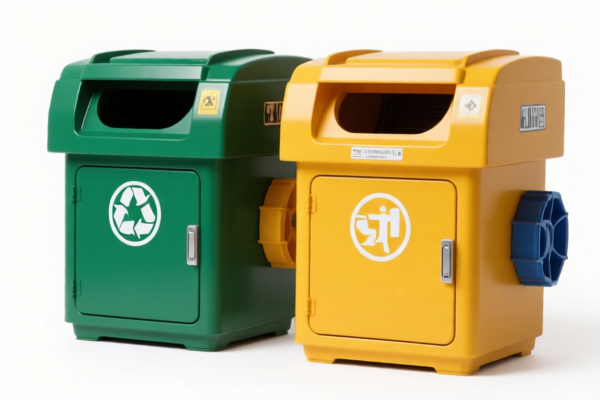
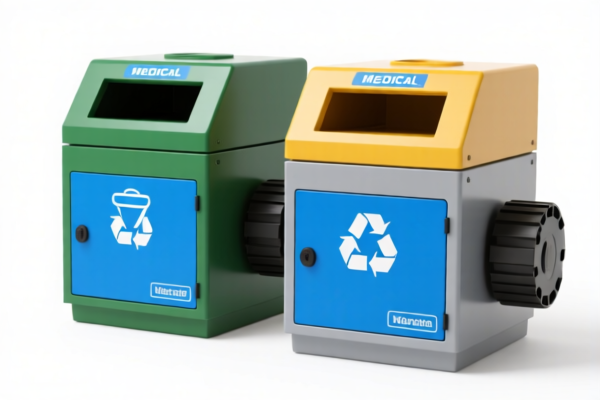
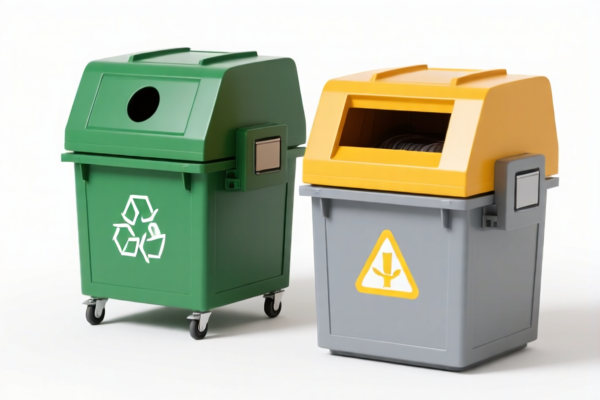

AI Analysis
🏥 Defoamer for Medical Waste Treatment (MWT)
🌐 HS Code Reference & Customs Clearance Guide | 2026 Latest Tariff Analysis | Professional Clearance Strategy
📌 1. Product Definition and Classification: Do You Truly Understand "Defoamer"?
Defoamers are critical chemical additives used to eliminate or prevent foam formation in industrial processes. In the context of Medical Waste Treatment (MWT), defoamers are primarily used in anaerobic digestion, composting, or chemical disinfection systems to improve process efficiency.
Internationally, these products are typically classified based on their chemical nature and primary function: * Surfactant-based Defoamers: Often classified under Chapter 34 (Soap, Organic Surface-Active Agents, Washing Preparations). * Biocide/Disinfectant-integrated Defoamers: If the product is primarily designed to disinfect while defoaming, it may fall under Chapter 38 (Insecticides, Rodenticides, Fungicides, Herbicides, Disinfectants).
⚠️ Key Classification Distinction:
- If the product is primarily a surfactant/cleaning agent with defoaming properties → Likely HS 3402.90.xxxxx
- If the product is primarily a disinfectant/pesticide with defoaming properties → Likely HS 3808.xxxxx
- Critical Note: The final classification depends on the principal character of the mixture and the specific composition provided by the manufacturer.
📦 2. HS Code Classification Details (Based on Provided Data)
| HS Code | Product Description | Summary & Logic | Total Tax Rate | Tax Breakdown |
|---|---|---|---|---|
3402.90.10.00 |
Chemical Preparations (Surfactant Type) | The chemical nature of defoamers aligns with synthetic detergents and surface-active agents. | 38.8% | Base: 3.8% Addl: 25.0% Section 301/122: 10% |
3808.59.40.00 |
Disinfectants & Similar Products | Defoamers used in MWT are categorized with disinfectants due to their application in sanitation and waste treatment. | 40.0% | Base: 5.0% Addl: 25.0% Section 301/122: 10% |
3402.90.50.50 |
Other Organic Surface-Active Agents | Classified as a preparation/ additive; compatible with other categories outside of cleaning/washing specifically. | 38.7% | Base: 3.7% Addl: 25.0% Section 301/122: 10% |
3808.99.95.01 |
Disinfectants (Extended Category) | Purpose aligns with disinfectant-like products; material attributes match other items in this code. | 40.0% | Base: 5.0% Addl: 25.0% Section 301/122: 10% |
🔍 Key Insight:
- All four HS Codes listed result in high total tariff rates (38.7%–40.0%) for imports from China to the US.
- The difference between 38.7% and 40.0% lies mainly in the Base Duty (3.7%/3.8% vs. 5.0%), while the Additional Tariffs (25% + 10%) remain constant across these categories.
💰 3. 2026 Latest Tariff Rate Breakdown (Including Additional Taxes)
✅ Applicable Country: United States (US)
✅ Origin: China (CN)
✅ Effective Date: 2025/2026 (Current Trade Policies)
🎯 1. HS 3402.90.10.00 – Surfactant-Type Defoamer
| Item | Details |
|---|---|
| Base Duty | 3.8% |
| Section 301 Additional Duty | +25.0% |
| Section 122 / IEEPA Additional Duty | +10.0% |
| Total Duty Rate | 38.8% |
| Calculation Basis | CIF Value × 38.8% |
| De Minimis Exemption | ❌ Not Applicable (Deny De Minimis for Section 301 goods) |
📌 Explanation:
- The 25% Section 301 tariff applies to most chemical preparations from China.
- The 10% additional duty (often under Section 122 or IEEPA authorities) further increases the cost.
- Total: 38.8% is a significant cost factor.
🎯 2. HS 3808.59.40.00 – Disinfectant-Type Defoamer
| Item | Details |
|---|---|
| Base Duty | 5.0% |
| Section 301 Additional Duty | +25.0% |
| Section 122 / IEEPA Additional Duty | +10.0% |
| Total Duty Rate | 40.0% |
| Calculation Basis | CIF Value × 40.0% |
| De Minimis Exemption | ❌ Not Applicable |
📌 Explanation:
- Disinfectants often carry a slightly higher base duty (5.0%) compared to some surfactants.
- However, the additional taxes remain identical, making the total rate 0.2% higher than the surfactant classification.
🎯 3. HS 3402.90.50.50 – Other Organic Surface-Active Agents
| Item | Details |
|---|---|
| Base Duty | 3.7% |
| Section 301 Additional Duty | +25.0% |
| Section 122 / IEEPA Additional Duty | +10.0% |
| Total Duty Rate | 38.7% |
| Calculation Basis | CIF Value × 38.7% |
| De Minimis Exemption | ❌ Not Applicable |
📌 Explanation:
- This code offers the lowest total duty rate (38.7%) among the options.
- Suitable if the defoamer is primarily a general-purpose chemical additive not strictly a "disinfectant."
🎯 4. HS 3808.99.95.01 – Other Disinfectants
| Item | Details |
|---|---|
| Base Duty | 5.0% |
| Section 301 Additional Duty | +25.0% |
| Section 122 / IEEPA Additional Duty | +10.0% |
| Total Duty Rate | 40.0% |
| Calculation Basis | CIF Value × 40.0% |
| De Minimis Exemption | ❌ Not Applicable |
📌 Explanation:
- Similar to3808.59.40.00, this code attracts the highest total duty (40.0%).
- Use only if the product’s primary function is unequivocally disinfection.
🛠️ 4. Customs Clearance Practical Advice (Pitfall Avoidance Guide)
✅ 1. Required Documentation Checklist
| Document | Mandatory | Notes |
|---|---|---|
| ✅ Product Specification Sheet | ✔️ | Must detail chemical composition, active ingredients, and primary function (defoaming vs. disinfecting). |
| ✅ MSDS (Material Safety Data Sheet) | ✔️ | Essential for chemical imports; confirms hazard class and transport requirements. |
| ✅ Certificate of Analysis (COA) | ✔️ | Proves purity and composition for accurate HS classification. |
| ✅ Commercial Invoice | ✔️ | Must clearly state "Defoamer for Medical Waste Treatment" and HS Code. |
| ✅ Packing List | ✔️ | Details net/gross weight, volume, and packaging type. |
| ✅ Country of Origin Certificate | ✔️ | Required to apply additional tariffs correctly. |
| ✅ FDA Registration (if applicable) | ✔️ | If the defoamer is considered a "device" or "biocide" in medical contexts, FDA registration may be required. |
✅ 2. Declaration Tips (Key Strategies)
🔥 "Define Primary Function, Choose HS Wisely!"
| Scenario | Recommended HS Code | Reason |
|---|---|---|
| Primary Function: Foam Control in Wastewater | 3402.90.50.50 (38.7%) |
Lower base duty; classified as surfactant/additive. |
| Primary Function: Disinfection & Foam Control | 3808.59.40.00 (40.0%) |
Classified as disinfectant; higher base duty. |
| Generic Chemical Defoamer | 3402.90.10.00 (38.8%) |
Standard surfactant classification. |
📌 Critical Warning:
- Do NOT under-declare by choosing a lower-duty HS code if the product’s primary function is disinfection. CBP (Customs and Border Protection) conducts rigorous audits on chemical products.
- Provide detailed composition: If the product contains both defoaming agents and disinfectants, the "principal character" determines the HS code.
✅ 3. Special Cases & Risk Mitigation
| Case | Handling Advice |
|---|---|
| Mixture with Antibiotics | If the product contains antibiotics for medical waste, it may require FDA pre-market approval in addition to customs clearance. |
| Private Label/OEM | Ensure the supplier’s documentation matches your invoice exactly. Mismatches lead to delays. |
| Small Shipments (De Minimis) | ❌ High Risk: Section 301 goods from China are not exempt from de minimis ($800) entry. All shipments, regardless of size, are subject to full duty calculation. |
🌍 5. Global Market Comparison (2026)
| Country/Region | Recommended HS Code | Estimated Duty | Key Requirements |
|---|---|---|---|
| 🇺🇸 USA | 3402.90.50.50 / 3808.59.40.00 |
38.7% – 40.0% | FDA, MSDS, CBP Audit |
| 🇨🇳 China | 3824.99.99 / 3402.90.00 |
5% – 8% | CIQ Certificate |
| 🇪🇺 EU | 3402.90 / 3808.94 |
0% – 4% | REACH Registration |
| 🇯🇵 Japan | 3808.93 / 3402.90 |
3% – 5% | JIS Standard |
📌 Conclusion:
- USA has the highest duty burden due to Section 301 and IEEPA tariffs.
- EU and Japan offer lower duties but have stricter chemical regulations (REACH, JIS).
- China has moderate duties but requires CIQ certification for medical-related chemicals.
📌 6. Common Mistakes & Pitfalls
❌ Mistake 1: Declaring Defoamer as "Generic Chemical" with no specific HS Code
👉 Consequence: Customs detention, additional inspections, and potential penalties.
❌ Mistake 2: Ignoring FDA Requirements for Medical Waste Treatments
👉 Consequence: Product seizure if the defoamer is deemed a medical device or biocide without proper FDA registration.
❌ Mistake 3: Assuming De Minimis Exemption Applies
👉 Consequence: No exemption for Chinese-origin goods under Section 301. All duties must be paid.
✅ Best Practice:
"Defoamer for Medical Waste Treatment, Chemical Composition: [Detail], Primary Function: Foam Control, Not for Direct Medical Use, FDA Not Required (if applicable)"
🎯 7. Conclusion: Professional Declaration, Cost Efficiency
🎯 Key Takeaway:
🔹 Choose the lowest applicable HS Code based on true principal character (e.g.,
3402.90.50.50at 38.7% vs.3808.59.40.00at 40.0%).
🔹 Always include MSDS and detailed composition to avoid CBP audits.
🔹 No de minimis exemption for Chinese goods – plan for 38.7%–40.0% total duty.
📌 Pro Tip:
If your defoamer is shipped from Vietnam, Thailand, or Malaysia, you may avoid Section 301 tariffs (subject to strict origin rules). Consider supply chain diversification to reduce costs.
📣 Action Required:
📞 Consult with a licensed customs broker.
📋 Provide detailed MSDS and COA.
📝 Apply for CBP Advance Ruling if unsure about classification.
✨ Precision in Classification = Savings in Costs!
💼 Every percentage point matters in chemical imports!
Customer Reviews
About HS Code Classification
The Harmonized System (HS) is an internationally standardized nomenclature developed by the World Customs Organization (WCO) to classify traded products. Over 200 countries use the HS system as the basis for customs tariffs, trade statistics, and import/export regulations.
Each HS code follows a hierarchical structure:
- Chapter (2 digits) — Broad category of goods (e.g., Chapter 84: Machinery and Mechanical Appliances)
- Heading (4 digits) — More specific grouping within the chapter
- Subheading (6 digits) — Internationally standardized breakdown, used by all WCO member countries
- National subdivisions (8-10 digits) — Country-specific extensions for further classification, such as US HTSUS 10-digit codes
Correct HS code classification is essential for smooth customs clearance, accurate duty payment, and compliance with trade regulations. Misclassification can lead to customs delays, overpayment of duties, or penalties.
When importing from CN to US, the applicable tariff rates may include:
- Most-Favored-Nation (MFN) rate — The standard duty rate applied to WTO members
- General rate — Applied to countries without trade agreements
- Trade remedy duties — Additional tariffs such as Section 301 (anti-dumping), Section 232 (national security), or countervailing duties
The information provided on this page is for reference purposes only. For official classification, please consult with your local customs authority or a licensed customs broker.