Dehaired Horsehide Whole Skin
CN → US| HS Code | Tariff Rate | Origin | Destination | Doc |
|---|---|---|---|---|
| 4101501091 | 17.5% | CN | US | Official Doc |
| 4101201020 | 17.5% | CN | US | Official Doc |
Product Images
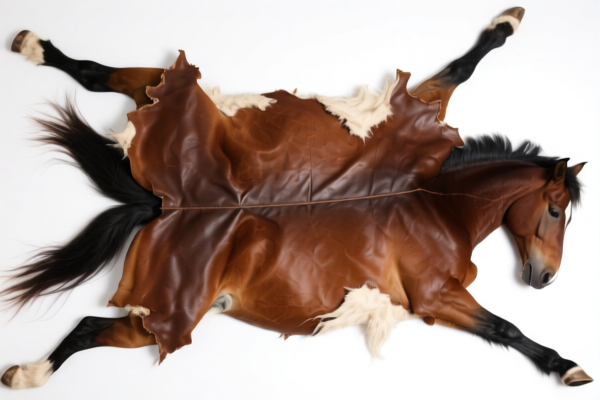
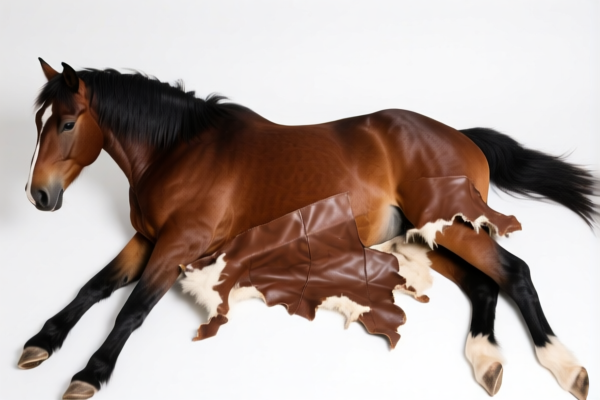
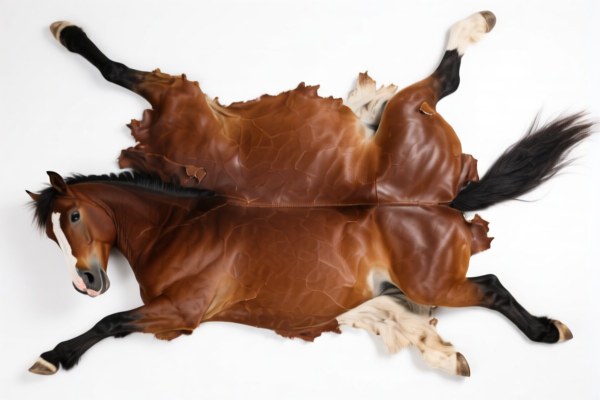
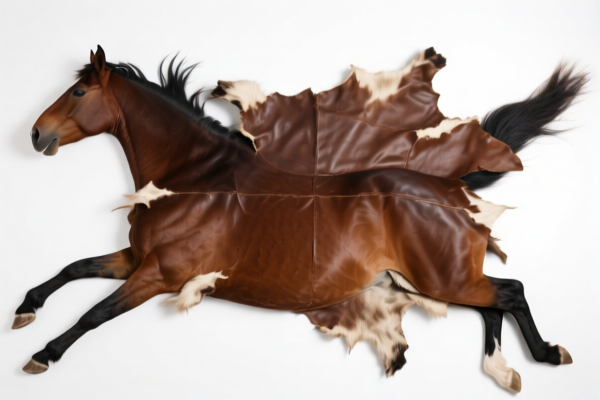
AI Analysis
🐴 Raw Horsehide Whole Skins (Boine/Equine Class)
🌐 HS Code Reference & Customs Clearance Guide | 2026 Latest Tariff Analysis | Professional Entry Strategy
📌 1. Product Definition & Classification: Do You Really Understand "Raw Horsehide"?
Raw horsehide whole skins represent the foundational material for high-end leather goods, footwear, and automotive upholstery. In international trade, the classification of raw hides depends strictly on weight, preservation method, and processing status (specifically, whether they are pretanned).
Equine Animals (Horses/Donkeys): Raw hides from equine species are treated distinctly from bovine hides in many tariff schedules, often requiring specific weight thresholds for classification.
⚠️ Key Distinction Point:
- If the skin is dehaired but not pretanned (i.e., raw, salted, dried, limed, or pickled only) → It falls under Chapter 41.
- If the skin has been pretanned (chemically treated to stabilize but not fully tanned) → It falls under Chapter 41 but a different subheading (e.g., 4101.50.10.90).
- Crucial Detail: The provided data specifies "Not pretanned". Therefore, we only look at raw, preservative-treated skins.
📦 2. HS Code Classification Details (2026 Latest Tariff Authoritative Comparison)
Based on the provided <DATA>, there are two specific HS Codes for Not Pretanned Raw Horsehide Whole Skins, distinguished by weight and preservation method.
| HS Code | Product Description | Applicable Scenario | Weight & Preservation Condition |
|---|---|---|---|
4101.20.10.20 |
Whole hides/unsplit, not pretanned, of equine animals | Small/medium raw skins | ≤ 8 kg (simply dried) ≤ 10 kg (dry-salted) ≤ 16 kg (fresh/wet-salted) |
4101.50.10.91 |
Whole hides, not pretanned, of equine animals, weight > 16 kg | Large raw skins | > 16 kg (Any preservation method) |
🔍 Critical Reminder:
- Weight is the deciding factor:
- If your horsehide is smaller/lighter (≤ 16 kg depending on salt/dry status), use 4101.20.10.20.
- If your horsehide is larger/heavier (> 16 kg), use 4101.50.10.91.
- "Dehaired" status: The description explicitly mentions "whether or not dehaired." Dehairing does not change the HS code for raw hides, as long as it is not pretanned.
- "Not Pretanned": This is vital. If the hides have undergone any pretanning process, they would fall under a different subheading (e.g., 4101.50.10.90), which may have different duty implications.
💰 3. 2026 Latest Tariff Rate Details (Including Additional Taxes)
✅ Applicable Country: United States (US)
✅ Origin: China (CN) (Implied by the 7.5% additional tax structure typical of US-China trade)
✅ Effective Time: 2025-11-10 onwards (including subsequent imports)
🎯 1. 4101.20.10.20 – Raw Horsehide, Unsplit, Small/Medium Weight
| Item | Details |
|---|---|
| Basic Tariff Rate | 0.0% (Ad Valorem) |
| Section 301 Additional Tariff | +7.5% (Applicable to Chinese origin goods) |
| Total Tariff Rate | 7.5% |
| Tax Calculation | CIF Value × 7.5% |
| De Minimis Exemption | ❌ Not Applicable (Raw hides are not eligible for de minimis) |
| Legal Basis Path | HTSUS:4101.20.10.20 → USITC Footnote: Section 301 |
📌 Explanation:
- The basic duty is 0%, which is favorable for raw materials.
- However, the 7.5% additional tariff applies due to trade measures against China.
- Total cost impact: You pay 7.5% of the CIF value in duties.
🎯 2. 4101.50.10.91 – Raw Horsehide, Large Weight (> 16 kg)
| Item | Details |
|---|---|
| Basic Tariff Rate | 0.0% (Ad Valorem) |
| Section 301 Additional Tariff | +7.5% (Applicable to Chinese origin goods) |
| Total Tariff Rate | 7.5% |
| Tax Calculation | CIF Value × 7.5% |
| De Minimis Exemption | ❌ Not Applicable |
| Legal Basis Path | HTSUS:4101.50.10.91 → USITC Footnote: Section 301 |
📌 Explanation:
- Despite the different weight category, the tax rate is identical to the smaller hides.
- Both codes share the same 0% base + 7.5% additional = 7.5% total structure.
- Consistency in Pricing: Whether you import small or large horsehide, the duty burden remains 7.5%.
🛠️ 4. Customs Clearance Practical Advice (Pitfall Avoidance Guide)
✅ 1. Preparation Checklist (Missing Documents = Delay)
| Document | Required | Notes |
|---|---|---|
| ✅ Commercial Invoice | ✔️ | Must clearly state: "Raw Horsehide," "Not Pretanned," "Dehaired/Undehaired," and exact weight per skin. |
| ✅ Packing List | ✔️ | Specify number of skins and total weight. |
| ✅ Product Specification Sheet | ✔️ | Detail preservation method (e.g., "Wet-Salted," "Dry," "Fresh"). |
| ✅ Proof of Non-Pretanning | ✔️ | A letter from the supplier confirming no pretanning has occurred. Critical for correct HS code. |
| ✅ Certificate of Origin | ✔️ | To confirm China origin for accurate tax application. |
| ✅ Photos of Goods | ✔️ | Show texture, weight tags, and preservation state (wet/dry). |
✅ 2. Declaration Tips (Key Mnemonic)
🔥 "Weight Determines Code, Pretanning Changes Fate!"
| Scenario | Correct Declaration | Error Consequence |
|---|---|---|
| Horsehide > 16 kg, Not Pretanned | 4101.50.10.91 |
Misclassification → Delay + Potential Penalty |
| Horsehide ≤ 16 kg, Not Pretanned | 4101.20.10.20 |
Misclassification → Delay + Potential Penalty |
| Pretanned Horsehide | NOT in provided data (Likely 4101.50.10.90) |
Using wrong code → Tax Error |
| Bovine Hides (Cattle) | NOT in provided data (Different Chapter) | Misclassification → Wrong HS Code |
✅ 3. Special Handling Cases
| Situation | Handling Advice |
|---|---|
| Mixed Batches (Bovine & Equine) | Do NOT mix in one declaration. Bovine and Equine hides have different HS codes. Separate shipments or declarations. |
| "Dehaired" vs. "Undehaired" | Both are eligible under these codes. Ensure the invoice specifies if dehaired to avoid questions, but it doesn’t change the code. |
| Wet-Salted vs. Dry-Salted | For 4101.20.10.20, the weight limit differs: Wet-salted allows up to 16 kg; Dry-salted allows up to 10 kg; Simply dried allows up to 8 kg. Choose the correct subheading based on weight AND preservation. |
| Value Fluctuation | Since the tax is a percentage, higher CIF values mean higher duties. Ensure accurate valuation to avoid disputes. |
🌍 5. Global Market Comparison (2026 Latest)
| Country/Region | Recommended HS Code | Tariff Rate (China Origin) | Notes |
|---|---|---|---|
| 🇺🇸 USA | 4101.20.10.20 / 4101.50.10.91 |
7.5% | 0% Base + 7.5% Additional |
| 🇨🇳 China | 4101.20.10.20 / 4101.50.10.91 |
0% | Import duty is typically 0% for raw hides |
| 🇪🇺 EU | 4101.20.10 / 4101.50.10 |
Varies (Usually 0-3%) | Check EUR.1 for preferences |
| 🇬🇧 UK | 4101.20.10 / 4101.50.10 |
0-3% | Post-Brexit tariffs may vary |
| 🇯🇵 Japan | 4101.20.10 / 4101.50.10 |
0-3% | Check EPA agreements |
📌 Conclusion:
- The US market imposes a 7.5% additional tariff on these raw hides from China.
- China, EU, UK, and Japan generally have lower or zero base duties for raw hides.
- Strategy: If importing for US re-export or domestic use, factor in the 7.5% cost. Consider sourcing from non-China origins if possible to avoid the additional tax.
📌 6. Common Mistakes & Pitfalls (Blood & Tears Lessons)
❌ Mistake 1: Confusing Equine with Bovine hides
👉 Consequence: Using bovine codes for horsehide → Customs Hold + Penalties
❌ Mistake 2: Ignoring Preservation Method for small hides
👉 Consequence: Declaring dry-salted (≤10 kg) as wet-salted (≤16 kg) when weight is 12 kg → Misclassification
❌ Mistake 3: Claiming "Pretanned" when it is "Raw"
👉 Consequence: Wrong HS code, potentially leading to higher duties or prohibited goods scrutiny
❌ Mistake 4: Not specifying "Not Pretanned" on Invoice
👉 Consequence: Customs may assume pretanned and apply a different, potentially higher tax code
✅ Correct Practice:
"Raw Horsehide Whole Skins, Dehaired, Wet-Salted, Not Pretanned, Weight per Skin: 15 kg, Model: XYZ, Origin: China"
🎯 7. Conclusion: Professional Declaration, Cost Control, Efficiency!
🎯 Remember the Mnemonic:
🔹 "Equine vs. Bovine: Don’t Mix!"
🔹 "Weight is King: >16kg is One Code, ≤16kg is Another!"
🔹 "Not Pretanned: 7.5% Total Tax for US Imports!"
🔹 "Dehaired is Fine: It Doesn’t Change the Code!"
📌 Pro Tip:
If you are importing pretanned horsehide, please note that it is NOT covered in the provided <DATA>. You will need to look up 4101.50.10.90 or similar, which may have different tax rates. Always confirm the processing status with your supplier.
📣 Immediate Action:
📞 Consult with a customs broker for Advanced Ruling if your hides are borderline in weight or processing status.
🚀 Ensure your invoice clearly states weight per skin and preservation method to avoid delays!
✨ Professional Customs Clearance Starts with Accurate Classification!
💼 Your Duty Cost is Predictable: 7.5% for Raw Horsehide to the US.
Customer Reviews
About HS Code Classification
The Harmonized System (HS) is an internationally standardized nomenclature developed by the World Customs Organization (WCO) to classify traded products. Over 200 countries use the HS system as the basis for customs tariffs, trade statistics, and import/export regulations.
Each HS code follows a hierarchical structure:
- Chapter (2 digits) — Broad category of goods (e.g., Chapter 84: Machinery and Mechanical Appliances)
- Heading (4 digits) — More specific grouping within the chapter
- Subheading (6 digits) — Internationally standardized breakdown, used by all WCO member countries
- National subdivisions (8-10 digits) — Country-specific extensions for further classification, such as US HTSUS 10-digit codes
Correct HS code classification is essential for smooth customs clearance, accurate duty payment, and compliance with trade regulations. Misclassification can lead to customs delays, overpayment of duties, or penalties.
When importing from CN to US, the applicable tariff rates may include:
- Most-Favored-Nation (MFN) rate — The standard duty rate applied to WTO members
- General rate — Applied to countries without trade agreements
- Trade remedy duties — Additional tariffs such as Section 301 (anti-dumping), Section 232 (national security), or countervailing duties
The information provided on this page is for reference purposes only. For official classification, please consult with your local customs authority or a licensed customs broker.