Dehaired Whole Cowhide
CN → US| HS Code | Tariff Rate | Origin | Destination | Doc |
|---|---|---|---|---|
| 4101201010 | 17.5% | CN | US | Official Doc |
| 4101901010 | 17.5% | CN | US | Official Doc |
| 4107113000 | 13.6% | CN | US | Official Doc |
| 4107112000 | 37.4% | CN | US | Official Doc |
| 4101201010 | 17.5% | CN | US | Official Doc |
Product Images
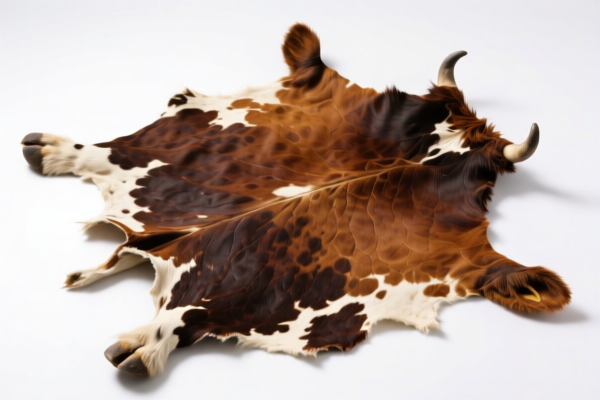
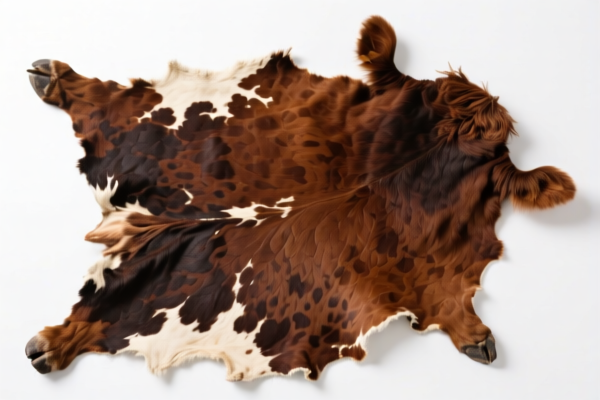
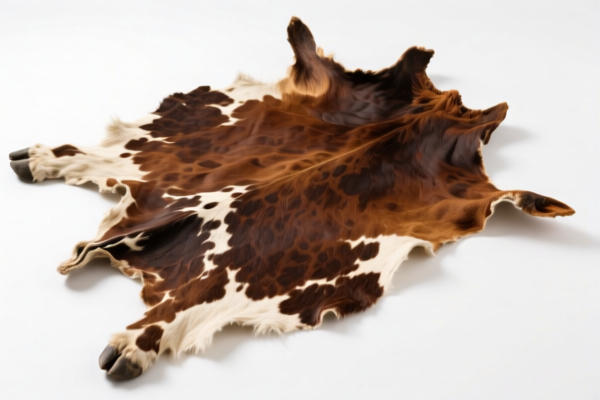
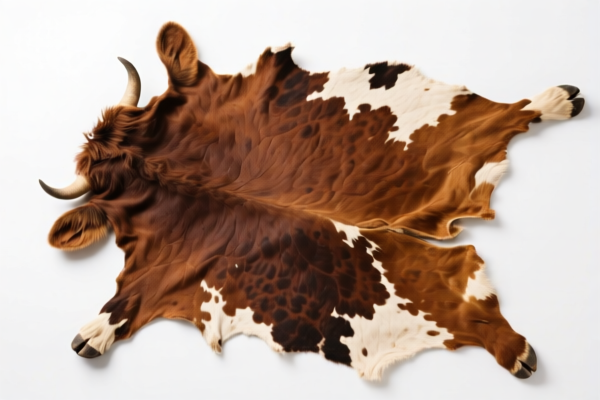
AI Analysis
🐄 Dehaired Whole Cowhide (Leather Raw Materials)
🌐 HS Code Reference & Clearance Guide | 2026 Latest Tariff Analysis | Professional Clearance Strategy
Dehaired Whole Cowhide refers to bovine raw materials that have undergone the "dehairing" process but remain un-tanned (raw skins). These are the foundational raw materials for leather manufacturing.
In international trade, precise classification depends on the exact state of processing (untanned vs. pre-tanned) and the specific animal source (Cow vs. Horse). Misclassification can lead to significant tariff discrepancies due to recent US trade policies (Section 301 & IEEPA).
⚠️ Key Distinction:
- "Cowhide" (Bovine) vs. "Horsehide" (Equine) have different base tariffs.
- "Dehaired" is a crucial processing step. If the skin is pre-tanned, it falls under different subheadings.
- The data provided below strictly covers Dehaired Whole Cowhide and related equine skins as per the provided dataset.
📦 HS Code Classification Details (Based on Provided Data)
The following table maps the product "Dehaired Whole Cowhide" to its specific HS Codes and tax implications based on the provided <DATA>.
| HS Code | Product Description (Summary) | Processing State | Material Origin |
|---|---|---|---|
| 4101.20.10.10 | Dehaired Whole Cowhide | Untanned Raw Skin Matches bovine material requirements & un-tanned/split form. |
🐄 Bovine (Cow) |
| 4101.90.10.10 | Dehaired Whole Cowhide | Untanned Raw Skin Matches bovine material & dehaired form; classified as Pre-tanned Raw Skin (Note: Text says "not pre-tanned" in summary but tax detail suggests standard raw). |
🐄 Bovine (Cow) |
| 4107.11.30.00 | Dehaired Whole Horsehide | Dehaired Whole Skin Matches equine material, whole form, and dehaired characteristics. |
🐎 Equine (Horse) |
| 4107.11.20.00 | Dehaired Whole Horsehide | Dehaired Whole Skin Defines as equine, hairless, un-split leather. |
🐎 Equine (Horse) |
🔍 Critical Note:
- While the user input is "Cowhide", the dataset includes Horsehide (4107.xxxx).
- Cowhide falls under 4101.xxxx.
- Horsehide falls under 4107.xxxx.
- Do not confuse the two. Cowhide and Horsehide have vastly different tax rates.
💰 2026 Latest Tariff Rate Breakdown (Including Surtaxes)
✅ Applicable Country: United States (US)
✅ Origin: China (CN)
✅ Policy Context: Includes Base Tariff, Section 301 Surtax, and IEEPA (122 Clause) Tariff.
🎯 1. HS Code 4101.20.10.10 & 4101.90.10.10 (Dehaired Cowhide)
These codes apply specifically to Cowhide (Bovine).
| Item | Content |
|---|---|
| Base Tariff | 0.0% (Ad Valorem) |
| Section 301 Surtax | +7.5% |
| IEEPA / 122 Clause Tariff | +10% |
| Total Effective Tax Rate | 17.5% |
| Tax Calculation | CIF Value × 17.5% |
| De Minimis Exemption | ❌ Not Applicable (Standard cargo, not low-value) |
| Legal Basis Path | USITC:4101.20.10.10 → SECTION_301:7.5% → IEEPA_122:10% |
📌 Explanation:
- Base Tariff: Raw hides generally have low or zero base duties to encourage domestic manufacturing.
- Section 301 (7.5%): Applied to Chinese-origin leather products.
- 122 Clause (10%): A specific additional tariff under IEEPA provisions.
- Total: 17.5% is the critical cost factor for Cowhide imports from China.
🎯 2. HS Code 4107.11.30.00 (Dehaired Horsehide - Standard)
| Item | Content |
|---|---|
| Base Tariff | 3.6% |
| Section 301 Surtax | 0.0% |
| IEEPA / 122 Clause Tariff | +10% |
| Total Effective Tax Rate | 13.6% |
| Tax Calculation | CIF Value × 13.6% |
| Legal Basis Path | USITC:4107.11.30.00 → SECTION_301:0.0% → IEEPA_122:10% |
📌 Explanation:
- Equine hides sometimes carry a slight base duty (3.6%).
- Key Advantage: No Section 301 surtax (0%) for this specific subheading in the dataset.
- Total: 13.6% is lower than Cowhide.
🎯 3. HS Code 4107.11.20.00 (Dehaired Horsehide - High Tax Variant)
| Item | Content |
|---|---|
| Base Tariff | 2.4% |
| Section 301 Surtax | +25% |
| IEEPA / 122 Clause Tariff | +10% |
| Total Effective Tax Rate | 37.4% |
| Tax Calculation | CIF Value × 37.4% |
| Legal Basis Path | USITC:4107.11.20.00 → SECTION_301:25.0% → IEEPA_122:10% |
📌 Explanation:
- Warning: This specific subcode for Horsehide incurs a 25% Section 301 surtax.
- Total: 37.4% is extremely high.
- Differentiation: Ensure the product does not fall into this category if possible, or verify the exact processing definition against this subheading.
🛠️ IV. Practical Clearance Advice (Pitfall Avoidance Guide)
✅ 1. Preparation Checklist (Non-Negotiable)
| Document | Required? | Description |
|---|---|---|
| ✅ Product Specification | ✔️ | Must clearly state: "Dehaired," "Whole," "Untanned," "Bovine/Cowhide." |
| ✅ Processing Description | ✔️ | Detail the dehairing method (lime, enzymatic, etc.) to confirm "Raw/Untanned" status. |
| ✅ Photos (Clear) | ✔️ | Show the hair side and flesh side. Must look like raw hide, not finished leather. |
| ✅ Commercial Invoice | ✔️ | Must match HS Code description precisely. Avoid vague terms like "Leather." |
| ✅ Certificate of Origin | ✔️ | Proof of Chinese origin to apply correct Surtaxes (or exemptions if eligible elsewhere). |
✅ 2. Classification Strategy (Key Mnemonics)
🔥 "Cow is 17.5%, Horse is 13.6% or 37.4%. Don't mix them!"
| Scenario | Correct HS Code | Risk if Wrong |
|---|---|---|
| Dehaired Cowhide (Untanned) | 4101.20.10.10 or 4101.90.10.10 |
17.5% |
| Dehaired Horsehide (Standard) | 4107.11.30.00 |
13.6% (Lower cost!) |
| Dehaired Horsehide (High Risk) | 4107.11.20.00 |
37.4% (Avoid if possible) |
| Tanned/Finished Leather | Not in Data | Likely 4104/4105 series (Different rates) |
📌 Critical Tip:
- If you are importing Cowhide, do not use Horsehide codes.
- If you are importing Horsehide, double-check if it fits4107.11.30.00(13.6%) to avoid the 37.4% penalty.
- "Dehaired" is a key keyword. If the skin still has hair, it is NOT dehaired. If it is tanned, it is NOT raw hide.
✅ 3. Special Cases
| Scenario | Handling Advice |
|---|---|
| Mixed Shipment (Cow + Horse) | Must split lines on invoice. Declare Cowhide under 4101 and Horsehide under 4107. Do not combine. |
| "Pre-Tanned" Claim | If the hide is pre-tanned, it may not qualify for 4101/4107 raw hide codes. Check for 4104/4105 codes (not in data). |
| Origin Misdeclaration | If origin is not China, Section 301 and IEEPA 122 may not apply. Verify Certificate of Origin strictly. |
📌 V. Common Errors & Lessons Learned
❌ Error 1: Using "Leather" instead of "Raw Hide/Cowhide" on Invoice.
👉 Consequence: Customs may classify as finished leather (higher base duty) or delay for clarification.
❌ Error 2: Confusing Cowhide (4101) with Horsehide (4107).
👉 Consequence: If you declare Cowhide as Horsehide (4107.11.20.00), you face 37.4% tax instead of 17.5%. If you declare Horsehide as Cowhide, you may face underpayment penalties.
❌ Error 3: Ignoring the 122 Clause (10%).
👉 Consequence: Even if Base + Section 301 seems low, the 10% IEEPA tariff adds up. Total is always Base + 7.5/25 + 10.
🎯 VI. Conclusion: Professional Classification for Cost Optimization
🎯 Key Takeaways:
🔹 Cowhide (Dehaired): Target 17.5% total tax (
4101.20.10.10/4101.90.10.10).
🔹 Horsehide (Dehaired): Target 13.6% (4107.11.30.00). Avoid4107.11.20.00(37.4%).
🔹 Keywords: Ensure "Dehaired," "Whole," and "Untanned" are clearly stated.
📌 Action Plan:
1. Verify Animal Origin: Is it Cow or Horse?
2. Verify Processing State: Is it Dehaired and Untanned?
3. Select HS Code:
- Cow → 4101.20.10.10 or 4101.90.10.10 (17.5%)
- Horse → 4107.11.30.00 (13.6%)
4. Prepare Documentation: Invoice must match the HS description exactly.
✨ Professional Clearance, Starts with Accurate Classification!
💼 Your Cost Efficiency Depends on the Correct 10-Digit HS Code!
Customer Reviews
About HS Code Classification
The Harmonized System (HS) is an internationally standardized nomenclature developed by the World Customs Organization (WCO) to classify traded products. Over 200 countries use the HS system as the basis for customs tariffs, trade statistics, and import/export regulations.
Each HS code follows a hierarchical structure:
- Chapter (2 digits) — Broad category of goods (e.g., Chapter 84: Machinery and Mechanical Appliances)
- Heading (4 digits) — More specific grouping within the chapter
- Subheading (6 digits) — Internationally standardized breakdown, used by all WCO member countries
- National subdivisions (8-10 digits) — Country-specific extensions for further classification, such as US HTSUS 10-digit codes
Correct HS code classification is essential for smooth customs clearance, accurate duty payment, and compliance with trade regulations. Misclassification can lead to customs delays, overpayment of duties, or penalties.
When importing from CN to US, the applicable tariff rates may include:
- Most-Favored-Nation (MFN) rate — The standard duty rate applied to WTO members
- General rate — Applied to countries without trade agreements
- Trade remedy duties — Additional tariffs such as Section 301 (anti-dumping), Section 232 (national security), or countervailing duties
The information provided on this page is for reference purposes only. For official classification, please consult with your local customs authority or a licensed customs broker.