Dehydrator Rack
CN → US| HS Code | Tariff Rate | Origin | Destination | Doc |
|---|---|---|---|---|
| 7616995130 | 87.5% | CN | US | Official Doc |
| 3926909930 | 22.8% | CN | US | Official Doc |
| 7326908688 | 87.9% | CN | US | Official Doc |
| 7326200090 | 88.9% | CN | US | Official Doc |
| 3926909989 | 22.8% | CN | US | Official Doc |
Product Images
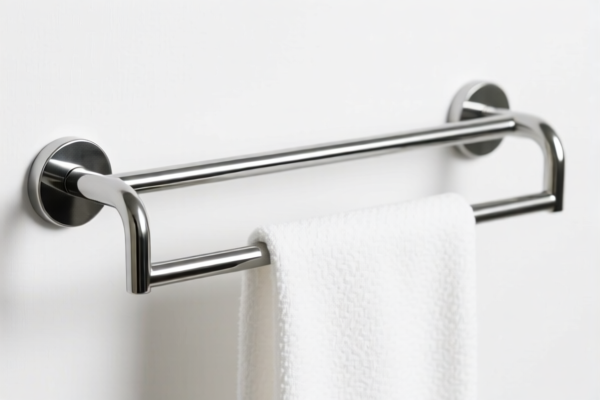

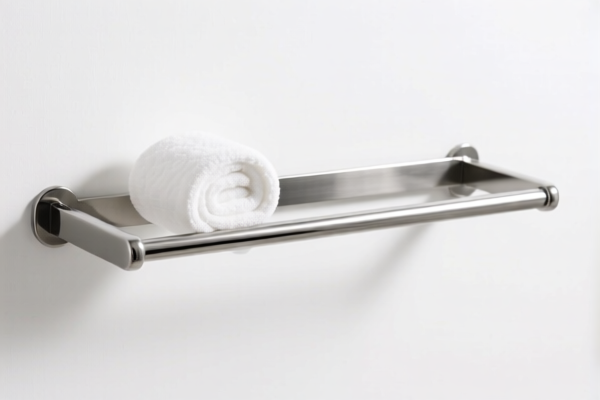

AI Analysis
📦 Dehydrator Rack (架/支架)
🌐 HS Code Classification & Customs Clearance Guide | 2026 Tariff Analysis | Professional Entry Strategy
📌 Part I: Product Definition & Classification Logic: What Exactly is a "Dehydrator Rack"?
A Dehydrator Rack is a critical component of food processing equipment, used to hold food items (fruits, vegetables, meats) during the drying process. In international trade, its classification depends heavily on material composition and structural form. Based on the provided data, three primary classification paths exist, categorized by material: Aluminum, Plastic, and Steel/Iron.
⚠️ Key Classification Principle:
- The item is treated as a Spare Part/Component (not a complete machine).
- The "Catch-all" (兜底) logic applies: if it doesn't fit specific dedicated parts codes, it falls under "Other" articles of the respective material.
- Material Conflict Check: The summary explicitly notes "no material conflict" with the general "other articles" categories, allowing for flexible grouping based on the dominant material.
📊 Part II: HS Code Classification Details (Based on Provided Data)
| HS Code | Material Inference | Classification Logic (Summary from Data) | Total Tax Rate |
|---|---|---|---|
| 7616.99.51.30 | Aluminum | Inferred as a frame/support (part/component). Fits the "Other Aluminum Articles" catch-all logic. No material conflict with aluminum products. | 87.5% |
| 3926.90.99.30 | Plastic | Inferred as plastic or metal, frame-like. Classified as "Other Articles" (part/support) under the "Other" catch-all principle. | 22.8% |
| 7326.90.86.88 | Iron/Steel | Inferred as a frame/support (part/component). Fits "Other Iron/Steel Articles" logic. No material conflict. | 87.9% |
| 7326.20.00.90 | Iron/Steel | Material inferred as Iron/Steel. Shape is a part/component. Does not conflict with excluded items like conveyor belts, coat hangers, or stake-posts. | 88.9% |
| 3926.90.99.89 | Plastic | Inferred as a mechanical structural component. Fits "Other Articles Made of Plastic/Other Materials" logic. No material conflict. | 22.8% |
🔍 Critical Observation:
- Plastic variants (3926...) have a significantly lower tax burden (~22.8%) compared to metal variants (~88%).
- Steel/Iron variants have the highest burden, ranging from 87.9% to 88.9%.
- Aluminum variants sit in the middle at 87.5%.
💰 Part III: Detailed Tariff Breakdown & Policy Analysis (2026)
✅ Applicable Jurisdiction: United States (US)
✅ Origin: China (CN)
✅ Policy Context: High tariffs due to Section 301 and IEEPA measures.
🎯 1. Aluminum Category: 7616.99.51.30
| Item | Detail |
|---|---|
| Base Duty | 2.5% |
| Section 301 Duty | 25.0% |
| IEEPA / 122 Clause | 10% (General) + 50% (Specific "Steel, Aluminum, Copper" surcharge) |
| Total Tax | 87.5% |
| Calculation | CIF Value × 87.5% |
| De Minimis Exemption | ❌ Denied (deny_de_minimis) |
| Legal Path | Base Tariff → Sec 301 (25%) → IEEPA (10%) → 122 Clause (50% for Al) |
📌 Analysis:
The 50% surcharge on aluminum products under the 122 Clause is the dominant cost driver. Even though the base duty is low, the total tax is nearly 90% of the product value.
🎯 2. Plastic Categories: 3926.90.99.30 & 3926.90.99.89
| Item | Detail |
|---|---|
| Base Duty | 5.3% |
| Section 301 Duty | 7.5% |
| IEEPA / 122 Clause | 10% |
| Total Tax | 22.8% |
| Calculation | CIF Value × 22.8% |
| De Minimis Exemption | ❌ Denied (deny_de_minimis) |
| Legal Path | Base Tariff → Sec 301 (7.5%) → IEEPA (10%) |
📌 Analysis:
Plastic racks are significantly cheaper to import. The total tax is ~22.8%, which is ~65% lower than aluminum or steel equivalents. If the rack is made of high-temperature resistant plastic, this is the optimal HS Code.
🎯 3. Steel/Iron Categories: 7326.90.86.88 & 7326.20.00.90
| Item | Detail |
|---|---|
| Base Duty | 2.9% (7326.90...) / 3.9% (7326.20...) |
| Section 301 Duty | 25.0% |
| IEEPA / 122 Clause | 10% (General) + 50% (Specific "Steel, Aluminum, Copper" surcharge) |
| Total Tax | 87.9% / 88.9% |
| Calculation | CIF Value × ~88% |
| De Minimis Exemption | ❌ Denied (deny_de_minimis) |
| Legal Path | Base Tariff → Sec 301 (25%) → IEEPA (10%) → 122 Clause (50% for Steel) |
📌 Analysis:
Steel racks face the highest punitive tariffs. The 50% surcharge for steel products under the 122 Clause makes importing steel dehydrator racks from China to the US extremely costly.
🛠️ Part IV: Customs Clearance Practical Advice (Avoid Pitfalls)
✅ 1. Material Declaration is Critical
| Action | Reason |
|---|---|
| Specify Material Clearly | Do not just write "Dehydrator Rack." Write "Plastic Dehydrator Rack" or "Aluminum Alloy Dehydrator Rack." |
| Provide Material Certificates | If claiming the 22.8% rate, provide proof of plastic composition (e.g., material safety data sheet, supplier declaration). |
| Avoid "Mixed" Descriptions | If the rack is Plastic with Metal Pins, customs may classify it by the principal material or the essential character, likely triggering the higher Steel/Aluminum rate. |
✅ 2.申报技巧 (Declaration Strategy)
| Scenario | Recommended HS Code | Tax Rate | Risk Level |
|---|---|---|---|
| Plastic Rack | 3926.90.99.30 or 3926.90.99.89 |
22.8% | ✅ Low Cost |
| Aluminum Rack | 7616.99.51.30 |
87.5% | ❌ High Cost |
| Steel Rack | 7326.90.86.88 |
87.9% | ❌ Highest Cost |
| Steel Rack (Structural) | 7326.20.00.90 |
88.9% | ❌ Highest Cost |
🔥 Key Strategy:
- If possible, reformulate the product to use High-Temperature Plastic instead of Metal.
- The tax saving is ~65% of the product value.
- If Metal is required for heat resistance, Aluminum is slightly cheaper than Steel (87.5% vs 88.9%).
✅ 3. Documentation Requirements
| Document | Necessity | Notes |
|---|---|---|
| Commercial Invoice | ✔️ | Must list Material (e.g., "ABS Plastic", "6061 Aluminum"). |
| Product Photos | ✔️ | Show the rack’s structure and material texture. |
| Material Declaration | ✔️ | Supplier letter stating the exact material composition. |
| Packing List | ✔️ | Ensure items are not split incorrectly (e.g., don't ship plastic racks as "parts of machines" to avoid different scrutiny). |
🌍 Part V: Global Market Comparison (2026)
| Country/Region | Recommended HS Code | Est. Total Tax (China Origin) | Remarks |
|---|---|---|---|
| 🇺🇸 USA | 3926.90.99.30 (Plastic) |
22.8% | Best option. |
| 🇺🇸 USA | 7616.99.51.30 (Aluminum) |
87.5% | High penalty on Al. |
| 🇺🇸 USA | 7326.90.86.88 (Steel) |
87.9% | Highest penalty on Steel. |
| 🇨🇳 China | Various | ~5-10% | Low entry duty, no Section 301. |
| 🇪🇺 EU | Various | ~0-6% | No Section 301/IEEPA surcharges. |
📌 Conclusion:
- The US market is the most hostile for metal dehydrator racks due to Section 301 and 122 Clause tariffs.
- Plastic racks are the only viable option for cost-effective entry into the US.
📌 Part VI: Common Mistakes & Pitfalls (Blood & Tears Lessons)
❌ Mistake 1: Declaring a Steel Rack as 7326.90.86.88 but misidentifying the material as "Generic Metal."
👉 Consequence: Customs audits material → Confirms Steel → Applies 50% Surcharge → 87.9% Tax + Penalties.
❌ Mistake 2: Using Plastic HS Code (3926...) for a Metal Rack.
👉 Consequence: Customs rejection, reclassification to Steel/Aluminum, Back-pay of ~65% tax difference, and potential fraud allegations.
❌ Mistake 3: Splitting a "Rack Assembly" into "Frame" and "Trays" to avoid higher duties.
👉 Consequence: De Minimis Exemption Denied. Each part is taxed individually, potentially increasing total cost if not optimized.
✅ Correct Practice:
"Plastic Dehydrator Rack, Food Grade ABS, Stackable, For Home Food Dehydrator, Model XYZ"
(Use this description to support the 22.8% HS Code)
🎯 Part VII: Conclusion: Professional Classification, Cost Savings!
🎯 Key Takeaway:
🔹 "Plastic is King, Metal is King (Expensive)."
🔹 Plastic Rack: 22.8% Tax.
🔹 Aluminum/Steel Rack: ~88% Tax.
🔹 Difference: 65% Tax Gap!
📌 Action Plan:
1. Check Material: Is your rack plastic or metal?
2. Choose Wisely: If designing new products, switch to Plastic for US exports.
3. Declare Accurately: Never lie about material.
4. Pre-Ruling: Apply for an Advance Ruling if unsure, especially for mixed-material racks.
📣 Immediate Action:
📞 Contact Customs Broker + Provide Material Specs + Select Correct HS Code
🚀 Save 65% in Taxes by choosing Plastic over Metal for the US Market!
✨ Professional Customs Clearance Starts with Accurate Classification!
💼 Every Dollar Saved is a Dollar Earned!
Customer Reviews
About HS Code Classification
The Harmonized System (HS) is an internationally standardized nomenclature developed by the World Customs Organization (WCO) to classify traded products. Over 200 countries use the HS system as the basis for customs tariffs, trade statistics, and import/export regulations.
Each HS code follows a hierarchical structure:
- Chapter (2 digits) — Broad category of goods (e.g., Chapter 84: Machinery and Mechanical Appliances)
- Heading (4 digits) — More specific grouping within the chapter
- Subheading (6 digits) — Internationally standardized breakdown, used by all WCO member countries
- National subdivisions (8-10 digits) — Country-specific extensions for further classification, such as US HTSUS 10-digit codes
Correct HS code classification is essential for smooth customs clearance, accurate duty payment, and compliance with trade regulations. Misclassification can lead to customs delays, overpayment of duties, or penalties.
When importing from CN to US, the applicable tariff rates may include:
- Most-Favored-Nation (MFN) rate — The standard duty rate applied to WTO members
- General rate — Applied to countries without trade agreements
- Trade remedy duties — Additional tariffs such as Section 301 (anti-dumping), Section 232 (national security), or countervailing duties
The information provided on this page is for reference purposes only. For official classification, please consult with your local customs authority or a licensed customs broker.