Delivery Note Carbonless Copy Paper
CN → US| HS Code | Tariff Rate | Origin | Destination | Doc |
|---|---|---|---|---|
| 4820400000 | 35.0% | CN | US | Official Doc |
| 4820900000 | 35.0% | CN | US | Official Doc |
Product Images
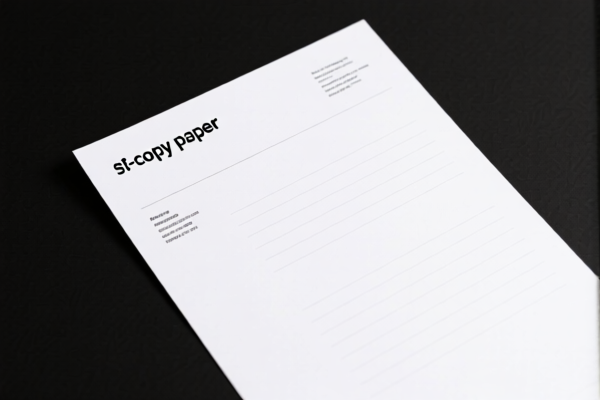
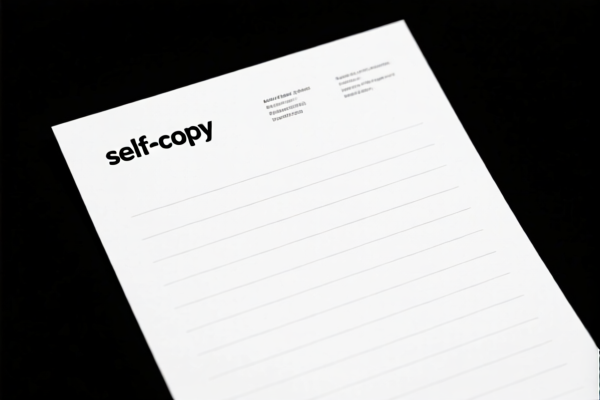
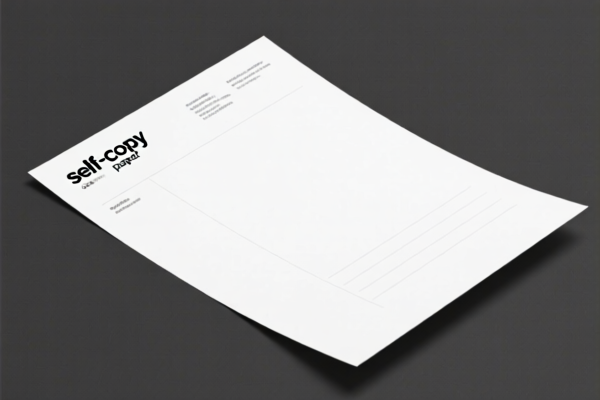
AI Analysis
📝 Delivery Note Carbonless Copy Paper (Repetitive Use Copy Paper)
🌐 HS Code Reference & Customs Clearance Guide | 2026 Latest Tariff Analysis | Professional Compliance Strategy
📌 I. Product Definition & Classification: Do You Truly Understand "Carbonless Copy Paper"?
Delivery Note Carbonless Copy Paper, technically known in international trade as Repetitive Use Copy Paper (RUCP) or Non-Chemical Carbonless Copy Paper, is a specialized stationery item used for creating multiple copies of documents (such as invoices, delivery notes, and contracts) simultaneously without the need for traditional carbon paper sheets. It relies on micro-encapsulated coating technology on its layers.
In the context of customs classification and trade tariffs, these products fall squarely under Chapter 48: Paper and Paperboard; Articles of Paper Pulp, of Paper or Paperboard. Specifically, they are categorized under the heading for "Manifold business forms and interleaved carbon sets."
⚠️ Critical Distinction:
- Standard Copy Paper (plain white sheets for printing) → Often classified under 4802 (Writing/printing paper).
- Carbonless Copy Paper (Manifold Forms) → Classified under 4820.40 or 4820.90.
- Key Differentiator: The presence of interleaved layers designed for duplicate generation. If the paper is sold as pre-printed forms (e.g., "Delivery Note #123"), it is explicitly a "Manifold Business Form."
📦 II. HS Code Classification Details (2026 Latest Tariff Authority Match)
Based on the provided data, there are two primary HS Codes for this product, depending on whether it is specifically identified as a "manifold form" or falls under "other" stationery.
| HS Code | Product Description | Applicability Scenario | Key Characteristic |
|---|---|---|---|
| 4820.40.00.00 | Manifold business forms and interleaved carbon sets | Pre-printed delivery notes, invoices, receipts, multi-part forms | ✅ Specifically Defined: "Manifold business forms" |
| 4820.90.00.00 | Other articles of stationery of paper | Plain carbonless copy paper (blank), notebook inserts, generic interleaved paper not pre-printed as a specific form | ✅ General Category: "Other" |
🔍 Priority Note:
- Delivery Notes are typically pre-printed documents. Therefore, 4820.40.00.00 is the most accurate and preferred classification because it explicitly lists "Manifold business forms."
- If the paper is blank (not pre-printed with specific fields like "Date," "Item," "Quantity"), it may be classified under 4820.90.00.00 as "Other."
- Do not classify under 4802 (Writing paper) if it is carbonless/repetitive use copy paper, as Chapter 48 Heading 4820 specifically captures these forms.
💰 III. 2026 Latest Tariff Rate Breakdown (Including Surtaxes & Policy Add-ons)
✅ Applicable Country: United States (US)
✅ Country of Origin: China (CN)
✅ Effective Date: November 10, 2025 onwards (including subsequent imports)
🎯 1. 4820.40.00.00 —— Manifold Business Forms (Pre-printed Delivery Notes)
| Item | Content |
|---|---|
| Base Tariff Rate | 0.0% (ad valorem) |
| USITC Surtax (Section 301) | +25.0% |
| Total Tax Rate | 25.0% |
| Tax Calculation | CIF Value × 25% |
| De Minimis Eligibility | ❌ Not Applicable (De minimis usually applies to $800; however, for formal commercial entry of goods subject to Section 301, duties apply. Note: Section 321/De Minimis exemptions for China have been tightened/revoked in many contexts; assume full duty for commercial shipments). |
| Legal Basis Path | HTSUS:4820.40.00.00 → USITC:301_Section_301_Footnote |
📌 Explanation:
- The Base Rate for manifold business forms is 0%, reflecting the low traditional duty on specific stationery items.
- The 25% Surtax is the critical component, applied to a wide range of Chinese-origin goods under Section 301 of the Trade Act of 1974.
- Total Cost Impact: For every $10,000 worth of pre-printed delivery notes, expect $2,500 in customs duties.
🎯 2. 4820.90.00.00 —— Other Stationery (Blank Carbonless Paper)
| Item | Content |
|---|---|
| Base Tariff Rate | 0.0% (ad valorem) |
| USITC Surtax (Section 301) | +25.0% |
| Total Tax Rate | 25.0% |
| Tax Calculation | CIF Value × 25% |
| De Minimis Eligibility | ❌ Not Applicable (See note above). |
| Legal Basis Path | HTSUS:4820.90.00.00 → USITC:301_Section_301_Footnote |
📌 Note:
- Even if classified as "Other," the 25% surtax remains identical.
- The distinction between 4820.40 and 4820.90 affects statistics and monitoring, not the duty rate in this specific tariff schedule.
- Both categories suffer the same 25% penalty, making cost optimization via HS code misclassification risky and ineffective for duty savings.
🛠️ IV. Customs Clearance Practical Advice (Battle-Tested Pitfall Guide)
✅ 1. Documentation Checklist (Non-Negotiable)
| Document | Must Provide | Description |
|---|---|---|
| ✅ Commercial Invoice | ✔️ | Must clearly state: "Carbonless Copy Paper, Repetitive Use, Manifold Forms." Avoid vague terms like "Paper." |
| ✅ Product Specification Sheet | ✔️ | Detail: Number of parts (e.g., 2-part, 3-part, 4-part), dimensions, coating type (CNC, CFC), and whether it is pre-printed. |
| ✅ Photos of Product | ✔️ | Show the "NCR" (No Carbon Required) coating layers if possible, and the pre-printed format (if applicable). |
| ✅ List of Contents (Packing List) | ✔️ | Clearly separate pre-printed forms from blank rolls/sheets if mixed. |
| ✅ Country of Origin Certificate | ✔️ | Confirm China origin to apply the correct 25% surtax. |
✅ 2. Declaration Tips (Key Mnemonics)
🔥 "Be Specific, Not Vague. 'Paper' is Wrong. 'Forms' is Right!"
| Scenario | Correct Declaration | Wrong Approach |
|---|---|---|
| Pre-printed Delivery Note (2-part) | "Carbonless Manifold Business Form, 2-part, Pre-printed" | "Copy Paper" or "Stationery" |
| Blank Carbonless Paper (Rolls) | "Carbonless Copy Paper, Blank, Repetitive Use" | "Printing Paper" |
| Mixed Shipment (Forms + Blank) | Split Line Items: One for 4820.40, one for 4820.90 | Combine into one line → Risk of Audit |
📌 Why Precision Matters:
- If you declare "Paper" generally, Customs may assign a default higher duty rate or request an immediate classification ruling, causing delays.
- Using the specific phrase "Manifold Business Forms" aligns with 4820.40, showing intent and accuracy.
✅ 3. Special Case Handling
| Situation | Handling Advice |
|---|---|
| Sample Shipments (Low Value) | Even if under $800, if the shipper is aware of Section 301 rules, some carriers may still apply duties or refuse de minimis for Chinese goods. Check carrier policy. |
| Pre-printed with Customer’s Logo | Still classified as 4820.40.00.00 (Manifold Form). The pre-printing confirms its function as a business form. |
| Paper with Adhesive (Self-Adhesive Labels) | If the carbonless paper is converted into labels (e.g., shipping labels with carbonless backing), it MUST be classified under Chapter 49 (Printed Material) or Chapter 35/49 adhesives, NOT 4820. This is a common misclassification error! |
🌍 V. Global Market Clearance Comparison (2026 Latest)
| Country/Region | Recommended HS Code | Tariff (China Origin) | Certification/Notes |
|---|---|---|---|
| 🇺🇸 USA | 4820.40.00.00 |
25% (Section 301) | High scrutiny on "Paper" vs. "Forms." |
| 🇨🇳 China | 4820.40.00.00 |
0% - 5% | Low import duty for raw materials. |
| 🇪🇺 EU | 4820.10 / 4820.90 |
0% - 6.5% | Standard WCO HS. No Section 301 equivalent. |
| 🇬🇧 UK | 4820.40 |
0% - 6.5% | Post-Brexit UK Tariff. |
| 🇨🇦 Canada | 4820.40 |
0% | USMCA may apply if Canadian origin; otherwise standard MFN. |
📌 Conclusion:
- The US market is significantly more expensive due to the 25% Section 301 surtax.
- EU and UK have standard low tariffs (0-6.5%) and do not impose the additional 25% penalty.
- Strategy: If targeting the US, calculate if the cost of production + 25% duty still allows for competitive pricing. Consider supply chain diversification to non-USMTA countries (e.g., Vietnam, Mexico) if volume is high, as these may be exempt from Section 301.
📌 VI. Common Errors & Pitfall Guide (Blood & Tears Lessons)
❌ Mistake 1: Declaring as "Printing Paper" (HS 4802)
👉 Consequence: Customs will reclassify to 4820.40 or 4820.90 upon inspection. While the base rate is similar, the 25% surtax still applies, and you will face late filing fees, penalties, and shipment delays.
❌ Mistake 2: Ignoring the "Pre-printed" Status
👉 Consequence: If the paper is pre-printed as a "Delivery Note," it is a Manifold Form. Declaring it as "Blank Paper" is misdeclaration. Customs may reject the entry.
❌ Mistake 3: Confusing with Adhesive Labels
👉 Consequence: If the carbonless paper is used to make labels (e.g., for shipping), it is NOT 4820. It is likely 4911.99 (Printed material) or 3506 (Adhesives). Misclassifying leads to significant duty discrepancies and compliance flags.
✅ Correct Declaration Example:
"Carbonless Copy Paper, Repetitive Use, 2-Ply, Pre-printed Delivery Forms, Size 8.5x11, China Origin"
🎯 VII. Conclusion: Professional Declaration, Cost Control, Compliance First!
🎯 Remember the Mnemonic:
🔹 "Manifold Forms go to 4820.40. Base is Zero, but 25% is the Rule. 'Paper' is too vague; 'Forms' is the truth. Don't get caught in the Section 301 net!"
🔹 "Pre-printed = Form. Blank = Other. Both = 25% Surcharge in the US."
📌 Pro Tip:
If your carbonless copy paper is not a pre-printed form (i.e., it is blank rolls/sheets), consider if it can be classified under 4820.90.00.00. However, as seen above, the duty rate is identical (25%). The classification choice is for data accuracy and regulatory compliance, not duty savings.
📣 Immediate Action Required:
📞 Verify Product Type: Is it pre-printed? → Use 4820.40.00.00.
📞 Check Origin: Is it Chinese? → Prepare for 25% Duty.
📞 Consult Broker: Submit specs for Advance Ruling if volume is significant.
🚀 Accurate Declaration, Smooth Clearance, Predictable Costs!
✨ Professional Customs Compliance Starts with Precise Classification!
💼 Every penny of duty is calculated; every declaration is scrutinized.
Customer Reviews
About HS Code Classification
The Harmonized System (HS) is an internationally standardized nomenclature developed by the World Customs Organization (WCO) to classify traded products. Over 200 countries use the HS system as the basis for customs tariffs, trade statistics, and import/export regulations.
Each HS code follows a hierarchical structure:
- Chapter (2 digits) — Broad category of goods (e.g., Chapter 84: Machinery and Mechanical Appliances)
- Heading (4 digits) — More specific grouping within the chapter
- Subheading (6 digits) — Internationally standardized breakdown, used by all WCO member countries
- National subdivisions (8-10 digits) — Country-specific extensions for further classification, such as US HTSUS 10-digit codes
Correct HS code classification is essential for smooth customs clearance, accurate duty payment, and compliance with trade regulations. Misclassification can lead to customs delays, overpayment of duties, or penalties.
When importing from CN to US, the applicable tariff rates may include:
- Most-Favored-Nation (MFN) rate — The standard duty rate applied to WTO members
- General rate — Applied to countries without trade agreements
- Trade remedy duties — Additional tariffs such as Section 301 (anti-dumping), Section 232 (national security), or countervailing duties
The information provided on this page is for reference purposes only. For official classification, please consult with your local customs authority or a licensed customs broker.